Blockchain Finance: Connecting Crypto and Traditional Money
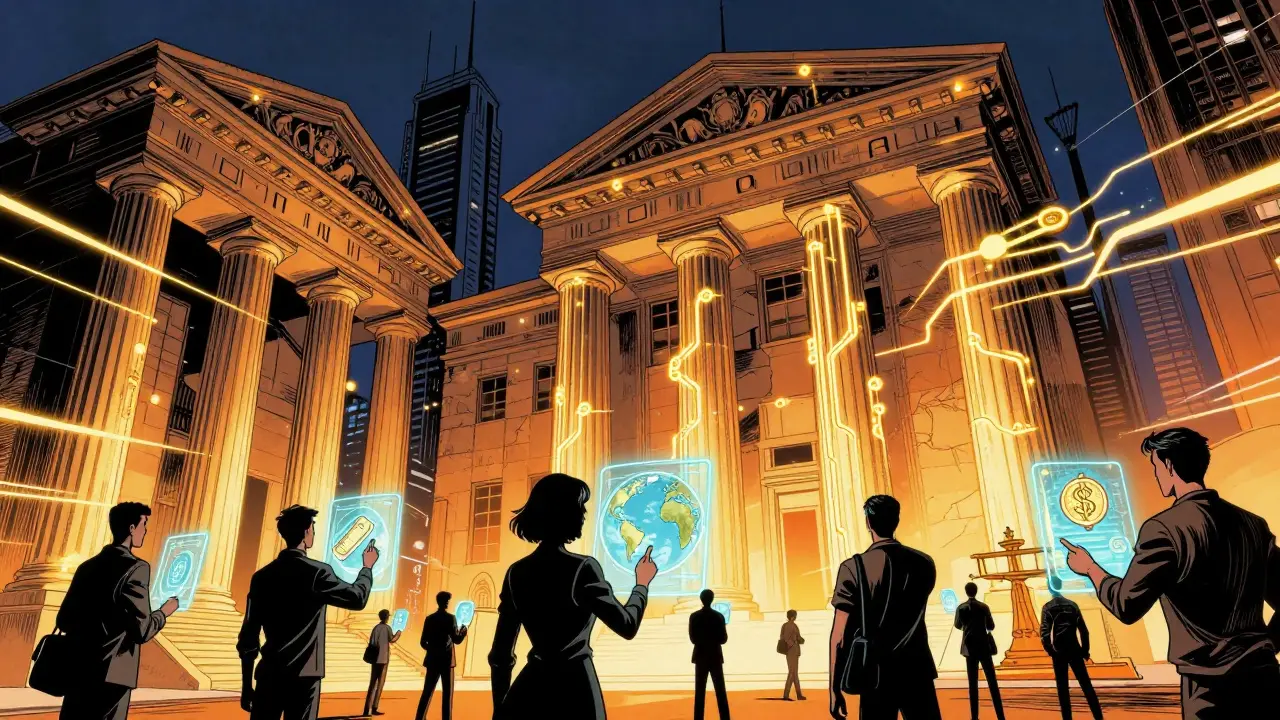
When working with Blockchain Finance, the use of distributed ledger technology to create, move, and settle financial assets. Also known as crypto finance, it bridges decentralized protocols with familiar monetary concepts, enabling faster settlement, lower fees, and new forms of ownership.
Key Topics in Blockchain Finance
Tokenized Securities, digital representations of stocks, bonds, or other traditional assets that live on a blockchain. These tokens let investors buy fractions, trade 24/7, and settle instantly, which reshapes fixed‑income markets. Because each token is backed by a smart contract, the process cuts out intermediaries and reduces settlement risk. This innovation shows how Blockchain Finance encompasses tokenized securities to bring traditional finance into the digital age.
Flash Loans, instant, unsecured loans that must be repaid within a single blockchain transaction. They rely on smart contracts to guarantee repayment, so no collateral is needed. Flash loans power arbitrage, liquidity provision, and rapid strategy testing. Their existence demonstrates that Blockchain Finance requires sophisticated coding skills and on‑chain risk management, linking DeFi mechanisms directly to traditional trading tactics.
Central Bank Digital Currencies, government‑issued digital versions of fiat money built on blockchain‑like infrastructure. CBDCs give governments faster payment rails, improved traceability, and new tools for monetary policy. While they boost financial inclusion, they also raise privacy questions. Their design shows how Blockchain Finance influences public sector finance and how policy decisions shape digital money ecosystems.
Security Tokens, regulated digital assets that represent ownership in real‑world securities. Compared to traditional securities, they offer higher liquidity, programmable compliance, and global reach. The rise of security tokens illustrates a direct crossover where Blockchain Finance meets existing regulatory frameworks, enabling fractional ownership and streamlined secondary markets.
All these pieces – tokenized securities, flash loans, CBDCs, and security tokens – form a vibrant toolbox for anyone curious about the future of money. Below you’ll find deep dives, practical guides, and real‑world examples that walk through each topic step by step, so you can see how the pieces fit together and start applying them today.
Learn how to implement smart contract vesting for secure token distribution. Explore architectural choices, security audits, and key parameters for successful DeFi launches.
Explore the top yield farming platforms in 2026, including Curve, Yearn, GMX, and Beefy. Learn how to maximize DeFi returns safely while avoiding common pitfalls.
Explore the future of digital asset ownership in 2026. Learn how tokenization, RWAs, and institutional adoption are reshaping finance, with insights on regulations, blockchain tech, and market projections.
Discover what Defactor (REAL) is, how its RWA tokenization works, and why it moved to Base. Learn about ERC3643 bonds, tokenomics, and risks for investors.
Explore how crypto fundamental analysis has evolved to include AI metrics, RWA tokenization, and regulatory compliance. Learn why these new dimensions are critical for accurate valuation in 2026.
Explore the pros and cons of multi-currency wallets in 2026. Learn how they save money on fees, speed up transfers, and simplify accounting, while understanding risks like regulatory freezes and limited crypto support.
Learn how Cloudflare Workers handles crypto billing costs, Web Crypto API performance, and secure payment verification architectures for developers.
Discover why Bitcoin payments are surging in popularity. Explore the role of the Lightning Network, corporate adoption, and how it's disrupting global remittances.
Explore the shift in crypto portfolio management from retail speculation to institutional-grade strategies, AI-driven analytics, and RWA tokenization for 2026.
Learn how blockchain technology eliminates the 'black box' of charitable giving through real-time tracking, smart contracts, and immutable public ledgers.
Learn how flash loans enable uncollateralized borrowing in DeFi. Discover how atomicity, arbitrage, and smart contracts allow instant, risk-free lending.
Kava Lend is a decentralized lending platform on the Kava blockchain that lets users earn interest, borrow crypto, and earn HARD governance tokens. With over $1.2B locked in and cross-chain support, it's a major player in DeFi.