
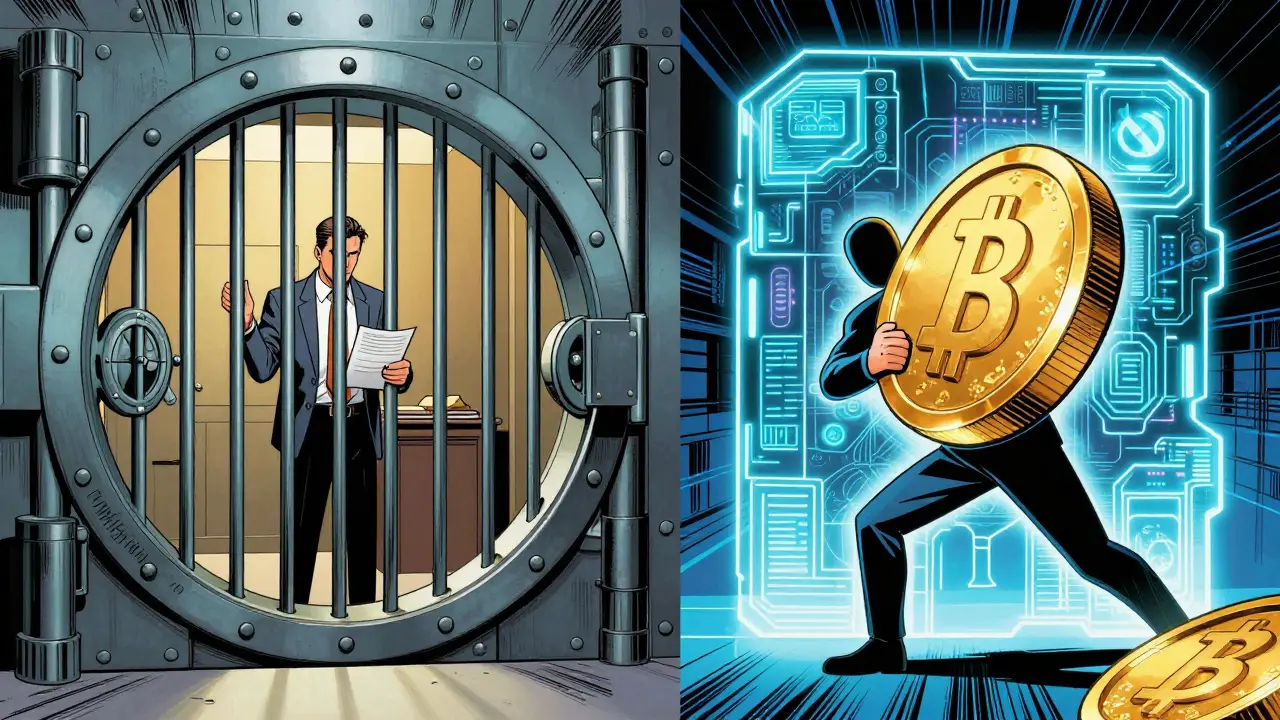
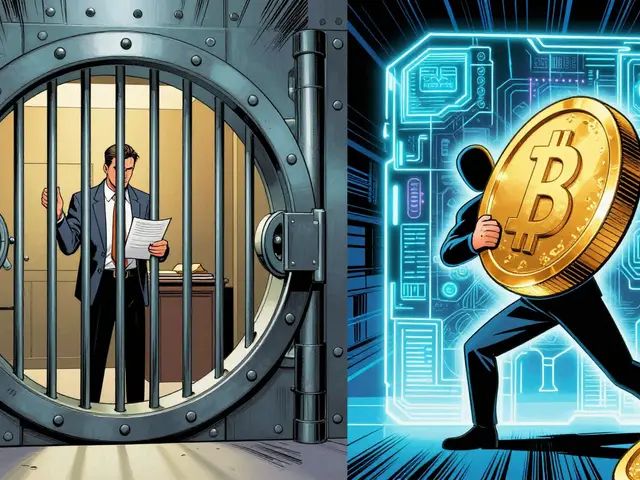
Imagine walking into a bank, asking for $10 million with zero collateral, using that money to make a quick trade, and paying the bank back-all within a single second. In the traditional world, that's impossible. In the world of decentralized finance, it's a Tuesday. This is the magic of Flash Loans is a financial primitive in DeFi that allows users to borrow any amount of assets without providing collateral, provided the funds are returned in the same blockchain transaction.
The catch? If you can't pay the loan back by the time the transaction ends, the entire process simply vanishes. It's like a "Ctrl+Z" for finance. Because of this, the lender takes zero risk, and the borrower gets access to massive liquidity that would otherwise be locked behind credit checks or mountains of collateral. If you've ever wondered how some traders make thousands in profit from tiny price differences across exchanges, this is often the secret sauce.
The "All-or-Nothing" Mechanic
To understand how this works, you have to understand transaction atomicity. In a standard blockchain environment, a transaction is a bundle of instructions. Atomicity ensures that either every single instruction in that bundle succeeds, or the whole thing fails. There is no middle ground.
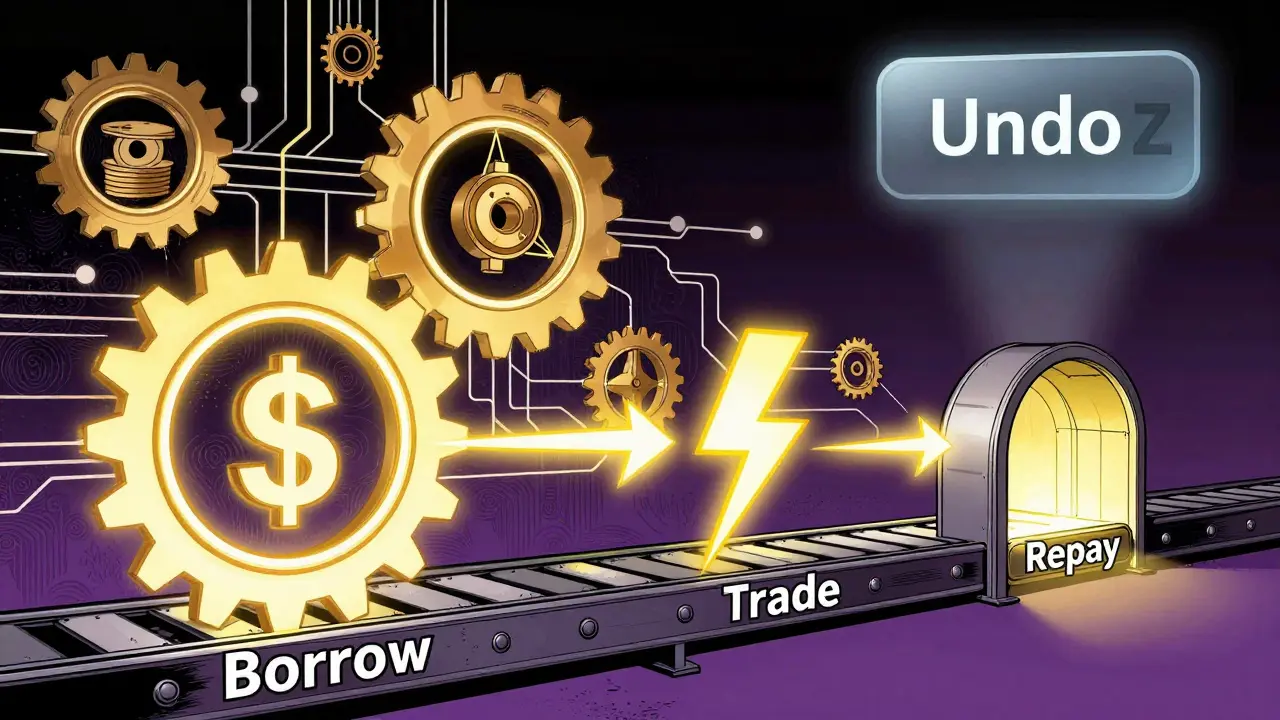
When you trigger a flash loan via a Smart Contract, the blockchain executes a sequence: borrow funds $\rightarrow$ execute trade $\rightarrow$ repay loan + fee. If the final step (repayment) fails because you didn't make enough profit or the trade didn't go your way, the network reverts the state. It's as if the loan never happened. This unique property is why these loans are uncollateralized; the code itself acts as the guarantee.
How Flash Loans are Actually Used
You can't just borrow a flash loan to pay your rent or buy a car because the money must be returned instantly. Instead, these loans are used for high-speed, programmatic strategies. Here are the most common ways they're deployed:
- Arbitrage: This is the most popular use case. If Ethereum is trading at $2,500 on one exchange and $2,510 on another, a bot can borrow 1,000 ETH, sell it on the expensive exchange, buy it back on the cheaper one, and pocket the difference.
- Collateral Swapping: Suppose you have a loan on MakerDAO backed by ETH, but you think the price of ETH is about to drop. You can use a flash loan to pay off your existing debt, withdraw your ETH, swap it for a more stable asset like USDC, and then open a new loan-all in one go.
- Self-Liquidation: If your position in a lending protocol is nearing the liquidation threshold, you can use a flash loan to top up your collateral or pay down your debt to avoid being liquidated by the protocol.
Top Protocols Powering the Market
Not every DeFi platform offers this feature. It requires deep liquidity pools and robust contract architecture. The landscape is dominated by a few heavy hitters.
| Protocol | Key Feature | Typical Fee | Market Position |
|---|---|---|---|
| Aave | Industry standard, high liquidity | 0.09% | Market Leader |
| Balancer | Utilizes pool liquidity | Variable | High Efficiency |
| Uniswap V2 | "Flash Swaps" mechanism | Low/None | Trade-focused |
The Technical Hurdle: Who Can Actually Use This?
If you're looking for a "Borrow" button on a website, you won't find one for flash loans. These are tools for developers. To use them, you need to write a custom smart contract in Solidity that tells the lending protocol exactly what to do with the money. You must have a solid grasp of the Ethereum Virtual Machine (EVM) and how gas fees work.
One major pitfall for beginners is gas costs. Even if your flash loan transaction fails and reverts, you still have to pay the gas fee to the miners/validators. If you attempt a complex multi-step arbitrage and it fails, you could lose a significant amount of money in gas without ever having successfully borrowed a dime.

The Dark Side: Flash Loan Attacks
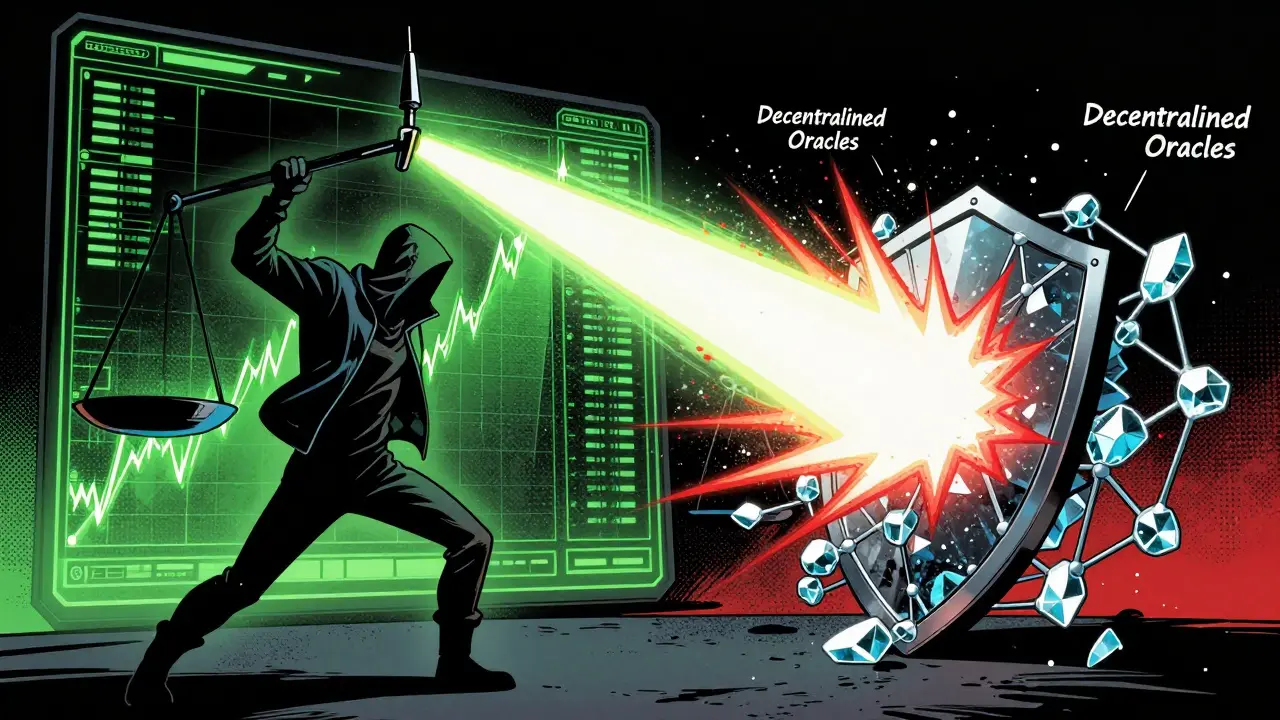
While they are a boon for liquidity, flash loans have a dangerous side. Because they allow anyone to access millions of dollars instantly, malicious actors use them to manipulate markets. In a typical flash loan attack, a hacker borrows a massive amount of a specific token to artificially inflate the price of an asset on one exchange. They then use that inflated value to borrow other assets from a different protocol that relies on the manipulated price feed, effectively draining the protocol's funds.
To counter this, many protocols have moved toward using decentralized price oracles like Chainlink, which aggregate prices from multiple sources to prevent a single flash-loan-funded trade from tricking the system.
Future Outlook and Composability
Flash loans are a prime example of "money legos"-the idea that DeFi protocols can be stacked and combined to create entirely new financial products. We are seeing a move toward cross-chain flash loans, which would allow a user to borrow on one blockchain and execute a trade on another, potentially unlocking even more arbitrage opportunities.
While they might never be a "mainstream" product for the average person, they are foundational for the efficiency of the crypto market. By democratizing access to capital, they ensure that price discrepancies are closed almost instantly, making the overall ecosystem more stable and efficient.
Do I need to provide any collateral for a flash loan?
No. The defining characteristic of a flash loan is that it is uncollateralized. The guarantee is the smart contract's atomicity: if the loan isn't paid back in the same transaction, the transaction is reversed.
Can a regular person use flash loans without coding?
Generally, no. Flash loans require the creation of a smart contract to handle the funds and the repayment. However, some DeFi dashboards and specialized bots are starting to offer simplified interfaces that wrap this complexity, but they are still primarily for advanced users.
What happens if the trade I make with the loan loses money?
If the trade doesn't generate enough profit to cover the original loan plus the fee, the transaction will fail. The blockchain will revert the state, meaning the funds are returned to the lender and you never officially "borrowed" them. You will, however, lose the gas fees spent on the failed transaction.
How much does a flash loan cost?
Costs vary by protocol. For example, Aave typically charges a fee of around 0.09% of the borrowed amount. You must ensure your strategy nets a higher profit than this fee plus the network gas costs to be viable.
Are flash loans legal?
Flash loans are programmatic interactions with smart contracts on a public blockchain. While regulatory frameworks for DeFi are still evolving, there is currently no specific law banning the use of flash loans for arbitrage or portfolio management.
Kieran Smith
April 10 2026man this is crazy stuff. imagine just grabbing milions for a sec and then it just vanishs if it doesnt work out. luv how simple this explains atomicity lol
Heather Warren
April 12 2026The part about collateral swapping is very useful for anyone trying to manage their risk during a market dip. It is a great way to keep your position safe without having to manually move assets across different wallets while the price is crashing.
william manes
April 13 2026US tech is the only reason this works 🇺🇸 🚀 Stop trying to make it global!! 🤡
Jonathan Chamma
April 14 2026It is like a financial magic trick that happens in the blink of an eye. The way these protocols weave together is just a beautiful dance of code and capital.
Jason Davis
April 15 2026Gas fees are the real kiler here. i've seen guys lose hundreds in gas on a revert cuz they didn't optimize their solidity code properly. always test on a testnet first folks!!
Swati Sharma
April 16 2026The MEV (Maximal Extractable Value) landscape is where this really gets intense. When you combine flash loans with sandwich attacks, you're dealing with highly optimized searchers fighting for every single wei in a competitive dark forest environment. Most of these arbitrage opportunities are snatched up by bots before a human could even blink, making the slippage parameters absolutely critical for the end user to avoid getting rekt by a flash-loan funded bot.
Tracie and Matthew Hartley
April 18 2026idk why evryone is so hyped. its just a way for whales to get more whaley while the rest of us lose money on gas. totally overated tech tbh
Prasanna Shembekar
April 19 2026literally a movie plot lol my mind is blown
Emily H
April 19 2026The implementation of decentralized oracles such as Chainlink is an essential safeguard. Without an aggregated price feed, the vulnerability to price manipulation would render the entire DeFi ecosystem unstable and untrustworthy for institutional capital.
Scott Fenton
April 21 2026It is imperative to maintain a rigorous understanding of the smart contract's logic before deployment. A single error in the repayment function can result in the loss of substantial gas fees without the benefit of a successful transaction.
Artavius Edmond
April 23 2026Cool to see the breakdown. I think the cross-chain stuff is going to be the next big wave, making the whole thing even more fluid.
Surender Kumar
April 24 2026really cool stuff man. glad to see a clear guide on this. i think it helps new peple understand why some botts make so much money so fast
Lauren Abrams
April 24 2026Just wondering if there are any tools that don't require coding at all, or if that's still a pipe dream for most of us.
Mikayla Murphy
April 24 2026The conceptual shift from traditional banking to this model is quite profound. It really highlights how the democratization of liquidity can change the way we perceive value and leverage in a global market.