
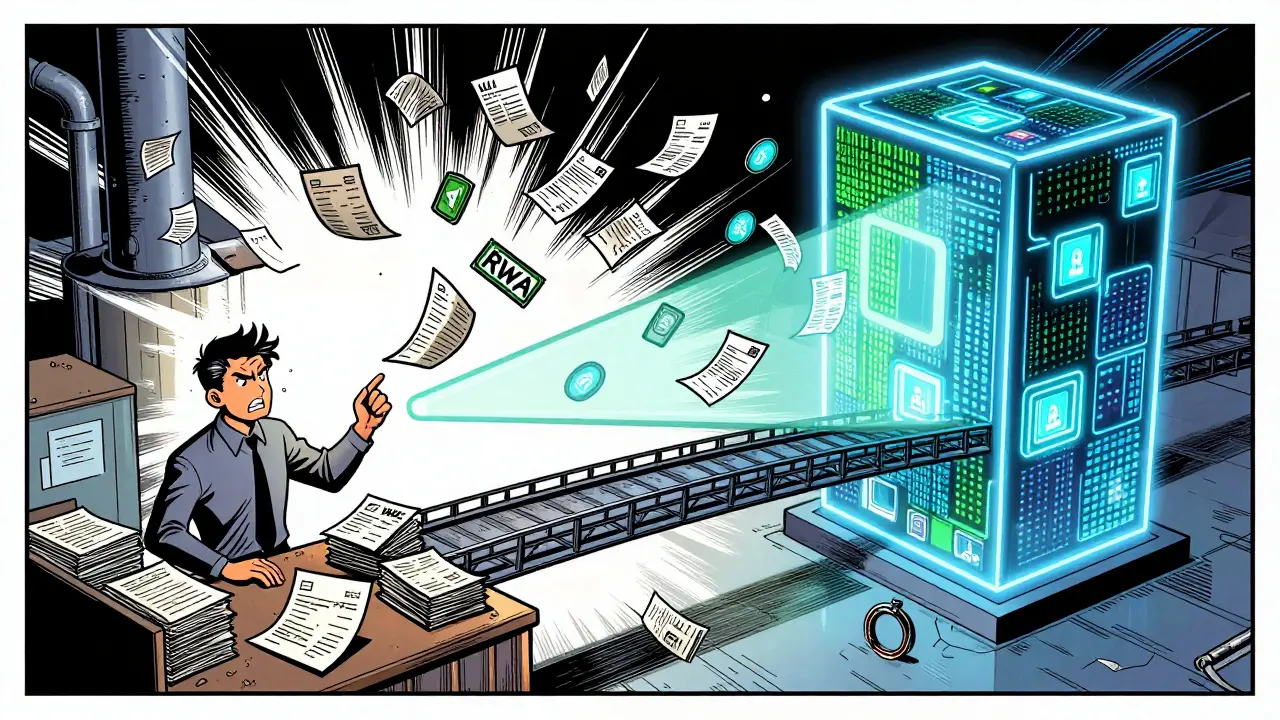
You might have seen the ticker REAL pop up on your exchange app or heard whispers about a project bridging small business loans with crypto. That’s Defactor. But before you buy or stake anything, you need to know exactly what this thing is. It isn’t just another meme coin hoping for a viral moment. It’s a protocol built around one specific job: putting real-world assets-like invoices and bonds from actual companies-onto the blockchain.
If you are looking for quick flips based on hype, this might not be it. But if you are curious about how traditional finance meets decentralized tech, Defactor offers a fascinating case study. Here is everything you need to know about the REAL token, its history, and how it actually works in the wild.
Key Takeaways
- Defactor (REAL) is a utility token powering a platform that tokenizes real-world assets (RWA), specifically SME receivables and bonds.
- The project migrated from its original FACTR token to REAL in 2025, moving exclusively to Coinbase’s Base Layer-2 network.
- REAL uses a deflationary model: part of platform revenue buys back tokens, which are then burned to reduce supply.
- The underlying bond structures use the ERC3643 standard on Polygon to enforce strict regulatory compliance for accredited investors.
- REAL does not grant ownership of the company; it provides access to tools, governance rights, and potential fee discounts.
From FACTR to REAL: The Evolution
To understand where Defactor is today, you have to look at where it started. Back in November 2021, the ecosystem launched under the name FACTR. At that time, the pitch was simple: bridge traditional finance with DeFi. Companies could tokenize their assets, use them as collateral, and get funding from crypto liquidity pools. It sounded good on paper, and the community grew.
Things got interesting in early 2023. In February, Huawei-a massive global telecom giant-shared Defactor on its social channels. You can guess what happened next. The price of FACTR surged by roughly 550% almost overnight. While that spike brought attention, it also highlighted a problem: the token’s value was swinging wildly based on news cycles rather than platform usage.
By 2025, the team decided it was time for a reset. They announced the migration from FACTR to a new token called REAL. This wasn’t just a rebrand. It was a technical overhaul. The goal was to unify liquidity on a single chain and tie the token’s economics directly to the platform’s success through burns and buybacks. If you held FACTR, you swapped it for REAL. If you are new, you only interact with REAL.
How Defactor Actually Works: The RWA Bridge
Let’s cut through the jargon. What does Defactor do? Imagine a small manufacturing company in Europe. They sell goods to a retailer but won’t get paid for 90 days. They need cash now. Traditionally, they’d go to a bank for a loan, which takes weeks and comes with high fees.
Defactor changes this dynamic. The company uploads these unpaid invoices (receivables) to the Defactor platform. These invoices are then bundled into a financial product called an Alpha Bond. Now, instead of waiting for the retailer to pay, the company gets immediate liquidity from crypto investors who buy these bonds.
This process relies on two main components:
- Tokenization: Turning the physical invoice into a digital token on the blockchain.
- Liquidity: Connecting those tokens with investors willing to lend money against them.
The key here is that the asset backing the token is real. It’s not algorithmic yield or empty promises. It’s backed by USDC (a stablecoin pegged to the dollar) and secured by actual business debts. When the retailer finally pays the invoice, the bond matures, and the lenders get their money back plus interest.
Technical Setup: Base vs. Polygon
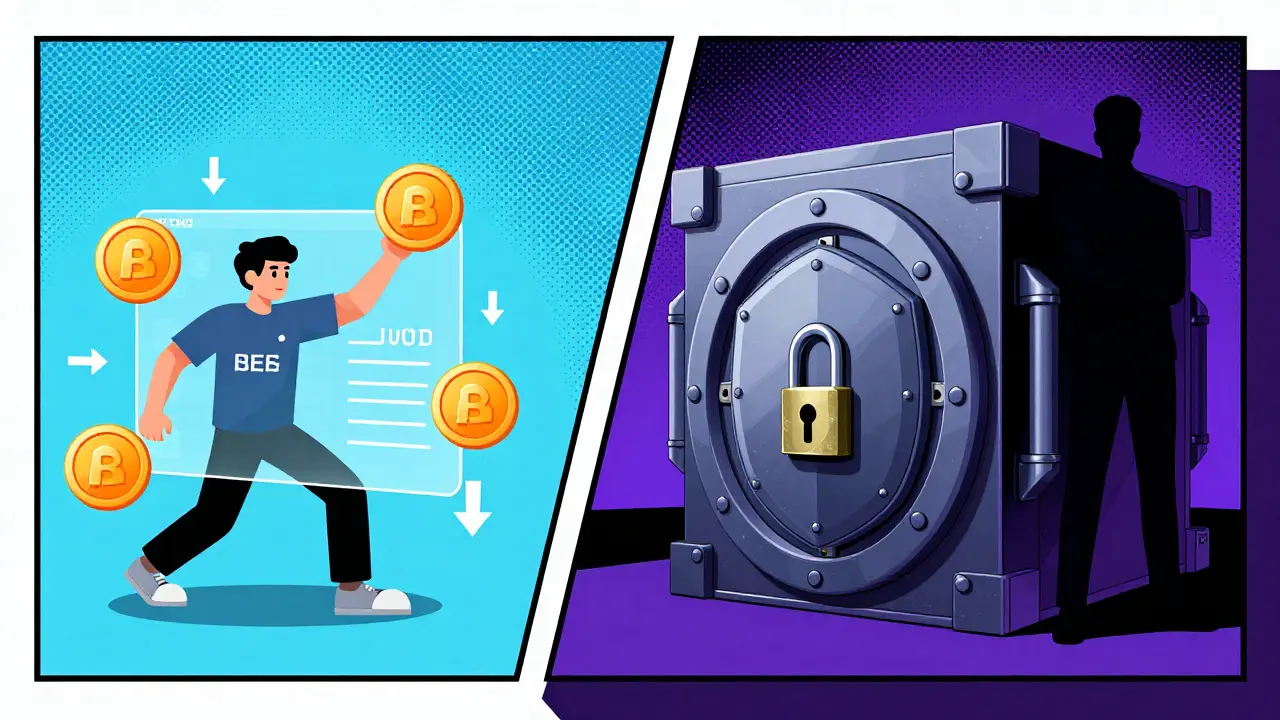
One confusing part of Defactor is that it operates across two different blockchains, each serving a distinct purpose. Understanding this split is crucial for anyone trying to use the platform or trade the token.
| Component | Network | Standard/Type | Purpose |
|---|---|---|---|
| Utility Token (REAL) | Base (Coinbase L2) | ERC-20 | Governance, staking, trading, ecosystem access |
| Alpha Bonds (RWAs) | Polygon | ERC3643 | Issuing compliant securities to accredited investors |
Why separate them? The REAL token needs to be fast, cheap, and accessible to everyone. That’s why it lives on Base, Coinbase’s Ethereum Layer-2 solution. It allows users to swap, stake, and participate in governance without paying high Ethereum gas fees.
The bonds, however, are securities. Securities are heavily regulated. You can’t just let anyone buy them. That’s why Defactor uses Polygon and the ERC3643 standard. ERC3643 is designed specifically for security tokens. It enforces rules at the code level-like checking if an investor is whitelisted or located in a restricted jurisdiction-before allowing a transfer. This ensures that Defactor stays compliant with laws in places like Luxembourg and Asia, where they target accredited investors.
REAL Tokenomics: Deflation by Design
If you are holding REAL, you should care deeply about its supply mechanics. Unlike many tokens that inflate endlessly to reward miners or validators, REAL is designed to become scarcer over time.
Here are the hard numbers as of mid-2026:
- Max Supply: 300,000,000 REAL (fixed cap).
- Circulating Supply: Approximately 188 million to 270 million (varies slightly by data source due to ongoing burns).
- Strategic Reserve: 12 million tokens set aside for buybacks.
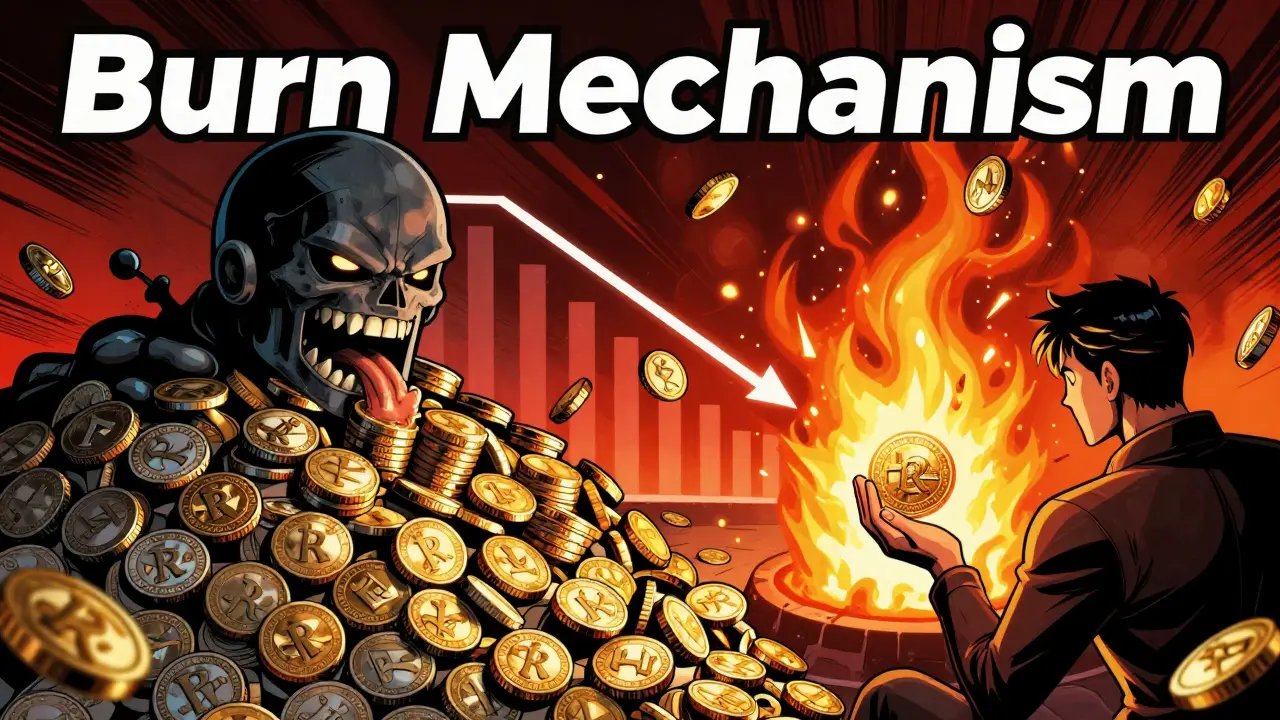
The magic happens in the burn mechanism. Defactor takes a portion of the revenue generated from its lending platform and uses it to buy REAL tokens from the open market. Once bought, half of those tokens are permanently destroyed (burned). The other half goes toward ecosystem growth, such as staking rewards or community incentives.
This creates a feedback loop. If more businesses use Defactor to finance their receivables, the platform makes more revenue. More revenue means more buybacks. More buybacks mean fewer tokens available, which theoretically supports the price if demand remains steady. It’s a classic deflationary play, aiming to align the token’s value with the actual utility of the platform.
Who Is REAL For? Use Cases and Risks
Not every crypto project fits every user. Let’s break down who benefits from REAL and what you stand to lose.
For Investors: You aren’t buying a share of Defactor Labs. REAL is a utility token. Holding it gives you voting power in governance proposals, access to certain toolkit features, and potentially lower fees when using the platform. If you believe the RWA sector will grow and Defactor will capture market share, REAL acts as a leveraged bet on that growth. However, remember that the market cap is relatively small (around $1.4-1.5 million USD). Small caps are volatile. A large sale can drop the price significantly because there isn’t deep liquidity.
For Businesses: If you run an SME with outstanding invoices, Defactor offers a faster alternative to bank factoring. You don’t need to be a blockchain expert. The platform abstracts away the tech. You upload docs, they handle the tokenization and compliance, and you get funded. Holding REAL might give you discounts on these services, but it’s not strictly required to use the core lending features.
The Risks: Regulatory uncertainty is the biggest elephant in the room. While Defactor tries hard to comply with laws using ERC3643, regulations around tokenized securities change constantly. Additionally, credit risk exists. If the small businesses borrowing against their receivables default, the bondholders take a hit. There is limited public data on the default rates of Defactor’s specific Alpha Bonds, so you are trusting their underwriting process.
Where to Trade REAL
Finding REAL can be tricky because of the ticker confusion mentioned earlier. Since MEXC already lists a different token as REAL, Defactor’s token appears as DEFACTOR on some centralized exchanges like Gate.io and MEXC to avoid mix-ups.
However, the primary home for REAL is on-chain. Because it lives on Base, you’ll find the most liquidity on decentralized exchanges (DEXs) native to that network. Aerodrome Finance is currently the most active venue for swapping REAL against WETH or USDC. Uniswap also supports it via bridges. If you are trading on a CEX, double-check the contract address to ensure you are getting the right token. The official contract address on Base is 0x0b0E6E32E4d69cB418630163574959108EdCB80E.
Final Thoughts on Defactor
Defactor represents a mature approach to the "Real World Asset" trend. Instead of chasing vague narratives, it focuses on a boring but profitable niche: helping small businesses manage cash flow. By combining strict compliance standards with modern DeFi efficiency, it aims to bring institutional-grade assets on-chain.
The shift to REAL and the Base network signals a desire for stability and integration with the broader Coinbase ecosystem. Whether it succeeds depends on execution. Can they onboard enough SMEs? Can they keep default rates low? And can they maintain trust in a regulatory environment that is still figuring out how to treat tokenized bonds? Keep an eye on their transparency reports and bond performance metrics. Those will tell you more than any price chart ever could.
Is Defactor (REAL) a security or a utility token?
REAL is classified as a utility token. It grants access to platform features, governance rights, and staking rewards. It does not confer ownership equity in Defactor Labs or direct legal claims on profits. However, the *assets* issued on the platform (Alpha Bonds) are securities, regulated via the ERC3643 standard.
How do I migrate from FACTR to REAL?
The migration occurred in 2025. Most major exchanges handled this automatically for users. If you held FACTR in a personal wallet, you likely needed to use a specific bridge or swap tool provided by Defactor during the migration window. Check the official Defactor documentation for legacy wallet instructions, as the FACTR token is now largely deprecated.
What is the ERC3643 standard?
ERC3643 is a smart contract standard for security tokens. Unlike standard ERC-20 tokens, ERC3643 includes built-in compliance checks. It can verify if a wallet is whitelisted, enforce transfer restrictions, and ensure KYC/AML requirements are met before allowing a transaction. This makes it ideal for regulated financial products like bonds.
Can retail investors buy Defactor Alpha Bonds?
Generally, no. The Alpha Bonds are targeted at accredited investors, particularly in Asian markets, due to regulatory constraints. Retail users can still participate in the ecosystem by holding and staking the REAL token, but they cannot directly purchase the underlying bond securities unless they meet specific accreditation criteria.
Why did Defactor move to the Base network?
Defactor moved REAL to Base to unify liquidity and reduce fragmentation. Base, being Coinbase’s Layer-2, offers low fees, high speed, and easy access for users familiar with Coinbase. This move simplifies the user experience for trading and staking REAL, while keeping the complex, regulated bond issuance on Polygon.
Jessie Smith
July 8 2026look, i get the hype around 'real world assets' but lets not pretend this is some revolutionary paradigm shift. it's just factoring with extra steps and a blockchain tax on top. the whole ERC3643 thing on polygon while the token sits on base is a mess of fragmentation that only benefits the devs who can navigate the bridge fees. most people here are too busy chasing yield to realize they're just providing liquidity for traditional banks to offload risk onto retail wallets. its clever, sure, but don't call it innovation when it's just outsourcing compliance to smart contracts that haven't been audited by anyone you actually trust.
Drew M
July 8 2026Oh wow! 🤯 This is actually super interesting!! I love how they moved to Base because Coinbase integration makes everything so much smoother for us regular folks 😍 The deflationary burn mechanism is genius! 🔥 If more businesses use it, the price goes up naturally! Who doesn't love a good feedback loop? 💸 I'm definitely going to check out Aerodrome Finance later today! 🚀✨
Deep Rahman
July 8 2026when we look at the deeper meaning of tokenizing invoices, we must consider the philosophical implications of value itself, because money is just a shared belief system anyway, and by putting these receivables on the blockchain, we are essentially trying to make the invisible visible, which is a very human desire to control uncertainty, but does it really solve the problem of trust, or does it just move the trust from bankers to code, which is also written by humans who make mistakes, and so we circle back to the beginning where nothing is truly real except the debt itself.
Melissa Beckwith
July 8 2026I have been following the migration from FACTR to REAL closely, and while the narrative suggests a technical overhaul, one must critically examine whether the underlying asset quality has improved or if this is merely a rebranding exercise to shake off the volatility associated with the Huawei incident in 2023, because without transparent default rate data for the Alpha Bonds, any discussion of tokenomics is speculative at best, and the separation of utility tokens on Base and securities on Polygon creates a regulatory arbitrage that could easily be dismantled by stricter enforcement in jurisdictions like Luxembourg, leaving retail holders with illiquid tokens and no recourse.
Josephine Finlayson
July 10 2026It is really quite fascinating how they are bridging the gap between traditional finance and crypto; I think it is wonderful that small businesses can get funding faster! 🌟 However, please remember to do your own research before investing, as regulations can change quickly! 😊 It seems like a thoughtful approach to help SMEs manage cash flow, which is always a good thing for the economy! 🙏
Tuan Nguyen
July 11 2026The entire premise is flawed. You are taking high-risk SME receivables, wrapping them in a layer of bureaucratic smart contract nonsense, and selling them to accredited investors who probably don't understand the counterparty risk involved. The ERC3643 standard is a band-aid on a bullet wound. It doesn't mitigate credit risk, it just makes it harder to sell the toxic asset once the underlying business defaults. This isn't DeFi, it's Securitization 2.0 with worse transparency than the 2008 subprime mortgage crisis. The team is playing fast and loose with 'compliance' while hiding behind jurisdictional loopholes. Don't be fooled by the 'Base network' marketing; the tech stack is irrelevant if the underwriting is garbage.
Hazel Fruitman
July 12 2026i mean its cool that they are trying to help small biz but come on, another token? seriously? the market is flooded with these rwa projects and half of them are scams waiting to happen. why should we trust that the invoices are real? what if the company just fakes the debt? there is no way to verify the physical reality of the transaction without trusting the platform completely, which defeats the whole point of decentralization. its just centralized finance with a crypto skin job. yikes.
Autumn Story
July 14 2026I am so excited about this new direction for Defactor!!! 🌈 It feels like such a positive step towards integrating crypto into the real world economy! I hope everyone stays safe and educated while exploring these opportunities! 💖 The burn mechanism sounds really promising for long-term holders! Let's support each other in this journey! ✨🙌
Mark Tuason
July 16 2026Thank you for this comprehensive overview. It is important to note the distinction between the utility token and the security tokens. For those interested in the technical aspects, the use of ERC3643 on Polygon for the bonds ensures a level of regulatory compliance that is often missing in other RWA projects. Please ensure you verify the contract address on Base before interacting with the token to avoid any potential phishing risks.
Ella Collinson
July 17 2026The structural decoupling of the governance/utility vector (REAL/Base) from the liability-bearing asset class (Alpha Bonds/Polygon/ERC3643) represents a sophisticated attempt to isolate regulatory contagion. By leveraging the ERC3643 standard, the protocol enforces transfer restrictions at the protocol layer, effectively creating a permissioned ledger within a public chain environment. This allows for the programmable enforcement of KYC/AML constraints without relying solely on off-chain legal agreements. However, the reliance on a single L2 for liquidity consolidation introduces centralization risks regarding validator sets and sequencer uptime, which could impact the immediate realizability of the utility token during periods of network congestion.
Ray Arney
July 18 2026Seems pretty solid to me. I like that they are focusing on actual use cases instead of just meme coins. The burn mechanism is a nice touch for holders. Just need to see consistent volume on the DEXes to know if people are actually using it.
Andrew Schneider
July 20 2026HAH! 🤡 You all are falling for it again! Another 'serious' project that is just a pump and dump in disguise! 📉 The 'Huawei' mention is just SEO bait! They want you to think it's legit because a big name tweeted it! 🐦💨 But look at the market cap! $1.5 million?! That is pocket change! 🤑 One whale sells and you are all ruined! It's a trap! A beautiful, shiny trap! 🪤 Don't be sheep! 🐑 Run away! 🏃♂️💨 Or buy the dip if you enjoy losing money! 😜🔥
Eric Braddock
July 21 2026Wake up sheeple! 🐑 This is part of the great reset! They are tracking every invoice, every payment, every cent you earn through these 'tokenized' assets! The ERC3643 standard is a digital leash! 🐕 Once you buy into this, you are giving up your financial privacy to the deep state and their crypto-bro overlords! 🕵️♂️ The 'burn' mechanism is a lie! They are hoarding the tokens to manipulate the supply and crash the dollar further! 💸 Do not let them tokenize your soul! 🚫 Keep your cash offline! 📉👁️
Nick G
July 21 2026I appreciate the detailed breakdown of the different blockchain roles. It is fascinating to see how cultural shifts in finance are being mirrored by technological adaptations. In many Asian markets, where trust in traditional banking can be nuanced, having a transparent, blockchain-backed record of receivables might actually foster greater confidence among smaller enterprises. It is important to approach this with an open mind, recognizing that while the technology is new, the fundamental need for liquidity in small business operations is universal and timeless.
Nick Wengel
July 21 2026This looks like a pretty standard RWA play. Nothing too crazy. I guess moving to Base makes sense for lower fees. I'll keep an eye on it but I am not rushing in. Seems like there are better yields elsewhere right now.
Alicia Hull
July 22 2026You claim this is a 'utility token' but the description clearly states it provides access to fee discounts and governance rights tied to a lending platform. Under the Howey Test, this smells heavily of an unregistered security, especially given the expectation of profits from the efforts of others (the platform's success). The SEC will likely come for this eventually. Are you prepared for that regulatory hammer? 📉⚖️