

Running cryptographic operations at the network edge is no longer a niche experiment. It is the backbone of modern payment verification, subscription management, and secure data handling. When you move these tasks to Cloudflare Workers, a globally distributed serverless compute platform that executes code in over 300 cities worldwide, you gain speed and reliability. But there is a practical question that keeps developers up at night: how does this affect your bill?
The term "crypto billing" can mean two things here. First, it refers to the cost of running cryptographic workloads-like hashing, signing, or encryption-on Cloudflare’s infrastructure. Second, it describes building billing systems for cryptocurrency payments using Workers as the integration layer. The good news is that Cloudflare does not charge extra for the math itself. There are no special fees for SHA-256, RSA, or AES-GCM. You pay for the time your code runs, just like any other script. Understanding exactly how that time is measured is the key to keeping costs predictable.
How Cloudflare Charges for Cryptographic Workloads
To understand the cost, you have to look at the unit Cloudflare uses: GB-seconds. This metric combines memory usage and execution time. If your Worker allocates 1GB of memory and runs for 1 second, that is 1 GB-second. Cryptographic operations are CPU-intensive, which means they take time. A complex signature verification might take 5 milliseconds. A simple hash might take 0.1 milliseconds. Both consume GB-seconds.
For most standard crypto tasks, this cost is negligible. Verifying an HMAC signature for a webhook or checking a JSON Web Token (JWT) usually completes in under 10 milliseconds. On the free plan, which includes 100,000 requests per day and 13,000 GB-seconds, you could handle millions of these lightweight checks without hitting limits. However, if you are doing heavy lifting-like generating large keys or running high-cost password hashing algorithms-you will burn through those seconds quickly.
The paid plans operate similarly but with higher ceilings. The standard paid tier starts at $5 per month, offering 1 million requests and 400,000 GB-seconds. Overages are charged at $0.15 per additional million requests and $12.50 per additional million GB-seconds. Crucially, Cloudflare does not charge for data transfer or bandwidth. This is a massive advantage for billing systems that need to talk to external payment providers frequently. Every API call to a gateway counts toward requests, but the data moving back and forth is free.
Using Web Crypto and Node.js APIs Efficiently
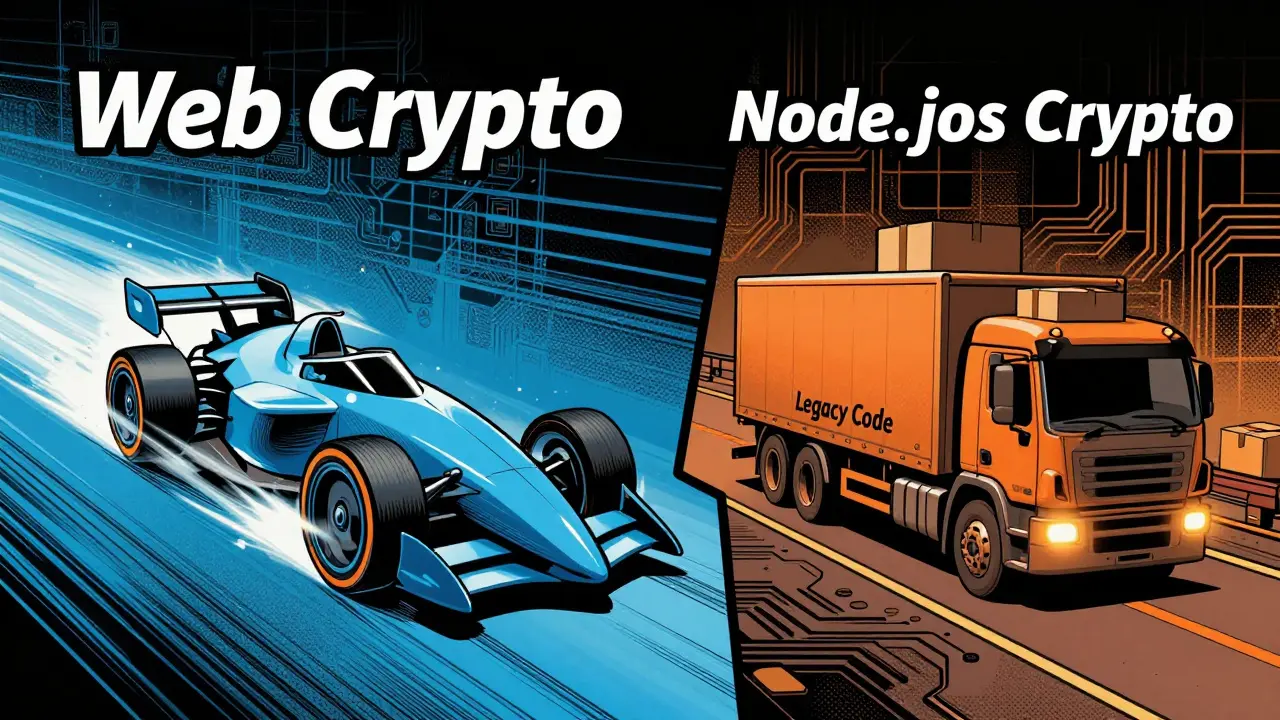
Cloudflare Workers support two main ways to handle cryptography: the Web Crypto API and the Node.js `crypto` module. Choosing the right one affects performance and, indirectly, cost.
The Web Crypto API is a browser-standard interface exposed via crypto.subtle in Workers. It is optimized for performance. Operations like subtle.digest for hashing or subtle.verify for signatures run significantly faster than pure JavaScript implementations. For billing logic, this is your go-to. It supports essential primitives like HMAC-SHA256, RSA, ECDSA, and AES-GCM. Since it runs natively in the V8 engine, it consumes fewer CPU cycles, meaning lower GB-second consumption.
The Node.js crypto module is also available in Workers via node:crypto. This is useful if you are porting existing backend code that relies on Node.js libraries. Most functions work identically, with a few exceptions. For instance, DSA and DH key pairs are not supported, and you cannot manually toggle FIPS mode. While convenient for legacy code migration, it may not be as performant as Web Crypto for tight loops. If your billing system involves thousands of verifications per minute, sticking to Web Crypto will keep your runtime lean.
Architecting Secure Payment Flows
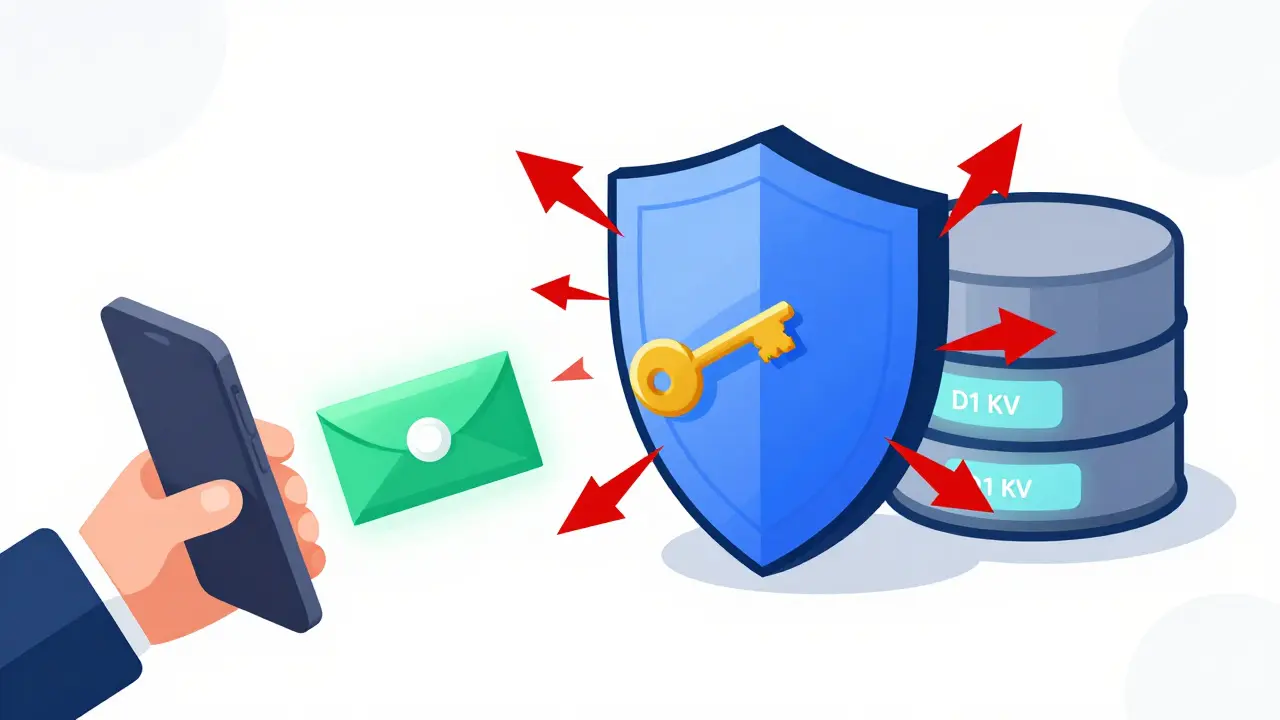
In practice, crypto billing on Workers rarely involves direct blockchain interaction. Instead, Workers act as the secure bridge between payment providers and your application state. The typical flow looks like this:
- A customer initiates a payment on your site.
- You redirect them to a provider like Coinbase Commerce, BitPay, or Lemon Squeezy.
- The provider processes the transaction and sends a webhook to your Cloudflare Worker.
- Your Worker verifies the webhook’s signature using Web Crypto.
- If valid, the Worker updates the user’s status in storage like D1, Cloudflare’s SQLite-based relational database or Workers KV, a globally distributed key-value store.
This architecture is powerful because it keeps your origin server safe from direct exposure. The Worker handles the public-facing HTTP request and the cryptographic validation. Only after successful verification does it touch your database. This reduces latency for global users since the verification happens in the data center closest to them.
Consider a scenario where you use JWTs for access control. After a successful payment, your Worker generates a JWT signed with a private key stored securely. Subsequent requests for paid content hit the Worker again, which verifies the token’s signature before granting access. This entire loop-payment confirmation, token issuance, and access verification-runs at the edge. The cryptographic overhead is minimal, and the user experience is instant.
Cost Optimization Strategies
Even though crypto operations are cheap, volume matters. Here are specific strategies to optimize costs when building billing systems on Workers:
- Use Service Bindings: If you split your logic into multiple Workers-for example, one for receiving webhooks and another for processing billing rules-use Service Bindings to communicate between them. Internal calls between Workers do not incur additional request fees. You only pay for the initial external request and the combined GB-seconds used.
- Avoid Heavy Algorithms: Do not use computationally expensive algorithms like Argon2 or PBKDF2 with high iteration counts directly in a Worker for every request. These can trigger soft CPU limits and increase latency. Pre-compute hashes where possible or offload heavy tasks to external services.
- Leverage Static Assets: Remember that serving static HTML, CSS, and JS files is free and unlimited. Only requests that invoke your Worker script are billed. Ensure your routing rules correctly distinguish between asset delivery and dynamic logic execution. Misconfigured routes can accidentally send all traffic through the Worker, spiking your bill.
- Cache Public Keys: If you are verifying signatures against rotating public keys, fetch and cache these keys in Workers KV. Avoid making external API calls to retrieve keys for every single webhook. This saves both request counts and execution time.
Comparison: Workers vs. Traditional Serverless
| Feature | Cloudflare Workers | AWS Lambda | Google Cloud Functions |
|---|---|---|---|
| Crypto Cost Model | Part of GB-seconds; no separate crypto fee | Part of duration; separate data transfer costs | Part of duration; separate data transfer costs |
| Data Transfer Fees | None for Workers traffic | Charged per GB (varies by region) | Charged per GB (varies by region) |
| Global Edge Presence | 300+ cities worldwide | Limited to AWS regions | Limited to GCP regions |
| CPU Limits | Soft limits; suitable for light crypto | High; supports heavy computation | High; supports heavy computation |
| Best For | HMAC verification, JWT validation, webhook routing | ZK-proof generation, heavy encryption | ZK-proof generation, heavy encryption |
The table highlights why Workers excel for billing flows. Most billing cryptography is about verification, not generation. You are checking signatures, not creating complex proofs. For these tasks, the lack of data transfer fees and the global edge presence make Workers more cost-effective and faster than traditional cloud providers. However, if your application requires generating zero-knowledge proofs or handling massive datasets, you might still need the raw power of AWS Lambda or Google Cloud Functions.
Real-World Implementation Example
Let’s look at a concrete example: verifying a webhook from a SaaS billing platform like Lemon Squeezy. The platform sends an HMAC-SHA256 signature in the header. Your Worker needs to verify this before updating the subscription status.
First, extract the signature from the request headers. Then, use the Web Crypto API to compute the expected HMAC using your shared secret and the request body. Finally, compare the computed signature with the received one. This entire process takes less than 5 milliseconds. In TypeScript, it looks straightforward:
const encoder = new TextEncoder();
const key = await crypto.subtle.importKey(
  'raw',
  encoder.encode(secret),
  { name: 'HMAC', hash: 'SHA-256' },
  false,
  ['verify']
);
const signature = await crypto.subtle.verify(
  'HMAC',
  key,
  encoder.encode(body),
  receivedSignature
);
This code snippet demonstrates the efficiency of the approach. No external dependencies, no heavy libraries. Just native APIs running at the edge. For cryptocurrency gateways, the pattern is identical. Whether it’s Coinbase Commerce or a self-hosted BTCPay Server, the webhook verification logic remains the same. The difference lies only in the event types you listen for and the actions you take upon success.
Future Trends: On-Chain Integration
Cloudflare is exploring deeper integrations with blockchain technology. Recent partnerships, such as the collaboration with Coinbase on the x402 protocol, signal a move toward enabling AI agents and edge workers to perform on-chain actions directly. While this is currently focused on agent interactions, it opens the door for more sophisticated billing models. Imagine a Worker that doesn’t just verify a webhook but directly checks on-chain balances or validates smart contract events. As these capabilities mature, the line between traditional billing and crypto-native billing will blur further.
For now, however, the most robust approach remains the hybrid model. Use established payment gateways for the heavy lifting of transaction processing and settlement. Use Cloudflare Workers for the fast, secure, and cost-effective verification layer. This combination gives you the best of both worlds: the reliability of proven payment processors and the agility of edge computing.
Does Cloudflare charge extra for cryptographic operations?
No, Cloudflare does not impose any special surcharges for cryptographic functions. All crypto operations are part of the standard compute time, measured in GB-seconds. You pay for the duration and memory used by your Worker, regardless of whether it is performing hashing, signing, or encryption.
Which crypto API is better for performance in Workers?
The Web Crypto API (crypto.subtle) is generally faster and more efficient for cryptographic tasks in Workers. It is optimized for the V8 engine and supports common primitives like HMAC-SHA256, RSA, and AES-GCM. The Node.js crypto module is also available but may be slightly less performant for tight loops.
Can I use Cloudflare Workers for Bitcoin payment verification?
Yes, you can use Workers to verify webhooks from Bitcoin payment providers like Coinbase Commerce or BitPay. You would typically verify the HMAC signature of the incoming webhook using Web Crypto. Direct on-chain verification is possible but may require careful optimization due to CPU limits.
How much does it cost to run a crypto billing Worker?
Costs depend on request volume and execution time. Lightweight tasks like HMAC verification cost fractions of a cent per thousand requests. The free plan covers 100,000 requests/day. Paid plans start at $5/month with 1 million requests. Data transfer is free, which helps reduce overall costs for API-heavy applications.
What are the limitations of crypto operations on Workers?
Workers have soft CPU limits. Extremely heavy operations, such as generating large RSA keys or running high-cost password hashing algorithms like Argon2 with many iterations, can exceed these limits and cause errors. For such tasks, consider offloading to external services or using platforms with higher CPU allowances like AWS Lambda.
Is it safe to store private keys in Cloudflare Workers?
You should never store private keys directly in your Worker code. Use environment variables or secure secrets management solutions. Even then, for high-security applications, consider using hardware security modules (HSMs) or dedicated key management services. Workers are excellent for verification using public keys, but sensitive material should be handled with extreme care.
How do Service Bindings help with crypto billing costs?
Service Bindings allow one Worker to call another internally without incurring additional request fees. If you split your billing logic into separate Workers for modularity, using Service Bindings ensures you only pay for the initial external request and the total compute time, avoiding double-charging for internal communication.