
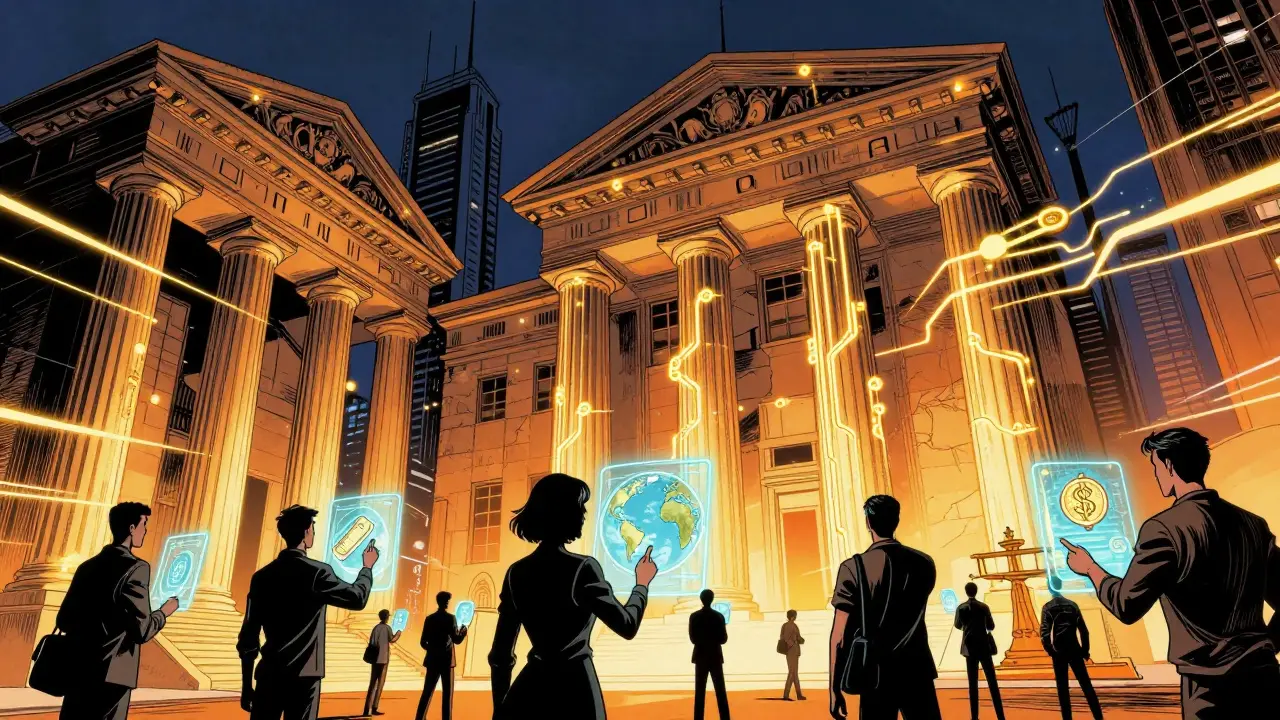
Forget the days when Bitcoin was just a speculative asset for tech enthusiasts. We're seeing a massive shift where Bitcoin is a decentralized digital currency that enables peer-to-peer transactions without the need for a central bank. Originally launched in 2009 by Satoshi Nakamoto, it has evolved from a niche experiment into a legitimate tool for global commerce. In 2025 alone, transaction volumes surged by 45%, proving that more people are actually using it to buy things rather than just holding it for a price jump.
What's Driving the Surge in Adoption?
The biggest draw is simple: speed and freedom. Traditional bank transfers, especially across borders, are a nightmare. They take days and eat your margins with hidden fees. Bitcoin settles in 10 to 60 minutes for on-chain transactions, and with the right tools, it happens almost instantly. For a small business owner, the allure of Bitcoin payments lies in the elimination of the middleman. You don't have to wait for a clearing house to approve your funds; the network handles the verification via a process called Proof-of-Work.
Another huge factor is the death of the chargeback. If you've ever run an e-commerce store, you know the pain of a customer claiming fraud weeks after a product is delivered. Because Bitcoin transactions are irreversible, that risk vanishes. This security makes it an attractive option for high-value sales over $10,000, where traditional credit card fraud is more common.
Solving the Speed Problem with the Lightning Network
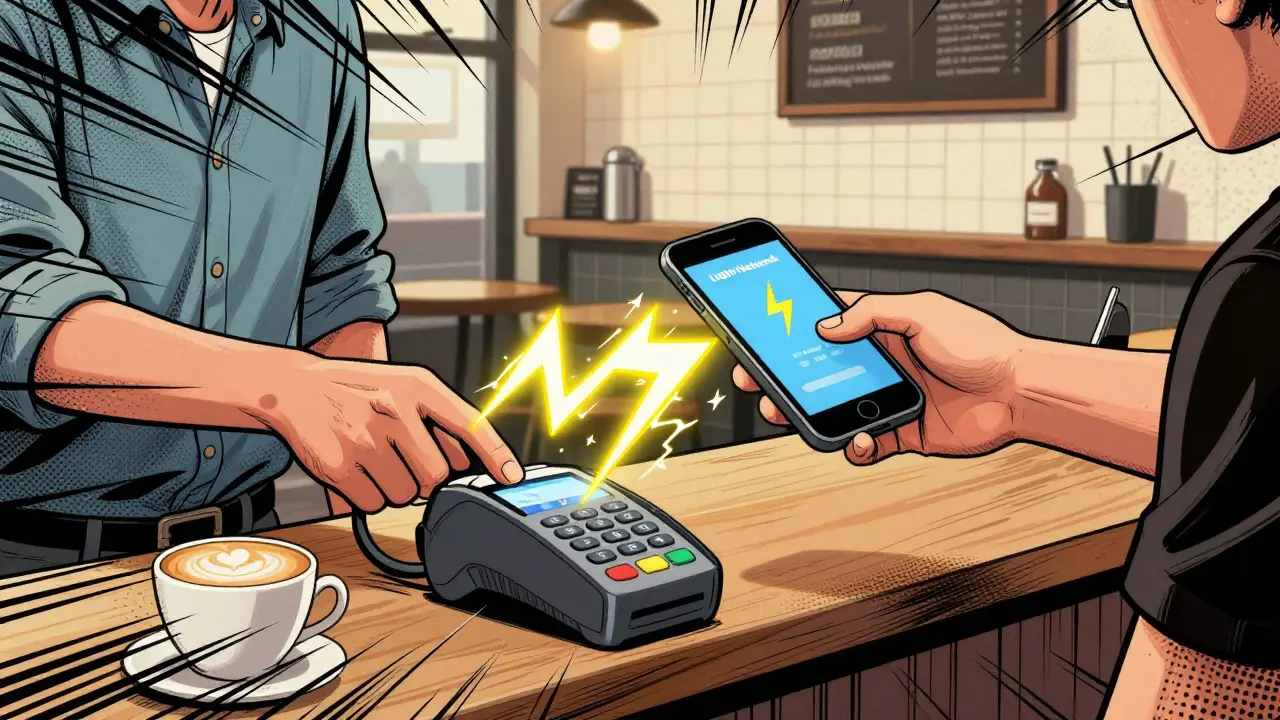
For years, critics argued that Bitcoin was too slow for a coffee shop. While the base layer only handles about 7 transactions per second (TPS), the game changed with the Lightning Network is a second-layer scaling solution that enables near-instant, low-cost payments by handling transactions off-chain.
By August 2025, this network was processing 1.2 million transactions daily. Instead of waiting for a block to be mined, the Lightning Network allows for micropayments with fees as low as $0.0003. This effectively bridges the gap between Bitcoin's security and the speed we expect from a Visa card. If you're paying for a digital subscription or a quick snack, you're likely using this layer without even realizing it.
| Feature | Bitcoin (On-Chain/LN) | Traditional Bank Transfer |
|---|---|---|
| Settlement Time | Seconds (LN) to 60 Mins (On-chain) | 2-5 Business Days |
| Cross-Border Cost | ~3.5% | ~6.3% |
| Transaction Reversibility | Irreversible | Reversible (Chargebacks) |
| Uptime | 99.98% | Dependent on Bank Hours |
How Businesses are Integrating Crypto
Integrating Bitcoin isn't the technical hurdle it used to be. A few years ago, you needed a developer to set up a wallet; now, you can do it in under two hours. Tools like Coinbase Commerce is a payment gateway that allows merchants to accept cryptocurrency payments and convert them to fiat instantly.
Most merchants tackle the volatility problem-the fear that the price will drop 10% by the time they pay their suppliers-by using instant conversion. About 83% of businesses use processors like BitPay to swap Bitcoin for local currency the moment the transaction hits. This lets them offer the convenience of crypto to customers without taking on the financial risk of the market's mood swings.
We're also seeing a trend in corporate treasuries. It's not just about accepting payments; it's about holding the asset. According to the River Business Report 2025, businesses now hold over 1.3 million BTC. This shift treats Bitcoin as a strategic reserve, similar to how companies hold gold or cash, but with the added benefit of being a functional payment rail.
The Impact on Global Remittances
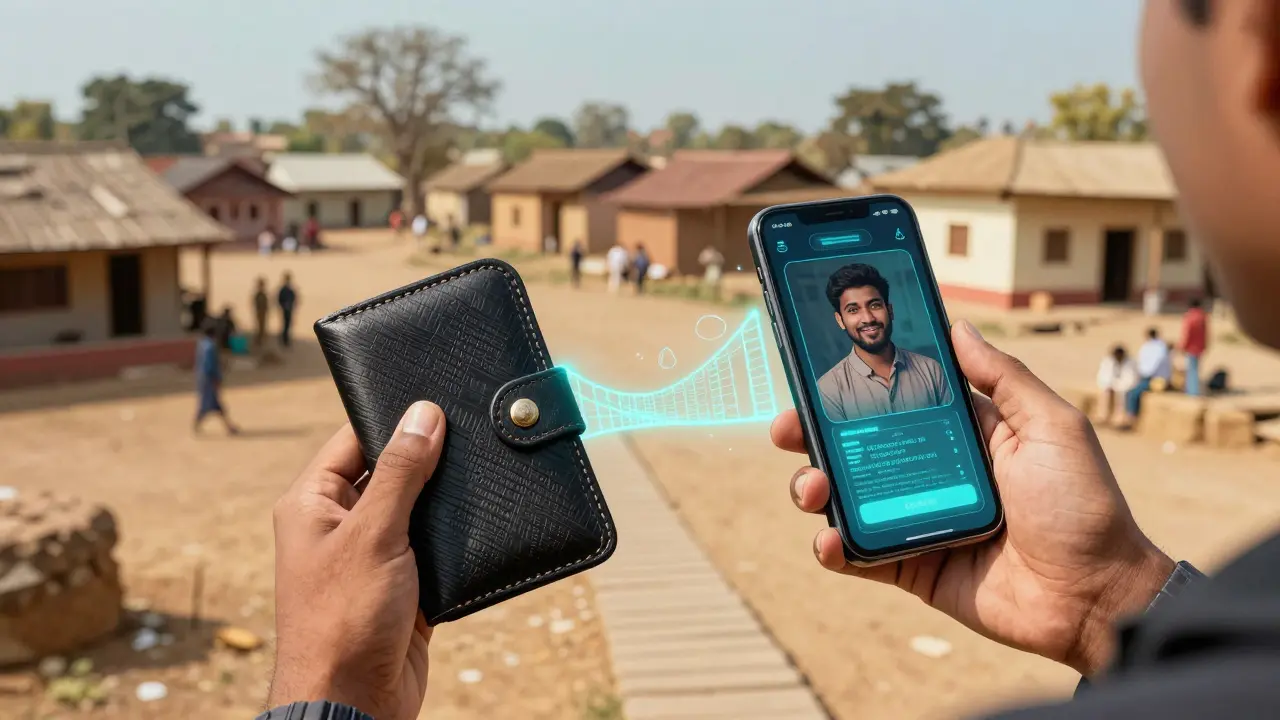
In many parts of the world, Bitcoin isn't just a choice-it's a lifeline. In regions like South Asia and North Africa, traditional remittance services are overpriced and slow. For a worker sending money home to family in Venezuela or the Philippines, the difference is stark. Some users report that sending Bitcoin is 82% cheaper than using Western Union. This real-world utility is why adoption is skyrocketing in emerging markets, often faster than in the West.
The decentralization of the network also provides a safety net against censorship. Unlike a bank account that can be frozen by a government, a Hardware Wallet is a physical device that secures cryptocurrency private keys offline to prevent hacking and unauthorized access. By controlling their own keys, users ensure that their funds are always accessible, regardless of local political instability.
Current Challenges and the Road Ahead
It's not all smooth sailing. Volatility is still the biggest elephant in the room. Even though the 30-day price swings have dropped from 65% in 2021 to around 18.7% in 2025, it's still a rollercoaster for some. There's also the headache of tax reporting. In many countries, every time you buy a coffee with Bitcoin, it's technically a "taxable event" because you're selling an asset. This complexity keeps some people on the sidelines.
Looking forward, the roadmap is promising. The proposed MAST upgrade in 2026 aims to reduce transaction sizes by 35%, which will make the network even more efficient. As more countries establish clear guidelines-like the US's 2024 accounting updates-the "fear factor" for corporate boards is disappearing.
Is Bitcoin actually fast enough for retail shopping?
Yes, if the merchant uses the Lightning Network. While a standard Bitcoin transaction takes about 10-60 minutes, the Lightning Network handles payments almost instantly, making it perfectly suitable for coffee shops, vending machines, and online checkouts.
How do merchants handle the price volatility of Bitcoin?
Most businesses use payment processors like BitPay or Coinbase Commerce. These services automatically convert the received Bitcoin into a stable currency (like USD or EUR) the moment the transaction is completed, ensuring the merchant receives the exact fiat amount they expected.
Are Bitcoin payments safer than credit cards?
In terms of fraud prevention for the seller, yes, because they are irreversible and eliminate chargebacks. For the buyer, safety depends on the wallet used; hardware wallets provide the highest security by keeping private keys offline.
Why is Bitcoin popular for sending money abroad?
It removes intermediaries like banks and wire services. This reduces the cost of cross-border remittances from an average of 6.3% (via traditional services) to around 3.5% or even less, while settling the funds in hours rather than days.
What are the main barriers to using Bitcoin for daily payments?
The two biggest hurdles are the complexity of tax reporting (as each payment can be seen as a capital gain) and the inherent price volatility, though the latter is being solved by instant-conversion tools.
Next Steps for Getting Started
If you're a consumer, start by downloading a reputable mobile wallet and experimenting with a small amount of BTC. Try using a Lightning-enabled wallet to see how fast micropayments actually are. If you're a business owner, don't try to build your own infrastructure from scratch. Use a payment gateway that handles the conversion to your local currency so you can accept crypto without worrying about the market dip tomorrow morning.
Robert Smith
April 29 2026Lightning Network is a game changer ⚡️
Emily A
May 1 2026The assertion that Bitcoin is a legitimate tool for global commerce remains overly optimistic given the current regulatory landscape. While the Lightning Network technically addresses scalability, it introduces a layer of complexity that the average consumer finds prohibitive. Furthermore, the volatility mentioned is not merely a "rollercoaster" but a systemic flaw that precludes Bitcoin from functioning as a stable unit of account. One must also consider that the lack of consumer protection in irreversible transactions is a feature for merchants, yet a catastrophic bug for buyers. The tax implications in the United States are not just a "headache," but a substantial legal burden for anyone attempting to use this for daily commerce. We are far from a world where a digital asset can replace the stability of a centrally managed fiat system without significant sacrifice in usability.
Jimmy vasquez
May 2 2026Actually, if you're looking to get started, I highly recommend looking into the Breez or Wallet of Satoshi apps for Lightning. They make the experience feel just like using a regular payment app without needing to manage your own channels!
Janis Naglis
May 3 2026OMG!!! I totally agree that the peer-to-peer aspect is just so empowering!!! The scalability via L2 solutions is exactly the kind of innovation we need to reach true financial inclusivity!!! Let's just stay positive and keep pushing for more adoption!!! 🚀✨
Andrew Todd
May 5 2026Only losers use banks anyway. US coins are the only thing that matters. Get with the program or stay poor.
Carli Bates
May 7 2026imagine thinking a 18 percent swing is a low rollercoaster lol. the logic here is just a dream honestly
VIVEK SINGH
May 7 2026Ah, the naive belief that "irreversibility" is a security feature. How charmingly quaint. In reality, you've just traded a bank's bureaucracy for the absolute void of having zero recourse when you get scammed by a "trusted" vendor. But please, continue believing that a decentralized ledger is the pinnacle of human financial evolution while you ignore the basic necessity of dispute resolution.
Sri Astuti
May 8 2026The analysis of remittances is quite shallow because it fails to account for the local off-ramp fees in countries like India where the government is constantly changing the rules on crypto-to-fiat conversions, making the 82% saving almost a myth once you actually try to pay your rent with it 🙄 and the long-winded nature of the blockchain confirmation process still plagues the on-chain experience for those who cannot afford high fees during peak congestion!
Elle Kharitou
May 10 2026It is truly fascinating to see how money is evolving from a tool of state control into a shared language of global trust 🌏. When we look at the remittance data, we aren't just seeing numbers on a screen, but real families in the Global South gaining autonomy over their own labor and wealth 🕊️. The shift toward a decentralized reserve is a philosophical movement toward a more equitable distribution of power where the individual is finally liberated from the whims of central planners 🌟. I believe that as we embrace this digital transition, we are fundamentally rewriting the social contract of value exchange for the better 🌈.
Gabrielle Danis
May 11 2026For those concerned about the tax reporting mentioned, there are now several software tools that automatically sync with your wallet to calculate capital gains in real-time, which significantly mitigates the accounting burden.
Felix Eduardo Velasquez
May 12 2026The transition from a store of value to a medium of exchange is the ultimate test for any currency. We are essentially witnessing a live experiment in monetary theory where the network's utility is being stress-tested by real-world commerce. If the Lightning Network succeeds, it proves that security and speed can coexist without compromising the underlying trustless nature of the system.
Harvey Alford
May 12 2026I bet you're using a hot wallet. Give me your seed phrase.
Ryan Nakielny
May 13 2026Sure, because nothing says "financial freedom" like trusting a payment gateway that converts your coins to USD instantly, basically making it a slow credit card. Love the irony.
Kathleen Warren
May 14 2026I can see why some people feel scared about the tech part. It's okay to start small and just try sending a few cents first to see how it works!
Rachel S
May 15 2026The drama of the volatility is honestly so overblown these days! 💅 Just use a processor and stop worrying about the dip!
Lynne Teperman
May 16 2026wild ride watching this stuff go mainstream. just keep your keys safe and stay in your own lane
Aaron Zeiler
May 17 2026if you're running a shop just use a plugin for shopify or woocommerce it takes like five minutes to set up the api keys
AP Fisher
May 19 2026I wonder if more stores will start taking it if the fees stay low.