
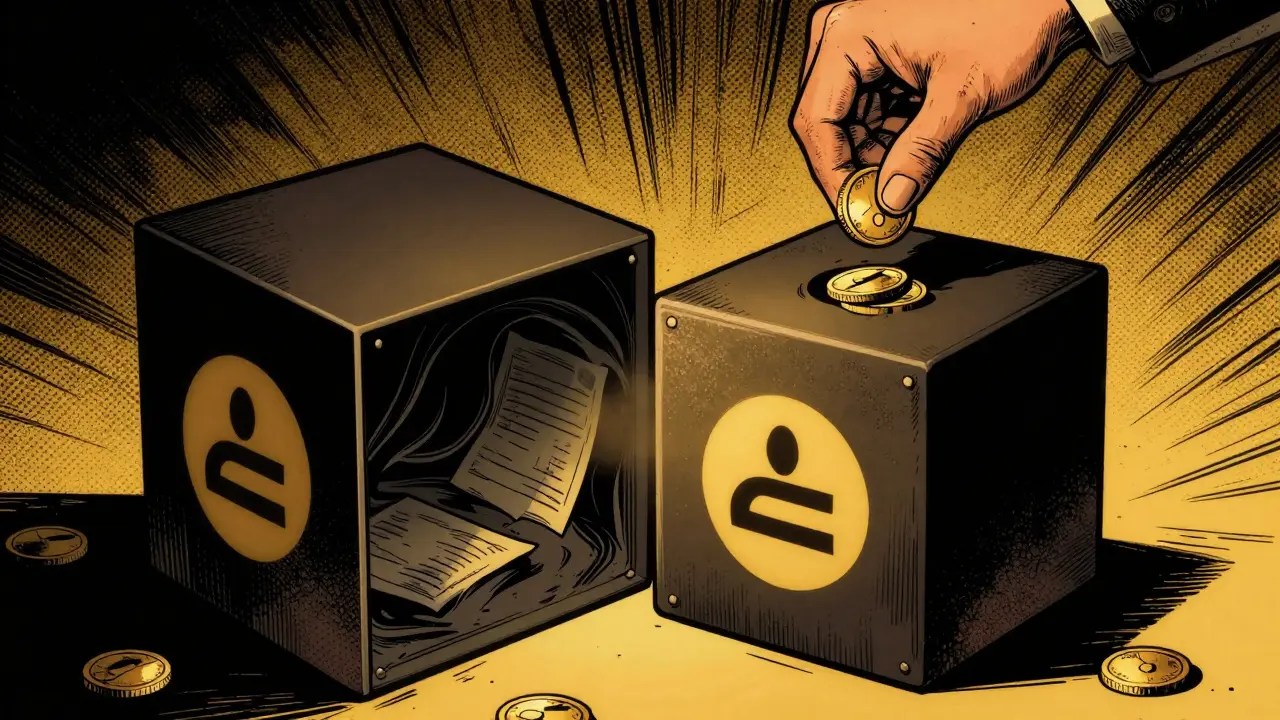
We've all been there: you donate to a cause you care about, the "thank you" email arrives, and then... nothing. You spend the next year wondering if your money actually bought the textbooks, planted the trees, or fed the families it was supposed to. This "black box" of charitable giving is why many people are hesitant to give large sums. But what if you could watch your donation move in real-time, from your wallet to the final purchase? Blockchain charity tracking is a system using distributed ledger technology to create an unbreakable, public record of how donations are spent. By replacing trust in a middleman with mathematical proof, it changes the game for both donors and nonprofits.
The Problem with Traditional Giving
Traditional charities usually rely on annual reports. These are often glossy brochures with a few heart-wrenching photos and a vague statement saying "80% of funds went to programs." The problem is that by the time you read that report, the money is long gone. There is no way for a regular person to verify that the funds weren't eaten up by administrative bloat or, in worst-case scenarios, mismanagement.
This lack of visibility creates a trust gap. When donors can't see the impact, they stop giving. Nonprofits, meanwhile, spend countless hours manually auditing spreadsheets to prove they are doing the right thing. It's an inefficient system that relies on "trust me" rather than "here is the proof."
How Blockchain Fixes the Trust Gap
Blockchain transforms a donation from a one-way street into a transparent pipeline. Instead of sending money into a dark void, you are interacting with a public ledger. Because these records are immutable-meaning they can't be deleted or edited by the charity-every cent is accounted for.
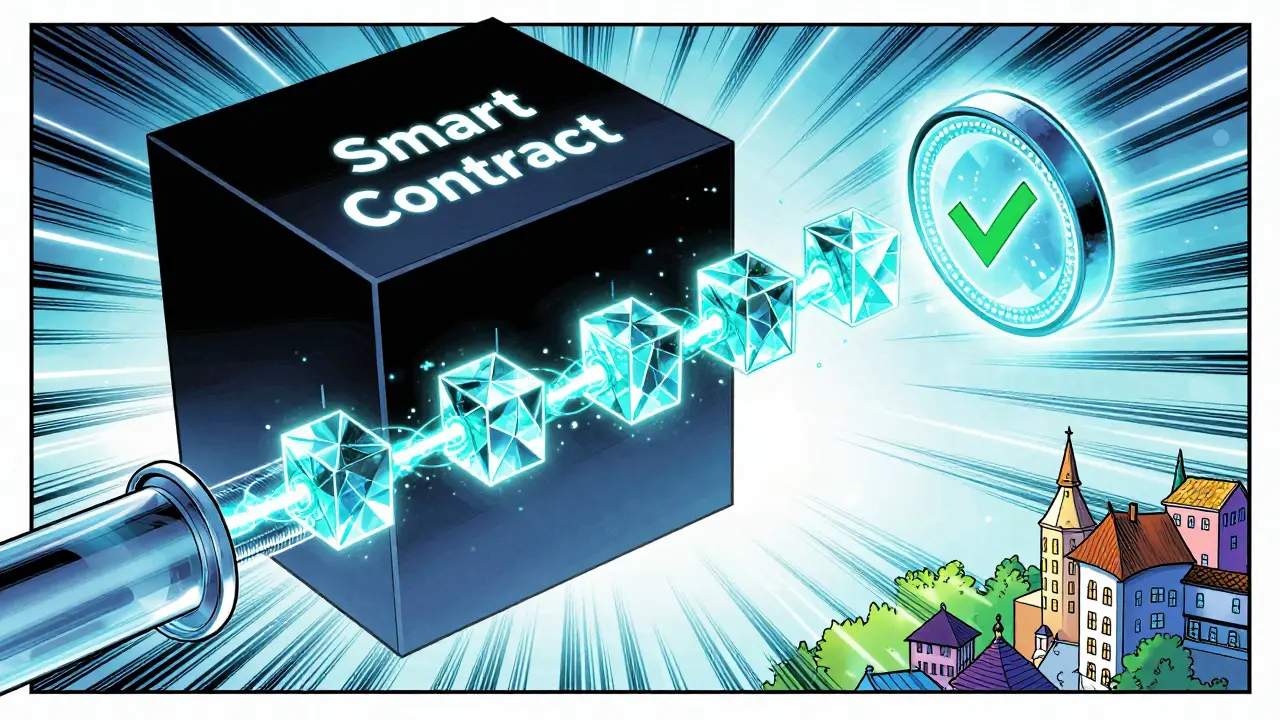
One of the most powerful tools here is the Smart Contract, which is a self-executing contract with the terms of the agreement directly written into lines of code. Imagine a charity that only releases funds to a supplier once a third-party inspector verifies that the goods have arrived at a refugee camp. The money doesn't move until the condition is met. No more wondering if the funds were diverted; the code simply won't allow it.
Real-World Implementation: From Luxury Goods to Life-Saving Aid
This isn't just theoretical. Take the LUXARITY case study. They integrated their business with ConsenSys to track donations from the sale of pre-owned luxury goods. When a customer buys an item, they receive a unique PIN. This PIN allows them to select a specific cause and track their exact contribution percentage. It's a complete shift from "I hope this helps" to "I can see exactly where my 5% went."
Another example is the BECP (Blockchain Enabled Charity Process Framework). This framework doesn't just track money; it registers every participant-the donor, the NPO, and the supplier. It creates a digital paper trail where documents must match the financial transactions. If a charity claims they bought 1,000 vaccines but the blockchain only shows payment for 500, the discrepancy is immediately visible to anyone with a Blockchain Explorer (a tool used to search and analyze transactions on a blockchain).
| Feature | Traditional Systems | Blockchain Systems |
|---|---|---|
| Reporting Speed | Delayed (Annual/Quarterly) | Real-time |
| Verification | Self-reported by NPO | Publicly verifiable on-chain |
| Fund Control | Full control by charity | Conditional (via Smart Contracts) |
| Audit Process | Manual, expensive, slow | Automated, instant, free |
| Transparency | Opaque / "Black Box" | Complete / "Glass Box" |
The Technical Side: What You Actually Need
If you're a donor wanting to get started, you don't need to be a computer scientist, but you do need a few basic tools. Most of these platforms require a Digital Wallet, like MetaMask, which acts as your gateway to the blockchain. This is where you hold your tokens and sign the transactions that send your funds.
For the organizations, the setup is a bit more complex. They need to build or integrate a decentralized application (dApp). For instance, some use Shopify for the front-end storefront and then pipe that data into a blockchain backend. The goal is to make the "crypto part" invisible to the average user while keeping the transparency of the ledger intact.
Potential Pitfalls and Hurdles
It's not all sunshine and rainbows. There are real challenges to this approach. First, there's the learning curve. Asking a 70-year-old philanthropist to manage a seed phrase and a digital wallet is a tall order. Until the user experience (UX) becomes as simple as using a credit card, adoption will be slower.
Then there's the issue of the "last mile." Blockchain can track money from you to a local NGO in a remote village, but it can't easily track whether that NGO actually handed out the food or if the food was stolen from a truck. This is where blockchain must be paired with real-world verification, like photos, GPS coordinates, or IoT sensors, to be truly effective.
The Future of Philanthropy
We are moving toward a world where "trust" is no longer a requirement for giving. Platforms like Firefly Giving are already pushing the envelope by offering zero transaction fees and screening tools based on hard financial metrics rather than emotional pleas.
In the next few years, expect to see more AI-powered impact tools. Imagine an AI that analyzes blockchain data and automatically generates a personalized report for you, saying: "Your $50 donation provided 12 meals in Nairobi, and the delivery was confirmed by the local hub at 2 PM on Tuesday." This level of granularity transforms the act of giving from a leap of faith into a strategic investment in social good.
Is my donation actually safer on a blockchain?
In terms of transparency, yes. Because the record is immutable, the charity cannot hide how the money was spent. However, safety also depends on the platform's security and your own ability to secure your digital wallet. If you lose your private keys, you lose access to your funds.
Do I need to own cryptocurrency to use these platforms?
Not necessarily. Many modern platforms allow you to donate in traditional currency (USD, EUR) and then convert it to tokens on the backend to facilitate tracking. The blockchain acts as the ledger, not necessarily the only payment method.
Can the charity change the records if they make a mistake?
No, that's the core feature of blockchain. Once a transaction is confirmed, it cannot be altered. If a mistake happens, a new transaction must be created to correct it, leaving a permanent record of both the error and the fix. This prevents "creative accounting."
What are the tax implications of blockchain giving?
Many blockchain platforms now generate detailed transaction histories that satisfy IRS and other tax authority requirements. Because every transaction is timestamped and recorded, it's actually easier to provide proof for charitable deductions than with some traditional systems.
How does a smart contract actually "trigger" a payment?
A smart contract is basically an "If/Then" statement. For example: "IF the shipping company confirms delivery of 100 tents via an API call, THEN release 50% of the funds to the supplier." This removes the need for a human to manually authorize a payment after checking a physical invoice.
Next Steps for Donors and Nonprofits
If you are a donor, start by looking for platforms that provide a blockchain explorer link or a public transaction ID. Don't just trust a dashboard; click the link and see the transaction on the ledger yourself. This will help you get comfortable with how the technology works.
If you are running a nonprofit, the first step isn't necessarily building your own chain. Look into existing frameworks like BECP or partnerships with companies like ConsenSys. Start by tracking one specific project-like a single water well or a small school renovation-to prove the concept before moving your entire financial operation to a decentralized model.
Jason Davis
April 11 2026Smart contrcts r really the way forward here. I've worked wit a few dapps and the hardest part is always the oracles providing the real world data to the chain. If the data input is wrong the whole thing fails regardless of the blockchan tech. Most peopel dont realize the 'garbage in garbage out' problem here.
Kieran Smith
April 13 2026this is so cool!! i always wondered if there was a way to actualy see where my money goes instead of just trusting a pdf report. thnx for sharing this info
Amanda Faust
April 14 2026obvious flaw here is the oracle problem. blockchain only tracks the movement of tokens not the physical delivery of goods which means you still need a trusted third party to verify the last mile and that defeats the entire purpose of decentralization
Swati Sharma
April 14 2026The integration of a decentralized identifier (DID) for suppliers would actually mitigate the oracle problem mentioned above by creating a sybil-resistant reputation layer. By leveraging a Layer 2 solution for the transaction throughput, we can ensure the scalability of the BECP framework without incurring prohibitive gas fees for small-scale donors.
Tyler Webb
April 15 2026It's really heartwarming to think about how this could empower people in underserved communities. Giving is such a personal thing and having that transparency probably makes the experience more meaningful for everyone involved. :)
william manes
April 16 2026Useless! 🙄 Only works if the US controls the tech. 🇺🇸
Kelly Cantrell
April 17 2026Convenient how this promotes a "public ledger." Who is actually running these nodes? It's just another way for the globalists to track every cent we move under the guise of "charity." They want us on a digital ID system so they can flip a switch and freeze your funds if you stop complying with their narrative. I'll stick to cash and local hand-deliveries, thanks.
Artavius Edmond
April 18 2026I can see both sides here. It's a bit scary to think about total surveillance, but the idea of finally stopping corruption in aid is too good to pass up. Maybe there's a middle ground where we use privacy-preserving proofs to show the money was spent without exposing everyone's private wallet addresses.
Adam Auksel
April 19 2026Love the energy here! 🚀 It's all about moving toward a more accountable world. For anyone struggling with the tech, just remember that we're all learning together. The UX will eventually get there, and when it does, the impact on global poverty could be massive! 🌍✨
ssjuul z
April 21 2026Let's get this implemented everywhere!! The efficiency gains alone are insane. Imagine the amount of waste we could cut out of the system if we just used basic automation for fund release. It's a win-win for the donors and the actual people in need! ^_^
Rima Dinar
April 22 2026As someone who has spent a lot of time mentoring new donors, I truly believe that the psychological barrier to giving is often not the amount of money but the fear of insignificance or waste, and by providing this level of granular detail, we are effectively coaching people to become more intentional with their philanthropy, which in turn creates a sustainable cycle of giving that benefits the long-term health of the nonprofit sector as a whole while reducing the administrative burden on the staff who are actually on the ground doing the hard work.
Hope Johnson
April 22 2026The philosophical implication of replacing "trust" with "mathematical proof" is a profound shift in how we perceive human cooperation. For centuries, the social contract of charity was based on a leap of faith, an act of surrender to the hope that the other party acted with integrity, but by shifting this burden to a distributed ledger, we are essentially redefining the nature of altruism from an act of blind trust to an act of verified impact. We must ask ourselves if the removal of trust actually diminishes the spiritual quality of the gift, or if it elevates the gift by ensuring that the intention of the donor is perfectly aligned with the outcome for the recipient, thereby creating a more honest form of connection between strangers across the globe. This transition reflects a broader societal move toward transparency, yet we must be careful not to reduce the human element of giving to a mere transaction on a screen, because the heart of charity is the care, not just the accounting. If we lose the empathy in the pursuit of the audit, we may find ourselves in a world where the ledger is perfect but the soul is absent, which is a trade-off we should contemplate deeply as we integrate these technologies into our most compassionate systems.
Prasanna Shembekar
April 24 2026omg i just cant believe how much money gets wasted in old charities it makes me so sad
Jessie Tayaban
April 26 2026This is literally the most excitng thing i've read all week!! I can't wait until i can just scan a QR code and see my money buying actual food for someone in real time!!! Its just so wild how tech is changing things 💖
Rebecca Violette
April 27 2026i tried to use a digital wallet once and i almost lost everything because the seed phrase thing is so confusing... i feel like these apps just want us to fail so they can take our money lol
Emily H
April 28 2026The points regarding the "last mile" problem are particularly salient. While the financial transparency is commendable, the operational verification remains the primary bottleneck. Integrating Internet of Things (IoT) sensors and biometric verification would likely provide the necessary empirical evidence to close this gap effectively.
Surender Kumar
April 30 2026agree with most points here. blockchain is just a tool but if we use it rite it could really help a lot of peopel in india and beyond. keep it simple for users and it will work out
Agnessa Dale
April 30 2026It is so encouraging to see these innovations coming to light. I truly believe that as more people embrace these transparent systems, the world will become a much kinder and more honest place for everyone.