
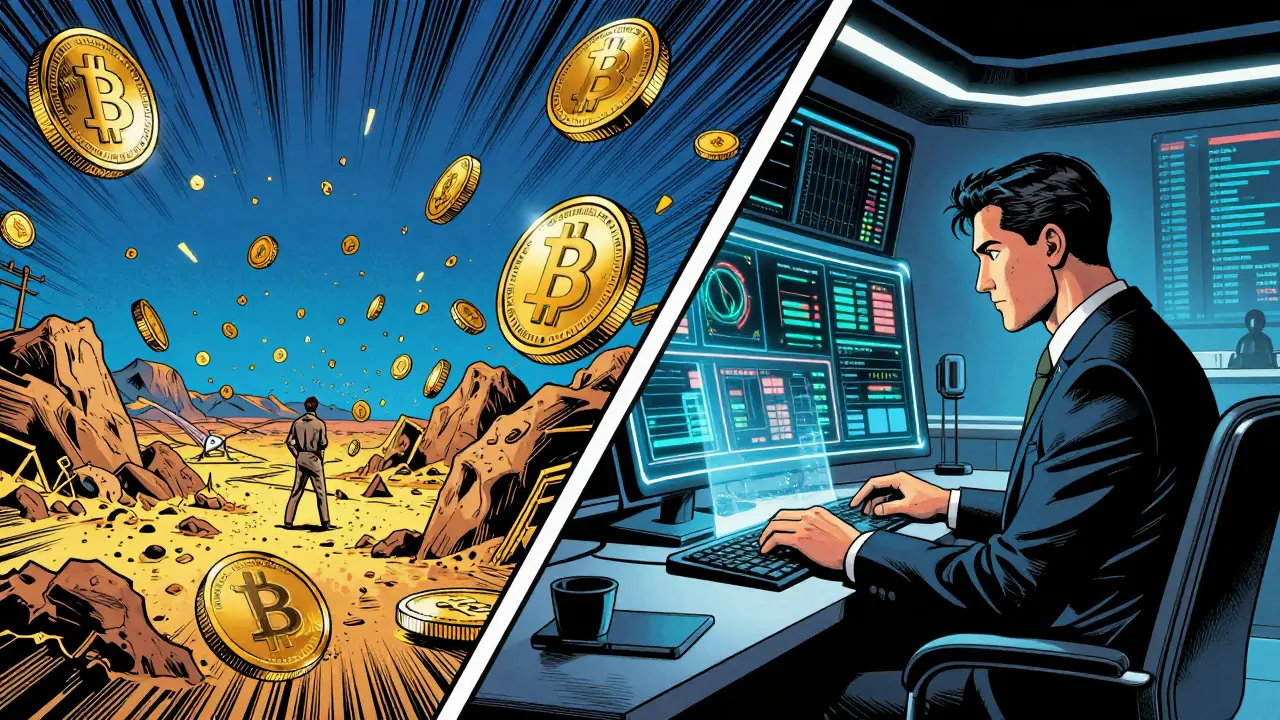
The reality is that the gap between 'retail gambling' and 'professional management' is closing. With the passage of the GENIUS Act and the coordinated frameworks between the SEC and CFTC, the regulatory fog has cleared. This has opened the floodgates, with nearly 86% of institutions now having exposure to digital assets. When you see Schwab customers holding $25 billion in crypto ETFs, you realize that crypto portfolio management is no longer a niche hobby-it's a sophisticated financial discipline.
The New Blueprint for Asset Allocation
You can't just buy and hold everything and expect to beat the market. Professional managers are now using specific allocation methodologies to balance growth with stability. If you want a portfolio that can actually withstand a market correction, you need a structured approach.
For those aiming for long-term growth, a balanced framework typically looks like this:
- Core Stability (40%): Bitcoin is the anchor. It provides the necessary stability and long-term appreciation that protects the rest of the portfolio.
- Smart Contract Exposure (30%): Ethereum isn't just a coin; it's an ecosystem. Allocating here allows you to capture staking income and the growth of decentralized apps.
- Narrative-Driven Growth (15%): This is where you play the trends. This includes AI-integrated tokens like Fetch.ai or specific AI analytics tokens.
- DeFi Protocols (10%): Assets like AAVE or UNI provide exposure to the plumbing of the new financial system.
- Liquidity Buffer (5%): Always keep a sliver in USDC. Having dry powder during a dip is the difference between panic selling and buying the bottom.
Institutional players take a slightly different route. They tend to lean heavier into core assets (60-70%) but carve out a significant 20-25% for tokenized real-world assets (RWAs). This blend reduces the volatility that usually scares off traditional fund managers.
| Feature | Retail Aggressive | Institutional Core |
|---|---|---|
| Core Holdings (BTC/ETH) | 40-60% | 60-70% |
| Speculative/Narrative Tokens | 20-30% | 10-15% |
| Tokenized RWAs | Minimal | 20-25% |
| Primary Goal | Maximum Alpha | Risk-Adjusted Returns |
The AI Revolution in Asset Management
If you're still managing your portfolio using a basic spreadsheet, you're fighting a losing battle. The future is AI Analytics, which is the use of machine learning and big data to identify market anomalies and predict price movements based on on-chain metrics. Tools like Token Metrics are now processing over a million data points per second, far exceeding what any human analyst could track.
Why does this matter? Because AI doesn't get emotional. It can track the Network Value to Transactions (NVT) ratio and the Miner Position Index in real-time to signal when a market is overheated. We've already seen that portfolios using AI-driven sentiment analysis achieved over 31% higher risk-adjusted returns during the volatility events of 2025. The trend is accelerating; a huge chunk of active managers now rely on these tools to trigger automated rebalancing when an asset deviates by more than 5% from its target allocation.
Tokenizing the Physical World
One of the most explosive growth areas is Real-World Asset (RWA) Tokenization, which is the process of converting rights to a physical asset, like real estate or gold, into a digital token on a blockchain. This isn't just a gimmick. We're seeing a massive shift where real estate can be fractionally owned, allowing people to invest as little as $100 into a property and earn a share of the rental income.
Projections show that tokenized RWAs will surge past $50 billion in value, potentially hitting $1 trillion by 2029. For a portfolio manager, this is a game-changer. It allows you to diversify away from the volatility of tokens while staying within the blockchain ecosystem. Instead of choosing between a volatile altcoin and a slow savings account, you can hold a tokenized piece of a commercial building that pays a steady 6.8% yield.

The Institutional Guardrails: Custody and Compliance
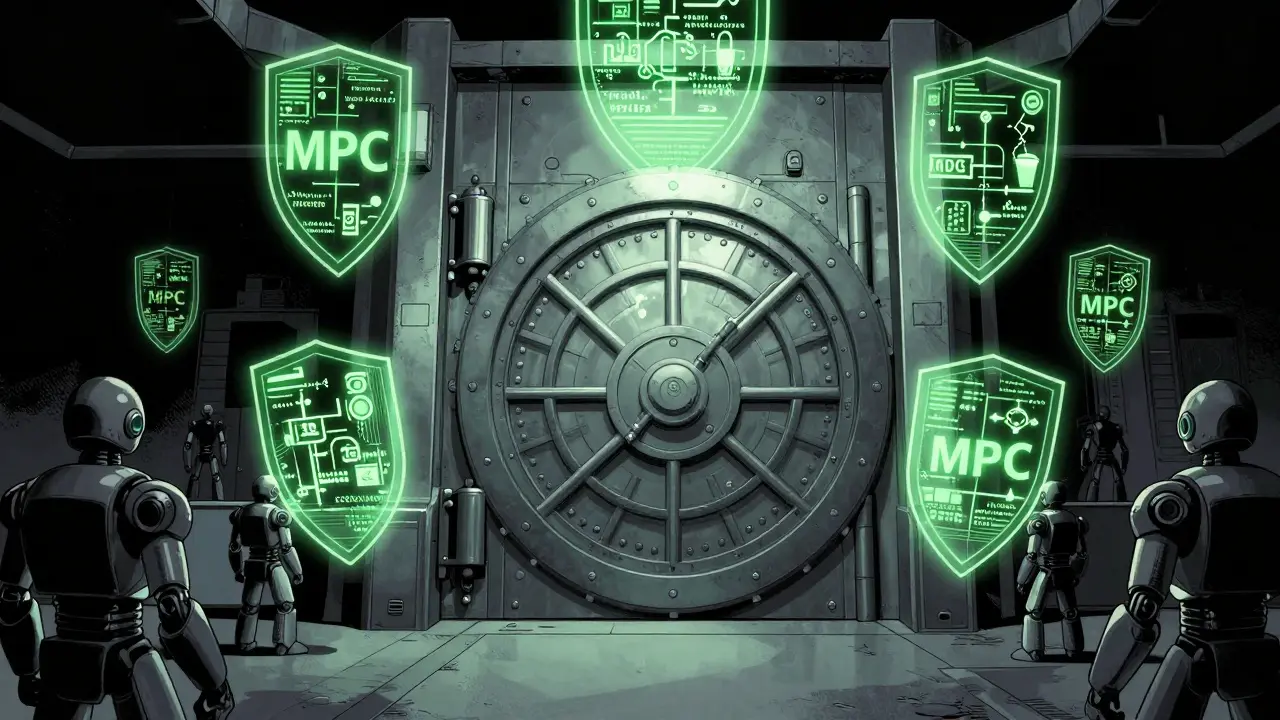
The biggest fear for any serious investor has always been security. The "not your keys, not your coins" mantra was great for individuals, but it doesn't work for a billion-dollar pension fund. This is why Institutional Custody solutions have evolved. Most big players have moved away from simple wallets to Multi-Party Computation (MPC) wallets provided by firms like Fireblocks or Copper.
Then there's the accounting side. Thanks to the FASB's ASC 350-60 standards, businesses can now measure digital assets at fair value. This means transparency is finally here. You can see gains and losses clearly on a net income statement without the accounting gymnastics of the past. This level of professionalization is exactly what's driving the expected $500 billion in new capital as the US Department of Labor potentially relaxes rules on crypto in 401(k) plans.
Active vs. Passive: Which Wins?
There is a constant debate about whether you should just buy a Bitcoin ETF and forget about it or actively manage your coins. The data from 2024 tells a clear story: active management wins on performance but costs more in fees. Active managers achieved returns around 38.2%, while passive index trackers sat around 14.5%.
However, the real value of active management isn't just the higher return-it's the risk mitigation. During market swings exceeding 30%, active managers delivered 2.1x better risk-adjusted returns. If you have the technical skill to handle API integrations and on-chain dashboards, the higher fees (averaging 1.25% compared to 0.45% for ETFs) are usually worth it. If you're just looking for a set-it-and-forget-it approach, the ETF route is the safest bet.
Common Pitfalls to Avoid
Even with the best tools, there are traps that can wipe out your gains. The most common one is the "complexity trap" in DeFi. Many retail investors dive into yield optimization without understanding Impermanent Loss, often losing 18% or more during price spikes. If you can't explain how a liquidity pool works, don't put your money in one.
Another issue is the "geographic risk." While the US is becoming more friendly, other jurisdictions are still unpredictable. Smart managers are diversifying their custody and assets across different regions to ensure a single regulatory crackdown in one country doesn't freeze their entire portfolio.
How often should I rebalance my crypto portfolio?
Professional managers typically set automated rebalancing triggers at a 5% deviation. For example, if your target for Bitcoin is 40% but it grows to 45% of your total portfolio, you sell the excess and redistribute it to underperforming assets. This ensures you are consistently "selling high and buying low."
What are the most important metrics for tracking a portfolio?
Look beyond the price. Focus on the Network Value to Transactions (NVT) ratio to see if a coin is overvalued relative to its utility, and the Realized Profit/Loss to gauge market sentiment. Using on-chain analytics helps you see where the "smart money" is moving before the price reacts.
Is AI really better than human management in crypto?
AI isn't a magic wand, but it excels at processing volume. While a human can track a few projects, AI can analyze 1.2 million data points per second. It is significantly better at spotting anomalies and sentiment shifts, which often precede major price movements.
What is the risk of tokenized real-world assets (RWAs)?
The primary risk is liquidity. While you may own a tokenized fraction of a building, finding a buyer for that token during a real estate market correction can be difficult. Always ensure you have a diversified mix of liquid (BTC/ETH) and illiquid (RWA) assets.
How do I start with institutional-grade security?
Move away from single-signature wallets. Explore Multi-Party Computation (MPC) solutions like Fireblocks or Copper. These systems split the private key into multiple pieces, meaning no single point of failure can lead to a total loss of funds.
Next Steps for Investors
If you're just starting to professionalize your approach, don't try to do everything at once. Start by auditing your current allocation-does it match a growth or stability profile? Next, integrate one AI analytics tool to move away from emotional trading. Finally, look into a small allocation of tokenized RWAs to lower your overall portfolio volatility. The transition from a "trader" to a "portfolio manager" is a journey, but it's the only way to survive in the 2026 market.
John and Lauren Busch
April 17 2026Cool, so now the suits have a way to lose money with "precision." Just what we needed.
Michelle Stanish
April 18 2026I don't think AI helps. It's just a bot following a bot. I'll stick to my simple way.
Adedamola Oyebo
April 19 2026MPC wallets are definitely the way!! Check out Fireblocks if you are serious about security!!
Adam Mann
April 19 2026It is honestly so wonderful to see the space evolving like this because for a long time it felt like only a few people knew what was going on, but now with these guidelines, everyone can get involved. I really think that the move towards tokenized real-world assets is the bridge that will finally bring in the older generation who just want a steady return without the stress of watching a chart every five minutes, and it just makes the whole community more inclusive for people who aren't tech geniuses but still want to grow their wealth in a modern way.
Andrew Southgate
April 20 2026The breakdown of the allocation is spot on for anyone trying to balance the risk. If you look at the historical data from the 2021 crash, the people who had a core stability anchor in Bitcoin were the only ones who didn't completely wipe out their accounts, whereas the ones chasing 100x memecoins ended up with nothing. I've spent the last few years studying these cycles and the shift towards a more institutional approach isn't just about the money-it's about the survival of the portfolio. You really have to consider that the volatility is a feature, not a bug, and using a liquidity buffer like USDC allows you to actually capitalize on that volatility instead of being a victim of it. It's all about staying rational when everyone else is panicking, and having a preset rule for rebalancing at 5% takes the emotion out of the trade entirely, which is where most retail traders fail miserably.
Trudy Morse
April 22 2026RWA is just the inevitable evolution of ownership. Simple as that.
Shantal Sanjur
April 24 2026Oh sure, let's just trust the SEC and the "GENIUS Act" to keep our money safe. Total joke. They'll just use these "frameworks" to freeze accounts the second they decide you're a threat to their precious system. I bet the MPC wallets have a backdoor for the government anyway. Good luck with your "professional management" while the elites pull the plug on the whole grid lol.
Shannon Kelly Smith
April 24 2026Get those AI tools running early! 🚀 The efficiency gains are insane! 📈 Let's all level up together! 💪
Gillian Kent
April 25 2026Tkenizing real estate sounds great but i wonder how it works in different contries with differnt laws
Joshua Salwen
April 27 2026THIS IS ABSOLUTELY RIDICULOUS!! Who actually believes the 401k integration won't just be a giant pump and dump for the hedge funds?? THE AUDACITY of thinking this is "professional" when it's basically just a fancy way to get fleeced by the same people who broke the economy in 2008!! I can't even deal with this level of delusion right now!!
Saurav Bhattarai
April 28 2026Imagine thinking US-based institutions are the pinnacle of finance. How quaint. We in India are already seeing the real utility while you lot argue about ETFs. But please, continue with your "sophisticated" Western strategies while we actually innovate.
Jeff Barlett
April 28 2026Passive indexing is for people who like losing slowly. Give me the active volatility any day.
Mark Pfeifer
April 29 2026I appreciate the focus on risk mitigation. It's better to have a boring portfolio that grows than a flashy one that disappears.
Keri Pommerenk
April 30 2026totally agree with the part about not diving into defi without understanding it. its so easy to lose money when you dont get the basics
siddharth narula
April 30 2026One must reflect upon the moral imperative of decentralization. If we merely replace old banks with new digital ones, have we truly progressed? 🕉️
Sandeep Bhoir
May 2 2026Sure, AI is great. Until the AI decides that the most "rational" move is to liquidate everything into a coin no one has heard of.
Ankit Sindhu
May 3 2026If you're new to the 5% rebalancing rule, just try doing it once a month to start. It helps build the habit of discipline.
Robert Preston
May 4 2026For anyone struggling with the MPC transition, remember that the learning curve is steep but the security payoff is absolute. Don't rush the process or you'll make a mistake with your seed phrases. Take your time to set up the multi-sig properly.
Mike Kempenich
May 5 2026I'm really glad to see people focusing on the long-term game. It's a great time to be an investor if you're willing to learn and adapt to these new tools!