

When you try to buy Bitcoin or send Ethereum in Saudi Arabia, you might think the problem is technical - maybe your app isn’t working, or your wallet won’t connect. But the real barrier isn’t technology. It’s the bank. Saudi Arabia doesn’t let its banks touch cryptocurrency. Not for trading, not for deposits, not for withdrawals. And that’s not a glitch - it’s policy. Since 2018, Saudi banks have been officially banned from handling any crypto-related transactions. This isn’t a temporary warning. It’s a hard wall between the country’s financial system and digital assets.
Why the Ban Exists
The Saudi Central Bank (SAMA) and the Ministry of Finance have been clear: cryptocurrencies aren’t legal tender. They aren’t regulated. They aren’t protected. And they aren’t welcome inside the banking system. The 2018 ban was the first formal step, but it wasn’t just about control. It was about fear - fear of money laundering, fear of fraud, fear of losing oversight over financial flows. The government didn’t want people using digital currencies to bypass the official economy. The warnings kept coming. In 2019, the Ministry of Finance issued a public notice: investing in Bitcoin or any other crypto is risky, unsupported, and potentially illegal. No government agency backs these assets. No consumer protection applies. If you lose money, you’re on your own. This isn’t just about safety. It’s about control. Saudi Arabia wants to manage how money moves. Crypto, by design, resists that control. So the banking system was locked down. Banks can’t open accounts for crypto exchanges. They can’t process payments to Binance, Bybit, or local P2P traders. They can’t even hold crypto-related funds in reserve. If a bank tries, it risks fines, license suspension, or worse.What Happens When You Try to Use Crypto
If you’re a regular user trying to buy crypto with your debit card, you’ll hit a wall. Your bank will likely block the transaction. You might get a message like “transaction declined due to policy restrictions.” That’s not your card failing - it’s the bank following SAMA’s rules. To get around this, people have built their own systems. Peer-to-peer (P2P) trading has exploded. Platforms like Paxful and LocalBitcoins are popular because they let Saudis trade directly with each other using cash, gift cards, or even international bank transfers. Some use third-party payment processors based outside the Kingdom to move money. Others rely on trusted friends or brokers who handle the fiat-to-crypto conversion. Businesses face even bigger hurdles. A crypto startup in Riyadh can’t open a business bank account. It can’t pay employees in SAR. It can’t pay taxes through normal channels. Many end up using foreign entities - setting up offices in Dubai or Singapore just to access banking. Others operate entirely off the grid, using offshore wallets and cash-based accounting.The Paradox: Crypto Is Growing Anyway
Here’s the twist: despite the ban, crypto use in Saudi Arabia is skyrocketing. In 2024, the country’s crypto market hit $23.1 billion. By 2025, it’s expected to generate nearly $500 million in revenue. Over 4 million Saudis - about 11.4% of the population - own crypto. That’s more than in many Western countries. How? Because the ban doesn’t stop individuals from owning crypto. It only stops banks from helping. So people buy, hold, and trade - just without bank support. The 153% spike in crypto transaction value from mid-2023 to mid-2024 shows this isn’t a passing trend. It’s a cultural shift. Young Saudis, especially those under 30, are leading the charge. They’re tech-savvy, skeptical of traditional finance, and drawn to decentralized systems. Altcoins like Solana, Dogecoin, and Shiba Inu are more popular here than the global average. This isn’t gambling - it’s investment. And it’s happening in plain sight, even as banks look away.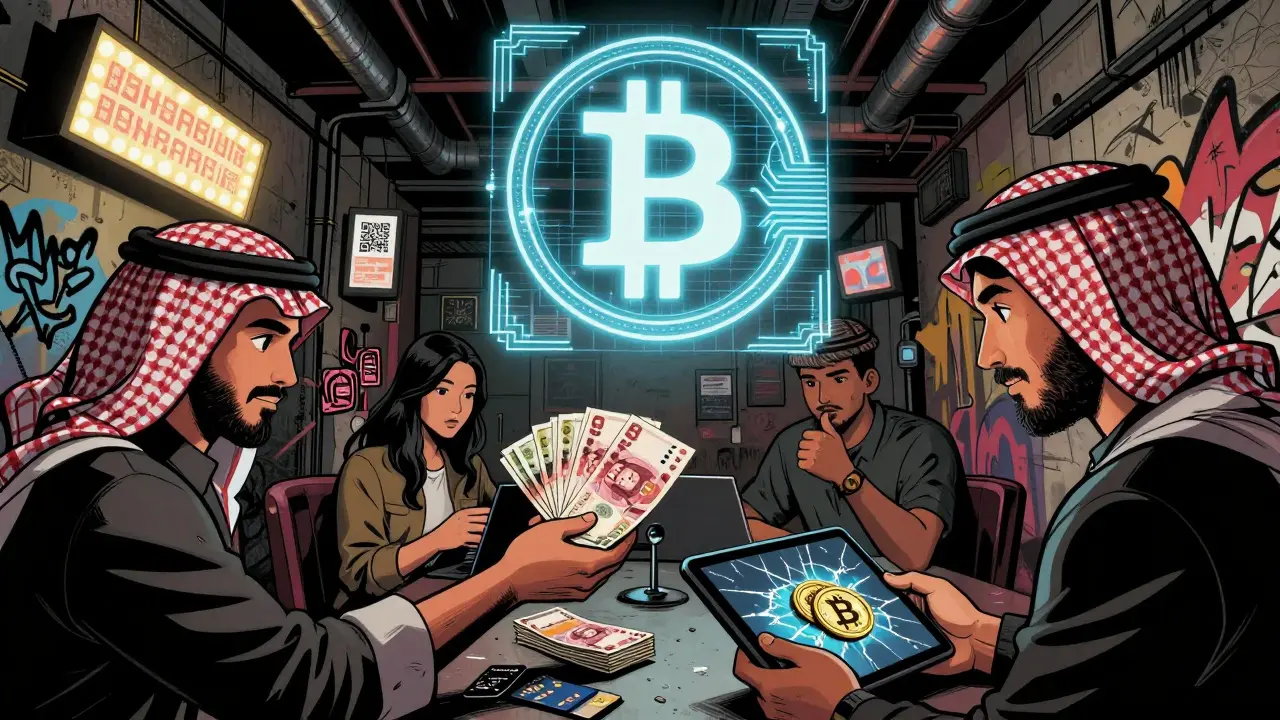
Blockchain vs. Crypto: The Government’s Double Game
While banks are blocked from crypto, the government is quietly building its own digital currency. Saudi Arabia is part of the mBridge project - a joint CBDC (Central Bank Digital Currency) initiative with the UAE, China, Thailand, and Hong Kong. This isn’t Bitcoin. It’s a government-controlled digital riyal, designed to move money faster between countries, with full oversight. SAMA isn’t against digital money. It’s against uncontrolled digital money. The bank sees blockchain as a tool - not a threat. It’s testing smart contracts, cross-border settlements, and automated compliance systems. But it wants every transaction traceable, every user identifiable, every flow monitored. Crypto, with its anonymity and decentralization, doesn’t fit that model. So the Kingdom is creating its own version of digital finance - one that looks like crypto but acts like a bank. And that’s the real message: the ban isn’t about technology. It’s about power.Taxes, Fatwas, and Legal Gray Zones
Crypto isn’t taxed for individuals - no capital gains, no reporting. But businesses? They pay 20% corporate tax, 15% capital gains, and 2.5% zakat. The problem? If you can’t use a bank, how do you prove you paid taxes? Many use foreign accountants, offshore invoices, or cash payments. It’s messy. It’s risky. And it’s common. Then there’s the religious angle. In 2023, a top Saudi cleric issued a fatwa saying Bitcoin and other cryptocurrencies are Sharia-compliant. That’s huge. It means, from a faith perspective, owning and trading crypto is acceptable. No interest, no gambling, no fraud - just digital ownership. This contradicts the banking ban. One side says it’s okay. The other says it’s forbidden. This tension is growing. Religious acceptance could eventually pressure regulators. After all, if Islam permits it, why should banks block it?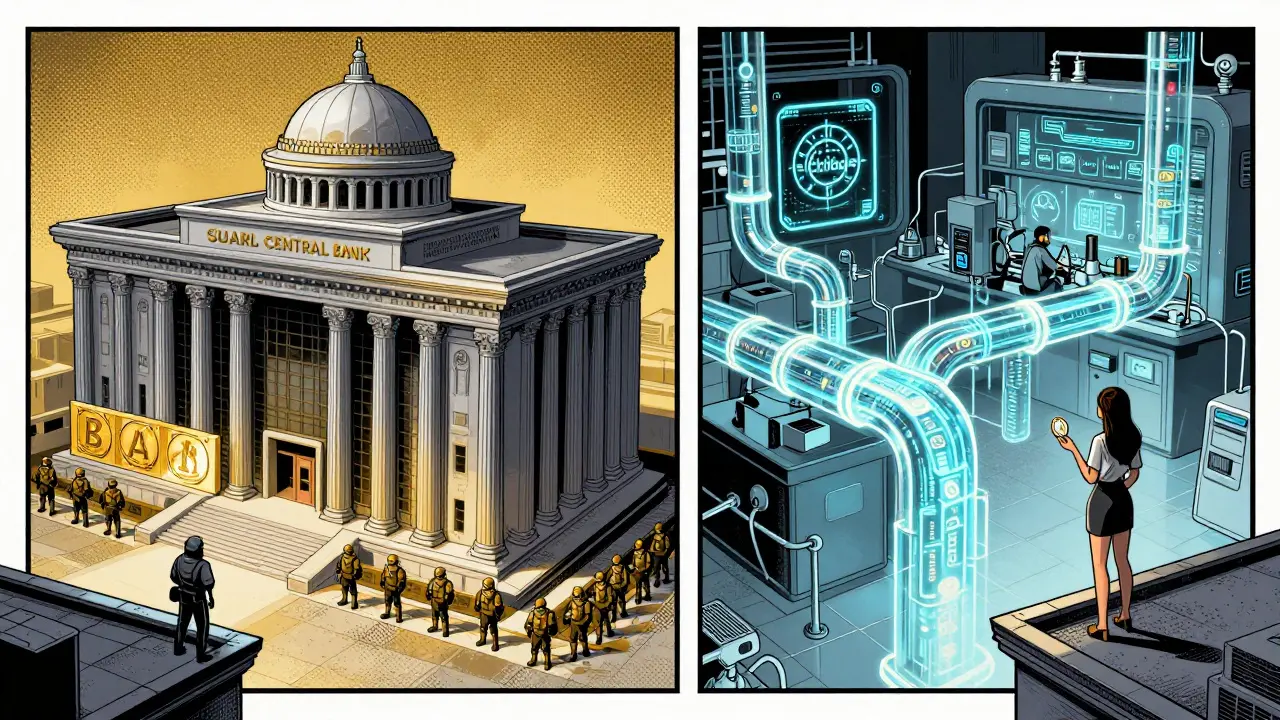
What’s Next?
Right now, Saudi Arabia sits in a strange place. It’s one of the largest crypto markets in the Middle East - yet it’s one of the strictest when it comes to banking access. No other Gulf country has gone this far. The UAE allows regulated exchanges. Bahrain licenses crypto firms. Saudi Arabia? No licenses. No approvals. Just silence. There’s no sign of a law change soon. Experts don’t expect comprehensive crypto regulations before 2028 or later. Until then, the ban remains. But the market keeps growing. People keep trading. Businesses keep adapting. The future might not be about lifting the ban. It might be about building bridges - not between banks and crypto, but between the government’s digital currency and the people’s demand for freedom. The real question isn’t whether Saudi Arabia will allow crypto. It’s whether it will let its people control their own money.What You Can Do Today
- If you’re an individual: Use P2P platforms. Stick to trusted traders. Keep records of every transaction - even if you’re not taxed, you’ll need proof if questioned.
- If you’re a business: Don’t try to use local banks. Set up operations abroad or use international payment processors with strong compliance.
- If you’re investing: Understand the risks. No insurance. No recourse. No protection. This is high-risk, high-reward territory.
- If you’re curious: Learn blockchain. The government is betting on it. You should too.
The ban isn’t going away. But the market is. And that’s the story no one’s telling: in Saudi Arabia, crypto isn’t illegal - it’s just ignored by the system. And sometimes, that’s enough.
Is cryptocurrency illegal in Saudi Arabia?
No, cryptocurrency is not illegal for individuals to own or trade. However, it is not recognized as legal tender, and no government agency regulates or protects it. The ban targets banks - not people. So while you can hold Bitcoin, Ethereum, or Solana, you can’t use your bank account to buy or sell it.
Can I use my Saudi bank card to buy crypto?
Almost certainly not. Saudi banks are legally prohibited from processing crypto purchases. If you try to use your debit or credit card on a crypto exchange, the transaction will be blocked. Some users report rare exceptions, but these are exceptions - not rules. Your best option is peer-to-peer trading using cash, gift cards, or international transfers.
Do I have to pay taxes on crypto in Saudi Arabia?
Individuals currently pay no capital gains tax on crypto profits. However, businesses that trade or mine crypto must pay 20% corporate income tax, 15% capital gains tax, and 2.5% zakat. The challenge is reporting - since banks won’t help, you’ll need to track everything yourself and possibly use foreign accounting services.
Why is crypto growing so fast despite the ban?
Because the ban doesn’t stop people - it just forces them to find workarounds. Saudi Arabia has a young, tech-savvy population (63% under 30) that’s distrustful of traditional finance. With over 4 million crypto owners and $31 billion in transactions in just one year, demand is outpacing regulation. P2P networks, international exchanges, and alternative payment methods are filling the gap.
Is there a chance the ban will be lifted soon?
Not in the near term. Experts don’t expect comprehensive crypto regulations before 2028. Saudi Arabia is focused on its own central bank digital currency (CBDC) through the mBridge project, not on opening banking access to Bitcoin or Ethereum. The government wants control - not competition. But with market growth and religious acceptance, pressure is building. Change is likely, but it will be slow and controlled.

Bruce Doucette
March 14 2026So let me get this straight - the government bans banks from crypto but lets people buy it with cash like it’s 1999? 😂
Meanwhile, the CBDC is being built like a surveillance drone with a royal seal. Classic Saudi move: ban the people’s freedom, then build their prison… with blockchain.
Also, Dogecoin is more popular than the royal family’s Twitter account. That’s not a trend - that’s a revolution in meme form.
Marie Vernon
March 15 2026It’s wild how much this mirrors what happened with mobile money in Kenya - same energy.
People find ways when the system fails them.
The fact that 4 million Saudis are doing this without banks? That’s not rebellion - it’s innovation with grit.
And yeah, the fatwa helping? That’s the quiet power move no one’s talking about.
Religion and tech aligning? That’s the real story here.
Jessica Beadle
March 17 2026The entire premise is flawed. Crypto isn’t growing ‘despite’ the ban - it’s growing BECAUSE of it.
Centralized systems are inherently inefficient, and Saudi Arabia’s banking infrastructure is a relic wrapped in oil-stained velvet.
The CBDC? It’s not innovation - it’s authoritarianism with a UI.
And the tax loophole? Pure chaos. No reporting, no oversight, no accountability - just offshore shell games and prayerful accounting.
This isn’t a market - it’s a regulatory vacuum with a really good marketing team.
S F
March 17 2026Why are we even talking about this? Crypto is a scam. Always has been. The Saudis are smart to block it.
Westerners think they’re so advanced with their ‘decentralized’ nonsense - but it’s just gambling with code.
Real money is backed by oil, not memes.
And if you’re using Dogecoin as an investment? You’re not smart - you’re just broke and confused.
Angelica Stovall
March 19 2026They’re lying. The ban isn’t about control - it’s about the Saudis being scared their elites will get hacked.
Remember the 2017 Saudi Aramco breach? They’re terrified crypto will expose offshore accounts.
And that ‘fatwa’? Probably paid for by a crypto firm in Dubai.
Everything’s a conspiracy. Nothing’s real. Just wait - the government will crack down hard next year. Mark my words.
Taylor Holloman.
March 19 2026Huh.
So… the banks are blocked.
The people are trading anyway.
The government is building its own version…
And the clerics said it’s okay?
That’s… oddly beautiful.
Like a silent rebellion where everyone’s just… doing it.
No shouting. No protests.
Just wallets and WhatsApp.
And somehow… it’s working.
Maybe that’s the point.
Not control.
Not rebellion.
Just… life.
Bryan Roth
March 20 2026Look - this isn’t about crypto being good or bad.
This is about people choosing autonomy over bureaucracy.
Saudi youth aren’t chasing get-rich-quick schemes - they’re rejecting a system that told them, ‘You can’t touch money unless we approve it.’
And guess what? They’re building their own.
That’s not illegal - that’s human.
And honestly? We should be cheering this on - not mocking it.
It’s the quietest, most powerful form of economic freedom I’ve seen in years.
sai nikhil
March 21 2026As someone from India, I see parallels with our own digital payment revolution - UPI didn’t need banks to lead. People just started using it.
Same here.
Technology bypasses policy when the demand is strong enough.
The real story isn’t the ban.
It’s the millions who chose to move forward anyway.
Respect.
Sahithi Reddy
March 23 2026People are using crypto because banks are slow and boring
And the government is building its own version
So what?
Let them have their digital riyal
And let us have our Dogecoin
Simple
George Hutchings
March 23 2026It’s not about legality.
It’s about trust.
People don’t trust banks.
They trust code.
And that’s why this works.
Henrique Lyma
March 25 2026Let’s be real - this whole article reads like a PR piece from a Dubai-based crypto influencer trying to sound edgy.
The numbers are inflated - $23 billion? That’s total transaction volume, not market cap - big difference.
And ‘4 million owners’? That includes people who bought one Dogecoin in 2021 and forgot about it.
Meanwhile, the CBDC? That’s the real future.
Everything else is just noise with a blockchain logo.
Steph Andrews
March 25 2026I love how this isn’t a war between tech and tradition
It’s a dance
One side tries to control
The other just keeps moving
And somehow… it’s beautiful
Not because it’s perfect
But because it’s alive
Prakash Patel
March 27 2026Actually, the UAE is doing the same thing with tighter controls
And Bahrain is just a tax haven with a blockchain sticker
So Saudi isn’t unique
They’re just louder about it
Zachary N
March 27 2026If you’re trying to navigate this space as a business or individual - here’s what actually works.
First, never use a local bank. Ever. Even if you think you found a loophole - you didn’t.
Second, use P2P platforms with verified traders. Look for users with 50+ trades and positive feedback - not just ‘cheap rates.’
Third, document EVERYTHING. Screenshots of transfers, wallet addresses, timestamps. Even if you’re not taxed, you need proof if questioned.
Fourth, if you’re a business, set up a legal entity in a jurisdiction that supports crypto - Dubai, Portugal, or Estonia. It’s worth the cost.
Fifth, learn blockchain basics. Understand smart contracts, wallets, and how to self-custody. You don’t need to code - just understand what you’re holding.
Sixth, ignore the hype. Solana and Shiba Inu aren’t investments - they’re speculative assets. Treat them like high-risk stocks.
And lastly - don’t panic. This isn’t going away. The system is adapting. You just need to adapt with it. Slowly. Safely. Smartly.