
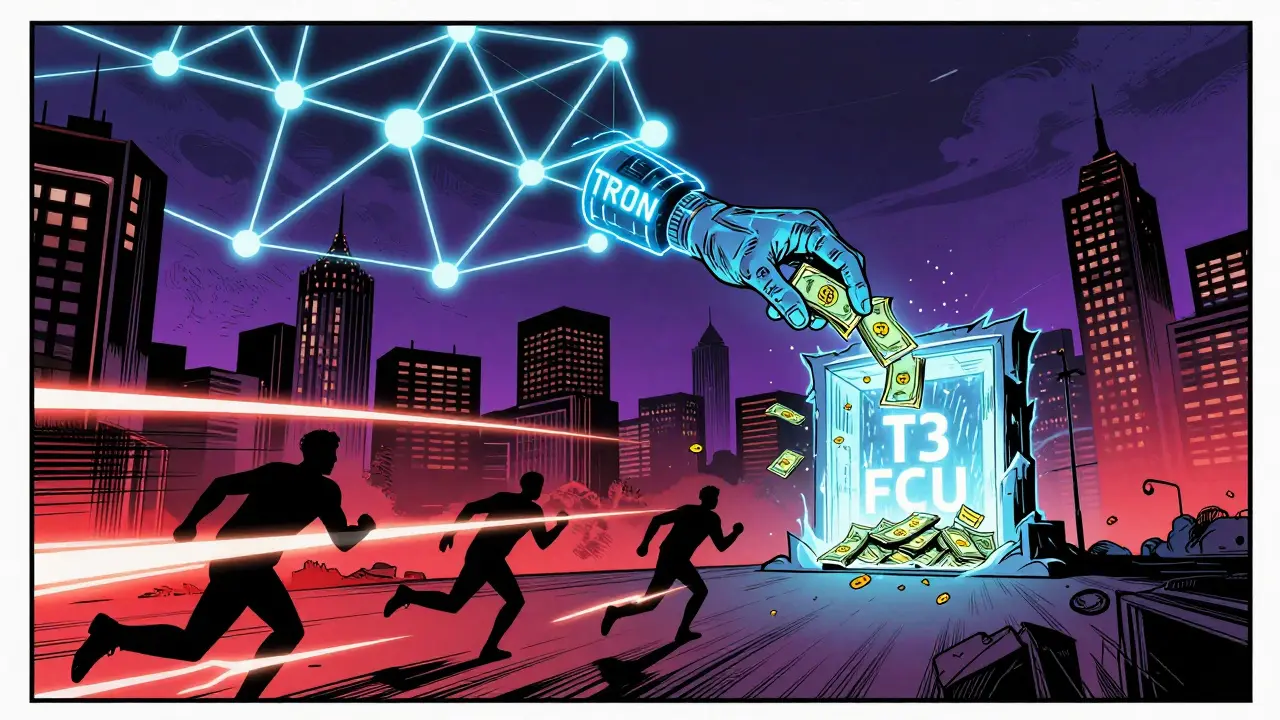
By 2025, the global fight against crypto crime isn’t about stopping it entirely-it’s about getting better at finding it, freezing it, and recovering it. The numbers tell a complicated story. Some reports say crypto crime is dropping. Others say it’s growing. And both can be right. Why? Because they’re measuring different things.
What’s Actually Being Measured?
TRM Labs says illicit crypto activity in 2024 totaled $10.7 billion-mostly from scams and fraud. That’s a 40% drop from 2023. But Chainalysis reports $40.9 billion received by illicit addresses in the same year. That’s not a contradiction. It’s a difference in scope. TRM focuses on fraud: fake investment schemes, rug pulls, phishing scams. Chainalysis includes everything: darknet markets, ransomware payments, money laundering through mixers, and stolen funds. Chainalysis also admits their numbers grow by about 25% each year as they uncover more hidden addresses. In 2023, their initial estimate was $24.2 billion. By the end of the year, it jumped to $46.1 billion. So when they say $40.9 billion for 2024, it’s likely to climb again in 2025. The real takeaway? Crypto crime isn’t vanishing. It’s evolving. And enforcement is catching up-slowly.Where Is the Crime Happening?
Not all blockchains are equal when it comes to crime. In 2024, TRON handled 58% of all illicit crypto volume. That’s more than half. Ethereum followed at 24%, Bitcoin at 12%, and Binance Smart Chain and Polygon each at 3%. Why TRON? Low fees. Fast transactions. And a ton of USDT-Tether’s stablecoin-moving through it. Criminals love that combo. But things changed in August 2024. The TRON Foundation, Tether, and TRM Labs teamed up to create the T3 Financial Crime Unit (T3 FCU). Their goal? Freeze bad money before it disappears. In just a few months, they froze over $130 million in illicit funds. They traced $20% of blocked USDT on TRON and returned it to victims or government accounts. That’s not just enforcement-it’s restitution. TRON’s illicit volume dropped by $6 billion in six months. That’s a 50% plunge. It’s proof that when blockchain companies, stablecoin issuers, and law enforcement work together, crime can be cut in half.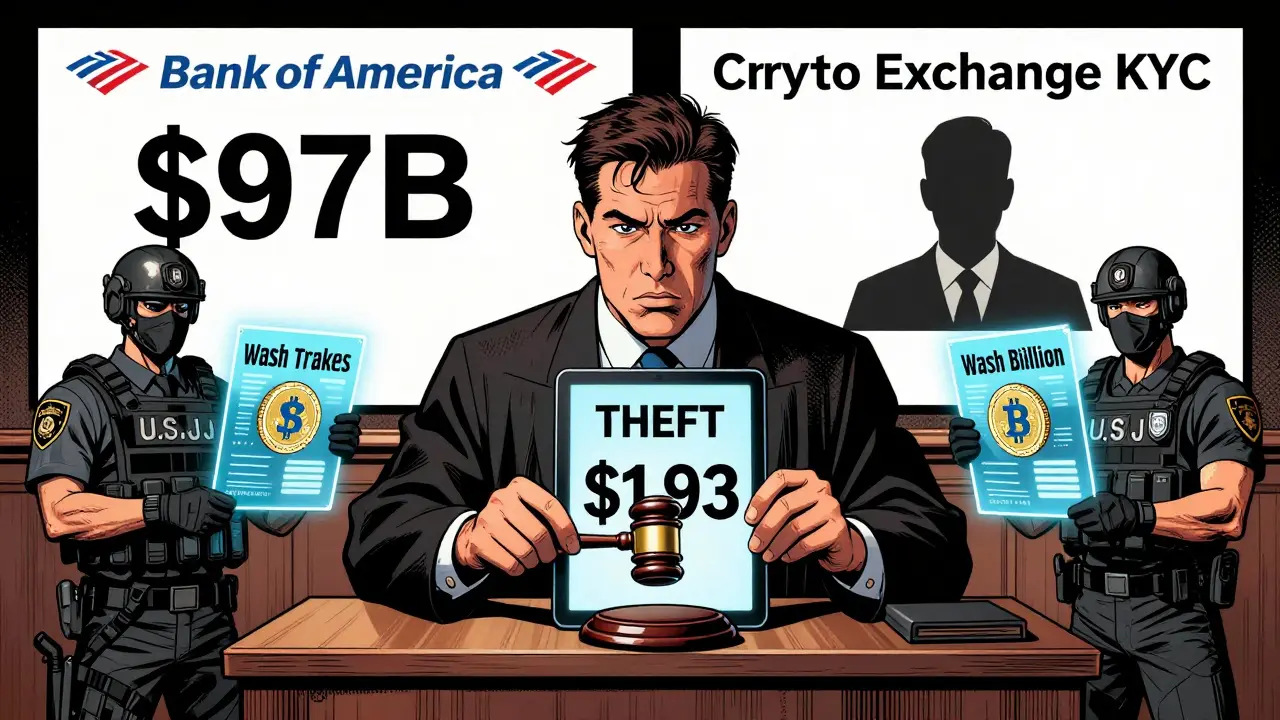
Regulations: Paper vs. Reality
Over 60% of the 24 major crypto markets analyzed by TRM Labs introduced new rules in 2024. The Financial Action Task Force (FATF) says 91% of countries have either passed or are working on anti-money laundering (AML) rules for crypto. Sounds good, right? But here’s the catch: PwC’s 2025 report found 75% of countries are still only partially compliant-or not compliant at all-with FATF’s rules. Nearly 30% still haven’t enforced the Travel Rule, which requires exchanges to share sender and receiver info on transactions over $1,000. Without that rule, criminals move money across borders like ghosts. There’s a gap between what laws say and what actually happens. A country might have a law on paper, but if its regulators don’t have the tools, staff, or training to enforce it, the law doesn’t matter.How Much Are They Really Fining Crypto Companies?
Between 2020 and early 2025, the entire crypto industry paid $13.5 billion in fines, sanctions, and losses from hacks and fraud. That sounds huge. But compare it to traditional finance. Bank of America and JPMorgan Chase alone have paid over $97 billion in penalties over the same period. The whole financial sector? Over $300 billion-for mortgage fraud, sanctions violations, and rigged interest rates. Crypto isn’t getting off easy. But enforcement is different. In traditional finance, regulators hit big banks with billion-dollar fines for systemic fraud. In crypto, they’re more focused on forcing compliance. Most enforcement actions (72%) are about missing licenses, unregistered exchanges, or failing to report suspicious activity-not massive fraud cases. The U.S. Department of Justice is starting to change that. In October 2024, prosecutors in Massachusetts charged 17 people for using bots to manipulate meme coins and run wash trades. That’s not a technical glitch. That’s organized crime-and they’re going after the people behind it.
Sean Kerr
December 18 2025bro this is wild 😅 i thought crypto crime was dying but turns out it’s just getting smarter… TRON alone had $6B drop?? that’s insane. T3 FCU is the real MVP 🙌
Patricia Amarante
December 19 2025This is actually really encouraging.
Cheyenne Cotter
December 20 2025People keep missing the point that TRM and Chainalysis aren’t even measuring the same thing-TRM tracks active fraud flows, Chainalysis tracks all illicit address inflows, including old stolen coins that get washed through mixers over years. That’s why the gap is so huge. Also, the 25% annual growth in Chainalysis’s numbers? That’s just them backfilling data from past years they didn’t have visibility into. It’s not necessarily more crime-it’s better detection. And honestly, if you’re comparing crypto fines to Bank of America’s $97B in penalties, you’re comparing apples to asteroids. Traditional finance has been laundering and rigging markets for over a century with zero accountability until recently. Crypto’s just getting its first real enforcement teeth. We’re not even close to where banking is in terms of systemic corruption, but at least now there’s a chance to fix it before it becomes that bad.
George Cheetham
December 21 2025It’s funny how we treat crypto like it’s some new frontier of chaos, but really it’s just capitalism with better tech. The same greed, the same exploitation, just wrapped in smart contracts instead of spreadsheets. The fact that TRON became the hub for illicit activity because of low fees and USDT? That’s not a blockchain flaw-that’s a market flaw. People will always find the path of least resistance. What’s impressive isn’t that crime happened-it’s that collaboration between private firms and regulators actually moved the needle. That’s the real innovation here: trustless systems being made accountable through human cooperation. We don’t need to ban crypto. We need to make it harder to abuse.
Mark Cook
December 22 2025LMAO so crypto crime is down?? yeah right 😏 they just moved it to Solana now. you think they’re dumb enough to stop? nah they just upgraded their tools. next stop: zk-rollups and private mempools. watch and learn.
Greg Knapp
December 22 2025theyre lying about the numbers again you know this right the whole system is rigged the feds control the analytics firms and they just inflate the stats to scare people into compliance and then they seize everything anyway you think they care about victims no they just want control
Shruti Sinha
December 23 2025Interesting that TRON’s illicit volume dropped 50% after T3 FCU. Shows that coordinated action works. Also, USDT’s dominance on TRON makes sense-stablecoins are the oil of crypto crime. No volatility, easy to move. But now that they’re freezing it, criminals are forced to use more traceable paths. That’s progress.
Terrance Alan
December 24 2025You think this is enforcement? this is control. theyre not trying to stop crime theyre trying to eliminate privacy. every time they freeze a wallet they’re not helping victims they’re building a global financial surveillance state. you’re celebrating the end of anonymity like its a victory. it’s not. it’s the end of freedom. and you’re all too stupid to see it
Sally Valdez
December 24 2025Oh wow so the US and EU are finally getting serious? funny how they only care when it’s not their banks stealing billions. meanwhile the US government owns 200k BTC from seized Silk Road and never returns it. who are we kidding? this isn’t about justice it’s about power. and if you think the T3 FCU is some hero move you’re naive. they’re just creating a new way to track you. you think your crypto is safe now? it’s just more monitored. they want you to think you’re protected so you stop asking questions
Sammy Tam
December 26 2025Honestly? This is the most exciting crypto update I’ve seen in years. We’ve been stuck in this loop of ‘crypto = scams’ for too long. The fact that TRON, Tether, and TRM actually worked together to freeze $130M and return it? That’s not just enforcement-that’s restitution with teeth. And the shift toward DeFi, NFT, and stablecoin rules? Finally. We’re moving from ‘wild west’ to ‘regulated frontier.’ It’s not perfect, but it’s real. And yeah, crime’s still happening-but now there’s a chance to catch the bad actors before they vanish into the ether. That’s worth celebrating.
Kayla Murphy
December 26 2025It’s not about the money. It’s about safety. If you’re holding crypto, this is good news. The more they crack down, the less likely your wallet gets drained by some bot farm. This is the quiet revolution. No headlines. No hype. Just better systems. And honestly? That’s what we needed all along.
Florence Maail
December 28 2025you think this is about crime? nah. they’re building the blockchain surveillance grid. every transaction you make is being logged, tagged, and sold to data brokers. the ‘restitution’ is just a distraction. they’re not returning your money-they’re building a profile on you. next thing you know, your crypto wallet gets flagged because you bought ETH during a protest. this isn’t justice. it’s social credit with a blockchain logo.
Chevy Guy
December 30 2025so the feds are proud they froze 130 million but they let banks launder trillions every year?? classic. they dont care about crypto crime they care about control. you think your wallet is safe now? it’s just another account they can freeze without a warrant. welcome to the new normal
Amy Copeland
December 31 2025Let’s be honest: if you’re still using TRON for anything serious, you’re either a criminal or a complete amateur. The fact that 58% of illicit activity runs through it is a red flag so bright it should be illegal to promote it. And the ‘T3 FCU’ sounds like a corporate PR stunt with a fancy acronym. Of course they’re going to pat themselves on the back. The real question is-why did it take this long for a stablecoin issuer to act like a responsible financial entity?
Abby Daguindal
January 2 2026You’re all missing the real story. This isn’t about crime reduction. It’s about consolidation. The big players-Tether, TRM, the big exchanges-are using regulation to crush the small ones. Now you need $50M in compliance overhead just to operate. The ‘good guys’ are the ones who can afford it. The rest? They disappear. This isn’t justice. It’s capitalism with a compliance veneer.
Madhavi Shyam
January 4 2026The T3 FCU model is the only viable path forward. Cross-border coordination via blockchain analytics is the future. Most jurisdictions still operate in silos. Without shared intelligence, you’re just chasing ghosts. The fact that they traced 20% of blocked USDT on TRON? That’s unprecedented. This is how you build trust in decentralized systems-through transparent, auditable enforcement.
Jack Daniels
January 4 2026they’re all lying. the numbers are cooked. they want you to think they’re winning so you keep investing. meanwhile they’re quietly buying up all the seized coins and dumping them later. you think they care about victims? they care about market stability. your money doesn’t matter. only price does
Donna Goines
January 4 2026You think the government’s really going after criminals? Nah. They’re going after anyone who uses privacy tools. Mixers? Banned. Zcash? Monitored. Even basic coinjoin? Flagged. The ‘crime’ they’re targeting isn’t the fraud-it’s the anonymity. And if you’re using crypto to avoid surveillance, you’re the real enemy now. This isn’t about justice. It’s about obedience.
Heather Turnbow
January 5 2026The data presented here is both statistically rigorous and ethically significant. The divergence between TRM Labs’ and Chainalysis’ metrics underscores the necessity of standardized taxonomies in financial crime analytics. Furthermore, the T3 Financial Crime Unit’s operational success represents a paradigmatic shift from reactive enforcement to proactive asset recovery, thereby redefining the role of private-sector entities in public safety infrastructure. The institutionalization of cross-jurisdictional cooperation, particularly in the context of stablecoin regulation, suggests a maturation of the crypto ecosystem toward systemic resilience. This is not merely regulatory compliance-it is the evolution of digital fiduciary responsibility.
Jesse Messiah
January 5 2026yo this is actually super cool 😊 i didn’t realize how much progress was made. tron dropping 50% in crime? that’s huge. and the fact that they’re returning money to victims? that’s the stuff that matters. keep it up team 💪
Rebecca Kotnik
January 7 2026The evolution of crypto enforcement from fragmented, reactive measures to coordinated, predictive frameworks-exemplified by the T3 FCU-represents not merely an improvement in compliance infrastructure, but a fundamental recalibration of the relationship between decentralization and accountability. The fact that private actors-Tether, TRON Foundation, TRM Labs-are voluntarily aligning with law enforcement objectives suggests a maturation of the ecosystem’s ethical framework. This is not a surrender to centralization; it is a strategic integration of transparency mechanisms into inherently pseudonymous systems. The critical challenge moving forward will be ensuring that these tools remain accessible, auditable, and resistant to abuse by the very institutions they are meant to constrain.
Jonny Cena
January 7 2026Honestly? This is the most hope I’ve had for crypto in years. People act like it’s all scams and chaos, but look-real people, real companies, real law enforcement are working together. They’re not just freezing money-they’re giving it back. That’s not just enforcement. That’s healing. And if this model spreads? We might actually get to a point where crypto is safe for normal people to use without fearing they’ll get scammed into oblivion. Keep going. This matters.