
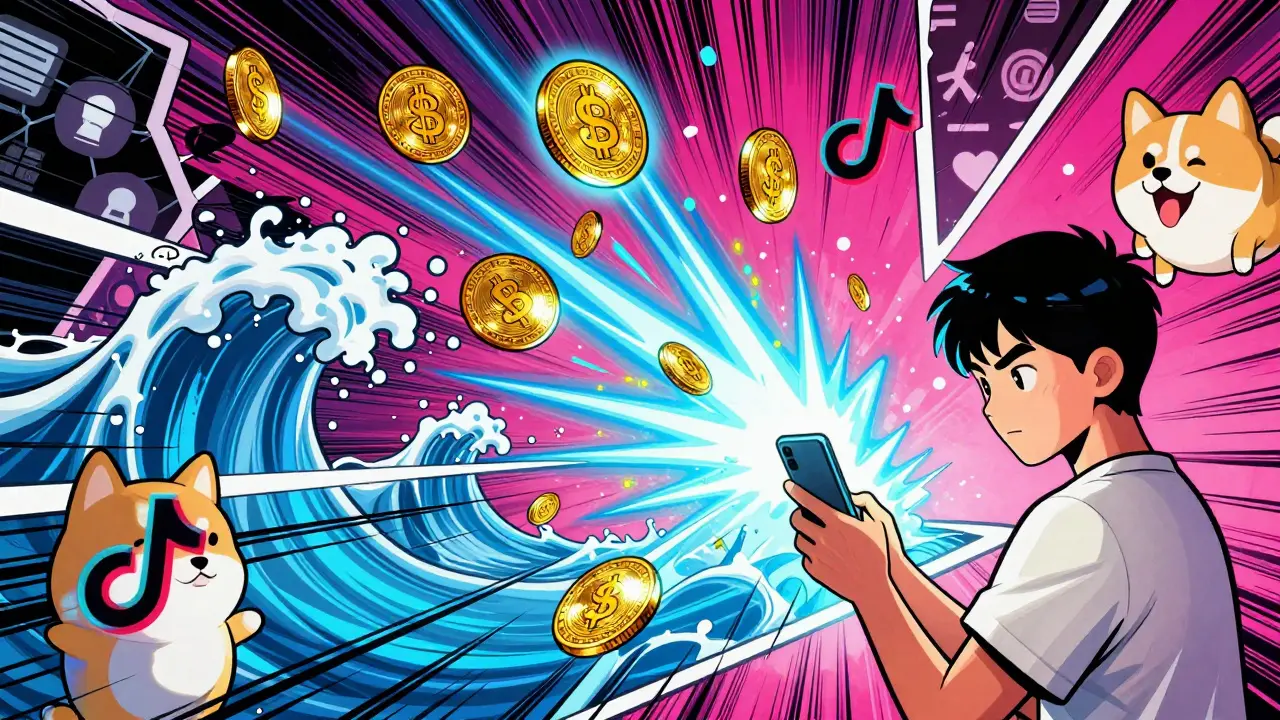
Memecoins like Dogecoin, Shiba Inu, and PEPE don’t have whitepapers, real-world use cases, or institutional backing. Yet they’ve hit billion-dollar market caps-not because of technology, but because of memes. A single TikTok video or a tweet from a celebrity can send a memecoin soaring in minutes. And then, just as fast, it can crash. This isn’t speculation. It’s a documented pattern. Social media doesn’t just influence memecoin prices-it drives them.
Why Memecoins Don’t Need Fundamentals
Traditional cryptocurrencies like Bitcoin and Ethereum have value tied to network usage, developer activity, and adoption. Memecoins? Their value comes from attention. A 2024 study tracked over 1.36 million tweets mentioning crypto tickers like $DOGE and $SHIB. The more people talked about them, the higher the price moved-even when no new feature was launched, no partnership announced, and no wallet got funded. That’s not a bug. It’s the system.Take $WOLF, a memecoin that briefly hit a $40 million market cap after going viral on Reddit’s WallStreetBets. The catch? 82% of its entire supply was held by just five wallets. When those holders started selling, the price collapsed in hours. No one cared about the code. They cared about the hype. And hype lives on social media.
How Each Platform Plays a Different Role
Not all social media is the same when it comes to memecoins. Each platform has its own rhythm, audience, and influence style.- TikTok is the spark. Short, funny videos with catchy music and bold claims-"This coin will 100x by Friday!"-go viral instantly. Studies show TikTok sentiment improves short-term Dogecoin price predictions by 35%. Younger users, often new to crypto, get hooked on the entertainment. They don’t analyze charts. They follow the trend.
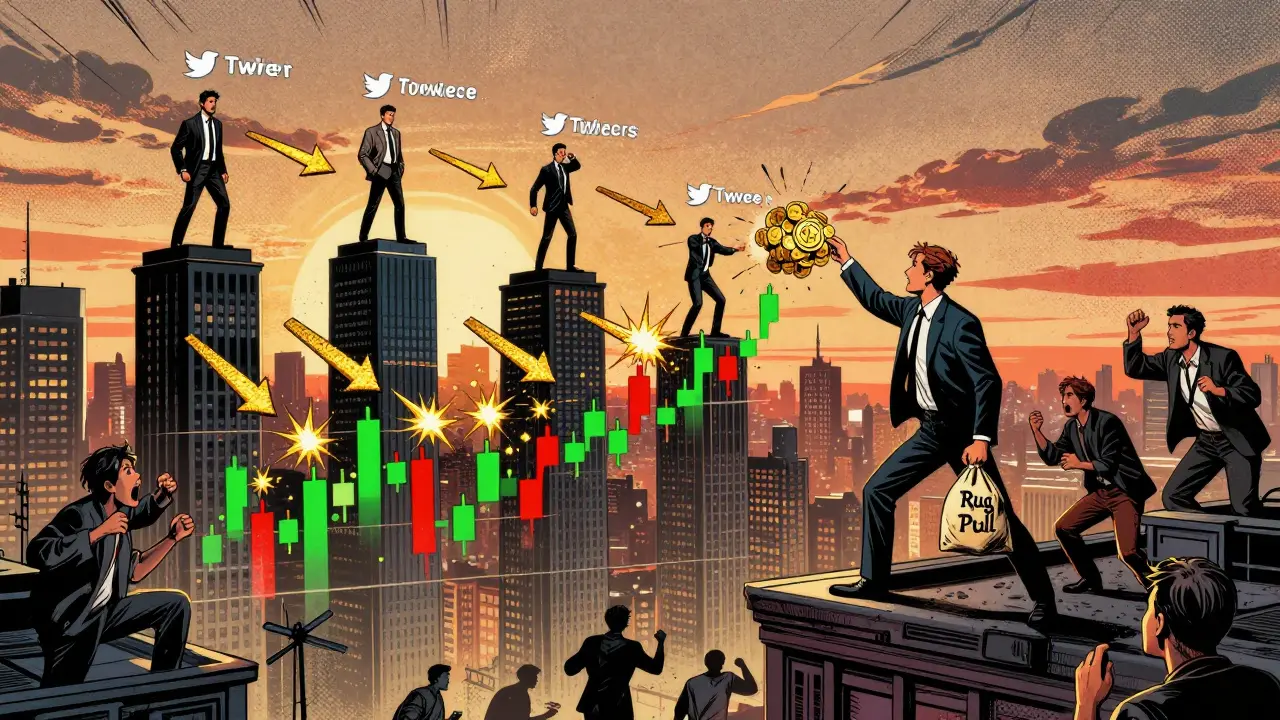
- Twitter is the amplifier. It’s where influencers, traders, and analysts share opinions, charts, and alerts. A single tweet from someone with 500K followers can trigger a 20% price spike. Twitter’s volatility shock levels are nearly 5%, the highest of any platform. It’s where FOMO turns into action.
- Reddit is the community engine. Threads on r/WallStreetBets or r/dogecoin can build momentum over days. People debate, share screenshots of profits, and coordinate buys. But Reddit is also where scams get buried under noise. Many "community-driven" memecoins are just pump-and-dumps with a subreddit.
- YouTube is the educator-or the con artist. Long-form videos break down memecoins like they’re investments. But most are paid promotions. One influencer with 2 million subscribers promoting a new memecoin can move millions in volume overnight. No one checks if they own the coin. They just trust the face on screen.
The Data Doesn’t Lie: Sentiment = Price
Researchers built models that combine sentiment from Twitter and TikTok to predict memecoin movements. The results? Accuracy jumped by up to 20%. That means if you’re tracking how many people are saying "buy" vs. "sell" in real time, you’re ahead of 90% of retail traders.Here’s how it works in practice:
- On Monday morning, a TikTok video of a guy buying $PEPE with his rent money goes viral. Mentions spike 300% in two hours.
- By noon, Twitter traders start sharing the video. $PEPE rises 15%.
- By 4 p.m., Reddit threads are asking "Is this real?" and "Who’s dumping?"
- By 8 p.m., the price peaks. The same guy who made the video sells his holdings. The price drops 40% by morning.
This cycle repeats daily. It’s not random. It’s predictable-if you know where to look.
Why This Is Gambling, Not Investing
People call it "investing." It’s not. You’re not buying a piece of a company. You’re buying a feeling. A meme. A moment.Stablecoins like USDT don’t move with memes. They’re pegged to the dollar. Memecoins? They move with emotion. When a celebrity says "I’m buying $DOGE," the price jumps. When they delete the tweet? It crashes. There’s no logic. No balance sheet. No revenue. Just vibes.
And that’s why so many people lose money. They see a 5x gain in a day and think they’re geniuses. They don’t realize they’re just the last person in line before the dump. The average memecoin investor holds for less than 48 hours. Most lose money. But the ones who win? They’re not analysts. They’re trend spotters. They know when the wave is about to break.
What You Need to Know Before Jumping In
If you’re thinking of chasing the next memecoin, here’s what you actually need:- Real-time monitoring tools-Platforms like LunarCrush or Santiment track social volume and sentiment across Twitter, Reddit, and TikTok.
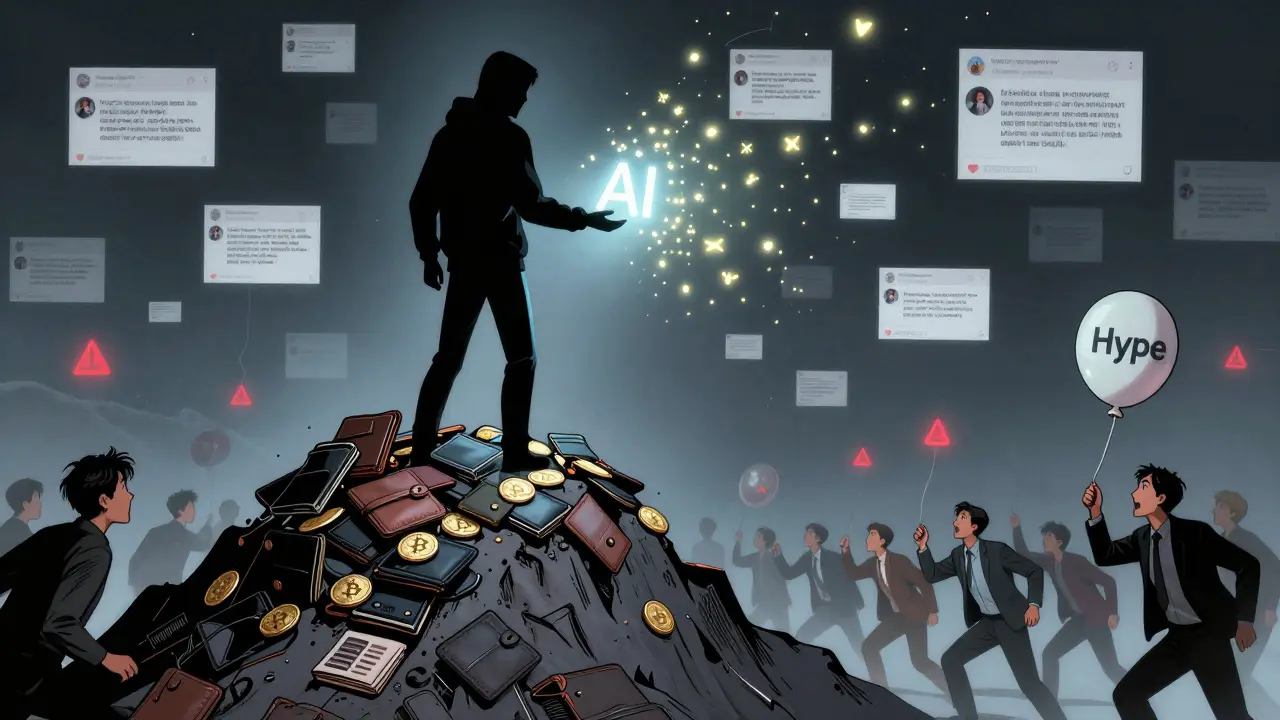
- On-chain data-Check if 80%+ of the supply is held by 5 wallets. If yes, run. That’s a rug pull waiting to happen.
- Timing-Enter early. Exit faster. The best trades happen within 30 minutes of a viral post. Waiting for "confirmation" means you’re already late.
- Emotional discipline-You will feel FOMO. You will feel panic. Don’t trade on emotion. Set a 10% profit target and a 15% stop-loss. Stick to it.
There’s no magic formula. No secret indicator. Just one rule: if you’re watching memes to make money, you’re playing a game where the house always wins. The only winners are the ones who created the meme, sold first, and walked away.
The Future: Regulation Is Coming
Social media platforms are starting to crack down. Twitter now requires crypto ads to be verified. TikTok has banned direct crypto promotion in many regions. Regulators in the U.S. and EU are investigating coordinated memecoin pumps as market manipulation.That doesn’t mean memecoins are dead. It means the wild west phase is ending. The next wave won’t be driven by random TikTokers. It’ll be driven by data. Professional traders are already building AI models that scan thousands of posts per second to predict price moves before they happen.
For regular people? The game is getting harder. The hype cycles are shorter. The scams are smarter. And the losses? They’re real.
Memecoins will keep existing. People will keep posting. Prices will keep swinging. But the days of getting rich off a viral meme without doing any homework? Those are over.
Can social media really make a memecoin go up overnight?
Yes. A single viral TikTok video or tweet from a popular influencer can cause a memecoin to spike 20-50% within hours. This happens because memecoins have no intrinsic value-only sentiment. When millions of people suddenly talk about a coin, buying follows. The price rises because of demand, not fundamentals.
Which social media platform has the biggest impact on memecoin prices?
Twitter has the strongest influence on long-term trends and expert-driven movements, while TikTok drives short-term, explosive spikes-especially among younger users. Reddit builds community momentum, and YouTube amplifies hype through influencer videos. For fastest price moves, TikTok leads. For sustained volume, Twitter wins.
Are memecoins a good investment?
They’re not investments-they’re speculative bets. Unlike Bitcoin or Ethereum, memecoins have no utility, revenue, or development team. Their value comes entirely from social media hype. Most people who trade them lose money. A few make quick gains, but only by exiting before the crowd. Treat them like lottery tickets, not assets.
How can I tell if a memecoin is a scam?
Check on-chain data. If over 70% of the total supply is held by 5 or fewer wallets, it’s likely a rug pull. Look for anonymous teams, no liquidity lock, and no audits. If the project’s only marketing is memes and influencer posts with no technical details, assume it’s a pump-and-dump. Trust code, not hype.
Is it possible to profit from memecoin social media trends?
Yes-but only if you treat it like a trading strategy, not an investment. Use tools to track real-time social sentiment, monitor wallet movements, and set strict profit and loss limits. Enter early during the hype surge, exit before the crowd. Most who try this fail because they let emotions take over. Discipline beats memes every time.
Why do celebrities promote memecoins?
They’re paid. Many celebrities partner with crypto marketing firms that pay them to post about a coin. Sometimes they even get free tokens upfront. Their posts are ads disguised as personal opinions. That’s why so many memecoins explode right after a celebrity tweet-and then crash within days. The promoter already cashed out.
Richard Kemp
February 1 2026man i just saw a doge meme on tiktok and bought 5 bucks worth
Jeremy Dayde
February 2 2026you know what sucks about all this is how people treat it like a get rich quick scheme when it's literally just emotional gambling with a blockchain wrapper
i watched my cousin dump his entire paycheck into shiba after some influencer said it'd hit 10x by friday
he cried for three days when it dropped 80%
and the worst part is he still thinks he'll get it back if he just holds longer
no bro the hype cycle is over you're not an investor you're a spectator who got caught in the tide
every time someone says 'but what if it goes to the moon' they're ignoring the fact that the moon was never the destination
the destination was the exit of the people who created it
and you're just the sucker holding the bag while they drive off in their lamborghini
it's not even about intelligence or education
it's about emotional regulation
people don't lose money because they're dumb
they lose it because they're lonely
they want to believe in something
and memes give them that feeling faster than anything else
but feelings don't pay bills
and when the internet moves on to the next viral cat video
your portfolio turns to dust
Jerry Ogah
February 3 2026THIS IS WHY AMERICA IS DOOMED
people are literally trading their rent money for a dog with sunglasses
and you call it investing???
we are a nation of toddlers with credit cards
the only thing more pathetic than buying memecoins is defending it
your grandkids will laugh at this era
and i will be the one telling them stories about how we traded our futures for a tweet
Will Pimblett
February 5 2026lol so you're telling me the entire crypto market is just a reality show where the producers are anonymous devs and the audience pays to be the punchline?
brilliant
who needs Wall Street when you've got TikTok influencers with 200k followers and zero accountability
the real innovation here isn't blockchain
it's the ability to turn mass delusion into a liquidity event
congrats to the 0.1% who cashed out
the rest of us just paid for the fireworks
Christopher Michael
February 6 2026Let me just say, as someone who’s tracked over 200 memecoin launches since 2021, the data is crystal clear: social sentiment correlation with price action is >0.85 on most platforms, especially Twitter and TikTok.
And yes, the 80%+ supply held by 5 wallets? That’s not a red flag-it’s a neon sign with a siren.
Also, please stop calling it ‘investing.’ It’s not. It’s speculation. There’s a difference.
And if you’re not using LunarCrush or Santiment, you’re flying blind.
On-chain analytics > memes.
Always.
Parth Makwana
February 8 2026Memecoins represent the epitome of post-modern financial pathology
Capitalism has devolved into performative liquidity
The meme is the new IPO
The virality metric replaces the P/E ratio
And the herd mentality becomes the sole arbiter of value
What we are witnessing is not market inefficiency
It is the commodification of collective psychosis
Where once we had balance sheets
Now we have viral reels
The algorithm doesn't care about utility
It cares about engagement
And engagement is the new currency
But make no mistake
This is not innovation
This is entropy dressed in crypto bros
Elle M
February 9 2026Oh so now it’s ‘emotional gambling’? You’re telling me this is the first time Americans lost money because they followed influencers?
Remember the housing bubble?
The dot-com craze?
The Beanie Babies?
Every generation thinks they’re special
Until they’re not
And then they blame the internet
Not themselves
Pathetic.
Rico Romano
February 10 2026Most of you don’t even understand the difference between a blockchain and a spreadsheet.
You think ‘viral’ means ‘valuable’?
Let me educate you: Bitcoin has a capped supply and decentralized nodes.
Shiba Inu has a dog logo and a Discord full of teens.
Calling them both ‘crypto’ is like calling a bicycle and a Boeing 747 ‘transportation’.
And you wonder why the world laughs at us?
Crystal Underwood
February 11 2026Ugh I can't believe you're still falling for this
Every single one of these memecoins is a rug pull
Every. Single. One.
And you're out here saying 'maybe this one's different' like a toddler playing with fire
They don't care about you
They care about your wallet
And your FOMO is their ATM
Stop being a pawn
Go read a book
Or better yet
Go invest in yourself
Not some random coin named after a cat
Raymond Pute
February 12 2026Actually, I think you're all missing the point
What if memecoins aren't meant to be investments at all
What if they're just digital tribal badges
Like wearing a band t-shirt or a sports jersey
People aren't buying $PEPE to get rich
They're buying it to belong
To say 'I'm part of the joke'
To laugh at the system while still playing it
Maybe the real innovation isn't the price chart
It's the community
And yeah
Most people lose money
But maybe they got something else
A sense of humor
A meme
A moment
That's worth more than a 10x return
Meenal Sharma
February 13 2026Have you ever considered that this entire system is orchestrated by a shadow coalition of tech elites, hedge funds, and social media algorithms to distract the masses from real economic collapse?
The memes? A placebo.
The price spikes? Controlled triggers.
The crashes? Scheduled to reset the narrative.
They don't want you to invest.
They want you to consume emotion.
And while you're chasing the next 100x
They're buying farmland.
And gold.
And real power.
Remember: the game was rigged before you even opened your wallet.
Freddy Wiryadi
February 14 2026honestly i think its kinda beautiful
like a digital campfire where everyone gathers to laugh at how crazy the world is
yeah people lose money
but they also make friends
and memes
and inside jokes that last longer than any coin
i bought $doge with my lunch money last week
lost 70%
but i got a new group chat with 12 strangers who now call me 'the meme knight'
and that? that’s worth more than any chart
emoji: 🐶✨
Tressie Trezza
February 15 2026It's not about whether memecoins are good or bad.
It's about what they reveal about us.
We live in a world where attention is the only currency that matters.
And if you can turn a joke into a trend
you've won the game.
Maybe the real lesson isn't how to trade memecoins.
It's how to recognize when you're being played.
And still choose to play anyway.
Because sometimes
the joy is in the absurdity.
Gurpreet Singh
February 15 2026Bro, in India we call this 'jugaad' - making something out of nothing
People here use WhatsApp groups to flip memecoins like they're street snacks
One guy turned 500 rupees into 50k in a week
Then lost it all in two days
But he still smiles
Because he got to talk to people from 12 states
And that’s the real gain
Money comes and goes
But connection? That sticks
Jeremy Dayde
February 17 2026you know what’s wild
the same people who got burned on shiba
are now posting screenshots of their new $WOLF buy
same energy
same captions
same delusion
they don’t learn
they just recycle the trauma
and the system loves it
because every new sucker is another wave
and the wave never ends
it just changes names