
Have you seen ads for Value DeFi Protocol promising high returns on your crypto holdings? It sounds too good to be true. In the world of decentralized finance, names like this often pop up with flashy websites and big promises. But here is the hard truth: there is almost no credible public data about a major exchange or protocol operating under this exact name in the top tier of the market.
If you are looking to invest, pause right now. The lack of transparency is a massive red flag. Unlike established platforms where you can verify audits, team identities, and total value locked (TVL) on independent trackers, "Value DeFi Protocol" appears to be either a very new, unverified project or potentially a fraudulent scheme designed to mimic legitimate DeFi brands. This review breaks down why you should proceed with extreme caution and what real security looks like in 2026.
The Silence Surrounding Value DeFi Protocol
In the crypto industry, silence is loud. When a platform claims to be a major player, it leaves a digital footprint. You can find its smart contracts on Etherscan, its token price on CoinGecko, and its TVL on DefiLlama. For Value DeFi Protocol, a claimed decentralized finance platform that lacks verifiable public records, audit reports, or significant market presence in 2026, none of these exist in any meaningful way.
Legitimate protocols do not hide. They publish their code for anyone to inspect. They undergo rigorous security audits from firms like CertiK or OpenZeppelin. If you cannot find a recent audit report for Value DeFi Protocol, you are essentially gambling with your funds. The absence of this basic information suggests the project may not have the infrastructure to handle user assets safely. It is not just a minor oversight; it is a critical failure of trust.
How Real DeFi Giants Operate Differently
To understand why the lack of data is so concerning, look at how the leaders in the space operate. In 2026, the decentralized finance sector has matured significantly. Total value locked across all protocols exceeds $100 billion. This growth is driven by users demanding safety, transparency, and efficiency.
Consider Lido, the largest liquid staking protocol in DeFi, handling billions in assets with transparent governance and multiple security audits. Lido doesn't just claim to be safe; it proves it. With over $13.9 billion in TVL, it operates across multiple chains, allowing users to stake Ethereum and receive stETH tokens. These tokens can be used elsewhere in DeFi to earn extra yield. Every transaction is visible on the blockchain. Every line of code has been scrutinized by independent experts.
Then there is Uniswap, the leading decentralized exchange (DEX) that revolutionized automated market making (AMM) with open-source liquidity pools. Founded in 2018, Uniswap processes billions in daily trading volume. Its interface is simple, but its backend is robust. It relies on a vast network of liquidity providers rather than a central company holding your money. This structure reduces counterparty risk significantly. You control your keys; you control your crypto.
Compare this to the vague promises often associated with unknown entities like Value DeFi Protocol. Do they offer a clear explanation of how yields are generated? Do they disclose who holds the private keys to the treasury? If the answer is no, you are likely dealing with a centralized entity pretending to be decentralized.
Red Flags: Identifying Potential Scams
Not every new project is a scam, but many share common characteristics with fraudulent schemes. Here are the specific warning signs you need to watch for when evaluating any crypto exchange or DeFi protocol:
- No Verifiable Team: Legitimate projects list their founders and developers with LinkedIn profiles or GitHub histories. Anonymous teams are acceptable in some privacy-focused projects, but never in lending or exchange platforms where accountability matters.
- Promises of Guaranteed High Returns: DeFi yields fluctuate based on market conditions. Any platform guaranteeing fixed, high percentages (like 1% daily or 50% monthly) is mathematically unsustainable and likely a Ponzi scheme.
- Lack of Smart Contract Audits: If you cannot find an audit report from a reputable firm, the code may contain backdoors that allow developers to drain user funds.
- Pressure to Act Quickly: Scammers create urgency. They might say the "bonus period" ends in 24 hours. Real financial products do not rush you.
- Unregistered Domains: Check the domain registration date. If the website was created only a few months ago but claims years of operation, it is a lie.
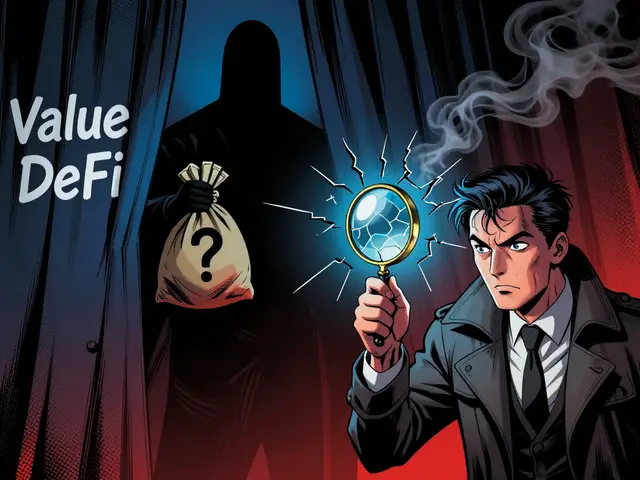
Value DeFi Protocol triggers several of these alarms simply by its invisibility in the broader ecosystem. There are no community discussions on Reddit or Discord with substantial user feedback. There are no partnerships announced by major blockchain foundations. In the age of social media, a real product generates noise. Silence means there is nothing behind the curtain.
The Importance of Due Diligence Tools
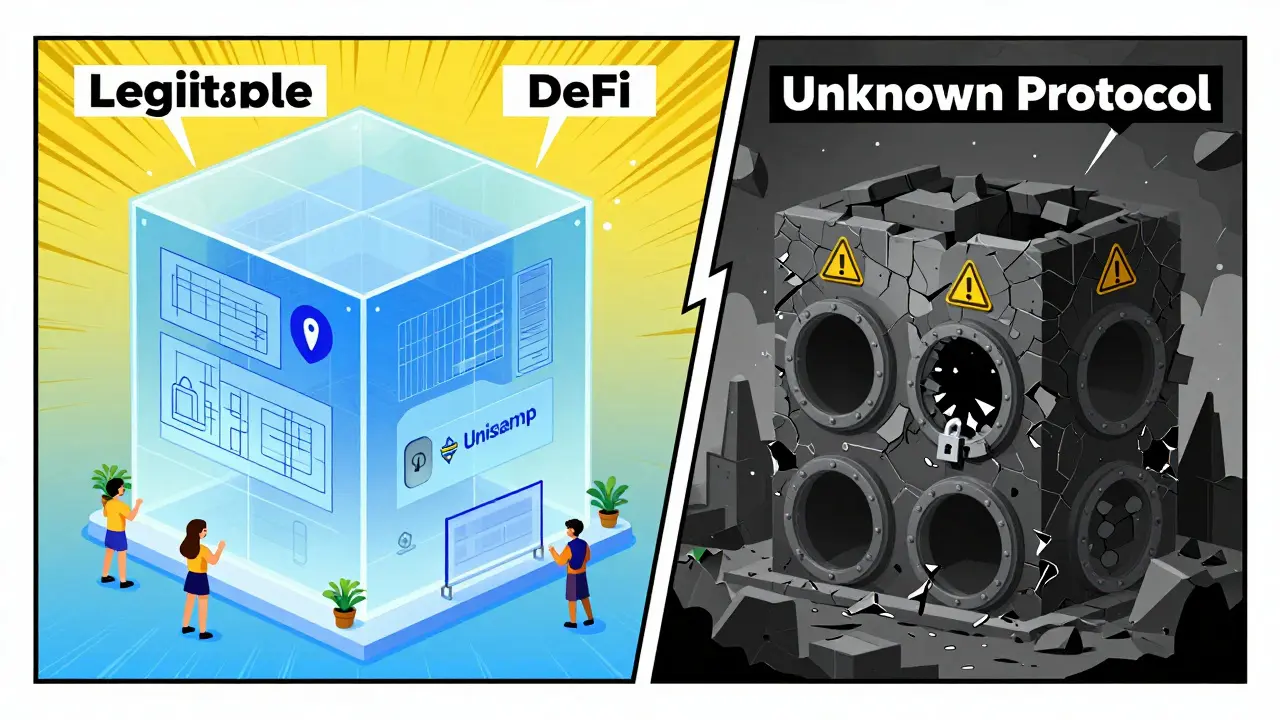
You don't have to take my word for it. You can verify the status of any DeFi project yourself using free tools. This process takes less than five minutes and can save you thousands of dollars.
- Check DefiLlama: Go to DefiLlama.com and search for the protocol name. If it does not appear in the rankings, or if its TVL is near zero, it is not a significant player. Major protocols like AAVE ($4.5B TVL) and Curve Finance ($2.1B TVL) are listed prominently.
- Search CoinGecko or CoinMarketCap: Does the project have a token? Is it traded on reputable exchanges? If the only place to buy the token is through the project's own website, it is a huge risk.
- Review Smart Contracts: Use Etherscan or BscScan to look at the contract address. Can you see the transactions? Are there large withdrawals to unknown wallets?
- Look for Audit Reports: Search for "[Protocol Name] audit report". If the results are empty or link to obscure blogs, avoid the platform.
When you apply these steps to Value DeFi Protocol, the results are stark. There is no evidence of institutional adoption, no regulatory compliance filings, and no technical documentation that stands up to scrutiny. In contrast, platforms like AAVE, a leading multi-chain lending protocol known for its robust security measures and widespread adoption across nine blockchains provide comprehensive docs, active governance forums, and regular updates.
Safety First: Alternatives to Consider
If you are looking to enter the DeFi space in 2026, there are safer, more transparent options available. The market has evolved to prioritize user protection and regulatory clarity. Here are three categories of trusted platforms:
| Feature | Trusted Protocols (e.g., Lido, Uniswap) | Unknown Entities (e.g., Value DeFi Protocol) |
|---|---|---|
| Audits | Multiple audits by top firms (CertiK, Trail of Bits) | No public audit reports found |
| Transparency | Open-source code, visible transactions on-chain | Opaque operations, unclear fund management |
| Track Record | Years of operation, survived market crashes | No verifiable history or past performance |
| Community | Active governance, large Discord/Telegram communities | Silent or bot-filled social channels |
| Risk Level | Low to Medium (market risk remains) | Extremely High (potential for total loss) |
For liquid staking, Rocket Pool, a decentralized Ethereum staking protocol that offers lower entry barriers and non-custodial staking options provides a solid alternative to Lido. For trading, Curve Finance, a specialized DEX focused on stablecoin swaps, offering low slippage and high capital efficiency remains a gold standard for stability. For lending, Compound Finance, a pioneering algorithmic money market protocol that allows users to lend and borrow cryptocurrencies continues to innovate with cross-chain capabilities.
These platforms have faced challenges-bugs happen, markets crash-but they always respond with transparency. They patch vulnerabilities quickly and compensate affected users if necessary. This level of accountability is missing from lesser-known entities.
Regulatory Landscape in 2026
The regulatory environment for crypto has tightened considerably. Governments worldwide are implementing stricter rules to protect investors. In the US and EU, unregistered securities offerings face severe penalties. Platforms that ignore these regulations risk being shut down or blacklisted.
Legitimate DeFi protocols are adapting. They are integrating KYC (Know Your Customer) solutions where required, partnering with regulated custodians for institutional clients, and publishing compliance reports. Sky (formerly MakerDAO), a decentralized credit platform that issues the DAI stablecoin, focusing on real-world asset backing and regulatory compliance has been a leader in this shift, ensuring its collateral reserves are audited and legally sound.
If Value DeFi Protocol is not engaging with regulators, it is operating in the shadows. This makes it vulnerable to sudden bans, frozen assets, or legal action. As an investor, you want to be on the right side of the law. Using unregulated platforms exposes you to unnecessary legal and financial risk.
Final Thoughts: Protect Your Capital
The allure of high yields is understandable, especially when inflation erodes traditional savings. But in crypto, security comes first. Never sacrifice safety for speculation. The fact that you cannot find basic information about Value DeFi Protocol should be enough to make you walk away.
Stick to protocols with proven track records, open-source code, and active communities. Use hardware wallets to store your assets. Enable two-factor authentication on all accounts. And remember: if a deal seems too good to be true, it almost certainly is. The DeFi space is full of opportunities, but they belong to those who do their homework. Don't let curiosity cost you your capital.
Is Value DeFi Protocol a scam?
While we cannot definitively label it a scam without legal proof, the complete lack of verifiable data, audit reports, and public team information strongly suggests it is unsafe. It exhibits many characteristics of fraudulent schemes, including opacity and unverifiable claims. It is highly recommended to avoid investing in it.
What is the safest DeFi protocol in 2026?
Safety is relative, but protocols like Lido, Uniswap, and AAVE are considered among the safest due to their long track records, multiple security audits, high total value locked (TVL), and transparent governance. They have survived previous market cycles and maintain strong security teams.
How can I verify if a crypto exchange is legitimate?
Check for public audit reports from reputable firms, look for the protocol on independent trackers like DefiLlama or CoinGecko, verify the team's identities on LinkedIn, and read community feedback on Reddit or Discord. Legitimate platforms will have all this information easily accessible.
Why is transparency important in DeFi?
Transparency allows users to verify that funds are secure and managed as promised. Since DeFi runs on smart contracts, anyone can inspect the code and transaction history. Lack of transparency hides potential risks, such as hidden fees, unauthorized access, or solvency issues.
Can I recover my funds if Value DeFi Protocol shuts down?
Likely not. If the protocol is truly decentralized, you might retain control via your wallet, but if it is a centralized front-end hiding behind a DeFi label, the operators can vanish with the funds. Without insurance or regulatory protection, recovery is extremely difficult.
Michelle Bonahoom
May 22 2026i dont care about all these fancy terms like TVL or audits if it works for me but yeah maybe be careful i guess
Matt Davis
May 23 2026You are absolutely missing the point here. The entire premise of DeFi is trustlessness, not transparency. If you need a team on LinkedIn to feel safe, you should stick to your bank. This article reeks of centralized bias and fear-mongering against innovation.
Furthermore, the lack of data simply means they are privacy-focused, which is a feature, not a bug. You are judging a book by its cover while ignoring the content entirely. It is pathetic how quickly people jump on the bandwagon without understanding the underlying technology.
Albert Lee
May 25 2026I can totally see why you might feel frustrated Matt, but safety is paramount when we are talking about life savings. It is not about bias, it is about protecting ourselves from losing everything overnight. We have seen too many rug pulls where 'privacy' was just a cover for theft.
Please remember that every single person reading this has their own journey and fears. Let us support each other in making informed decisions rather than tearing down valid concerns. Your passion is great, but let us channel it into helping others stay secure.
Ankush Pokarana
May 27 2026the nature of truth in decentralized systems is often obscured by the noise of marketing and the silence of bad actors one must look beyond the surface level indicators and consider the philosophical implications of anonymity versus accountability in financial instruments that claim to serve the public good yet operate in shadows
Bianca Vilas Boas Lourenço
May 28 2026Oh wow another lecture on how to live my life 🙄 I bet you think you are so smart because you read DefiLlama 🤭 Meanwhile I am over here making actual profits while you write essays about risk management 😂 Enjoy your zero gains loser 📉💀
Yash Lodha
May 29 2026The silence is not accidental it is orchestrated by shadowy figures who control the narrative through mainstream media outlets that are paid to discredit independent projects. They want you to believe that only the regulated entities are safe because they can track your every move. Value DeFi Protocol is likely being suppressed by algorithms designed to protect the status quo. Wake up sheeple before the digital surveillance state takes away your freedom to choose where your money goes.
Jesse Alston
May 30 2026Hey guys 👋 Just wanted to add a quick tip for anyone looking into new protocols. Always check the contract address on Etherscan first. If you see functions like `withdrawAll` or `blacklist` that are owned by a single wallet, run far away 🏃♂️💨 Legit projects renounce ownership or use multi-sig wallets. Stay safe out there! 🔒✨
Sarah C
May 31 2026I appreciate this perspective. It helps to have clear guidelines on what to look for when evaluating new opportunities in the crypto space.
Kimberly Herbstritt
June 1 2026Actually I think you are being way too negative here. There are plenty of legit projects that start small and grow later. Why assume everyone is a scammer? It is kind of rude to dismiss them so quickly.
Sharada Vakkund
June 1 2026Let us come together as a community to share our experiences and help each other navigate this complex landscape. Your voice matters and your insights are valuable to all of us.
Sudarshan Anbazhagan
June 2 2026it is imperative that individuals understand the fundamental principles of cryptographic security and the necessity of rigorous auditing processes before entrusting their assets to any platform that lacks verifiable credentials in the current market environment
John Gonzalez Bentham
June 3 2026nah this is all bs. i made 50k last week using a random site i found on twitter. why listen to these haters who never win at anything?
Destiny Kilby
June 5 2026i hear what you are saying and it does seem concerning but perhaps there is more to the story than meets the eye
Jerry CUNNINGHAM SR
June 7 2026Thank you for bringing this to light. It is crucial that we maintain high standards for security and transparency within our industry. I encourage everyone to engage in respectful dialogue and prioritize the safety of their investments above all else.