You’ve probably seen the cute penguins on social media or in retail stores, but what exactly is Pudgy Penguins in the world of cryptocurrency? It’s not just a collection of digital images anymore. The brand has evolved into a massive Web3 ecosystem, anchored by its native utility token, PENGU. If you’re wondering whether this is just another passing meme trend or a legitimate asset with real utility, you need to understand how it bridges the gap between mainstream consumer brands and blockchain technology.
The short answer is that PENGU is the fuel for the Pudgy Penguins community, built on the Solana blockchain. It launched in December 2024, marking a significant shift from being purely an Ethereum-based NFT project to a broader cryptocurrency player. This guide breaks down what the token does, where the money comes from, and why this specific project stands out in a crowded market.
The Origin Story: From NFTs to a Brand Powerhouse
To understand the value behind the token, you have to look at the history. Pudgy Penguins started in July 2021 as a collection of 8,888 unique, hand-drawn penguin avatars on the Ethereum blockchain. Like many projects back then, it faced a rough patch known as "the Great Blizzard," where the community struggled and the project was mocked by rivals.
However, the turning point came in April 2022 when entrepreneur Luca Netz acquired the brand’s intellectual property for 750 ETH (about $2.5 million at the time). Under his leadership, the project underwent a community-led takeover. Instead of focusing solely on speculative trading, they focused on building a real-world brand. Today, the IP is owned by LSLTTT Holdings, Inc., which manages licensing deals that put Pudgy Penguins toys in major retailers like Target and Walmart. This mainstream visibility is rare in crypto and provides a solid foundation for the token.
What Is the PENGU Token?
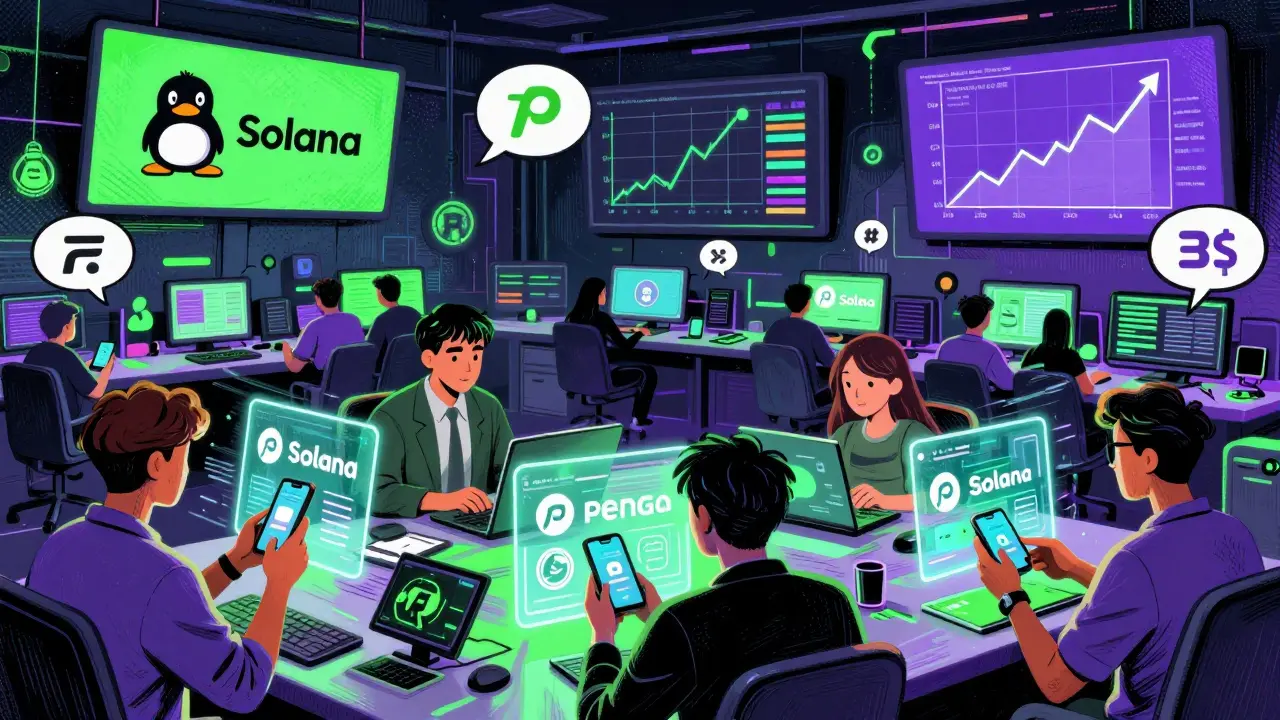
The PENGU token is the native currency of the Pudgy Penguins ecosystem. Unlike the original NFTs which live on Ethereum, PENGU operates on Solana. Why Solana? Because it offers high throughput and low transaction fees, making it accessible for everyday users who might be intimidated by Ethereum’s gas costs.
Launched on December 17, 2024, PENGU serves several purposes:
- Community Alignment: It allows fans of the brand to participate in the ecosystem beyond just owning an NFT.
- Governance: Holders may gain voting rights on future initiatives, though specific governance mechanics are still evolving.
- Utility: It acts as a medium of exchange within the growing Web3 initiatives tied to the brand.
Luca Netz has described PENGU as "the token for the people, by the people." The goal isn’t just to create a financial instrument but to bring millions of existing fans into the cryptocurrency space through a familiar and beloved character.
Tokenomics: Supply and Distribution
When evaluating any crypto asset, the tokenomics-the economics behind the token-are crucial. Here is the breakdown for PENGU:
| Metric | Value |
|---|---|
| Total Maximum Supply | 88,888,888,888 (88.88 Billion) |
| Circulating Supply | ~62.8 Billion |
| Blockchain | Solana |
| Launch Date | December 17, 2024 |
| Initial Listing Price | ~$0.068 |
A notable feature of the distribution is that 50% of the total supply is dedicated to community growth and expansion. This means half of all tokens exist to reward active participants, fund public initiatives, and incentivize engagement. This heavy allocation to the community distinguishes it from many other tokens where large portions are held by early investors or venture capital firms.
Market Performance and Volatility
The launch of PENGU was one of the most anticipated events in the crypto calendar for late 2024. Upon listing, particularly on major exchanges like Binance, the token saw immense activity. It achieved a market capitalization of approximately $2.1 billion on its first day, placing it firmly in the top 100 cryptocurrencies globally.
However, new launches are rarely smooth. On day one, the price experienced a 51% decline due to initial volatility and selling pressure. By February 2026, the token had stabilized somewhat but continued to show typical crypto fluctuations, including periods of decline such as a 13.7% drop over a seven-day period observed in recent data. If you are considering buying, remember that meme-adjacent tokens can be highly volatile. They react strongly to social sentiment, news about the brand, and broader market trends.
The Strategy: Becoming the "Meme King"
There is no sugar-coating it: PENGU is positioned partly as a meme coin. Luca Netz has openly discussed the strategy of making PENGU "the Meme King" and even mentioned ambitions to compete with giants like Dogecoin. But this isn’t just about jokes and internet culture.
The strategy leverages the emotional connection people have with the brand. In crypto, attention is currency. By combining the viral nature of memes with the tangible backing of a licensed physical toy brand, Pudgy Penguins creates a unique hybrid. It’s not *just* a meme coin with no utility; it’s a utility token backed by a brand that sells millions of dollars worth of merchandise annually. This dual identity aims to provide more stability than pure meme coins while maintaining the high engagement levels they attract.
Risks You Should Know Before Buying
No investment is without risk, and PENGU carries several specific dangers:
- Volatility Risk: As with all crypto assets, prices can swing wildly in short periods.
- Regulatory Risk: Governments worldwide are still defining rules for crypto assets. Changes in regulation could impact trading or utility.
- Smart Contract Risk: While Solana is generally secure, any code defect or security breach in the token’s smart contract could lead to losses.
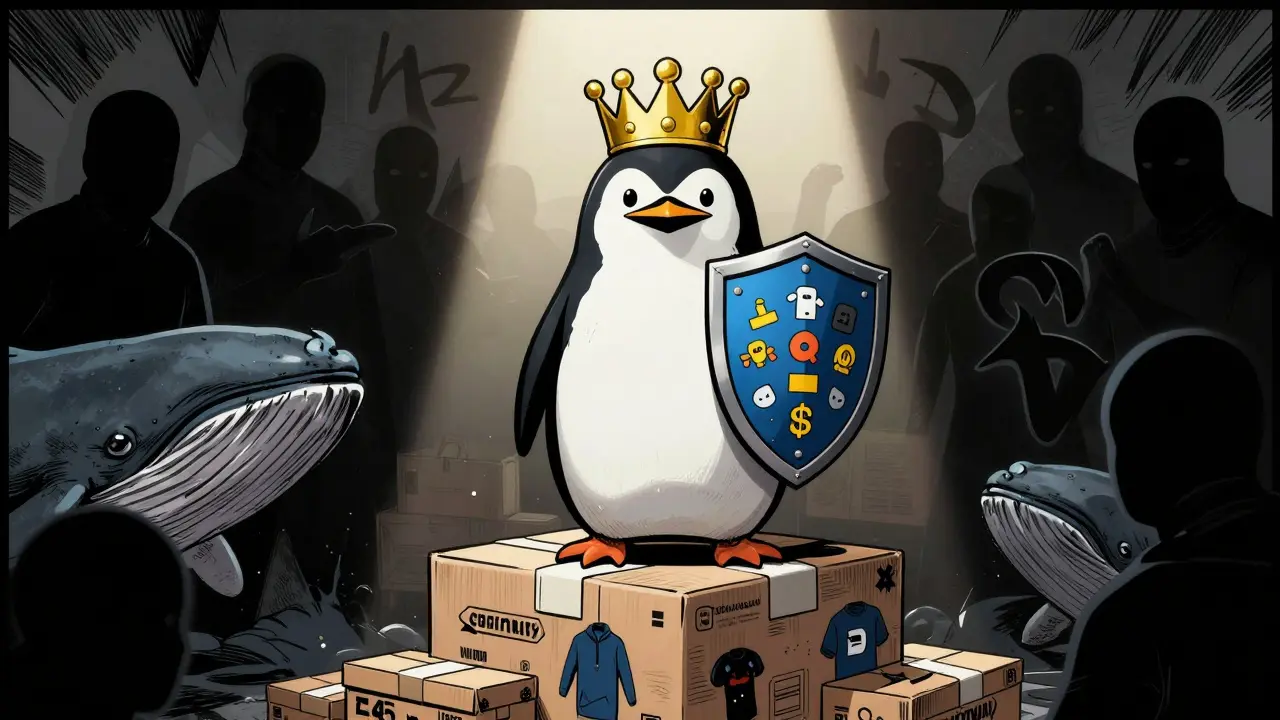
- Concentration Risk: Although 50% is allocated to the community, you must monitor who holds the remaining supply. Large holders (whales) can influence price movements.
- Brand Dependency: The token’s value is closely tied to the success of the Pudgy Penguins brand. If consumer interest in the merchandise wanes, it could negatively impact the token.
How Does PENGU Compare to Other Projects?
If you’re trying to decide if PENGU fits your portfolio, it helps to see how it stacks up against similar assets. Here is a quick comparison:
| Feature | PENGU | Dogecoin (DOGE) | Bonk (BONK) |
|---|---|---|---|
| Blockchain | Solana | Ethereum (Sidechain) | Solana |
| Backing | NFT + Physical Merchandise | Community/Culture | Community/Solana Ecosystem |
| Primary Utility | Ecosystem Access & Rewards | Tipping/Micropayments | Ecosystem Incentives |
| Mainstream Presence | High (Retail Stores) | Medium (Cultural Icon) | Low (Crypto-Native) |
PENGU’s advantage lies in its tangible real-world presence. While Dogecoin relies heavily on celebrity endorsements and cultural moments, and Bonk relies on the Solana ecosystem’s growth, PENGU has a direct pipeline to non-crypto consumers through its toys and apparel. This creates a potential influx of new users who might buy the token to engage with the brand, rather than just for speculation.
Is PENGU a Good Investment?
Only you can decide if PENGU fits your financial goals. However, here are some factors to weigh:
Pros:
- Strong Community: One of the most engaged communities in Web3.
- Real-World Revenue: Backed by a profitable merchandise business.
- Accessibility: Built on Solana, making it easy to transact.
- Founder Commitment: Luca Netz has stated he intends to hold his Penguins forever, signaling long-term confidence.
Cons:
- New Asset: The token itself is relatively new (launched late 2024), so there is limited historical data.
- High Volatility: Expect sharp price swings.
- Market Sentiment Dependence: Value is heavily influenced by hype and social media trends.
If you believe in the power of community-driven brands and want exposure to the intersection of NFTs, memes, and mainstream commerce, PENGU offers a unique proposition. If you prefer stable, established assets with decades of history, this might be too risky for you.
Can I buy PENGU on Binance?
Yes, PENGU was listed on Binance shortly after its launch in December 2024. Binance is one of the largest cryptocurrency exchanges in the world, providing high liquidity and ease of access for buyers. Always check the current trading pairs available on the platform before attempting to trade.
What blockchain is PENGU built on?
The PENGU token is built on the Solana blockchain. This choice was made to leverage Solana’s high speed and low transaction fees, making it more user-friendly for everyday transactions compared to Ethereum, where the original NFTs reside.
Who owns the Pudgy Penguins brand?
The intellectual property and brand are owned and managed by LSLTTT Holdings, Inc., led by founder Luca Netz. He acquired the project in 2022 and has since expanded it into a global licensing powerhouse.
Is PENGU just a meme coin?
While it has meme coin characteristics and aims to capture that market segment, it is also a utility token for the Pudgy Penguins ecosystem. It is backed by a real-world brand with physical merchandise, licensing deals, and an active NFT community, giving it more fundamental support than traditional meme coins.
What is the total supply of PENGU?
The maximum total supply of PENGU is 88,888,888,888 tokens (88.88 billion). Approximately 50% of this supply is allocated to community growth and expansion initiatives.
When did the PENGU token launch?
The PENGU token officially launched on December 17, 2024. This marked the expansion of the Pudgy Penguins brand from solely an NFT project to a broader cryptocurrency offering.
How does PENGU differ from the original Pudgy Penguins NFTs?
The original NFTs are 8,888 unique digital collectibles on the Ethereum blockchain. The PENGU token is a fungible cryptocurrency on the Solana blockchain. While they are part of the same ecosystem, they serve different purposes: NFTs represent ownership of specific art pieces, while PENGU serves as a utility token for community participation and rewards.