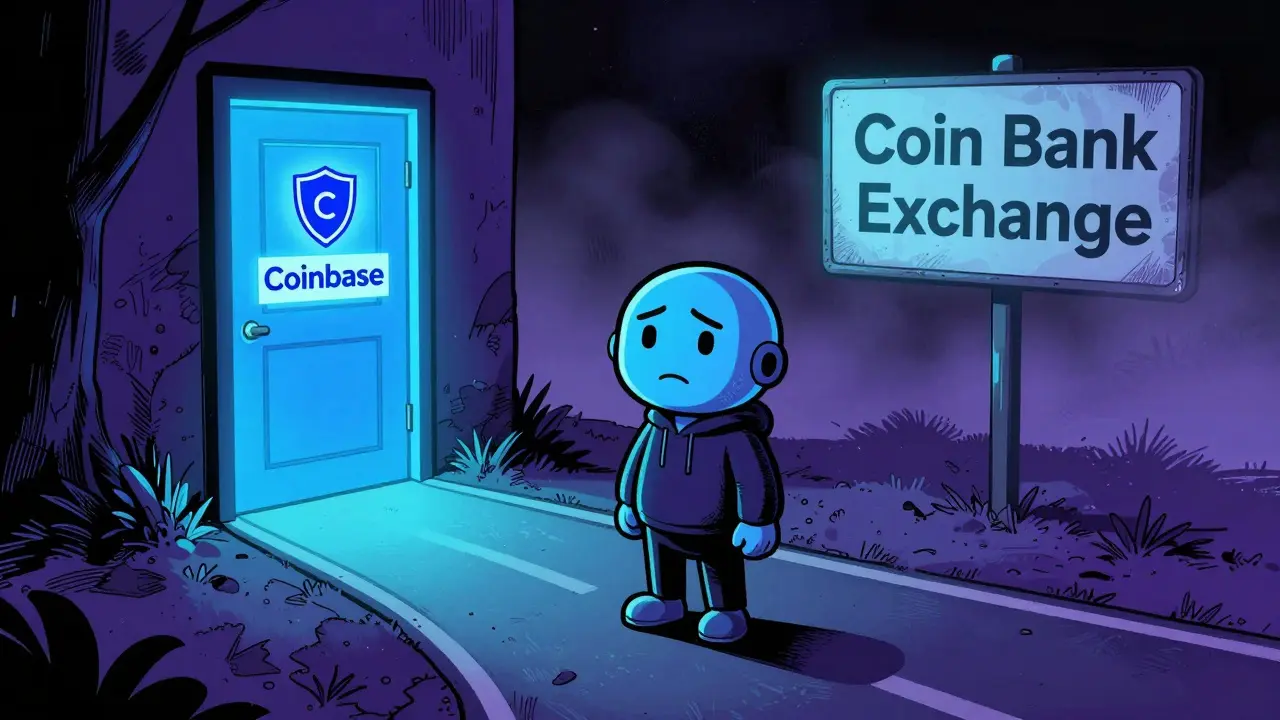
There is a common mix-up in the crypto world. You might have heard of "Coin Bank Exchange" or similar names, but here is the hard truth: Coin Bank Exchange does not exist as a standalone cryptocurrency platform. What you are likely looking for is Coinbase, which is the publicly traded cryptocurrency exchange founded by Brian Armstrong and Fred Ehrsam in June 2012. This confusion often stems from Coinbase’s partnerships with traditional banks like Customers Bank and Evolve Bank & Trust, which handle fiat deposits for the platform. If you are trying to find a safe place to buy Bitcoin or Ethereum, you need to know that Coinbase is the actual entity behind those banking connections.
By May 2026, the landscape has shifted significantly. The regulatory pressure that peaked in early 2025 forced major changes across the industry. Coinbase had to delist several tokens, including XRP and ADA, following SEC enforcement actions. This wasn’t just bad news; it reshaped who uses the platform. Today, Coinbase serves 48.7 million verified U.S. users, making it one of the most trusted entry points for beginners, even if it isn’t the cheapest option for pros. Let’s break down whether it still deserves your trust and wallet space in 2026.
Who Is Coinbase For?
Coinbase positions itself as the gateway for everyday people to enter the digital asset space. It is not built for high-frequency traders who need millisecond execution speeds. Instead, it prioritizes simplicity, compliance, and security. If you are new to crypto, this matters more than you think. A complex interface can lead to costly mistakes, and Coinbase avoids that trap.
- Beginners: With a $0 minimum deposit and an intuitive mobile app (iOS 15.0+/Android 8.0+), getting started takes less than 3.2 hours on average, according to Koinly’s 2025 onboarding study.
- Institutional Investors: Over 14,300 business accounts use Coinbase for custody and trading, relying on its SEC-registered broker-dealer status (No. 177-00009).
- Earners: Users who want to learn while earning can take advantage of Coinbase Earn, which offered 127 courses viewed 4.3 million times in Q3 2025 alone.
However, if you are a day trader looking to scalp small price movements, you will likely hit walls. The API rate limits cap at 100 transactions per second (TPS), whereas competitors like Kraken offer 2,000 TPS. That difference is massive when you are executing dozens of trades per minute.
Fees: Where the Money Goes
Let’s talk about costs because they eat into profits faster than market dips. Coinbase’s fee structure is transparent once you understand the tiers, but it can be confusing for newcomers. In August 2025, Coinbase introduced a "Fee Breakdown" toggle to help users see exactly what they are paying, addressing complaints that hidden fees inflated costs by 22% on average.
| Exchange | Retail Card Purchase Fee | Pro/Advanced Trading Fee | ACH Transfer Fee |
|---|---|---|---|
| Coinbase | 1.49% - 3.99% | 0.50% | $0.00 |
| Kraken | 0.90% - 1.50% | 0.16% - 0.26% | $5.00 |
| Binance US | 0.50% | 0.10% | $0.00 |
If you buy $1,000 worth of Bitcoin using a credit card on standard Coinbase, you pay up to 3.99%. That is nearly $40 gone instantly. Switch to Coinbase Advanced Trade, which is a professional trading interface offering lower fees and advanced charting tools, and that fee drops to 0.50%. For large volumes, the October 2025 launch of Advanced Trade Pro offers 0.00% maker fees for daily volumes over $100,000. Always check which interface you are using before clicking "buy."
Security and Asset Protection
Security is non-negotiable in crypto. After the collapses of FTX and other platforms in previous years, users demand proof. Coinbase delivers on this front with aggressive transparency measures. As of September 30, 2025, their Proof of Reserves audit confirmed that 98% of customer assets sit in cold storage across 17 geographically dispersed locations. Hot wallets, which are online and vulnerable to hacks, are capped at $250 million.
Their security stack includes:
- FIDO2 Security Keys: Hardware-based authentication that prevents phishing attacks.
- Biometric Login: FaceID and fingerprint scanning for mobile access.
- Insurance Coverage: A $255 million crime insurance policy through Lloyd's of London, verified in their Q2 2025 transparency report.
Despite these measures, no system is perfect. In April 2024, a significant outage prevented 1.2 million users from trading during a volatile 12% Bitcoin swing. While not a security breach, it highlighted infrastructure vulnerabilities during peak stress. By 2026, Coinbase has improved uptime SLAs to 99.95% for institutional clients via FIX API connectivity, but retail users should still expect occasional delays during extreme market volatility.
Staking and Passive Income
You don’t have to trade actively to make money on Coinbase. Staking allows you to lock up certain cryptocurrencies to support network operations and earn rewards. Coinbase supports nine staking options, including Ethereum and Solana. As of August 2025, Ethereum staking yields approximately 3.8% APY, while Solana offers around 6.2% APY.
Keep in mind that Coinbase takes a cut. Their staking terms document fee deductions ranging from 25.25% to 35% of the rewards. So, if the network produces 6.2% APY for Solana, you might net closer to 4.5% after Coinbase’s share. Compare this to self-staking, where you keep 100% of rewards but manage your own validator nodes. For most beginners, the convenience outweighs the cost, but always calculate the net yield before committing funds.
Regulatory Landscape in 2026
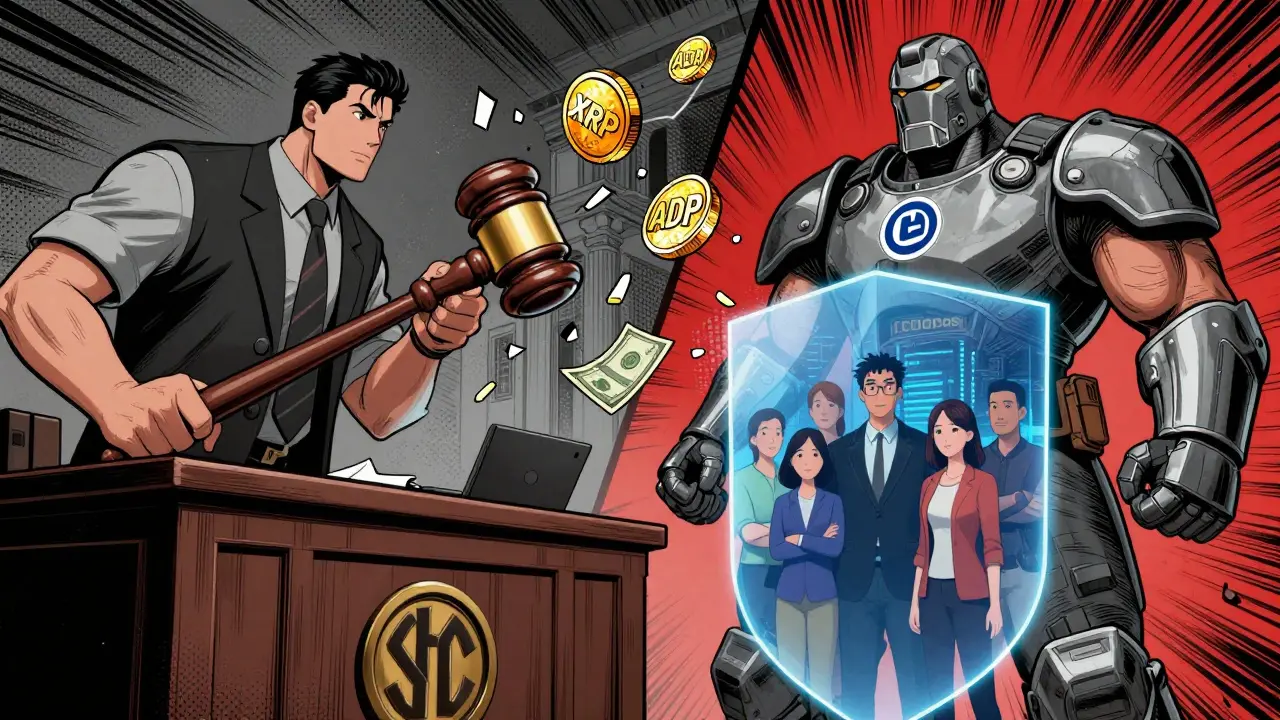
The year 2025 was brutal for crypto regulation in the U.S. The SEC’s February 2025 enforcement action against unregistered securities forced Coinbase to delist 17 tokens. This included major altcoins like XRP and Cardano (ADA). If you were holding these on Coinbase, you received cash equivalents rather than the tokens themselves.
This regulatory clarity has two sides. On one hand, it reduces privacy and limits choice. Dr. David Gerard, author of 'Attack of the 50 Foot Blockchain', noted in CoinDesk (September 22, 2025) that Coinbase’s compliance framework is "industry-leading but restrictive." On the other hand, it attracts institutional capital. Institutional adoption grew by 37% in 2024 due to these stricter monitoring protocols. For a regular user, this means your account is safer from fraud but less flexible regarding which coins you can hold.

User Experience and Support
How easy is it to actually use? Coinbase scores 4.5 out of 5 stars in NerdWallet’s 2025 usability assessment. The interface is clean, white-space heavy, and straightforward. New users complete verification within 24 hours using AI-powered ID systems, with an 87% success rate.
Customer support is generally responsive, resolving 92% of tickets within 24 hours per their Q2 2025 transparency report. However, community sentiment reveals friction points. Reddit users frequently complain about 2FA issues locking 15% of users monthly, according to Sensor Tower data. Withdrawal speeds also vary; ETH withdrawals averaged 17 minutes in September 2025 benchmarks, compared to Kraken’s 4.2 minutes. If speed is critical, consider upgrading to Premium Access ($29.99/month) to bypass some queue delays.
Is Coinbase Worth It in 2026?
Coinbase controls 24.1% of the U.S. crypto exchange market, generating $2.99 billion in revenue in 2025. It is not the cheapest, nor is it the most feature-rich for advanced traders. But it is the safest bet for long-term holders who prioritize regulatory compliance and ease of use. If you plan to hold Bitcoin or Ethereum for years, Coinbase’s security and insurance coverage provide peace of mind that offshore exchanges cannot match.
For active traders, the higher fees and slower withdrawal times may justify splitting your portfolio. Many experienced users recommend pairing Coinbase for fiat on-ramps and security with Kraken or Binance US for altcoin trading and lower fees. This hybrid approach maximizes safety while minimizing costs.
Does Coin Bank Exchange exist?
No, "Coin Bank Exchange" is not a real cryptocurrency platform. This name often confuses users who associate Coinbase with its banking partners like Customers Bank or Evolve Bank & Trust. The actual exchange is Coinbase, founded in 2012.
Why did Coinbase delist XRP and ADA?
In February 2025, the SEC took enforcement action against unregistered securities. To comply with legal requirements, Coinbase delisted 17 tokens, including XRP and Cardano (ADA), replacing them with cash equivalents for affected users.
How much does Coinbase charge for buying crypto?
Standard retail purchases via card range from 1.49% to 3.99%. Using Coinbase Advanced Trade reduces fees to 0.50%, and Advanced Trade Pro offers 0.00% maker fees for high-volume traders exceeding $100,000 daily.
Is my money safe on Coinbase?
Yes, Coinbase maintains robust security with 98% of assets in cold storage. They also carry a $255 million crime insurance policy through Lloyd's of London. However, they do not insure against market value losses or personal account compromise due to weak passwords.
Can I stake Ethereum on Coinbase?
Yes, Coinbase supports Ethereum staking with an approximate 3.8% APY as of late 2025. Note that Coinbase deducts 25.25% to 35% of the rewards as their service fee.