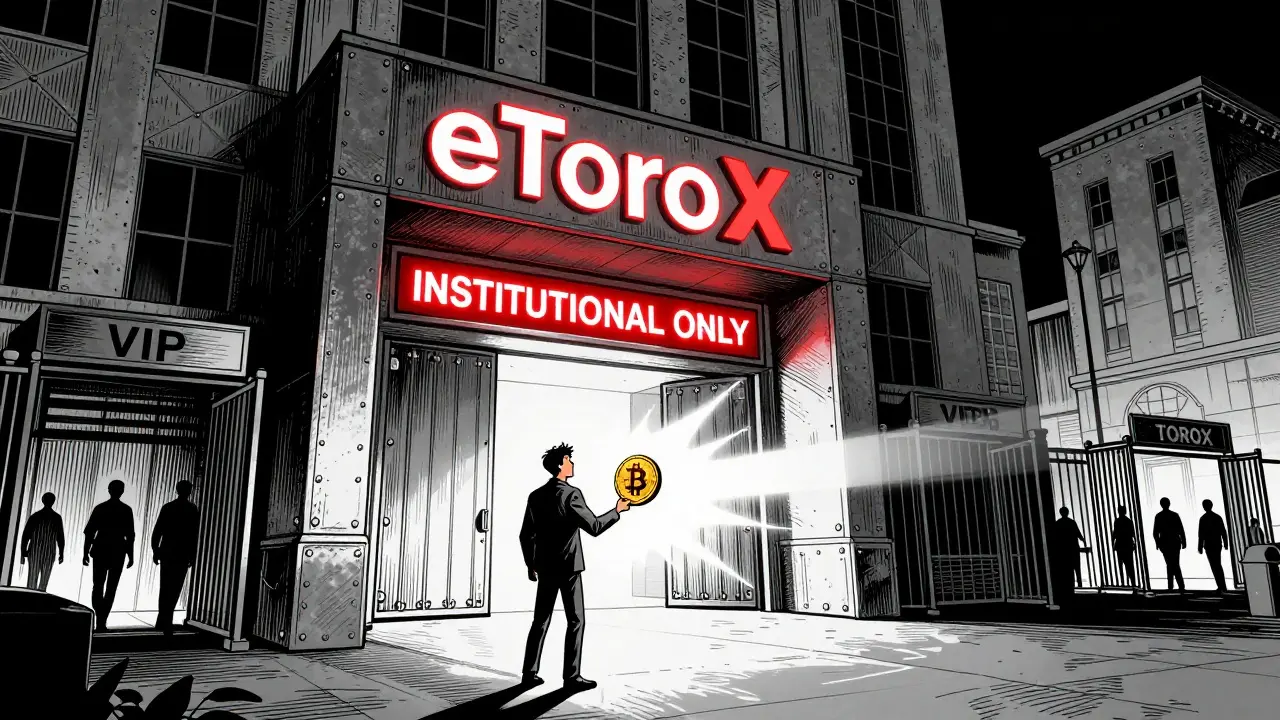
If you are looking for a place to buy Bitcoin or trade Ethereum as a retail investor, eToroX is no longer your option. That might sound like a harsh start, but it saves you from wasting time on a platform that has changed its rules. As of 2026, eToroX has pivoted away from serving everyday traders. It now operates exclusively for institutional investors, professional traders, and corporate entities.
This shift is crucial because many users still find eToroX through search results, expecting the same experience they had years ago. The reality is quite different. What was once a standalone cryptocurrency exchange with over 70 trading pairs is now an infrastructure layer supporting eToro Group’s broader wallet operations. Understanding this change helps you decide where to put your capital. If you are a regular trader, you need to look elsewhere. If you represent a fund or a large corporation, eToroX offers specific regulatory advantages worth exploring.
The Shift from Retail to Institutional Focus
eToroX launched in 2018 as a professional-grade trading platform distinct from eToro’s main social trading site. Back then, it aimed to bridge the gap between retail accessibility and professional execution. Over the last few years, however, the landscape of crypto exchanges has consolidated heavily around giants like Binance, Coinbase, and Kraken. Competing directly with these behemoths for retail users became unsustainable without massive capital expenditure.
In response, eToro Group made a strategic decision. They repositioned eToroX to serve the corporate and institutional sector. This means the platform now focuses on providing high-volume, low-latency trading infrastructure for large players. For the average person wanting to diversify their portfolio with small amounts of Solana or Cardano, eToroX simply does not open accounts anymore. This move aligns eToroX with other institutional-focused platforms like Coinbase Prime and Gemini, which cater to banks, hedge funds, and asset managers.
Why did this happen? The retail crypto market is saturated. New entrants struggle to gain traction against established brands with deep liquidity pools. By focusing on institutions, eToroX leverages its regulatory compliance and security infrastructure to solve a different problem: trusted custody and execution for large sums. This niche is smaller but more profitable and less competitive than the retail space.
Regulatory Status and Security Framework
One of the strongest selling points for eToroX remains its regulatory standing. The platform is registered in Gibraltar and overseen by the Gibraltar Financial Services Commission (GFSC). In fact, eToroX holds an "Exceeded" regulatory status, meaning it meets standards beyond the minimum requirements set by the commission. This is rare among crypto exchanges, especially those targeting institutional clients who demand strict adherence to anti-money laundering (AML) and know-your-customer (KYC) protocols.
The parent company, eToro Group, is also regulated by major bodies including the Cyprus Securities & Exchange Commission (CySEC), the UK's Financial Conduct Authority (FCA), and the Australian Securities and Investments Commission (ASIC). This multi-jurisdictional oversight provides a robust safety net. For institutional clients, this reduces counterparty risk significantly compared to unregulated offshore exchanges.
Security features include standard industry protocols such as two-factor authentication (2FA) and cold storage solutions for digital assets. However, the rigorous KYC process required for account activation can be a barrier for some. Institutions appreciate this friction because it ensures a clean client base, but individual traders often view it as unnecessary bureaucracy. Since eToroX now only serves professionals, this verification step is mandatory and thorough.
Fee Structure and Trading Costs
When evaluating any exchange, fees are paramount. eToroX utilizes a maker-taker fee model with an inverted design. This structure rewards liquidity providers. Specifically, the primary trading fee for crypto-to-crypto conversions sits at 0.1%. While this seems competitive on paper, it is essential to compare it with current market leaders.
| Platform | Target Audience | Average Trading Fee | Regulation | Liquidity Level |
|---|---|---|---|---|
| eToroX | Institutional / Professional | 0.1% (Maker-Taker) | GFSC (Gibraltar) | Low to Moderate |
| Binance | Retail & Institutional | 0.1% (Standard) | Varies by Region | Very High |
| Coinbase Pro | Retail & Institutional | 0.4% - 0.6% | US State Licenses | High |
| Kraken | Retail & Institutional | 0.16% - 0.26% | Multiple Jurisdictions | High |
The 0.1% fee on eToroX is reasonable, but it comes with caveats. First, the lower liquidity on eToroX compared to Binance or Kraken can lead to slippage on larger orders. Slippage occurs when the price changes between the time you order a trade and when it executes. For institutional players moving millions of dollars, even a tiny percentage of slippage adds up quickly. Second, deposit and withdrawal methods vary in cost. While bank transfers and credit cards are supported, using processors like Simplex for direct purchases incurs higher fees and a minimum threshold of €112.
Additionally, eToroX supports proprietary stablecoins that can only be traded on its platform. This creates a closed ecosystem benefit for existing users but limits flexibility for external integrations. For most traders, the ability to withdraw freely to external wallets is a key feature, which eToroX does support, though the costs associated with certain payment gateways remain higher than industry averages.

Supported Cryptocurrencies and Assets
Despite its pivot to institutional services, eToroX maintains a diverse selection of digital assets. The platform supports over 70 cryptocurrencies and more than 70 active trading pairs. This includes major coins like Bitcoin (BTC), Ethereum (ETH), and Tether (USDT). It also covers popular altcoins such as Ripple (XRP), Cardano (ADA), Solana (SOL), Avalanche (AVAX), and Dogecoin (DOGE).
Beyond standard cryptocurrencies, eToroX offers trading in 17 unique stablecoins and over 80 tokenized assets. Tokenized assets allow traders to gain exposure to real-world commodities or financial instruments without holding the underlying physical asset. This is particularly appealing to institutional portfolios seeking diversification within a single crypto interface. The platform has also been rolling out access to additional ERC20 tokens, expanding its utility for DeFi (Decentralized Finance) interactions.
However, the breadth of assets does not guarantee depth of liquidity. Just because a coin is listed doesn't mean there are enough buyers and sellers to execute large trades efficiently. Retail users often face wider spreads on less popular altcoins due to thinner order books. Institutional clients, conversely, may use algorithmic trading strategies to manage this liquidity risk, making the asset variety more valuable to them than to casual traders.
User Experience and Interface Design
eToroX was originally praised for its user-friendly interface. Users described it as having an "effortlessly sleek" design with impressive transaction speeds. The dashboard integrates trading functions with a separate wallet component, allowing users to store assets securely while maintaining easy access for trading. This separation enhances security by isolating hot wallets (connected to the internet) from cold storage (offline).
For new users, the initial navigation could be confusing. Finding the purchase function sometimes required digging through menus, a common complaint in early reviews. However, as the platform matured, the UI became more intuitive. The integration of payment processors like PayPal, Skrill, and Neteller streamlined deposits for those who had access. Now, with the focus on institutions, the interface likely emphasizes advanced charting tools, API connectivity, and bulk order management rather than simple buy/sell buttons.
Customer support is another critical aspect. While specific response times for eToroX are not publicly detailed, the parent company eToro boasts a large support team given its 13 million+ user base. Institutional clients typically receive dedicated account managers, ensuring faster resolution of complex issues related to compliance or large transactions. Retail users, if they existed, would rely on standard chat or email support, which can be slower during peak market volatility.
Alternatives for Retail Traders
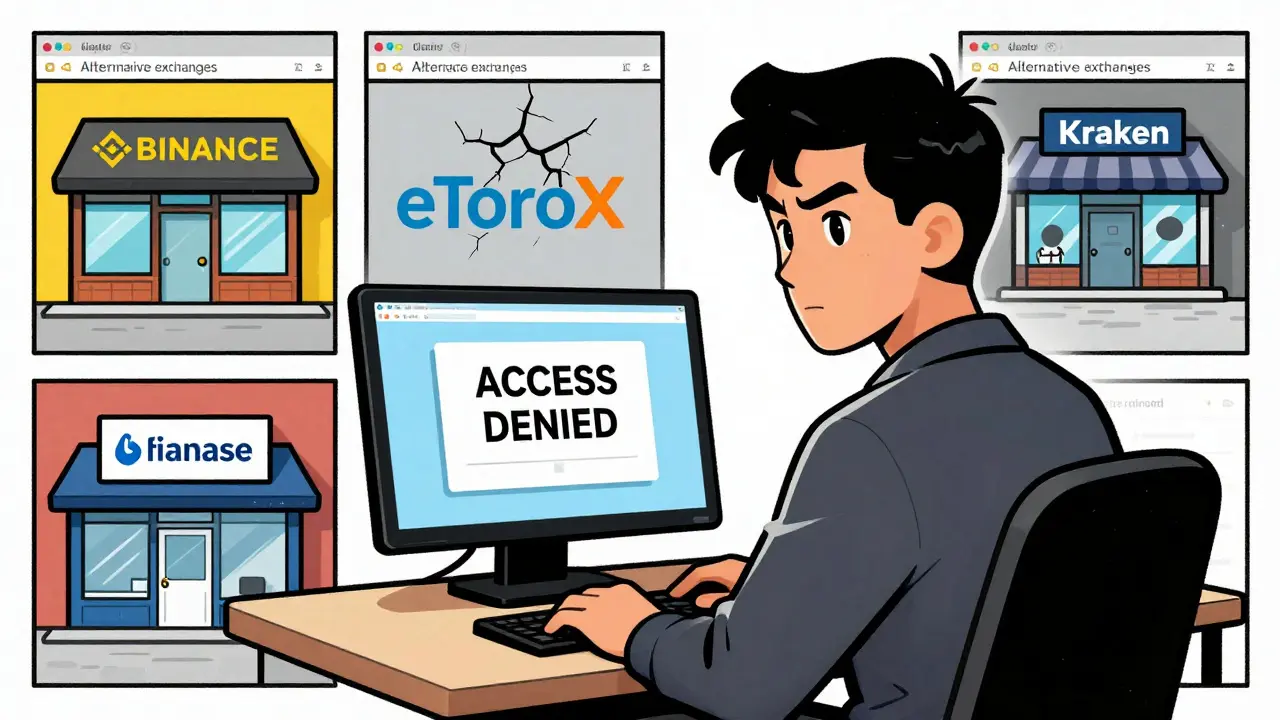
Since eToroX is off-limits to retail investors, you need viable alternatives. Your choice depends on your priorities: ease of use, low fees, or extensive asset selection.
- Binance: Offers the highest liquidity and widest range of cryptocurrencies. Fees are low, especially if you hold BNB. Ideal for active traders who want minimal slippage.
- Coinbase: Known for its simplicity and strong regulatory compliance in the US. Higher fees make it less attractive for frequent traders, but great for beginners buying Bitcoin or Ethereum.
- Kraken: A balanced option with strong security, good customer support, and moderate fees. Suitable for both beginners and experienced traders looking for a reliable mid-tier exchange.
- eToro (Main Platform): If you liked the eToro brand, the main social trading platform remains open to retail users. It allows copy trading, where you mimic the moves of successful investors. Note that fees here are structured differently, often involving spreads rather than explicit trading fees.
Each of these platforms caters to different needs. Binance dominates volume, Coinbase leads in trust for US users, and Kraken offers a solid middle ground. For those interested in social features, the main eToro platform provides a unique community-driven approach, though it lacks the direct spot trading efficiency of traditional exchanges.
Conclusion: Who Should Use eToroX?
eToroX has carved out a specific niche in the crypto ecosystem. It is no longer a general-purpose exchange for everyone. Instead, it serves as a specialized tool for institutional players requiring regulated, secure, and efficient trading infrastructure. Its Gibraltar regulation, robust security, and professional-grade features make it a strong candidate for corporate treasury management or hedge fund operations.
For the average investor, however, eToroX is effectively closed. Trying to sign up will likely result in rejection or redirection to eToro’s main retail platform. This distinction is vital to understand before allocating time or resources. If you are a retail trader, focus on platforms with deep liquidity and transparent fee structures tailored to individual accounts. If you represent an institution, eToroX’s compliance framework and dedicated service model offer significant value in navigating the complex regulatory environment of digital assets.
Can I still sign up for eToroX as a retail investor in 2026?
No, eToroX is no longer available for retail investors. As of 2026, the platform exclusively serves institutional investors, professional traders, and corporate entities. Retail users should consider alternative exchanges like Binance, Coinbase, or the main eToro platform.
Is eToroX safe and regulated?
Yes, eToroX is highly regulated. It is licensed by the Gibraltar Financial Services Commission (GFSC) with an "Exceeded" status, indicating compliance beyond standard requirements. The parent company, eToro Group, is also regulated by CySEC, FCA, and ASIC, providing a strong security framework.
What are the trading fees on eToroX?
eToroX uses a maker-taker fee model with a primary trading fee of 0.1% for crypto-to-crypto conversions. However, actual costs can vary based on liquidity and slippage, especially for large orders. Deposit and withdrawal fees depend on the method used, with some processors like Simplex charging higher rates.
How does eToroX differ from the main eToro platform?
The main eToro platform is designed for retail investors, featuring social trading, copy trading, and a simplified interface. eToroX was built as a professional-grade exchange with advanced trading tools, deeper liquidity provision incentives, and strict institutional compliance. Now, eToroX primarily serves as backend infrastructure for institutional clients, while the main platform handles retail traffic.
Which cryptocurrencies are supported on eToroX?
eToroX supports over 70 cryptocurrencies, including Bitcoin (BTC), Ethereum (ETH), Tether (USDT), Solana (SOL), Cardano (ADA), and Ripple (XRP). It also offers trading in 17 stablecoins and over 80 tokenized assets, catering to diverse investment strategies.
Why did eToroX stop accepting retail users?
eToroX shifted to an institutional-only model due to intense competition in the retail crypto exchange market dominated by giants like Binance and Coinbase. By focusing on institutions, eToroX leverages its regulatory strengths and security infrastructure to provide specialized services for large-scale trading and custody, which is more sustainable and profitable.