
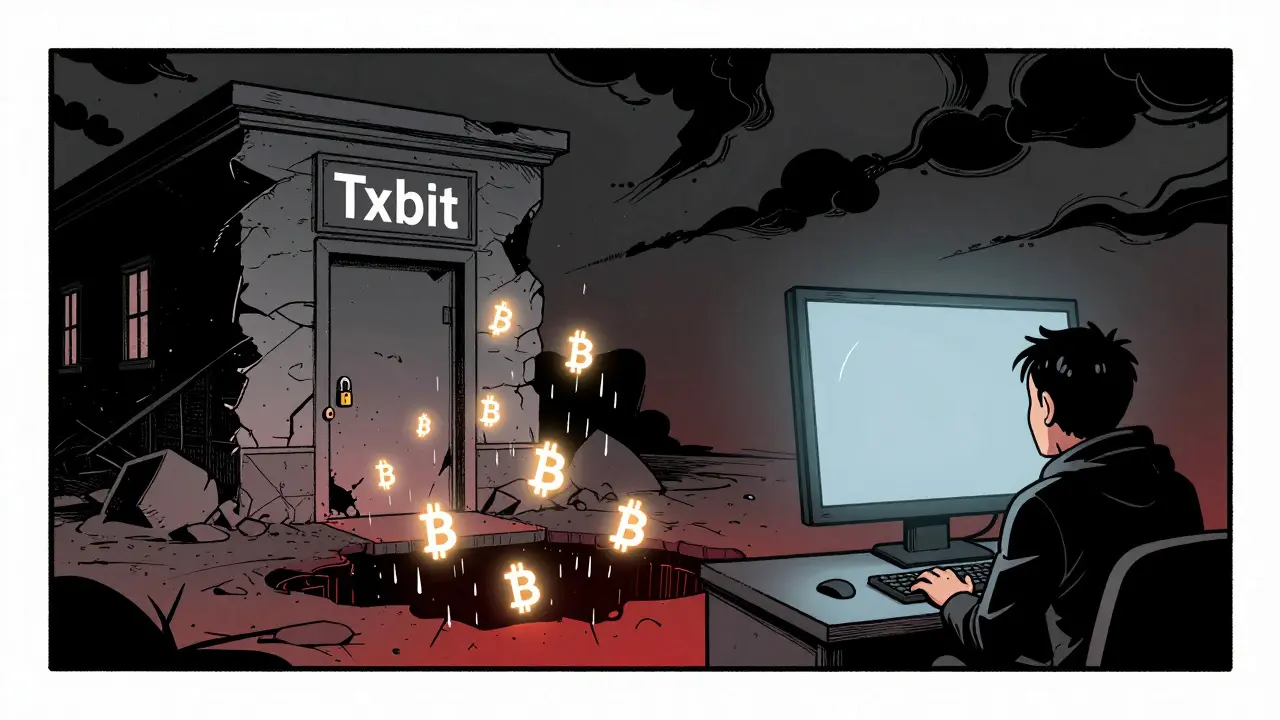
Txbit was once promoted as a privacy-focused crypto exchange with low fees and simple trading. But by September 2023, it vanished without warning. No announcements. No refunds. Just silence. If you’re considering any crypto exchange today, Txbit’s story isn’t just a footnote-it’s a warning label you need to read.
What Txbit Actually Offered (And What It Didn’t)
Txbit launched in 2019 from Amsterdam, claiming to be a clean, no-nonsense platform for trading Bitcoin and altcoins. It supported EUR, GBP, and USD bank transfers, which sounded good on paper. But here’s the catch: it didn’t offer a mobile app. Not even a basic one. If you wanted to trade, you had to use a desktop browser. That alone ruled out a huge chunk of casual traders who rely on phones for quick buys or emergency sells.
The trading interface was basic but functional. Order books, charts, buy/sell buttons-all there. Nothing fancy, but nothing broken either. It had 24/7 customer support, which was rare for a mid-sized exchange. Some users appreciated that. But support doesn’t mean safety. If your funds are locked inside a platform that’s about to collapse, no chatbot can help you.
The Fee Structure That Made Trading Unprofitable
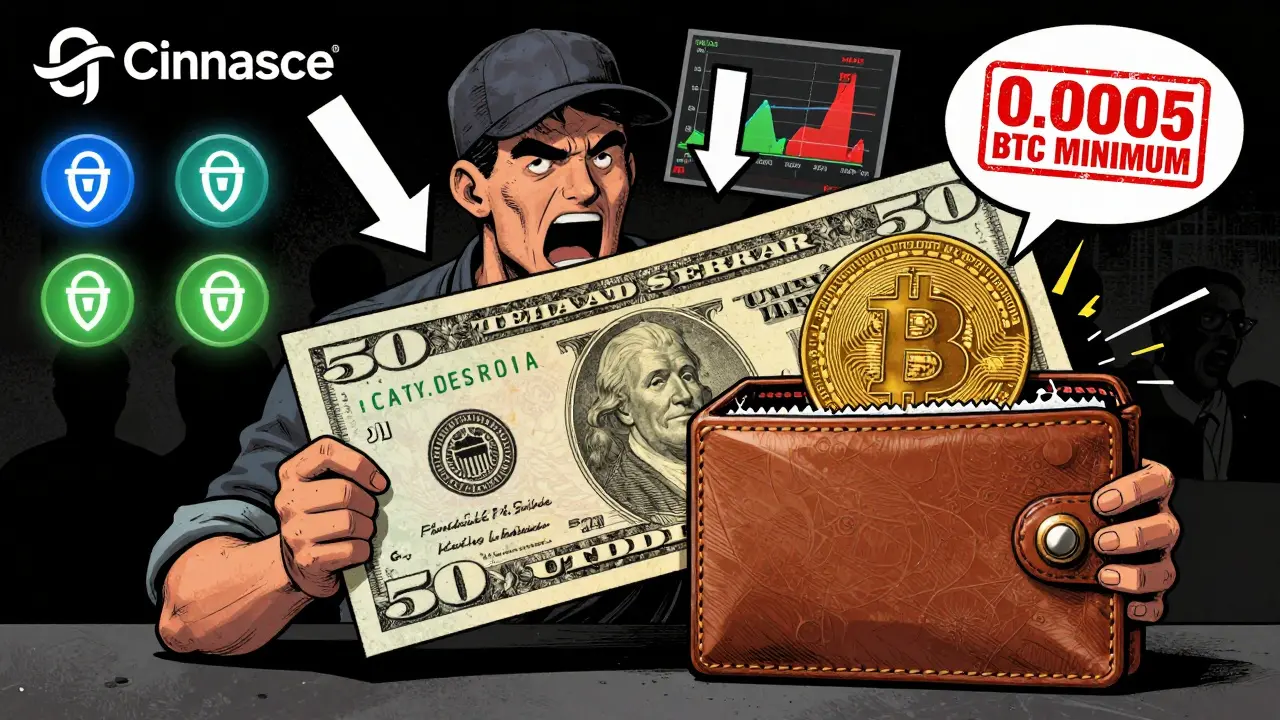
Txbit’s biggest flaw wasn’t security-it was cost. Every trade cost 0.0014 BTC. On December 2, 2021, that was about $80. Let that sink in. Most exchanges charge 0.1% to 0.6% per trade. On a $1,000 trade, that’s $1 to $6. Txbit charged $80. Even if you traded $10,000, you’d still pay $80. That’s not a fee. That’s a tax.
And there was a minimum order size of 0.0005 BTC. At the time, that was around $28. So if you had $50 to trade, you couldn’t even use half of it. You’d be forced to deposit more just to make a single trade. For small investors, this wasn’t just inconvenient-it was a trap.
Why the Lack of Transparency Was a Red Flag
Txbit claimed to prioritize security and privacy. But they never showed proof. No third-party audits. No details on cold storage. No breakdown of insurance funds. Nothing. Meanwhile, Binance publishes quarterly proof-of-reserves. Kraken releases SOC 2 reports. Coinbase is regulated in multiple countries. Txbit? Silence.
Experts call this “security theater”-making users feel safe while hiding the real risks. If a platform won’t show you how it protects your money, why should you trust it? The fact that they never disclosed their security infrastructure wasn’t an oversight. It was a deliberate choice to avoid accountability.
Regulatory Gray Area = High Risk
Txbit didn’t ban U.S. users outright. Instead, they told Americans: “Do your own research.” That’s not compliance. That’s evasion. The U.S. has strict rules for crypto exchanges. If you’re not registered with the SEC or FinCEN, you’re operating illegally. Txbit knew that. They just hoped no one would notice.
They also claimed to operate under multiple jurisdictions over time-first the Netherlands, then hints of other locations. That’s a classic sign of regulatory arbitrage: moving around to avoid rules, not to serve customers better. And it always ends the same way: with regulators stepping in, or the platform collapsing under its own weight.
Liquidity and Volume: A Mirage
Txbit’s trading volume jumped from $12,000 in 2019 to $2.1 million in late 2021. That’s a 17,000% increase. Sounds impressive, right? But here’s the reality: Binance processes over $20 billion daily. Coinbase? Over $5 billion. Txbit’s $2.1 million was less than 0.01% of that. It was a tiny pond in a sea of giants.
Low liquidity means slippage. It means you can’t sell when you need to. It means your orders get stuck. Even if you managed to buy Bitcoin on Txbit, selling it quickly for a fair price was a gamble. Most users didn’t realize this until it was too late.
User Ratings and Community Trust
With only 11 reviews on Cryptogeek.info, Txbit had almost no user base to speak of. Its 3.3/5 rating was below average. Compare that to Kraken’s 4.5/5 based on over 10,000 reviews. That gap isn’t about opinions-it’s about survival. If thousands of people have used a platform for years and trust it, that’s a signal. If only a handful have used it and barely rated it, that’s a warning.
The TrustScore system, which tracks reliability across exchanges, gave Txbit a failing grade. Why? Because it had no legal entity transparency, no clear compliance, and no financial stability indicators. These aren’t just ratings-they’re survival indicators.
The Shutdown: No Warning, No Refund
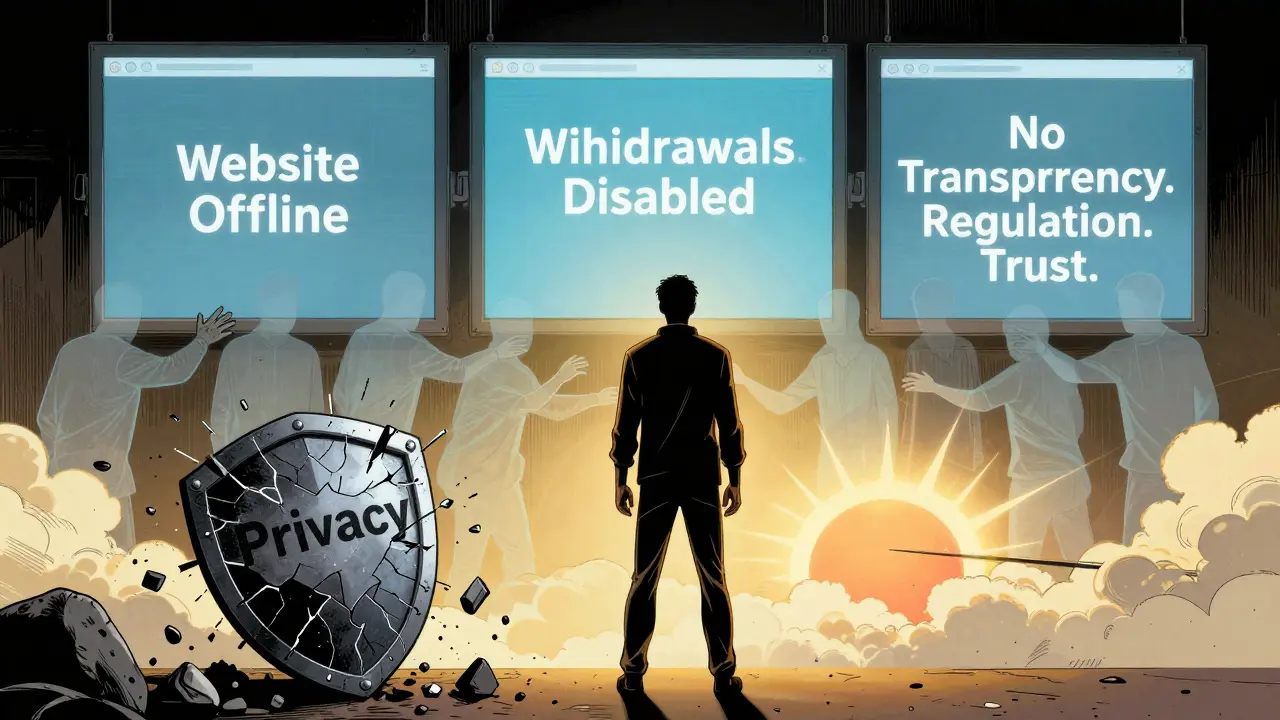
Txbit closed in September 2023. No press release. No email. No Twitter update. One day the website was up. The next, it was a blank page. Users woke up to find their accounts frozen. Withdrawals impossible. Native tokens-worthless. Bank transfers stuck in limbo.
This is the brutal truth about unregulated exchanges: they don’t fail slowly. They vanish overnight. And when they do, your money disappears with them. There’s no FDIC insurance. No government bailout. No legal recourse. You’re on your own.
What You Should Do Instead
If you’re looking for a crypto exchange today, here’s what matters:
- Regulatory compliance: Does the exchange have licenses in major markets like the U.S., EU, or Australia? If not, walk away.
- Transparent fees: Are fees listed clearly? Are they percentage-based, not flat BTC charges? Avoid flat fees-they’re designed to hurt small traders.
- Mobile app: Can you trade, check balances, and withdraw on your phone? If not, you’re locked into one device. That’s risky.
- Security audits: Has the platform published independent audits of its wallet holdings? If not, assume your funds aren’t safe.
- High liquidity: Check trading volume on CoinMarketCap or CoinGecko. Avoid exchanges with less than $100 million daily volume.
Stick with platforms like Kraken, Coinbase, or Bitstamp. They’re not perfect, but they’re accountable. They have legal teams. They answer to regulators. They don’t vanish.
The Bigger Lesson
Txbit didn’t fail because it was “bad tech.” It failed because it was built to exploit, not serve. It targeted people who didn’t know better-those who saw “privacy” and “low fees” and didn’t ask the hard questions.
The crypto world is still young. But it’s growing up. Exchanges that cut corners won’t survive. The ones that do will be transparent, regulated, and user-focused. Txbit’s closure wasn’t just a loss for its users-it was a step toward a cleaner, safer market. Don’t let your next trade be another cautionary tale.
Is Txbit still operating?
No. Txbit permanently shut down in September 2023. Its website is no longer accessible, and users were unable to withdraw funds. The exchange has not returned any assets or provided official communication since its closure.
Why did Txbit charge such high fees?
Txbit charged a flat fee of 0.0014 BTC per trade, which was around $80 in 2021. This structure was designed to generate revenue regardless of trade size, making small trades unprofitable. Most competitors use percentage-based fees (0.1%-0.6%), which are fairer and scalable. Txbit’s model favored large traders who could absorb the cost-most retail users couldn’t.
Can I get my money back from Txbit?
No. Since Txbit shut down without warning and had no legal obligations to users, there is no known recovery process. Funds held on the platform are considered lost. This is why regulatory compliance and withdrawal access are critical when choosing any exchange.
Was Txbit regulated?
Txbit was registered in the Netherlands as Txbit Exchange B.V., but it did not hold licenses from major financial regulators like the SEC, FCA, or ASIC. It advised U.S. users to assess their own legal risks, which is a common tactic used by unregulated platforms to avoid liability. This lack of formal compliance made it vulnerable to shutdown.
Should I avoid exchanges that don’t have mobile apps?
Yes. A lack of mobile access limits your ability to react to market changes, secure your funds quickly, or withdraw in emergencies. Reputable exchanges like Coinbase, Kraken, and Binance all offer fully functional mobile apps. If an exchange doesn’t, it’s often a sign of outdated infrastructure or lack of user focus.
How do I check if a crypto exchange is safe?
Look for three things: 1) Clear regulatory status in your country, 2) Published security audits and proof-of-reserves, and 3) High trading volume (over $100 million daily). Avoid platforms that hide fee structures, don’t disclose security practices, or rely on vague marketing claims like “maximum privacy” without proof.
Michael Jones
January 19 2026Txbit’s fee structure was a scam disguised as a discount. Charging 0.0014 BTC per trade? That’s not a fee-it’s a robbery. Most exchanges charge less than 0.5% on a $10,000 trade. Txbit charged $80 regardless. That’s predatory. No excuse. No gray area. Avoid any platform that treats small investors like ATM machines.
And the lack of a mobile app? Unforgivable in 2023. If you can’t access your funds when the market crashes, you don’t own them-you’re just borrowing them from a casino that doesn’t even give you a key.
Transparency isn’t optional. It’s the baseline. If they won’t show you their cold wallet audits, assume they’re empty. Period.
Jill McCollum
January 21 2026omg i remember when txbit was popping up on reddit like it was the next binance 😅 i thought ‘finally someone who gets privacy’ but then i saw the fees and was like… wait this is a trap??
lowkey felt bad for the ppl who deposited $50 and couldn’t even trade half of it 😭 like bro i just wanna buy 0.001 btc not get taxed like i’m buying a car
Hailey Bug
January 22 2026Let me be blunt: Txbit was never meant to last. It was a honeypot for people who didn’t understand crypto fundamentals. Low fees? No, it was high fixed fees disguised as low fees. Privacy? They didn’t even have a whitepaper. No audits, no compliance, no mobile app-this wasn’t a startup, it was a phishing site with a fancy logo.
Don’t fall for the ‘privacy’ buzzword. Real privacy tools like Wasabi Wallet or Samourai don’t need to be exchanges. You store your coins, you trade on regulated platforms. That’s the model. Txbit flipped it-and it backfired spectacularly.
Also, the ‘do your own research’ line? That’s the crypto equivalent of ‘it’s not my fault you trusted me.’
Josh V
January 23 2026they shut down and left people with nothing and now everyone’s acting surprised??
if you put money in a black box with no name on it you deserve what you get
crypto is wild west dont cry when the bandit rides off
CHISOM UCHE
January 24 2026From a regulatory arbitrage perspective, Txbit’s operational model exemplifies a classic ‘jurisdictional hopping’ strategy, leveraging the absence of unified global crypto governance frameworks to exploit regulatory fragmentation. The absence of KYC/AML compliance protocols, coupled with non-disclosure of proof-of-reserves, constitutes a systemic governance failure that aligns with the risk profile of unlicensed VASPs under FATF guidelines.
Moreover, the flat-fee structure is economically irrational for retail participation, effectively creating a liquidity trap where marginal utility of trade diminishes below a critical capital threshold-essentially, a rent-seeking mechanism disguised as a trading platform.
Ashlea Zirk
January 25 2026The closure of Txbit is not an anomaly-it is an inevitable consequence of operating without accountability. Regulatory compliance is not a burden; it is the foundation of trust. The absence of audited reserves, the lack of a mobile application, and the opaque fee structure are not mere oversights-they are red flags that should have been heeded by anyone with even a basic understanding of financial systems.
It is worth noting that the platforms that survived-Kraken, Coinbase, Bitstamp-did so because they prioritized legal obligations over short-term growth. Their success is not luck. It is discipline.
For users: if an exchange cannot clearly articulate its legal standing in your jurisdiction, it is not a platform-it is a gamble.
Chris Evans
January 27 2026Txbit didn’t fail because of bad code or bad luck. It failed because it was built on a lie: that privacy means secrecy. But in finance, privacy without transparency is not freedom-it is control. The founders didn’t want to protect users; they wanted to obscure their own actions.
And now we’re supposed to mourn them? No. We should celebrate their collapse. Because every Txbit that vanishes makes room for something that actually respects its users.
This is the natural selection of capitalism. The weak, the dishonest, the performative-those are the ones who disappear. The rest? They build. They audit. They adapt.
So if you’re reading this and thinking ‘I could’ve made it big on Txbit’-you were never meant to. You were meant to be a statistic. And now you’re not.
Pat G
January 29 2026USA should ban these offshore crypto scams. This is why we need a national crypto regulator. Not some Dutch shell company with no accountability. Americans lost money because the government let a foreign entity run a financial operation with zero oversight.
It’s not ‘do your own research’-it’s ‘do your own research because your government doesn’t care.’
And why do these guys always use ‘privacy’ as a cover? Because they’re hiding something. Always.
Alexandra Heller
January 30 2026People don’t get it. Txbit didn’t just take money. It took trust. And trust is the only currency that can’t be recovered.
They sold the dream of financial liberation to people who were already desperate for it. That’s not capitalism. That’s exploitation dressed up as innovation.
And now we have a generation of new crypto users who think ‘low fees’ means ‘safe.’ That’s not ignorance. That’s a system designed to make ignorance profitable.
There is no such thing as ‘risk-free’ in crypto. But there is such a thing as ‘unethically risky.’ Txbit was that.
myrna stovel
January 30 2026Just wanted to say-I’m glad someone wrote this. I lost $300 on Txbit back in 2021 and I still feel stupid about it. But reading this? It helps. Not because it brings the money back, but because it shows I wasn’t alone.
If you’re new to crypto, please don’t let your excitement blind you. Look for the audits. Look for the app. Look for the reviews from real people-not influencers.
You don’t need to be a genius. You just need to be careful. And that’s okay.
And if you’re reading this and thinking ‘I’ll just try one more small exchange’-please, stop. You’re not saving money. You’re risking peace of mind.
Hannah Campbell
February 1 2026txbit was basically crypto’s version of a pyramid scheme with a trading interface
they didn’t even have a decent logo
and the ‘customer support’ was a bot that said ‘we’re here for you!’ while your funds were being drained into a russian server
lol
btw who still uses desktop-only exchanges in 2023??
Bryan Muñoz
February 2 2026you think txbit was just some random scam? nah
they were funded by a shell company linked to a dark web marketplace
the whole thing was a front to launder crypto from ransomware attacks
they shut down because the feds finally traced the wallet addresses
and now they’re all in a bunker in belarus
you think they gave a damn about your $50? they were laundering millions
and you were just the bait
they didn’t want your trades
they wanted your wallet addresses
and now your keys are on a blockchain somewhere being sold to the highest bidder
you’re not broke
you’re compromised
Rod Petrik
February 4 2026why do people keep falling for this
every time someone says ‘low fees’ or ‘privacy’ i just laugh
they’re always hiding something
txbit was just the latest
next one will be ‘crypto bank’ with 24/7 live support and a ‘blockchain-powered’ app that doesn’t exist
then it vanishes
and the same people will come back saying ‘but this one looks legit’
the cycle never ends
and i’m just here waiting for the next one to drop
Christina Shrader
February 5 2026Don’t let this scare you out of crypto. Let it teach you. Txbit was a bad actor. But Kraken? Coinbase? They’re still here. They’ve survived bull and bear markets. They’ve weathered regulatory storms.
That’s the difference between a scam and a platform.
Don’t avoid crypto. Avoid bad platforms.
And if you’re still unsure? Start small. Use a trusted app. Learn as you go. You don’t need to go all-in to get ahead.
This isn’t a game of luck. It’s a game of patience.
ASHISH SINGH
February 7 2026txbit was a masterpiece of psychological manipulation
they knew the type of person who’d fall for it
young, eager, scared of banks, obsessed with ‘decentralization’
so they gave them a fake temple with a golden gate
but the altar was empty
the priests had already fled
and the ‘holy scripture’? just a pdf no one read
we’re not in the wild west anymore
we’re in the digital jungle
and the predators wear crypto logos
Vinod Dalavai
February 9 2026been there, done that. lost $200 on txbit in 2021. didn’t even know what i was doing back then.
now i only use exchanges with mobile apps and clear fee structures.
also i keep 90% of my coins in a cold wallet.
live and learn, bro.
crypto’s cool but don’t be the guy who trusts a website with no phone number.
Tony Loneman
February 10 2026you think txbit was the worst? wait till you hear about ‘BitVortex’-they had a trading bot that ‘predicted’ price swings using ‘quantum AI’
their website had a spinning globe and a voice saying ‘your wealth is being optimized’
they took $40 million and vanished
and guess what? the same people who lost on txbit are now posting ‘I’m back, ready to try again’
the real scam isn’t the exchange
it’s the belief that the next one will be different
Callan Burdett
February 11 2026man i’m glad this got written up
txbit was such a vibe back in 2021
low fees, no KYC, cool logo
turns out ‘no KYC’ just meant ‘we’re laundering your cash’
still think about that $100 i lost
but hey-at least i learned
now i only trade on platforms that have actual offices
and real humans who answer emails
Anthony Ventresque
February 12 2026I’ve been in crypto since 2017 and I’ve seen a lot of platforms rise and fall. Txbit wasn’t unique-but it was emblematic.
What made it dangerous was how well it mimicked legitimacy. Clean design, professional branding, even decent support chat.
But all of that was surface. Underneath? Nothing.
That’s the lesson: Don’t judge a platform by its UI. Judge it by its audits, its compliance, its transparency.
If you can’t find a single third-party report on their security? Walk away.
And if you’re still tempted? Start with $10. See how long it takes to withdraw. That’s your real test.
Haley Hebert
February 13 2026i just want to say… i’m so sorry to everyone who lost money on txbit. i know how it feels to think you’re being smart and then realize you were just the mark.
but please don’t give up on crypto because of this. i lost too. i cried. i felt dumb.
but then i learned. i started with coinbase. i kept 90% in cold storage. i only trade with small amounts.
and now? i sleep better.
you’re not alone. and you’re not stupid. you just trusted the wrong people.
now you know better.
and that’s worth more than any coin.