
Meme Coin Safety Checker
Check Coin Safety
Enter criteria that the coin meets. Missing criteria indicate high risk.
Minimum for reliable liquidity
Required for accessible trading
Indicates community engagement
Essential for trust
Provides real value beyond speculation
Safety Assessment
0/5
Check the coin's criteria to see if it meets safety standards.
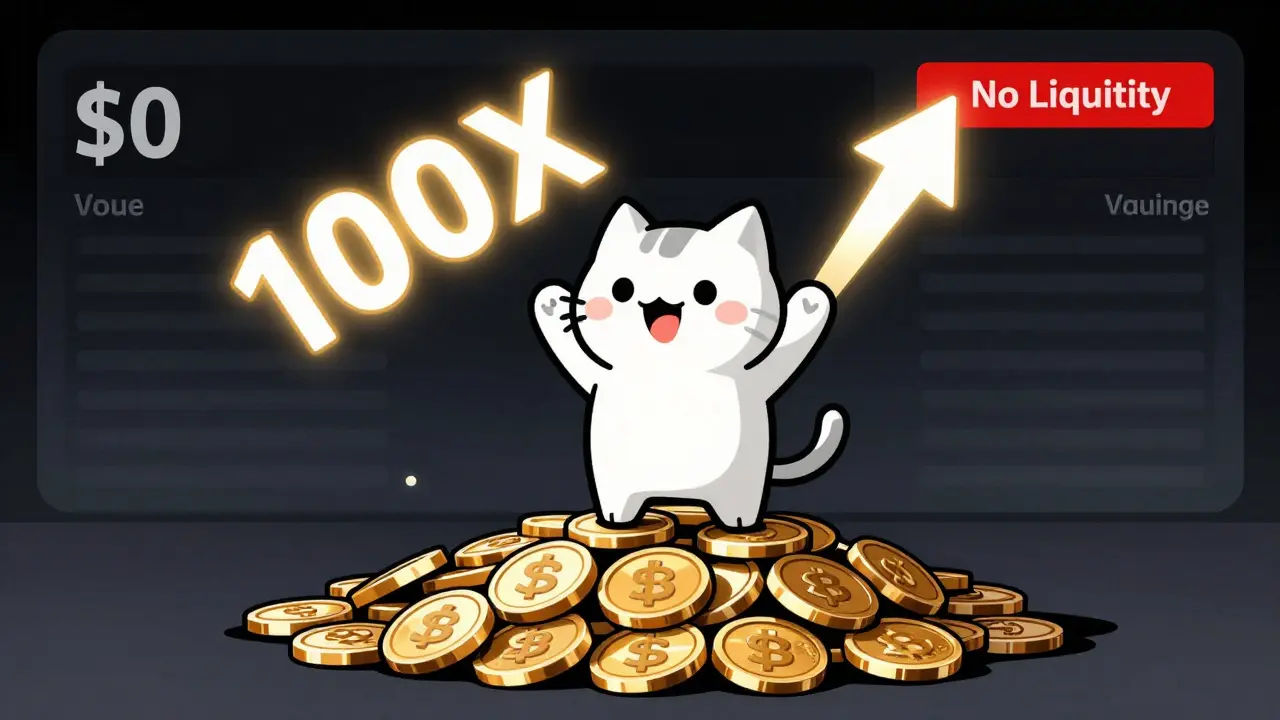
Hinagi (HINAGI) is a meme cryptocurrency built on the BNB Chain, marketed with a story about a cat who made his first 100X in crypto and became a millionaire. Sounds like a fun tale - until you look at the numbers. As of November 21, 2025, HINAGI has a market cap of just $32,756.56. That’s less than the cost of a used laptop. It’s ranked #8553 out of nearly 25,000 cryptocurrencies on CoinGecko. This isn’t just a small coin. It’s practically invisible in the crypto world.
How HINAGI works - and why it doesn’t
HINAGI is a BEP-20 token, meaning it runs on the BNB Chain, the same network that powers Binance Coin and thousands of other tokens. It has a total supply of 1 billion tokens, with about 590 million in circulation. That’s not unusual for a meme coin. But here’s where it falls apart: there’s no whitepaper. No team. No roadmap. No official website. No GitHub repository. No developer updates. Nothing. The whole project relies on a cartoon cat character named Hinagi, supposedly self-made in crypto. No one knows who created it. No one claims to be behind it. And no one has audited the smart contract. Not CertiK. Not Hacken. Not even a freelance auditor on Fiverr. That’s a red flag bigger than a 100X promise.Price chaos and zero liquidity
The price of HINAGI doesn’t make sense. On Coinbase, it’s $0.000059. On Bybit, it’s $0.000073. On Crypto.com, it’s $0.000075. That’s a 26.5% difference between exchanges. Why? Because no one is trading it. The 24-hour trading volume on CoinMarketCap is listed as $0. On Kriptomat, it’s 10 euros. That’s less than the price of a coffee. When trading volume is this low, prices become meaningless. A single buyer with $500 can push the price up 20%. A seller with $300 can crash it. That’s not a market. That’s a game of chance where the house always wins - and you’re the sucker.Who’s buying it? No one.
You’d think a meme coin with a cute cat story would at least have a community. It doesn’t. Search Reddit for HINAGI. You’ll find zero threads. Check Twitter. Only 12 mentions in the last 30 days - and none from anyone with more than 500 followers. No Telegram group. No Discord server. No influencers talking about it. No YouTube videos explaining how to buy it. Compare that to Dogecoin or Shiba Inu. Even at their lowest points, those coins had thousands of active users discussing trades, memes, and future plans. HINAGI has silence. And silence in crypto is usually a sign of abandonment - or worse, a scam.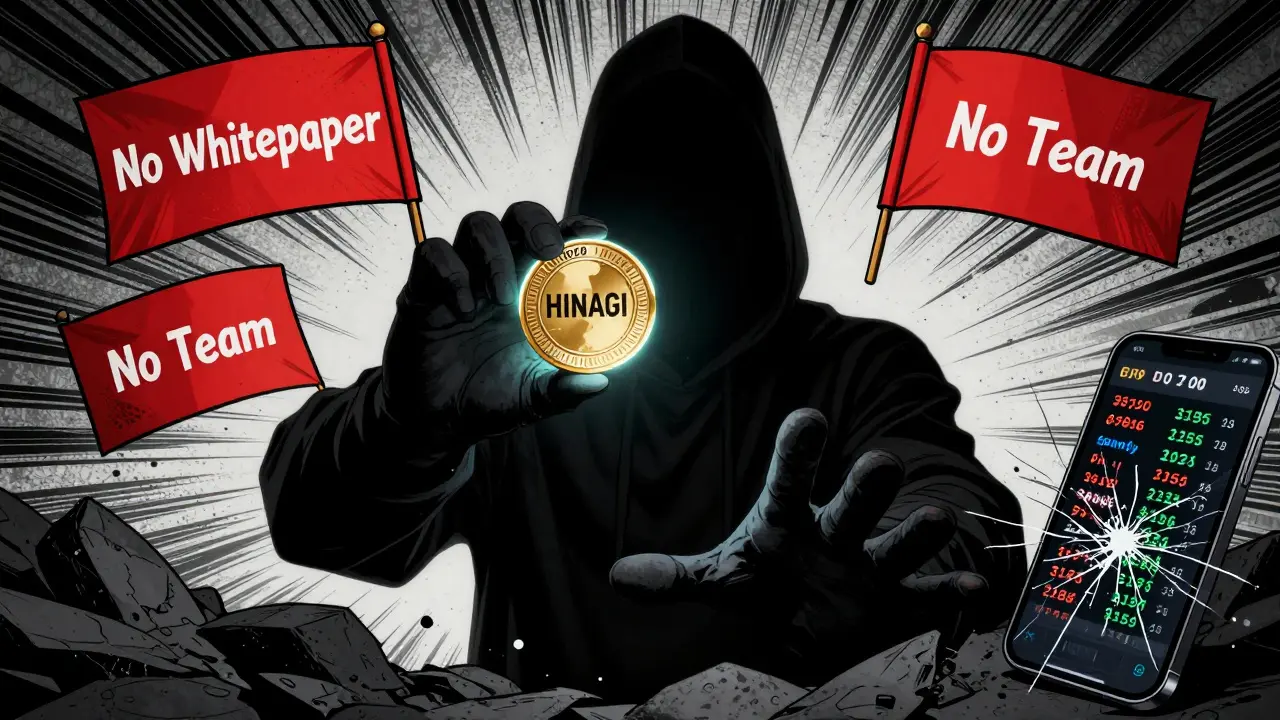
Why this is dangerous
If you buy HINAGI, you’re not investing. You’re gambling. And you’re gambling on a coin that can’t be sold. With $0 trading volume, there’s no buyer when you want out. You’ll be stuck. And that’s not hypothetical. According to a 2024 study by Cambridge’s Centre for Alternative Finance, tokens with less than $1,000 in daily volume have a 97.3% failure rate within six months. This isn’t just about losing money. It’s about losing access to your funds. Many low-cap tokens are “honeypots” - smart contracts designed to look like normal tokens but trap your money when you try to sell. No one’s proven HINAGI is a honeypot. But with no audit, no team, and no volume, there’s no way to know.How it stacks up against real meme coins
Dogecoin has a market cap of $14.2 billion. Shiba Inu is at $7.8 billion. Even tiny meme coins like Pepe or Bonk have trading volumes in the millions. HINAGI’s market cap is 0.00000016% of Bitcoin’s. It’s 0.000077% of the entire BNB Chain ecosystem’s value. Real meme coins have utility - even if it’s just a joke. Dogecoin is used for tipping on social media. Shiba Inu has a decentralized exchange and a token burn system. HINAGI has nothing. No staking. No governance. No NFTs. No partnerships. Just a cat and a promise.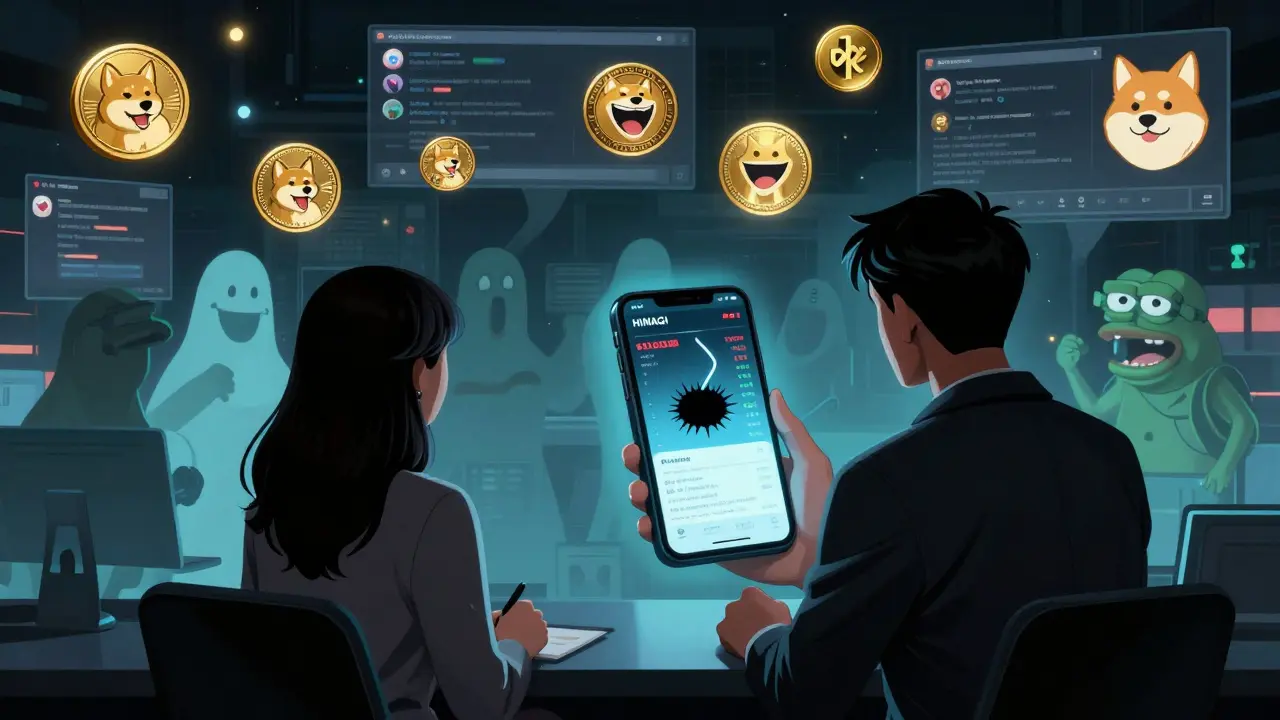
Regulatory risk? Absolutely.
The U.S. Securities and Exchange Commission (SEC) uses the Howey Test to decide if something is a security. If a token has no utility and its value depends entirely on others’ efforts to make it profitable, it’s likely a security. HINAGI fits that description perfectly. No team building it. No product. No roadmap. Just speculation. If the SEC ever targets low-cap tokens - and they have - HINAGI will be one of the first to get flagged. That means exchanges will delist it. Wallets will block it. And your coins? Worthless.Should you buy HINAGI?
No. Not because it’s “too risky.” Because it’s not even a real project. There’s no team to hold accountable. No code to review. No community to support it. No future. Just a cat story and a price chart that looks like a glitch. If you’re curious about meme coins, go for ones with volume, history, and transparency. Dogecoin. Shiba Inu. Pepe. Even newer ones like Dogwifhat have real trading activity and active communities. HINAGI? It’s a ghost. And ghosts don’t make money. They just haunt your portfolio.What to do instead
If you want to explore meme coins, here’s what to look for:- Trading volume over $1 million daily - ensures you can buy and sell
- At least one major exchange listing - like Binance, Coinbase, or KuCoin
- Active social media - thousands of posts, not dozens
- Transparency - team info, GitHub, whitepaper, audits
- Utility - even if it’s just burning tokens or tipping features
Sarah Roberge
December 2 2025so like... i just bought 2 million HINAGI because the cat looked cute?? 🤡 i mean, if it's worth less than my coffee, why am i even here??
Jess Bothun-Berg
December 3 2025No team. No audit. No volume. No brain. Just a cartoon cat and a dream. This isn't crypto. It's a funeral for your wallet.
Steve Savage
December 4 2025I get why people get drawn in. The story’s cute. The cat’s adorable. But crypto isn’t about stories. It’s about trust. And when there’s zero transparency, you’re not investing-you’re handing cash to a shadow. I’ve seen this movie before. It ends with a blank screen and a sad portfolio.
samuel goodge
December 5 2025The real tragedy here isn't the $32k market cap-it's the illusion of participation. People think they're part of a movement, but there's no movement. Just a ghost town with a price chart. And yet, someone-somewhere-is still buying it, hoping the next sucker will pay more. That's not speculation. That's a psychological loop.
alex bolduin
December 6 2025honestly if you think this is a good idea you probably also think your wifi password is a good investment
Vidyut Arcot
December 7 2025I’ve seen this pattern before in India-low-cap tokens with no team but big dreams. People buy because they want to believe. But belief doesn’t pay bills. Volume does. Stay safe, stay smart.
Jay Weldy
December 8 2025I know it’s tempting to chase the next big thing, especially when it’s wrapped in a cute cat. But sometimes the best move is to walk away. Not because you’re scared-but because you’re wise. And that’s worth more than any meme coin.
Melinda Kiss
December 9 2025I feel so bad for the people who lost money on this. 😔 I know how easy it is to get swept up in the hype. Just remember-you’re not dumb for believing. You’re just human. And you can always learn from this.
Christy Whitaker
December 10 2025You think this is bad? Wait till you find out who REALLY owns the wallet. I’ve seen the blockchain. It’s not a cat. It’s a hedge fund from Cyprus. They’ve been dumping since day one. And you? You’re the last one holding the bag.
Nancy Sunshine
December 10 2025It is, without question, a profound example of market inefficiency and behavioral economics in action. The cognitive dissonance exhibited by individuals who invest in assets with zero utility, no governance, and negligible liquidity is both fascinating and deeply concerning from a financial literacy standpoint.
Alan Brandon Rivera León
December 11 2025I’ve seen this in my home country too. People chase cute things. But in crypto? Cute doesn’t pay rent. If you don’t know who’s behind it, don’t touch it. That’s not fear. That’s respect.
Mohamed Haybe
December 12 2025This is why America is weak. In India we don't waste time on cat coins. We build real shit. This is what happens when you let influencers decide what money is
Marsha Enright
December 14 2025I just checked the contract address. No mint function. No burn. No transfer restrictions. It’s literally just a token with a name and a price. If you’re holding this, you’re not a crypto investor-you’re a museum curator of digital dust.
Andrew Brady
December 14 2025The SEC is watching. They’ve already flagged 37 tokens under $100k market cap this year. HINAGI is on the list. Your wallet will be frozen. Your funds seized. And no, you won’t get a warning. They don’t care about your cute cat.
Sharmishtha Sohoni
December 14 2025How many people actually traded this today? 10? 5? Zero?
Althea Gwen
December 15 2025I bought 500k HINAGI and now I have a new wallpaper 😌🐱💎
Durgesh Mehta
December 17 2025i think everyone here is being too harsh. maybe someone just wanted to make something fun. not every coin has to be a billion dollar project
ashi chopra
December 17 2025I used to think the same. Then I lost $1,200 on a token called 'DogePuppy' that vanished overnight. No warning. No explanation. Just... gone. I don’t judge people for hoping. But please, don’t mistake hope for strategy.
Alan Brandon Rivera León
December 19 2025I’ve seen this before in the Philippines too. A cute logo, a whisper on Telegram, and boom-people throw in rent money. The sad part? They’re not dumb. They’re just lonely. They want to belong to something. And someone sold them a ghost as a family.