
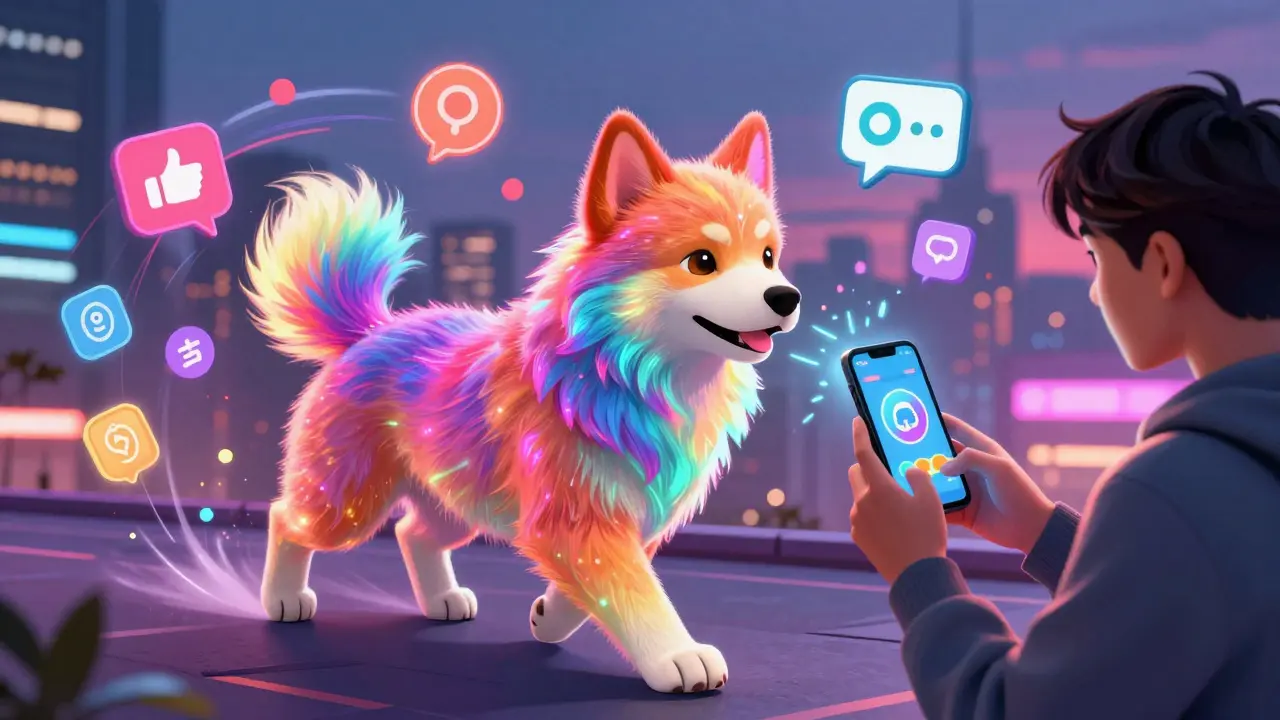
On November 22, 2023, IguVerse launched one of the most unusual airdrops in the GameFi space-not just handing out free tokens, but rewarding people for helping build a new kind of NFT ecosystem. This wasn’t another faceless profile picture collection. This was IGU, a project built on the idea that NFTs should be alive, unique, and shaped by real human behavior-powered by AI.
The airdrop ran for just 72 hours. But it drew over 16,852 participants. Why? Because IguVerse didn’t just give away tokens. They gave people a chance to help create something new: AI-generated NFTs that changed based on what you did. And they paid you for it.
How the IguVerse Airdrop Actually Worked
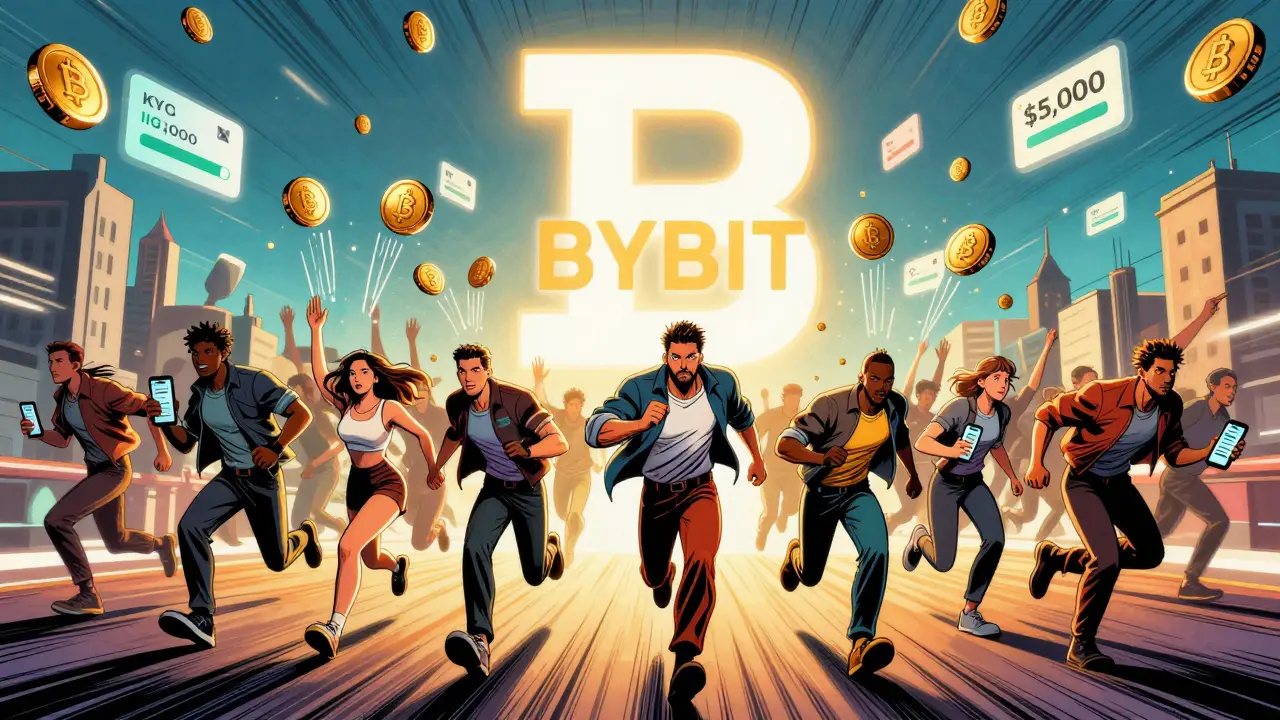
To qualify for the IGU airdrop, you had to do three things: sign up on Bybit, complete KYC, and deposit at least $100 in crypto. Then you voted for IguVerse on their Bybit ByVote campaign. That’s it. No complicated tasks. No endless social media posts. Just voting after verifying your identity and putting up a small amount of funds.
But here’s where it got smart. The rewards weren’t evenly split. The first 800 people who voted got $5,000 in IGU tokens each. The first 100 voters got an extra $5,000 split between them. And the first 100 people who cast 10,000 votes shared another $5,000. This wasn’t luck-it was a race. And people raced.
On top of that, Zealy ran a separate task-based giveaway. Completing simple actions like joining Discord, following Twitter, and sharing content earned you $3,000 in USDT and $3,000 in IGU tokens. These weren’t just fluff tasks. They were designed to build real community momentum before launch.
In total, IguVerse distributed $121,000 in IGU tokens and USDT during this campaign. That’s a lot for a project still in its early stages. And it worked. The campaign hit its $40,000 target on Gate.com’s startup platform with over $49 million in USDT committed-more than 1,200% over goal.
What Made IguVerse’s NFTs Different
Most NFTs are static. You buy one, you own it, and it sits there. IguVerse wanted to change that. Their NFTs weren’t just images. They were digital pets-AI-powered, unique, and evolving based on what you did in the app.
Think of it like a Tamagotchi meets TikTok. You feed your pet, walk it, post photos of it on social media, and the AI turns those actions into new NFT traits. Your pet’s fur color, accessories, even its personality traits changed based on your behavior. No two pets were the same. And because the AI learned from millions of interactions, your pet got smarter over time.
This was their version of NFT 2.0. They called the old model “faceless collections”-thousands of identical bored apes or pixelated penguins. IguVerse said: what if your NFT was a living thing shaped by your life? That’s what made their tokens valuable-not speculation, but personalization.
The GameFi Ecosystem: Three Ways to Earn
IguVerse didn’t stop at NFTs. They built a full GameFi platform with three earning streams built into one app:
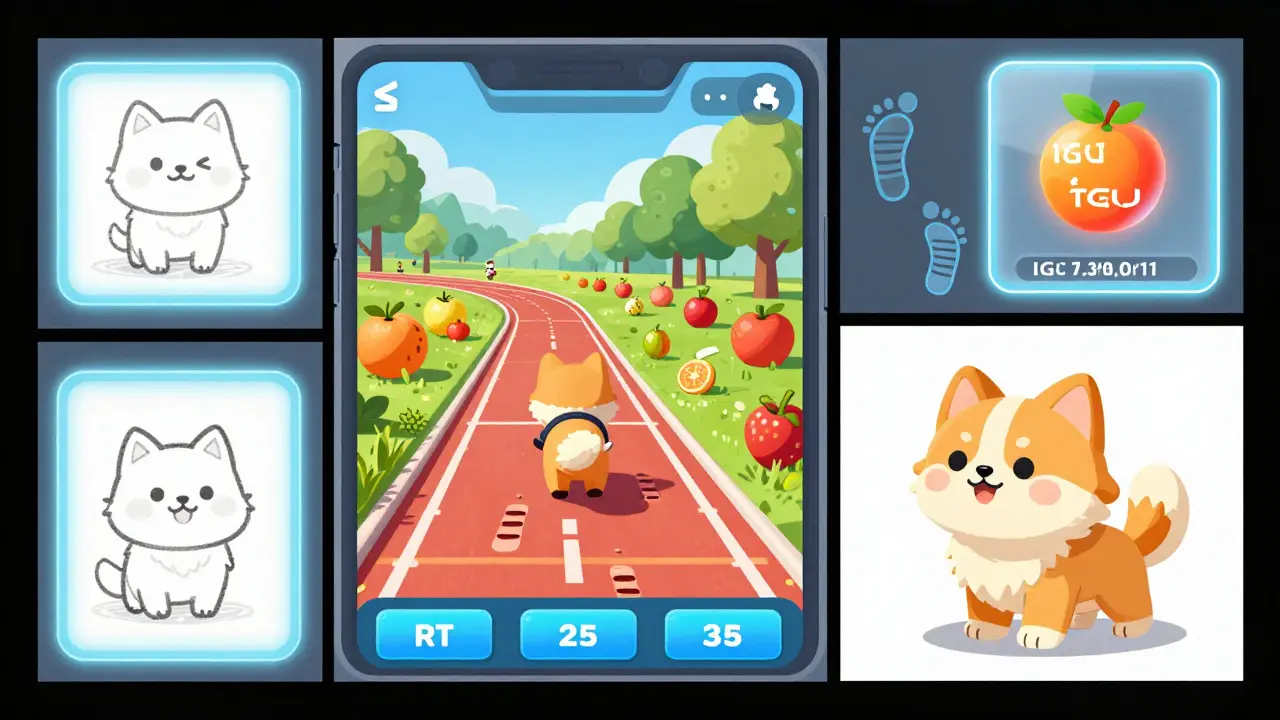
- Socialize to Earn: Share pet photos on Instagram, Twitter, or TikTok. The AI tracks engagement-likes, shares, comments-and rewards you with IGU tokens based on how much your content spreads.
- Move to Earn: Use your phone’s pedometer. Walk 5,000 steps? Get tokens. Hit 10,000? Double the reward. No special wearables needed-just your phone.
- Play to Earn: Compete in mini-games inside the app. Race your pet down fruit-filled tracks. Spin a quantum wheel. Predict crypto prices using a crystal ball. Win against other players. Top performers got bonus IGU and rare NFT upgrades.
These weren’t gimmicks. They were real mechanics designed to hook users into daily habits. People weren’t just playing a game-they were building digital identities that grew with them.
Where IGU Tokens Landed After the Airdrop
After the airdrop wrapped up, IGU tokens hit exchanges. OKX listed them on February 16, 2024. Kucoin followed the next day. By February 17, IGU was trading on four major platforms: Gate.io, Biswap, Poloniex, and QMall.
By September 2025, 99% of all IGU trading volume happened on the IGU/USDT pair. Peak daily volume hit $90,100. The token price hovered around $0.00000219 per IGU-about 0.219 cents. Weekly lows usually came on Saturdays, dipping to $0.00000002 cents.
That’s not a huge price. But it’s not a failure either. For a project launched in late 2023 with no venture capital funding, hitting $90K in daily volume on four exchanges is a quiet win. It means real people are using the app, not just trading.
What’s Next for IguVerse?
In early 2024, they ran a second giveaway: 1,000,000 IGU tokens-worth roughly $100,000 at the time-given away to celebrate their token generation event and exchange listings. They didn’t stop there.
The team keeps posting daily updates on Twitter, Discord, and Telegram. They’ve partnered with small NFT marketplaces like Binance NFT and OpenSea to let users trade their AI pets. They’re also testing a decentralized advertising platform: brands pay in IGU to reach users who opt into seeing ads while playing. Instead of interrupting your game, the ads become part of it-like sponsored fruit on your pet’s race track.
The roadmap includes PvP tournaments with cash prizes, AI-generated NFT art auctions, and a mobile app update that lets you link your real social media accounts directly to your pet’s profile. The goal? To make blockchain feel as normal as checking Instagram.
Why This Airdrop Mattered
Most airdrops are marketing stunts. IguVerse’s was a prototype. They didn’t just want to give away tokens-they wanted to test whether people would engage with AI-powered NFTs over time. And they did.
Over 16,000 people didn’t just claim free tokens. They walked, posted, played, and voted. They built digital pets that changed based on their real behavior. That’s not speculation. That’s adoption.
The project didn’t become the next Ethereum. But it didn’t need to. It proved that NFTs can be more than JPEGs. They can be companions. They can learn. They can grow with you. And if you do the right things, they can pay you back.
If you’re tired of seeing the same 10,000 bored apes, IguVerse showed there’s another way. One where your NFT is yours-not because of rarity, but because of your life.
Was the IguVerse airdrop really free?
No, it wasn’t completely free. To qualify, you had to deposit at least $100 in crypto on Bybit and complete KYC. But you didn’t lose that money-you just used it to enter the campaign. The IGU tokens you earned were separate from your deposit, and many participants ended up with more in tokens than they put in.
Can I still get IGU tokens from the airdrop?
The main airdrop ended in November 2023. But you can still buy IGU tokens on exchanges like Gate.io, Biswap, Poloniex, and QMall. The project occasionally runs new giveaways, so following their Discord or Telegram is the best way to catch the next one.
Do I need to be a crypto expert to join IguVerse?
No. The app is built for regular smartphone users, not crypto traders. You don’t need to understand wallets or gas fees. You just download the app, create a pet, walk around, post photos, and play mini-games. The AI handles the blockchain side. It’s designed to feel like any other mobile game.
Are IguVerse NFTs stored on the blockchain?
Yes. All AI-generated NFTs are minted on the Binance Smart Chain. Each pet has a unique token ID and metadata that updates in real time based on your actions. The AI doesn’t change the image directly-it updates the attributes stored on-chain, which then change how the NFT looks in the app and on marketplaces.
Is IguVerse still active in 2026?
Yes. The team is still posting daily updates, launching new in-game events, and expanding partnerships. The app remains available on iOS and Android. While the token price is low, the user base is growing slowly but steadily, especially in Southeast Asia and Latin America where mobile-first crypto adoption is rising.
How does the AI actually create unique NFTs?
The AI analyzes your behavior-how often you walk your pet, what kind of photos you post, which games you win, and even the time of day you play. It then combines those patterns with thousands of other users’ data to generate new visual traits. For example, if you post mostly sunset photos, your pet might develop golden fur. If you win a lot of races, it gains speed-themed accessories. No two pets look alike because no two users behave the same.
Can I sell my IguVerse NFTs?
Yes. You can list your AI pet NFT on Binance NFT or OpenSea. The app includes a built-in marketplace where you can set your own price in IGU or USDT. Some rare pets-like those with unique trait combinations from early users-have sold for over 500 IGU tokens (around $1.10 at current prices).
What’s the biggest risk with IguVerse?
The biggest risk is that the AI system could become too complex or lose user interest. If people stop walking their pets or posting photos, the NFTs stop evolving-and that breaks the core promise. Also, the token price is very low, so there’s little upside unless adoption grows dramatically. This isn’t a get-rich-quick project. It’s a long-term experiment in digital identity.
Jason Zhang
January 16 2026Okay but why does my pet need to walk 10k steps to get a tiny boost? I’m not a robot. I’m a human who sometimes just wants to lie on the couch and eat chips. This feels like a fitness app that got drunk with blockchain.
Katherine Melgarejo
January 16 2026So let me get this straight. You pay $100 to play a Tamagotchi that tracks your Instagram likes? And you call this innovation? I’ve seen better AI in my toaster.
Patricia Chakeres
January 18 2026This is just another psyop from the crypto elite to funnel retail money into their private wallets. The ‘AI’ is probably just a bot that cycles through 12 preset images. They’re not building a new ecosystem-they’re building a Ponzi with cute fur colors.
Alexis Dummar
January 20 2026I think this is kinda beautiful actually. Like… your digital pet learns from you. It’s not just a JPEG. It’s a mirror. Every walk, every post, every game you win-it’s all part of your story. Kinda like how your dog knows when you’re sad. Except this one’s on the blockchain. Weird? Yeah. But kinda sweet?
kristina tina
January 21 2026Y’ALL. THIS IS THE FUTURE. 🥹 I got my first IGU token after walking 7k steps and posting a pic of my cat wearing sunglasses. My pet now has glittery ears and a tiny crown. I named him Sir Fluffington. I cry every time he does a victory dance. This isn’t crypto. This is my new emotional support algorithm.
Anna Gringhuis
January 21 2026Let’s be real. If you needed to deposit $100 to vote, it wasn’t an airdrop. It was a fee disguised as opportunity. And now you’re all celebrating like you won the lottery when you just paid to play a game that rewards you for being a walking data farm.
Michael Jones
January 22 2026The mechanics here are actually really well designed. Clear entry points, tiered incentives, community-driven engagement. The AI integration isn’t perfect, but it’s a functional prototype. Most crypto projects don’t even get this far. This deserves credit.
Jill McCollum
January 24 2026i love how this feels like a digital pet but also like a social experiment?? like my igu pet got golden fur after i posted 15 sunsets in a row 😭 i didnt even realize i was doing it. now i walk more just to see what it turns into next. its weirdly therapeutic??
Hailey Bug
January 24 2026The BSC minting is solid. On-chain metadata updates are correctly implemented via smart contracts. The real innovation is the behavioral trigger system-no centralized server altering images. Everything is deterministic. This is actually technically impressive.
Hannah Campbell
January 25 2026AMERICA IS BEING OUTSOURCED TO A TIKTOK BOT. This isn’t innovation. It’s a scam run by people who think ‘AI’ means putting a filter on a JPEG. If you’re still buying this, you’re part of the problem.
Liza Tait-Bailey
January 25 2026i know it sounds silly but my pet got a hat after i posted a photo of me holding my grandma’s teacup. she passed last year. i didn’t even think about it when i uploaded it. now he wears it every day. it’s… weirdly healing? idk. just saying.
Anthony Ventresque
January 26 2026I think this is the quietest revolution in crypto. No hype. No VC money. Just people walking, posting, and playing. It’s not about the token price. It’s about what happens when you make blockchain feel human. I’ve never felt this connected to a digital thing before.
Nishakar Rath
January 27 2026this is just a gimmick with extra steps. why not just give free tokens to people who post memes? why make them walk 10k steps? who even has time for this? and why is everyone acting like this is the future? it’s not. it’s just a distraction
Stephen Gaskell
January 29 2026The token price is laughable. $0.00000219? That’s not a currency. It’s a decimal error. If you’re not making money off this, you’re just funding someone else’s hobby.
Ashlea Zirk
January 31 2026While the project demonstrates a commendable attempt at integrating behavioral data with blockchain-based digital assets, one must consider the long-term sustainability of user engagement metrics. The attrition rate for gamified crypto platforms typically exceeds 80% within six months.
Alexandra Heller
January 31 2026You people are so easily pleased. You think a digital pet that changes color when you post a sunset is ‘art’? You’ve been conditioned by capitalism to mistake algorithmic novelty for meaning. This isn’t evolution. It’s a dopamine trap dressed in NFT glitter.
nathan yeung
February 1 2026bro i just started using this app last week and already my pet has a beard from me posting 30 photos of my chai latte. its dumb but also kinda fun. i think i like it. maybe i’m just tired of boring crypto. this feels like play.