
You’ve probably stumbled across Diffusion Finance while browsing for the next big thing in decentralized finance or looking for a new place to trade. Maybe you saw a mention in a forum, heard about it from a friend, or just typed its name into your search bar hoping for a detailed breakdown. But here’s the reality check: finding solid, verified information about this specific platform is surprisingly difficult.
In the crowded world of cryptocurrency exchanges, where giants like Binance and Coinbase dominate the headlines, smaller platforms often fly under the radar. Diffusion Finance is one of those obscure names. It doesn’t appear on major ranking lists for top exchanges in 2025 or 2026. There are no flashy marketing campaigns, no celebrity endorsements, and very little public data regarding its trading volume or user base. So, what exactly is Diffusion Finance, and should you trust your money with it? Let’s peel back the layers and look at what we actually know versus what we don’t.
What Is Diffusion Finance?
To understand Diffusion Finance, we first need to define what kind of entity it is. In the crypto space, terms like "exchange," "protocol," and "platform" get thrown around loosely. Diffusion Finance appears to operate as a cryptocurrency platform that facilitates transactions. The strongest evidence of its existence comes not from marketing materials, but from tax documentation.
Sites like cryptotaxcalculator.io have dedicated guides for filing taxes related to transactions on Diffusion Finance. This is a crucial clue. It means the platform generates taxable events-likely swaps, trades, or yield farming activities-that users need to report to authorities like the IRS or HMRC. If it weren’t processing real financial movements, there would be no need for specialized tax calculation tools.
However, beyond this tax implication, the platform’s core identity remains vague. Is it a centralized exchange (CEX) where a company holds your funds? Or is it a decentralized protocol (DEX) running on smart contracts? The lack of clear public positioning suggests it might be a niche DeFi protocol or a smaller hybrid service that hasn’t sought mainstream visibility. Unlike major CEXs that publish whitepapers detailing their team and roadmap, Diffusion Finance operates with minimal transparency in public channels.
The Transparency Problem: Why Information Is Scarce
If you’re used to researching established exchanges, you’ll notice a glaring absence of standard details for Diffusion Finance. Most reputable exchanges provide:
- Founding Date & Team: Who built it? When did it launch?
- Headquarters: Where is the company legally registered?
- Supported Assets: Which cryptocurrencies can you trade?
- Fee Structure: What percentage do they take per trade?
- Security Audits: Have independent firms checked their code?
For Diffusion Finance, none of these details are readily available in mainstream reviews or news outlets. This isn’t necessarily proof of malice, but it is a significant red flag for risk-averse investors. In the crypto industry, transparency is currency. Platforms that hide their operational details often do so because they are either too small to matter, highly experimental, or potentially risky.
The absence from major 2025/2026 exchange rankings further complicates things. Top-tier platforms like Bybit, Kraken, and MEXC Global compete fiercely for market share by highlighting their features-Bybit offers up to 100x leverage, Kraken focuses on security for US users, and MEXC boasts hundreds of altcoins. Diffusion Finance doesn’t show up in these comparisons. This suggests it serves a very specific, perhaps tiny, segment of the market, or it simply lacks the liquidity and infrastructure to compete on a global scale.
Security Risks and Due Diligence
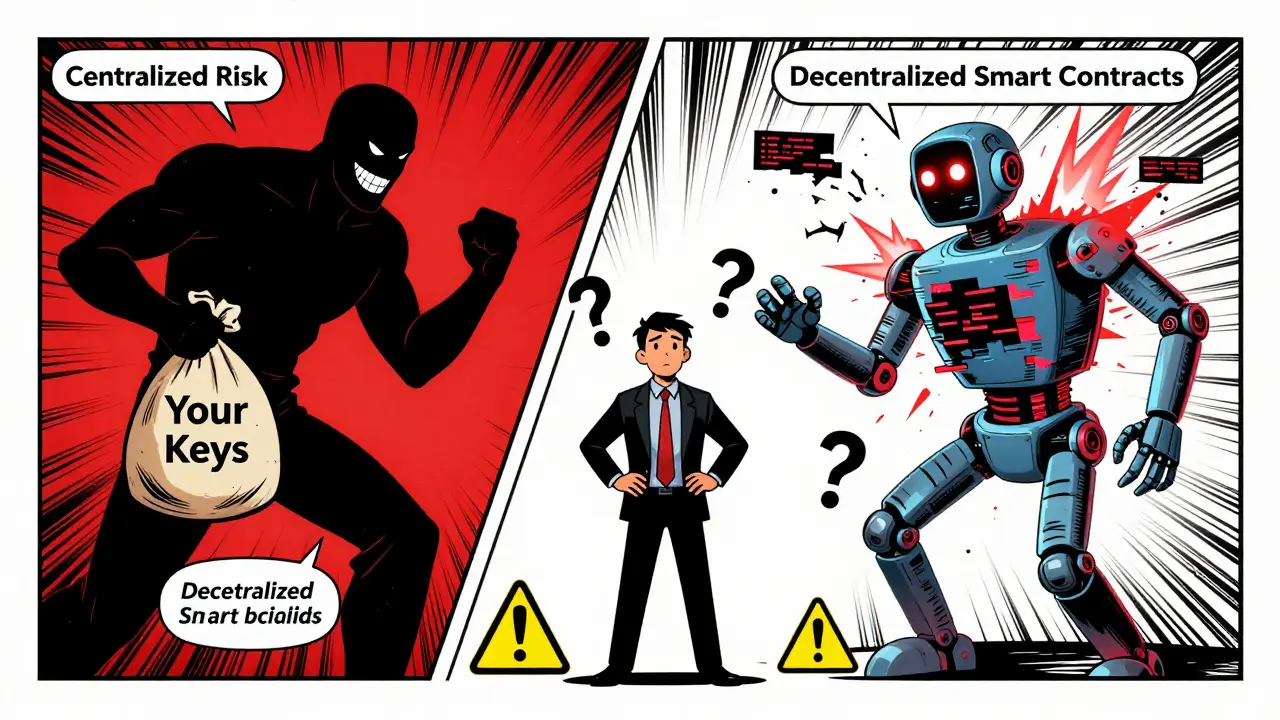
When dealing with an obscure platform, security becomes your primary concern. Without knowing if Diffusion Finance is centralized or decentralized, you can’t accurately assess the risks.
If it’s a Centralized Exchange (CEX): You are trusting a third party with your private keys. If the company goes bankrupt, gets hacked, or decides to rug pull, your funds could vanish. Established exchanges mitigate this with insurance funds, cold storage, and regulatory compliance. Does Diffusion Finance have any of these? We don’t know. That uncertainty is dangerous.
If it’s a Decentralized Protocol (DEX): Your risk shifts to smart contract vulnerabilities. Even if the team disappears, the code runs on the blockchain. However, unaudited or poorly audited smart contracts are prone to exploits. Hackers frequently target smaller DeFi protocols because they often lack the robust security teams of larger competitors.
Since there are no public records of security audits or bug bounty programs for Diffusion Finance, you must assume the worst-case scenario. Never deposit more than you can afford to lose. In fact, many experienced traders advise avoiding platforms entirely until they demonstrate a track record of reliability over at least 12-24 months.
Tax Implications: The Hidden Cost
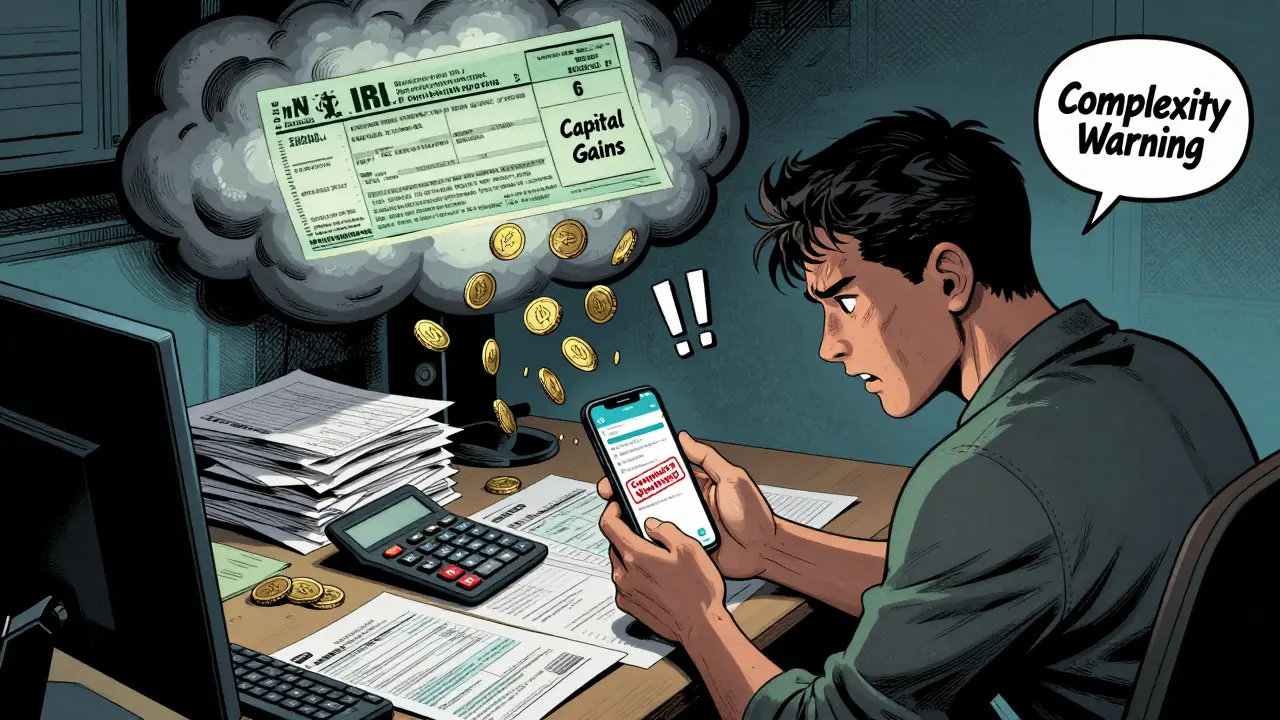
One area where Diffusion Finance leaves a clear footprint is taxation. As mentioned earlier, the existence of specific tax guides indicates that interacting with this platform triggers taxable events. Whether you are swapping tokens, providing liquidity, or earning rewards, every action likely counts as a disposal or acquisition of assets in the eyes of tax authorities.
This creates a complex burden for users. You will need to track:
- Cost Basis: The value of your crypto when you acquired it.
- Disposal Value: The value when you swapped or sold it on Diffusion Finance.
- Date and Time: Precise timestamps for each transaction.
Using a tool like cryptotaxcalculator.io is essential here. Manual tracking is nearly impossible due to the frequency of DeFi interactions. Keep in mind that tax laws vary by country. In the US, the IRS treats crypto as property, meaning capital gains tax applies. In other jurisdictions, rules may differ. Always consult a local tax professional before engaging with niche platforms, as the complexity of reporting can outweigh potential profits.
How It Compares to Major Exchanges
To put Diffusion Finance in perspective, let’s compare it against established players. This table highlights why most users stick to known entities.
| Feature | Diffusion Finance | Binance / Bybit / Kraken |
|---|---|---|
| Market Visibility | Low / Obscure | High / Global Leaders |
| Regulatory Status | Unknown | Licensed in multiple jurisdictions |
| Security Audits | Not Publicly Available | Regular Third-Party Audits |
| User Support | Unclear | 24/7 Dedicated Teams |
| Tax Reporting Tools | Third-party integrations only | Built-in tax reports (some) |
The contrast is stark. Major exchanges invest heavily in compliance, security, and user experience because they rely on trust to retain millions of users. Diffusion Finance, lacking this infrastructure, offers no such guarantees. For beginners, this gap is unforgiving. If you are an advanced DeFi user who understands how to audit smart contracts yourself, you might find niche opportunities here. For everyone else, the risks likely outweigh the rewards.
Who Should Use Diffusion Finance?
Given the limited information, the answer is: very few people. Specifically, only those who meet all the following criteria:
- Advanced Technical Knowledge: You understand blockchain explorers, smart contract interaction, and gas fees.
- Risk Tolerance: You are willing to lose 100% of the funds you deposit.
- Niche Need: There is a specific token or feature on Diffusion Finance that you cannot access elsewhere.
- Tax Preparedness: You have a system in place to track every transaction for tax purposes.
If you are a beginner looking to buy Bitcoin or Ethereum, stick to regulated, well-known exchanges. If you are an intermediate trader seeking liquidity and tight spreads, major CEXs or top-tier DEXs like Uniswap are safer bets. Diffusion Finance does not offer a compelling advantage that justifies the opacity surrounding its operations.
Red Flags to Watch For
Before you even consider creating an account or connecting your wallet, watch out for these common warning signs associated with obscure crypto platforms:
- Anonymity: No identifiable team members or legal entity.
- Promises of High Returns: Unsustainable APYs often signal a Ponzi scheme.
- Pressure Tactics: Urgent calls to action like "Join now before it’s too late!"
- Lack of Community: No active Discord, Telegram, or Twitter presence with real engagement.
- Broken Links: Official websites that are down or poorly maintained.
While we cannot confirm Diffusion Finance exhibits all these traits, the general lack of information places it in a high-risk category. Always verify URLs carefully to avoid phishing sites impersonating legitimate platforms.
Final Verdict: Proceed With Extreme Caution
So, is Diffusion Finance a scam? We can’t say for sure without concrete evidence of fraud. But is it safe? Based on current data, the answer is no-not for the average investor. The lack of transparency, absence from major rankings, and unclear security measures make it a poor choice for storing or trading significant amounts of cryptocurrency.
In the crypto world, obscurity is rarely a feature; it’s usually a bug. Established platforms work hard to build trust through audits, licenses, and community engagement. Diffusion Finance seems to operate in the shadows. Unless you have a specific, technical reason to use this platform and the expertise to protect yourself, it’s better to stay away. Your capital is hard-earned; don’t gamble it on a mystery.
Is Diffusion Finance a centralized or decentralized exchange?
It is currently unclear. The platform lacks public documentation specifying its architecture. However, the existence of tax guides suggests it processes transactions that generate taxable events, which is common in both CEXs and DEXs. Users should assume higher risk due to this ambiguity.
Why is there so little information about Diffusion Finance?
The platform likely operates on a small scale or serves a niche market. It does not appear in major 2025/2026 exchange rankings, indicating low trading volume or limited geographic reach. This lack of visibility makes it difficult to verify its legitimacy.
Do I need to pay taxes on Diffusion Finance transactions?
Yes. Specialized tax calculators exist for Diffusion Finance, implying that swaps, trades, or yields generated on the platform are taxable events. You must track cost basis and disposal values for accurate reporting to tax authorities.
Is Diffusion Finance safe for beginners?
No. Beginners should avoid obscure platforms due to the lack of customer support, unclear security measures, and potential regulatory risks. Stick to well-established, regulated exchanges like Coinbase, Kraken, or Binance for safer entry into crypto.
Where can I find official support for Diffusion Finance?
Official support channels are not clearly documented in public sources. Users are advised to exercise extreme caution and never share private keys or seed phrases. If possible, consult the platform’s official website directly, but verify the URL to avoid phishing scams.