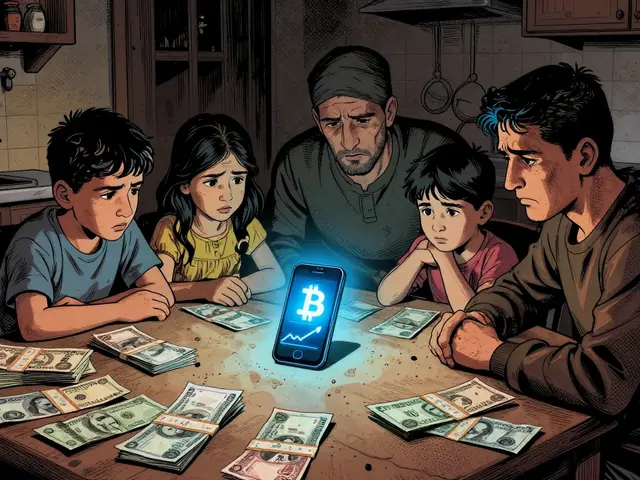
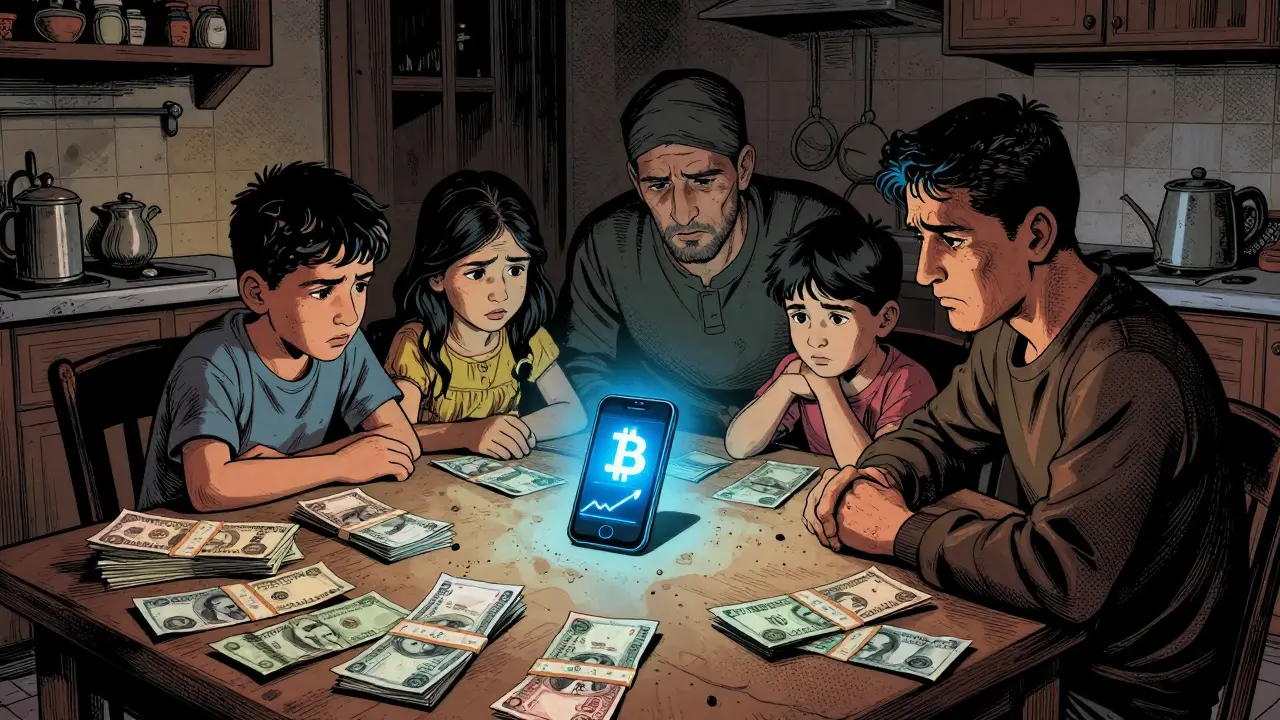
Imagine trying to save your life savings while the currency you hold loses nearly 90% of its value in just a few years. For millions of Iranians, this isn't a hypothetical nightmare; it is their daily reality. In 2024, $4.18 billion in cryptocurrency flowed out of Iran, marking a staggering 70% increase from the previous year. This massive surge in digital asset movement wasn't driven by state-sponsored hackers or criminal syndicates, as often portrayed in media narratives. Instead, it was fueled by ordinary citizens desperate to protect their wealth from hyperinflation and geopolitical instability.
This figure represents a significant shift in how sanctioned economies interact with global finance. When traditional banking channels are blocked by international restrictions, people turn to decentralized alternatives. The data tells a story of survival, not just speculation. Understanding these flows helps us see the real-world impact of economic policy on everyday lives.
The Human Story Behind the Numbers
Behind every dollar moved via blockchain is a person making a difficult choice. The primary driver for these outflows is the catastrophic collapse of the Iranian rial. Since U.S. sanctions intensified in 2018, the local currency has plummeted, with inflation rates hovering between 40% and 50%. For a family earning a salary in rials, watching their purchasing power evaporate is terrifying.
Cryptocurrency, particularly Bitcoin the leading digital asset used as a store of value, became the logical refuge. It acts as "digital gold" or "escape money." Users on Persian-language forums and Telegram channels frequently share stories of converting life savings into Bitcoin during periods of extreme volatility. These aren't sophisticated traders looking for quick profits; they are parents trying to ensure their children's education funds don't vanish overnight.
The motivation is clear: preservation. Unlike speculative investments, this usage is defensive. Citizens rush to convert local currency to stablecoins or Bitcoin when they sense economic trouble. This behavior creates distinct patterns in transaction data that researchers can track and analyze.
Geopolitics and Market Spikes
Economic pressure isn't the only factor driving these transactions. Geopolitical events create immediate spikes in crypto activity. Chainalysis a blockchain analytics firm that tracks illicit finance and regulatory compliance identified specific dates where outflows surged dramatically, directly correlating with military tensions.
For instance, on April 9th and 14th, 2024, following the Israeli bombing of the Iranian Embassy in Damascus and subsequent retaliatory actions, crypto transfers jumped sharply. Similarly, late September through early October 2024 saw another peak amid escalated conflicts. Google Trends data confirms this pattern, showing global search interest in "Iran Israel" matching precisely with blockchain-recorded capital movement peaks.
When war seems imminent, trust in government institutions plummets. People fear asset freezes, bank closures, or further devaluation. In those moments of uncertainty, the borderless nature of cryptocurrency offers a lifeline. It allows individuals to move value out of the country quickly, bypassing traditional financial gatekeepers who may be subject to political interference.
| Driver | Impact on Outflows | Evidence/Correlation |
|---|---|---|
| Rial Devaluation | Sustained high volume | 90% loss in rial value since 2018 |
| Hyperinflation | Continuous retail adoption | Inflation rates between 40-50% |
| Military Tensions | Sharp short-term spikes | Peaks on April 14 & Oct 1, 2024 |
| Banking Restrictions | Alternative remittance channel | FATF blacklist status since 2018 |
How Iranians Access Global Markets
Accessing international cryptocurrency exchanges is not straightforward for residents of Iran due to strict sanctions. However, necessity breeds innovation. Iranian users have developed sophisticated methods to navigate these barriers.
Virtual Private Networks (VPNs) and proxy connections are essential tools. They allow users to mask their location and access platforms like Binance or Coinbase, which otherwise block Iranian IP addresses. While direct access has declined due to tighter compliance measures, indirect routes remain active.
Domestic exchanges played a crucial role until late 2024. Platforms such as Nobitex, Wallex, and Ramzinex facilitated substantial trading volumes locally. These platforms operated under heavy scrutiny, requiring detailed user data submission to comply with central bank regulations. Despite this, they provided a vital bridge for citizens wanting to enter the crypto ecosystem without immediately dealing with complex international protocols.
The learning curve for adopting these technologies accelerated rapidly. Education happens peer-to-peer, through social media groups and community forums rather than formal courses. Within weeks, many users learned how to secure wallets, manage private keys, and execute cross-border transfers. This grassroots knowledge sharing demonstrates the resilience of communities facing financial exclusion.

Comparison with Other Sanctioned Economies
Iran's situation shares similarities with other nations under heavy sanctions, but there are key differences in how cryptocurrency is utilized.
Russia also increased crypto usage for circumvention, but Iran's outflows were proportionally higher relative to GDP and showed greater concentration at the retail level. Russian activity often involves larger institutional moves, whereas Iranian activity is dominated by individual citizens protecting personal savings.
North Korea's crypto activities are typically associated with state-sponsored hacking and theft operations. This contrasts sharply with Iran's citizen-driven capital flight. The intent in North Korea is revenue generation for the regime; in Iran, it is wealth preservation for the populace.
Venezuela provides the closest parallel, having experienced hyperinflation and widespread crypto adoption. However, Iran's outflows exceeded Venezuela's peak periods by substantial margins in 2024. This suggests that the combination of severe sanctions and active geopolitical conflict creates a unique pressure cooker environment.
Regulatory Challenges and Future Outlook
Governments and regulators face a growing challenge in monitoring these flows. The U.S. Treasury Department and its Office of Foreign Assets Control (OFAC) have expanded enforcement capabilities, targeting Iranian-linked financial networks. Yet, the decentralized nature of blockchain makes complete control nearly impossible.
Exchange compliance costs have risen by 40-60% specifically to address monitoring requirements for Iranian and Russian transactions. Financial institutions invest heavily in blockchain analytics to detect suspicious patterns. However, users adapt. Techniques for obfuscating transaction trails continue to evolve, often outpacing detection methods.
The Iranian government itself takes a contradictory stance. While restricting citizen access to prevent capital flight, it simultaneously develops state-sponsored mining operations and explores digital currency initiatives for revenue generation. This dual approach creates policy uncertainty but does little to stop the underlying demand for financial security among the public.
Looking ahead, the trend is likely to continue. As long as sanctions persist and economic instability remains, cryptocurrency will serve as a critical alternative financial system. The precedent set by Iran influences other sanctioned nations, highlighting the limitations of traditional financial restrictions in the digital age.
Why did crypto outflows from Iran increase by 70% in 2024?
The increase was primarily driven by the continued devaluation of the Iranian rial and high inflation rates. Ordinary citizens used cryptocurrency to preserve their wealth against economic collapse, rather than for illicit purposes.
Is the $4.18 billion figure related to illegal activities?
According to Chainalysis, the majority of these outflows were driven by retail investors seeking financial security, not state-sponsored illicit activities. It represents an 'alternative financial system' for wealth preservation.
How do Iranians access international crypto exchanges?
Users predominantly use VPN services and proxy connections to bypass geo-restrictions. Domestic exchanges like Nobitex also facilitate initial entry into the market before users move assets internationally.
Which cryptocurrencies are most popular in Iran?
Bitcoin dominates the outflow composition, especially during crisis periods. Stablecoins are also widely used for preserving value against inflation, offering a hedge against both economic and geopolitical uncertainty.
How does Iran's crypto usage compare to Russia or Venezuela?
Iran's outflows are more concentrated at the retail level compared to Russia's institutional moves. While similar to Venezuela's hyperinflation response, Iran's volumes were higher in 2024 due to combined economic and geopolitical pressures.