
Imagine depositing your hard-earned money into a platform that promises total anonymity, only to find your account frozen and support going silent. This isn't a hypothetical nightmare; it is the reality for many users of BitFex, a cryptocurrency exchange that has drawn significant scrutiny in 2025 and 2026. If you are searching for a low-fee, anonymous trading platform, you have likely stumbled upon BitFex. But before you type in your banking details, we need to separate marketing hype from the harsh truth. This review cuts through the noise to answer the most critical question: Is BitFex a legitimate tool for private trading, or is it a dangerous trap?
What Is BitFex? The Basics
BitFex is a cryptocurrency exchange launched in early 2018 that targets users in Eastern Europe with a focus on minimal verification and low fees. On paper, it sounds appealing. You want to trade Bitcoin or Ethereum without jumping through endless identity verification hoops. BitFex claims to offer exactly that. They position themselves as an alternative to giants like Binance or Coinbase, promising a "no KYC" (Know Your Customer) environment where your privacy remains intact.
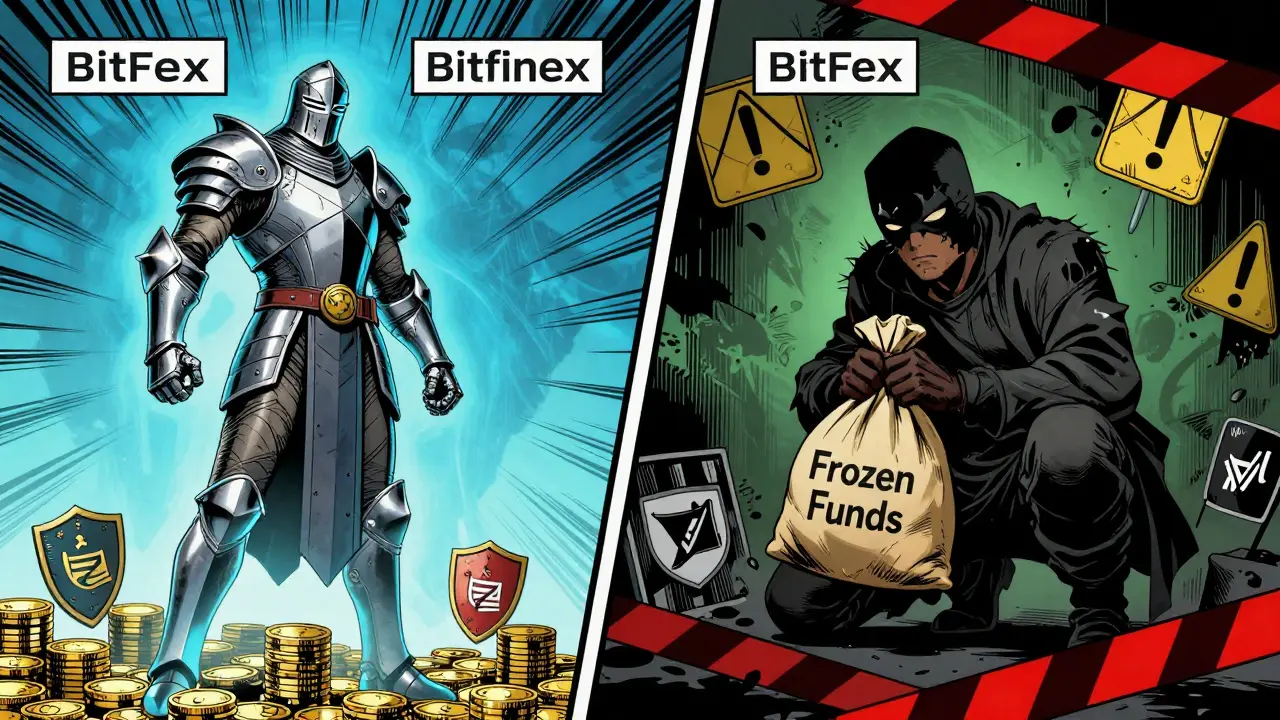
However, there is a massive elephant in the room. BitFex is often confused with Bitfinex, which is a major, established global exchange founded in 2012 known for deep liquidity and professional trading tools. These are two completely different entities. Bitfinex is a top-tier player with regulatory compliance and billions in volume. BitFex is a marginal, obscure platform with almost no market presence outside specific niche circles. Confusing the two is a common mistake that can lead to serious financial loss.
The Red Flags: Why Experts Warn Against BitFex
When evaluating any crypto exchange, trust is the currency that matters most. BitFex fails this test on multiple fronts. The first major warning sign came in September 2025, when the UK Financial Conduct Authority (FCA) published a list of reported scam companies and unregistered firms operating in the UK. Several domains associated with BitFex operations appeared on this list. The FCA does not put platforms on this list lightly; it indicates a high risk of fraud, including fake exchanges and investment scams.
Let's look at what industry experts are saying. John Rodriguez, a Senior Analyst at CryptoSecurity Labs, stated in his September 2025 assessment that exchanges promoting complete anonymity without verifiable security protocols usually operate in regulatory gray areas. He noted that BitFex's lack of transparency regarding ownership aligns with patterns seen in previous exchange failures. In plain English? When a platform hides who runs it and how they secure funds, they are hiding something bad.
Sarah Chen from the Blockchain Transparency Institute echoed this sentiment in October 2025. She warned that the absence of clear regulatory status combined with promises of anonymity should trigger immediate caution. Legitimate exchanges balance privacy with necessary compliance. BitFex offers neither proper security nor legal protection.
User Experiences: A Pattern of Frozen Funds
Data from regulators is one thing, but real user experiences tell the true story. If you dig into forums like Reddit's r/CryptoCurrency or Trustpilot, the picture becomes grim. As of November 2025, BitFex holds an average rating of just 1.8 out of 5 stars on Trustpilot based on 12 reviews. That is abysmal.
Consider the experience of 'CryptoWatcher2025' on Reddit, who posted in October 2025 about depositing 500 EUR via bank transfer. Their account was credited initially, but when they tried to withdraw, "verification issues" suddenly appeared. Support went unresponsive for three weeks. This is a classic scam pattern: let you in easily, make withdrawal impossible.
Another user, 'AnonTrader', described a similar scenario on CryptoSlate's forum. They noted that while BitFex advertises no KYC, once a significant amount is deposited, the platform invents "compliance issues" requiring documents never mentioned before. According to the Blockchain Transparency Institute's incident tracking database, only 29% of users who faced such issues managed to recover their funds, and it took an average of over 30 days. For most people, that money is gone forever.
| Feature | BitFex | Bitfinex / Kraken / OKX |
|---|---|---|
| Regulatory Status | Unregulated / Listed on FCA Warning List | Licensed in multiple jurisdictions (EU, US, Asia) |
| KYC Requirement | None initially, then forced during withdrawal | Mandatory for fiat deposits and withdrawals |
| Security Transparency | No public audits or security details | Regular third-party audits, cold storage proof |
| Market Liquidity | Extremely Low (Outside Top 100) | High (Top 20 globally) |
| User Recovery Rate | ~29% (after disputes) | >99% (standard processing) |
Technical Limitations and Lack of Features
Beyond the safety concerns, BitFex simply isn't built for serious traders. The platform is technically basic. It functions as a simple web interface with minimal features. There are no advanced charting tools, no API access for algorithmic trading, and no sophisticated order types like stop-losses or take-profits. If you are looking to execute complex strategies, BitFex will frustrate you.
Liquidity is another major issue. CoinGecko's data from November 2025 shows BitFex ranking outside the top 100 exchanges by trading volume. Low liquidity means you might struggle to sell large amounts of crypto without significantly impacting the price (slippage). Compare this to Bitfinex or Kraken, which handle billions in daily volume, ensuring your trades execute instantly at fair prices.
Furthermore, there is no mobile app. In 2026, managing crypto primarily through a desktop browser is inconvenient for most users. Competitors like MEXC or BingX offer robust mobile applications with biometric security, whereas BitFex offers nothing beyond a basic website.
The Regulatory Landscape in 2026
The world of cryptocurrency is changing fast. In 2025, 92 countries implemented some form of crypto exchange regulation, according to the IMF. The era of wild-west, unregulated exchanges is ending. Gartner's 2025 Crypto Exchange Report forecasted a 90% reduction in non-compliant exchanges by 2027 due to global regulatory harmonization.
BitFex is swimming against this tide. By refusing to comply with standard regulations, they are isolating themselves from banking partners and legitimate business opportunities. Deloitte's 2025 report noted that exchanges without clear regulatory status face increasing difficulties in maintaining operations. For a user, this means the platform could shut down overnight without warning, leaving you with zero recourse.
Safer Alternatives for Privacy-Conscious Traders
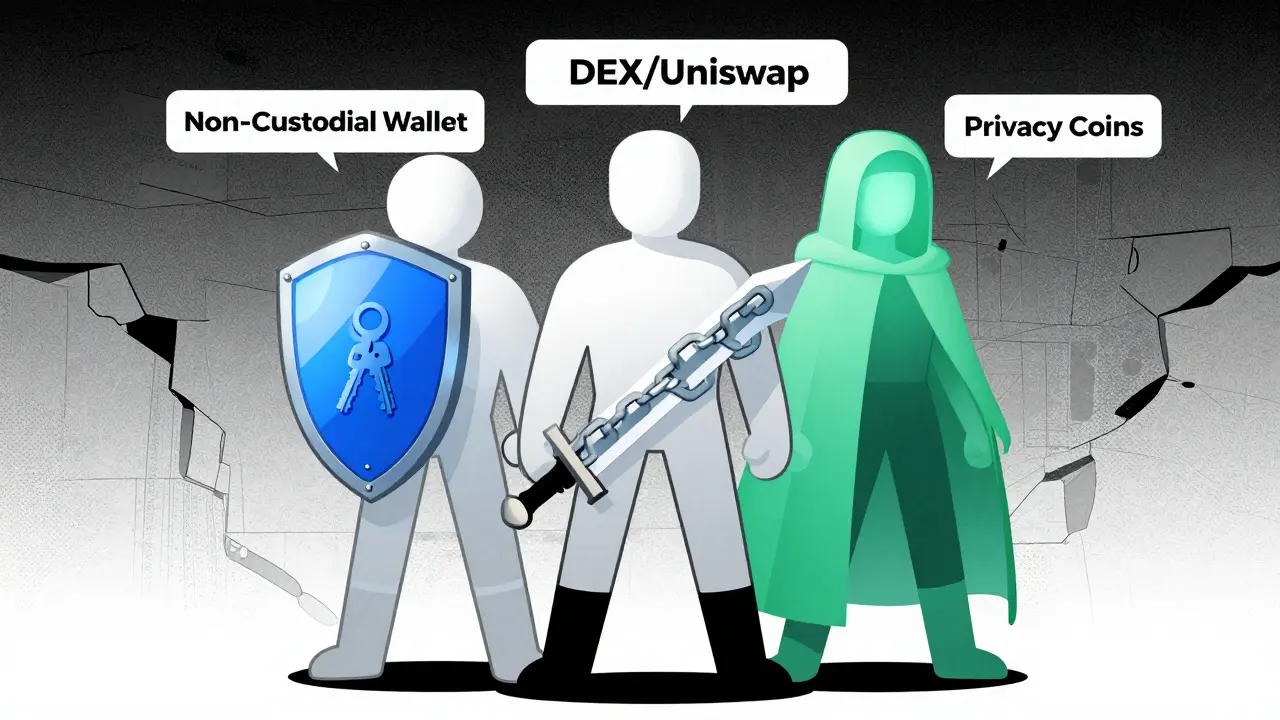
If your goal is privacy, there are safer ways to achieve it than using a shady exchange like BitFex. You don't have to sacrifice security for anonymity.
- Use Non-Custodial Wallets: Platforms like MetaMask or Ledger allow you to hold your own keys. You control your assets, not an exchange.
- P2P Trading: Services like Bisq or Hodl Hodl facilitate peer-to-peer trades without a central intermediary holding your funds.
- Privacy Coins: Consider using Monero (XMR) or Zcash (ZEC) on reputable exchanges like Kraken (where available), which offer better privacy features than Bitcoin while still being traded on regulated platforms.
- Decentralized Exchanges (DEXs): Platforms like Uniswap or PancakeSwap allow you to swap tokens directly from your wallet without KYC, provided you use them correctly and understand smart contract risks.
These options may require slightly more technical knowledge, but they do not carry the existential risk of having your funds stolen by a fraudulent centralized entity.
Conclusion: Do Not Use BitFex
The evidence is overwhelming. BitFex lacks regulatory compliance, has been flagged by the UK FCA, suffers from terrible user reviews involving frozen funds, and offers inferior technical features compared to established competitors. The promise of "no KYC" is a bait-and-switch tactic used to lure in deposits before locking you out.
In the crypto space, if something sounds too good to be true-like high anonymity with zero hassle-it usually is. Protect your capital. Stick to well-known, regulated exchanges like Kraken, Bitfinex, or OKX, or explore decentralized alternatives that respect your privacy without compromising your security.
Is BitFex the same as Bitfinex?
No, they are completely different. Bitfinex is a major, reputable exchange founded in 2012 with high liquidity and regulatory compliance. BitFex is a small, obscure platform launched in 2018 that has been linked to scam warnings and has poor user feedback. Never confuse the two.
Why is BitFex on the UK FCA warning list?
The UK Financial Conduct Authority listed domains associated with BitFex in September 2025 due to concerns about unregistered activities and potential fraud. This indicates that the platform operates without proper authorization and poses a high risk to consumers.
Can I withdraw my money from BitFex?
Many users report being unable to withdraw funds. Common complaints include sudden "verification requirements" appearing after deposits, followed by unresponsive customer support. Data suggests only 29% of users facing these issues successfully recover their money, often after waiting over 30 days.
Are there safe alternatives to BitFex for anonymous trading?
Yes. Instead of risky centralized exchanges, consider using Decentralized Exchanges (DEXs) like Uniswap, peer-to-peer platforms like Bisq, or non-custodial wallets. These options allow you to maintain control of your assets and privacy without relying on a potentially fraudulent middleman.
What is the fee structure of BitFex?
BitFex claims to have low fees, but they do not publish transparent fee schedules. This lack of clarity is a red flag. Reputable exchanges clearly display their maker/taker fees and withdrawal costs. With BitFex, hidden fees or unexpected charges during withdrawal are common complaints.
mark valmart
June 1 2026man this hits home. i saw my buddy get burned by a similar setup last year. they let you in easy then ghost you when you try to cash out. classic bait and switch.
Craig Swanson
June 1 2026listen up folks because i am only going to say this once. if an exchange is not regulated and has zero transparency, it is a scam period. do not be stupid enough to deposit your life savings into a black hole just because someone promised you anonymity. you are playing russian roulette with your money and the gun is already loaded against you.
Bill Gunn
June 2 2026😬 wow. that table comparing bitfex to kraken is terrifyingly accurate. i always tell people: if it sounds too good to be true, it’s a trap. no kyc + low fees = rug pull waiting to happen. stick to the big boys or use a hardware wallet like ledger 🛡️
Barclay Chantel
June 3 2026It is frankly embarrassing how many people still fall for these obvious cons. The lack of basic due diligence is staggering. One would assume that by now, anyone with even a modicum of financial literacy would recognize that 'no KYC' in 2026 is not a feature, but a liability. It suggests the operators have something to hide, likely their own identities or the fact that they are siphoning funds. To engage with such platforms is to invite one's own ruin through sheer negligence.
Diana Morris
June 3 2026stop falling for it guys. just stop. its so easy to spot these scams now. why are people still losing money? wake up.
Hadleigh Edwards
June 4 2026I have been following the crypto space for quite some time now and I must say that the trajectory of unregulated exchanges is becoming increasingly clear to those who pay attention to the broader regulatory landscape which is tightening around the globe at an unprecedented pace making it virtually impossible for entities like BitFex to operate without eventually facing severe legal consequences or simply vanishing overnight leaving their users with nothing but empty promises and frozen assets which is a scenario that we have seen play out time and time again with various other platforms that tried to fly under the radar only to crash and burn spectacularly in the end serving as a cautionary tale for all of us who value our financial security above the fleeting allure of anonymity.
Dianne Wright
June 6 2026i feel so drained just reading about these victims. it is tragic how these scammers prey on hope. i wish i could help everyone but i can't. my energy is gone from thinking about it. please protect yourselves because no one else will.
Crystal Davis
June 7 2026The data presented here is irrefutable, yet I suspect the typical reddit user will ignore it in favor of conspiracy theories. The FCA warning list is not a suggestion; it is a definitive marker of illegitimacy. Furthermore, the technical limitations cited-lack of API, poor liquidity-are symptomatic of a platform that lacks the infrastructure to support legitimate trading volume. Anyone claiming otherwise is either misinformed or complicit. The comparison to Bitfinex is particularly egregious given the deliberate naming confusion employed by BitFex to siphon trust from a reputable entity. This is textbook fraud architecture.
Eric Grosso
June 8 2026thats wild man. i thought i heard bout this before but forgot the name. thanks for clarifying the diff between bitfex and bitfinex. easy to mix up huh.
Sam Dashti
June 10 2026It’s like walking through a minefield blindfolded, isn’t it? One step wrong and boom-your funds are gone into the ether. I’ve seen friends lose thousands chasing that 'anonymous' dream, only to realize too late that privacy without security is just a fancy word for vulnerability. Let’s not feed the wolves, shall we?
Joe Clements
June 10 2026Hey there! Just wanted to add a friendly reminder that using decentralized exchanges like Uniswap is a much safer bet if you're worried about privacy. You keep control of your keys, so no middleman can freeze your account. Stay safe out there!
Dana Rapoport
June 12 2026We need to look after each other in this community. If you see someone asking about BitFex, gently steer them toward safer options. Education is our best defense against these predatory platforms. Let's build a culture where looking out for one another's financial well-being is the norm, not the exception.
Christina Pearce
June 13 2026I appreciate this detailed breakdown. It’s really helpful to have the facts laid out clearly instead of just rumors. I’m definitely sticking to Kraken for now since they seem to balance privacy and compliance better. Thanks for sharing this info!
saradee dee
June 15 2026Oh my god! This is so scary! I was actually thinking about trying them because I wanted to trade quietly. But now I see the truth! My heart is pounding just reading about the frozen accounts. Thank you for saving me from making a huge mistake! I will never touch that site again! Please stay safe everyone!
Miss Masquer
June 16 2026In Canada, we often talk about the importance of regulatory frameworks in protecting consumers, and this case study of BitFex perfectly illustrates why those safeguards are necessary. The global harmonization of crypto regulations mentioned in the post is a positive trend that should be embraced rather than resisted. By opting for platforms that adhere to international standards, we contribute to a more stable and trustworthy financial ecosystem that benefits everyone involved in the long run.
Joshua Alcover
June 18 2026The ontological framework of digital asset custody necessitates rigorous adherence to sovereign regulatory mandates. BitFex operates within a liminal space of juridical ambiguity, thereby exposing the participant to existential risk. It is imperative that the citizenry recognizes the hegemony of state-sanctioned financial institutions over rogue entities. The pseudo-anonymity proffered by such platforms is a deceptive construct designed to obfuscate illicit capital flows. One must align with the macro-structural integrity of the market.
trisya hazriyana
June 20 2026lol yeah right. like anyone actually cares about fca warnings unless they live in uk. but sure lets pretend regulation equals safety. meanwhile the big exchanges get hacked left and right. but ok boomer. keep your shiny compliant chains while we make real alpha in the shadows. whatever makes you sleep at night i guess.
Debbie Lewis
June 21 2026just watching this thread unfold. seems pretty clear cut to me. dont put your eggs in a basket that might disappear. simple as that.
Edith Mair
June 23 2026I demand more transparency from all crypto platforms. If you cannot provide proof of reserves and regulatory compliance, you have no business operating. Users deserve to know exactly where their money is and who is holding it. Silence is not an option.