
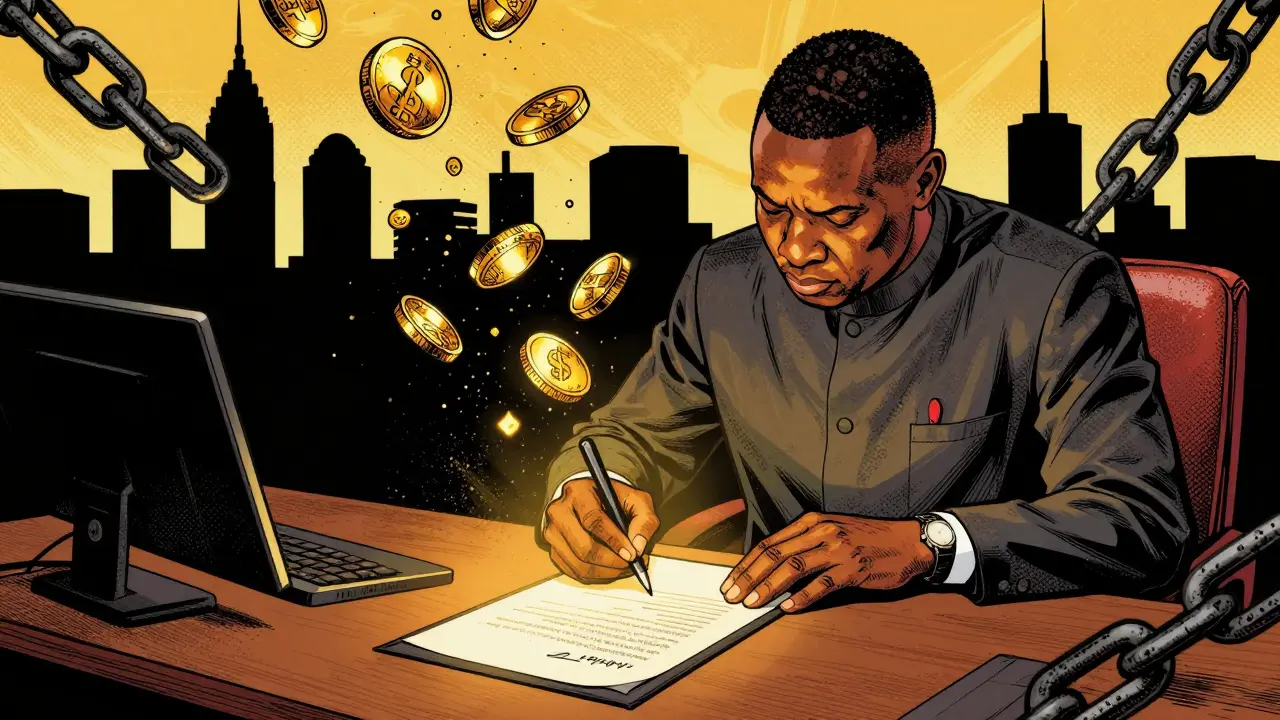
If you are a Nigerian citizen holding digital assets, you have likely heard conflicting stories about bans, arrests, and freezing accounts. The situation has changed significantly since 2023, but confusion remains high. Many people still worry that their money is at risk because of outdated information circulating online. The reality in 2026 is quite different from the headlines of the past. The government has moved from a hard ban to a regulated framework, but understanding the specific rules is crucial for your safety.
The landscape shifted dramatically with the passage of the Investments and Securities Act (ISA 2025), which is legislation signed by President Bola Ahmed Tinubu in March 2025 that officially recognizes digital assets as securities under Nigerian law. This law marked a complete policy reversal. Before this, the environment was hostile. Now, the focus is on regulation rather than prohibition. However, this does not mean you can use any platform you find. There are strict licensing requirements that determine whether an exchange is legal to use.
Understanding the New Regulatory Framework
The core of the current system lies in how the government defines digital assets. Under the ISA 2025, a crypto asset is defined as a digital representation of value that can be transferred, traded, and used for payment or investment. This definition is broad but excludes digital versions of fiat money. This distinction matters because it determines which agency oversees your activity. The Securities and Exchange Commission (SEC) is the primary regulatory body responsible for licensing and overseeing cryptocurrency exchanges and Virtual Asset Service Providers in Nigeria. They are the ones deciding who gets to operate legally.
This is a major change from the previous years when the Central Bank of Nigeria (CBN) held the reins. In 2021, the CBN imposed a comprehensive ban on crypto transactions, forbidding banks from facilitating these activities. That ban caused chaos for traders. In December 2023, Governor Cardoso announced the lifting of that ban. Now, the CBN works alongside the SEC. This coordination is designed to create a unified oversight system. The goal is to allow innovation while protecting consumers from fraud.
However, the implementation has not been seamless. The licensing process has experienced delays due to thorough regulatory vetting procedures. This means that while the law exists, not every platform you see online is approved yet. Using an unlicensed exchange puts you outside the protection of the law. If something goes wrong with your funds, the SEC cannot help you if the platform is not registered.
Licensed vs. Unlicensed Exchanges
One of the most critical questions for traders is which platforms are safe. The SEC has granted early approvals to established platforms. Two names that frequently appear in the approved list are Quidax and Quidax Exchange, which is a locally registered cryptocurrency exchange that received early licensing approval from the Nigerian SEC. Another approved platform is Busha, which is a licensed Nigerian crypto trading platform known for its compliance with local regulatory standards. These platforms have undergone the necessary compliance checks.
Using a licensed exchange means the platform must adhere to anti-money laundering (AML) and counter-terrorism financing (CFT) requirements. They are overseen by the Nigerian Financial Intelligence Unit (NFIU). This adds a layer of security. If you use an international exchange that is not registered with the SEC, you are operating in a gray area. While using foreign exchanges is not explicitly criminalized for individuals, you lose the legal protections afforded to users of licensed domestic platforms.
| Feature | Licensed Exchange (e.g., Quidax, Busha) | Unlicensed/Foreign Exchange |
|---|---|---|
| SEC Registration | Required and Verified | None |
| Banking Access | Supported by Nigerian Banks | Often Blocked or Restricted |
| Legal Protection | Yes, under ISA 2025 | No recourse under Nigerian Law |
| Compliance Checks | AML and CFT Enforced | Varies by Platform |
The competitive landscape includes both these local platforms and international exchanges seeking entry. However, the regulatory bodies acknowledge that the market is still maturing. Industry growth trends suggest continued expansion, but the clear policies are the main driver for foreign investment. If you are looking for stability, sticking to the licensed names is the safest bet.
Banking Relationships and Access
For years, the biggest hurdle for Nigerians was moving money in and out of crypto. The CBN's 2021 ban meant banks would freeze accounts associated with crypto transactions. This changed in 2023 when the CBN issued guidelines permitting financial institutions to maintain banking relationships with licensed VASPs. This was a game-changer.
Today, you can theoretically use your bank account to fund a licensed exchange. However, user experiences reveal significant practical challenges. Many traders still report difficulties accessing traditional banking services even for licensed activities. Some banks are slow to adapt their internal systems to the new rules. You might find that a transaction gets flagged even if you are using a compliant platform.
Peer-to-peer (P2P) trading remains a massive part of the ecosystem. Nigeria ranks first globally in peer-to-peer crypto transaction volume. This is driven by currency devaluation concerns and limited access to traditional financial services. While P2P is legal, it carries higher risks. You are dealing with individuals rather than regulated entities. The SEC's oversight covers investment-focused activities, but P2P interactions rely heavily on the trust between buyers and sellers.
Enforcement and Police Harassment
Despite the legal framework changes, the reality on the ground can be scary. Reports across the country indicate that police continue to mandate victims to pay large sums of money for owning crypto accounts or engaging in cryptocurrency transactions. This is a serious issue. The law says one thing, but enforcement practices vary wildly.
Law enforcement agencies like the Economic and Financial Crimes Commission (EFCC) is a Nigerian agency responsible for investigating financial crimes including fraud and money laundering in the crypto sector have enhanced tools for combating Ponzi schemes. They have access to telecom records for investigations. This is good for stopping fraudsters, but it also means they are watching closely.
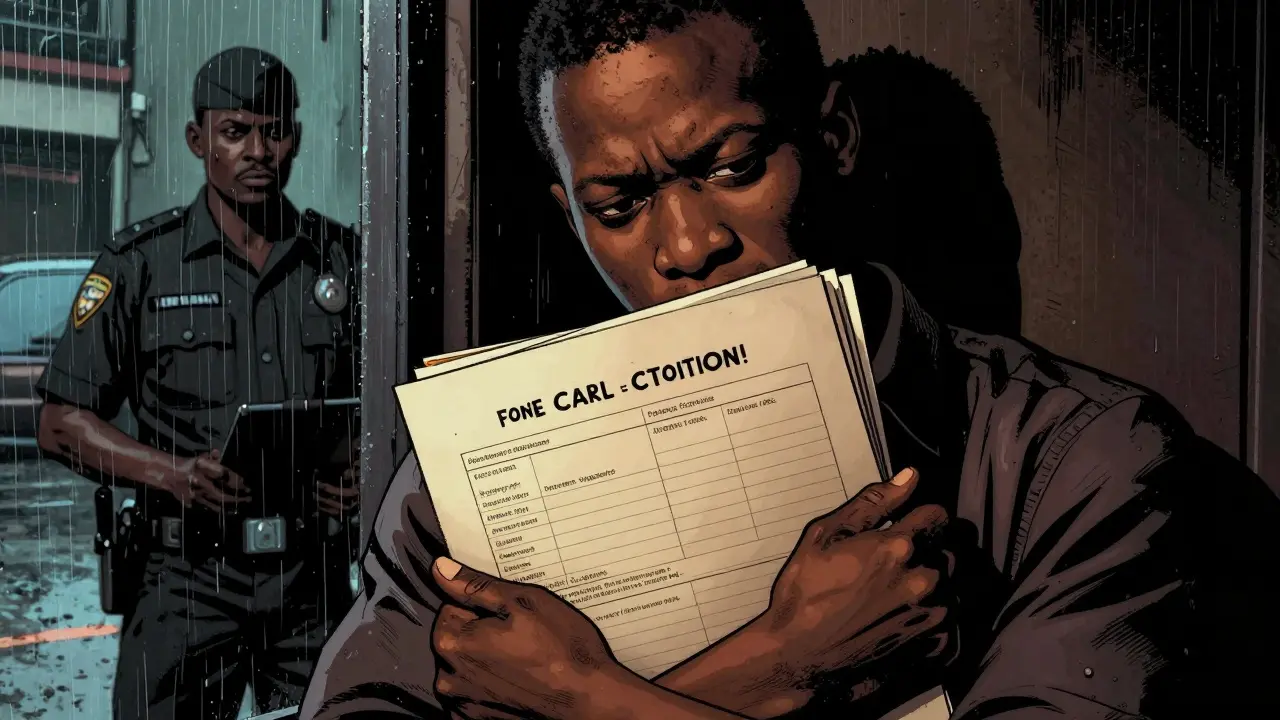
Individual users face challenges in distinguishing between legitimate enforcement and harassment. Social media sentiment on platforms like Twitter reflects cautious optimism about regulatory clarity while expressing frustration about inconsistent enforcement practices. If you are stopped by law enforcement, you need to know that the ISA 2025 protects you if you are using licensed platforms. However, carrying proof of compliance is essential. Always keep screenshots of your exchange's license status and your transaction records.
Taxation and Future Compliance
As of October 2025, the regulatory bodies confirmed work on new rules subjecting eligible transactions to taxation. The SEC acknowledges substantial potential tax revenue from cryptocurrency activities. This is a logical step for any formalized market. The government needs to fund its operations, and the digital economy is a growing source of wealth.
Specific implementation timelines for these taxes remain undisclosed, but you should prepare for them. The regulatory coordination between the SEC, CBN, EFCC, and NFIU creates a system where data sharing is possible. This means your trading activity could be visible to tax authorities. Professional analysts suggest that successful implementation could position Nigeria as a regional leader in regulated blockchain innovation. However, the framework's effectiveness remains to be proven in practice.
The learning curve for businesses includes understanding multi-agency coordination. For individual users, it means keeping your records straight. If you make significant profits, be ready to declare them. The goal is to avoid penalties later. The regulatory guidance documents from the SEC are becoming more comprehensive, but documentation quality varies significantly across different regulatory bodies.
How to Stay Safe and Compliant
Navigating these Crypto exchanges restrictions requires diligence. You cannot rely on rumors. Here is a practical checklist to protect yourself in the current environment. First, verify the license. Go to the SEC website and check the list of approved Virtual Asset Service Providers. Do not trust a platform just because it has a popular app.
- Use only SEC-licensed platforms like Quidax or Busha for major transactions.
- Maintain clear records of all deposits, withdrawals, and trades.
- Avoid platforms that promise guaranteed high returns; these are often Ponzi schemes.
- Be aware that P2P trading carries higher risk than exchange trading.
- Keep your personal data secure and do not share it with unverified agents.
Support infrastructure includes the SEC's regulatory guidance documents and industry consultation processes. However, community resources remain limited compared to more established cryptocurrency jurisdictions. This puts the onus on you to stay informed. Join reputable local communities where users share verified updates about enforcement and licensing.
Long-term viability assessments indicate positive prospects contingent on consistent policy implementation. The country's consistent ranking among the top nations worldwide for crypto adoption underscores the policy importance of regulatory clarity. The market is estimated to have a $400 million digital market expansion as of October 2025. This growth shows that despite the hurdles, the demand is there. Your ability to participate safely depends on following the rules.
Frequently Asked Questions
Is cryptocurrency still banned in Nigeria in 2026?
No, cryptocurrency is not banned. The Investments and Securities Act (ISA 2025) officially recognizes digital assets as securities. However, all exchanges must be licensed by the SEC, and using unlicensed platforms is risky.
Which crypto exchanges are legal to use in Nigeria?
Exchanges like Quidax and Busha have received early licensing approvals from the SEC. You should always verify the current status on the official SEC website before depositing funds into any platform.
Can I use my Nigerian bank account for crypto?
Yes, the CBN lifted the ban on banking relationships with licensed crypto businesses in 2023. However, some banks may still flag transactions, so it is best to use licensed exchanges to minimize issues.
Will I be taxed on my crypto profits?
The SEC is working on taxation frameworks for cryptocurrency transactions. While specific timelines are not fully public, eligible transactions are expected to be subject to taxation, so keep your records ready.
Is P2P trading safe in Nigeria?
P2P trading is legal and popular, but it carries higher risks than using licensed exchanges. There is less regulatory protection, and you must be careful to avoid scams or fraud when dealing with individuals.

Kayla Thompson
March 26 2026Most people are completely missing the bigger picture here while obsessing over minor details. The regulatory framework is merely a tool for control disguised as protection. It is amusing how quickly everyone accepts the narrative without questioning the underlying motives. We should be skeptical of any government that suddenly embraces digital assets after years of hostility. The real power lies in who controls the licensing process and who gets left out. This is not about safety but about centralized oversight of decentralized technology. People who think this is progress are sadly mistaken about the nature of freedom. The SEC will inevitably become another bottleneck for innovation. I find it hilarious that traders are celebrating restrictions as if they are benefits. True financial sovereignty requires no permission from bureaucrats in Abuja.
Brijendra Kumar
March 26 2026The moral implications of using unlicensed platforms are absolutely clear and everyone needs to understand this. You are essentially participating in a system that undermines the stability of the national economy. It is irresponsible to ignore the laws that are designed to protect the greater good. People who choose foreign exchanges are putting their own greed above community safety. The ISA 2025 is a testament to the government trying to clean up the mess caused by reckless actors. We need to support compliance to ensure the ecosystem grows in a healthy manner. Those who argue against regulation are just looking for loopholes to exploit. The police actions against fraudsters are necessary to maintain order. We must not sympathize with those who refuse to follow the rules.
Ananya Sharma
March 27 2026interesting perspective on the moral side of things but the practical issues are what matter most for daily traders. many people still struggle with banking even when they follow the rules. the enforcement is not always fair or consistent across different states. i wonder how long it will take for the banks to fully adapt to the new guidelines. the police harassment is a real concern that cannot be ignored just because the law changed. compliance is important but safety from arbitrary actions is also vital for everyone involved.
Florence Pardo
March 27 2026It is really interesting to see how the landscape has shifted over the last few years. I remember when people were terrified to even mention Bitcoin in public conversations. Now we have actual laws like the ISA 2025 in place that provide clarity. It feels like a breath of fresh air for everyone involved in the space. The banking situation was the biggest hurdle for so long for many Nigerians. Seeing the CBN work with the SEC is a huge step forward for the industry. People just want to feel safe with their hard-earned money and investments. The fear of account freezes was a constant shadow over traders for years. Licensed exchanges like Quidax provide that necessary security layer for users. We cannot ignore the risks that still exist in the gray areas of the market. Unlicensed platforms are still a major trap for the unsuspecting individuals. The police harassment issue is something that needs addressing by the authorities. Laws on paper are different from enforcement on the street unfortunately. Everyone deserves to trade without fear of arbitrary detention or harassment. We should all support compliance to make the system work better for everyone. It takes time for these institutions to fully adapt to new rules and regulations. Patience is key while we navigate this new regulatory environment together.
Abhishek Thakur
March 29 2026The technical compliance requirements under the ISA 2025 involve strict AML and CFT protocols that must be integrated into the VASP infrastructure. Virtual Asset Service Providers need to ensure their KYC pipelines are robust to avoid regulatory penalties. The integration with the NFIU for data sharing is critical for transaction monitoring. Users should verify the API endpoints for license status to confirm legitimacy. The blockchain analytics tools used by the SEC can trace fund flows effectively. It is important to maintain immutable records of all wallet addresses linked to bank accounts. The regulatory sandbox environment allows for testing before full deployment. Smart contract audits are now a standard requirement for token listings on licensed platforms. Interoperability with traditional banking rails is the next major challenge to solve. The latency in transaction settlements needs to be minimized for better user experience.
Jackie Crusenberry
March 31 2026Everyone is so focused on the rules but nobody talks about the feeling of losing money. It is just sad to see people get hurt by scams even with licenses. The whole system feels like it is set up to fail the little guy eventually. I feel like the government only cares about the tax revenue they can collect. It is exhausting trying to stay compliant when the rules keep changing constantly. People just want to make a living without all this drama and stress. The emotional toll of worrying about your funds is something no one mentions. It is a pity that trust is so hard to build in this industry. We are all just trying to survive in a chaotic economic environment.
Anna Lee
March 31 2026I think this is great news for everyone out there and we shoudl stay positive. You guys shoudl check the SEC list before you start trading anything new. Its gonna be so much easier to trade soon once the banks catch up. Just make sure you keep your records stright so you dont have issues later. We are going to see so much growth in the market if we all work together. Dont let the bad news scare you away from the opportunities available. The future is bright for crypto in Nigeria if we stay compliant. Keep your heads up and trust the process even when it feels slow. You can do this and build a secure portfolio with the right platforms.
DarShawn Owens
March 31 2026I really appreciate the detailed breakdown of the licensed versus unlicensed platforms. It helps to understand the specific risks associated with each option clearly. The banking access section was particularly useful for my own planning. I agree that sticking to the licensed names is the safest bet for long term stability. It is good to see the community sharing accurate information instead of rumors. We all benefit when everyone follows the guidelines and protects their assets. The support for local platforms like Quidax is encouraging for the ecosystem. Let us continue to help each other navigate these changes safely. Your input on the tax section was also very valuable to read.
Andy Green
April 1 2026Most of you are simply accepting the narrative without thinking critically about the long term implications. The SEC is just another layer of bureaucracy that will slow down innovation significantly. You think they care about your safety when they are collecting fees and taxes. It is naive to believe that regulation will stop the bad actors from operating. The real players will always find a way around these restrictions eventually. You are putting your trust in institutions that have failed you before repeatedly. The only true security is self custody and avoiding the system entirely. This regulatory framework is a trap for the average user who lacks technical knowledge. Do not let them convince you that compliance equals safety in this market.
Zion Banks
April 1 2026THIS IS ALL A SETUP TO TRACK EVERY SINGLE TRANSACTION YOU MAKE. The government wants to see where your money is going and who you are sending it to. They claim it is for security but it is really about total surveillance of the population. The ISA 2025 is just the first step in a massive data collection operation. They will use the NFIU data to target political opponents and dissidents. Do not trust the licensed exchanges because they are working with the state. Your privacy is already gone and you need to wake up to the reality. The police harassment is just a warning to those who do not comply fully. We are being herded into a digital pen and we must resist this control.
Annette Gilbert
April 3 2026Oh sure, just trust the government to protect you like they always do so well. It is hilarious how people ignore the history of corruption and think this will be different. The licensed exchanges are just as likely to fail or steal as the unlicensed ones. You are all so naive to think the SEC will actually care about your money. I bet the real money is being moved by the elites while you play in the sandbox. This whole regulatory thing is just a way to legitimize their own schemes. Enjoy your little licenses while they take everything away eventually. It is truly entertaining to watch people get excited about being monitored.
vu phung
April 4 2026The regulatory framework integration with the global compliance standards is a positive step for institutional adoption. We should see increased liquidity as foreign entities feel more comfortable entering the market. The risk mitigation strategies outlined in the ISA 2025 are comprehensive and well structured. It is important for users to understand the custody solutions provided by licensed VASPs. The market depth will improve as more capital flows into the regulated channels. We need to focus on the long term viability of the ecosystem rather than short term gains. The coordination between agencies is a strong indicator of policy stability. This environment allows for sustainable growth without the volatility of unregulated markets.
Kevin Da silva
April 5 2026interesting point about the banking access and liquidity flows. still seeing flags on transfers though even with licensed platforms. need more clarity on the tax side before committing more capital. the enforcement variance is a real risk factor for institutional players. hope the guidelines become more uniform across all financial institutions soon.
Andrew Midwood
April 7 2026yea the banking stuff is still kinda messy in practice despite the rules. i think the internal systems at the banks just need more time to update. the jargon around VASP compliance is getting heavy but its necessary. we shoudl see better integration with the SWIFT network soon maybe. its all about building trust with the international partners too. keep an eye on the SEC updates for any new guidance.
Alicia Speas
April 7 2026It is essential that we approach this new regulatory landscape with a sense of responsibility and cultural awareness. The collaboration between local and international stakeholders is key to fostering a healthy environment. We must respect the laws that are designed to protect the financial integrity of the nation. Education is the most powerful tool we have to ensure everyone understands the compliance requirements. The community should support initiatives that promote financial literacy regarding digital assets. We are building a foundation for future generations to benefit from this technology. It is important to maintain a dialogue with the regulators to address concerns constructively. Our collective actions will determine the success of this regulatory framework. Let us work together to create a safe and prosperous digital economy.
Jeannie LaCroix
April 8 2026YOU NEED TO WAKE UP AND FIGHT FOR YOUR RIGHTS IN THIS SYSTEM. The regulations are just a way to control you and limit your freedom to move money. We cannot let them dictate how we manage our own financial lives anymore. The licensed platforms are just puppets for the government to monitor your transactions. It is time to stand up against this oppressive framework before it is too late. Your silence is what gives them the power to keep expanding their control. We must demand better transparency and accountability from the SEC immediately. This is a battle for our economic sovereignty and we cannot afford to lose. Join the movement to protect our digital assets from state interference.
Sam Harajly
April 10 2026The shift in policy from prohibition to regulation represents a significant milestone for the industry. It is important to observe how the implementation plays out in the coming months carefully. The balance between innovation and consumer protection is a delicate one to maintain. We should continue to monitor the enforcement actions to ensure fairness. The potential for Nigeria to lead in blockchain innovation is substantial if managed well. It is prudent to stay informed about the latest updates from the regulatory bodies. The market will evolve based on how these rules are applied in practice. We can expect more clarity as the agencies gain experience with the new framework.
Pradip Solanki
April 10 2026the regulatory capture is evident in the way the licensed exchanges are favored. the market dynamics are skewed to benefit the insiders who got the approvals first. the ISA 2025 is just another mechanism for rent seeking by the elite. the compliance costs are too high for smaller players to compete fairly. the data sharing protocols are a violation of user privacy rights fundamentally. we need to challenge the narrative that regulation equals safety in this context. the centralized control is antithetical to the core principles of decentralization.
Brad Zenner
April 11 2026Good summary of the current regulatory situation.