
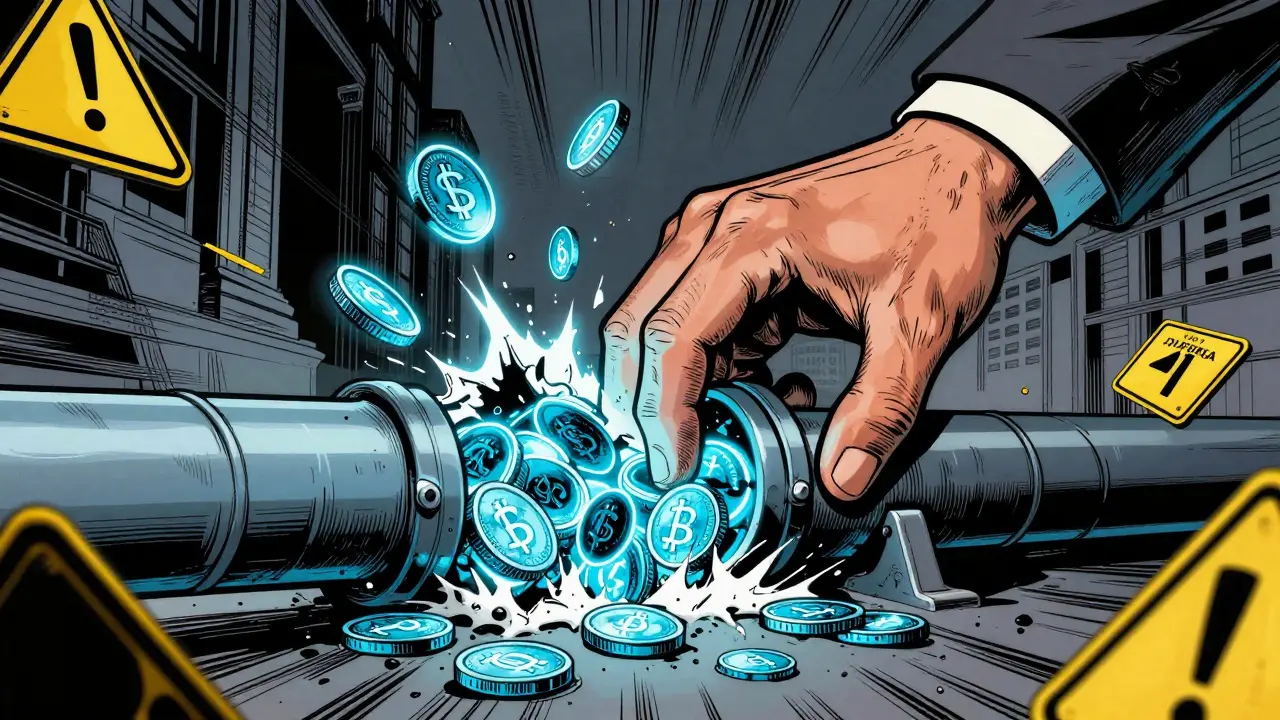
Imagine trying to stop a flood by putting your hand over a leaking pipe. That is essentially what the Central Bank of Nigeria (CBN) tried to do with cryptocurrency for nearly seven years. They started with warnings, moved to a harsh crackdown that froze bank accounts, and finally realized that you cannot ban a decentralized technology that people are determined to use. Today, Nigeria has shifted from a policy of avoidance to one of controlled accommodation, creating a blueprint for how other emerging economies might handle digital assets.
The Early Warnings and the 2017 Chill
The tension began on January 12, 2017. The CBN didn't start with a total ban, but it sent a clear signal that it didn't trust virtual currencies. They issued a circular to all banks and financial institutions, telling them to avoid holding or transacting in these assets. At the time, the primary fear wasn't about the tech itself, but about Anti-Money Laundering (AML) and countering the financing of terrorism. Essentially, the CBN told banks: "You can't touch this stuff, but if your customers are running exchanges, make sure you're watching them closely for illegal activity." This created a grey area where crypto existed, but it was treated like a suspicious outsider in the formal financial system.
The 2021 Crackdown and the Rise of P2P
Things got much more aggressive on February 5, 2021. The CBN stopped suggesting banks avoid crypto and started demanding it. They issued a directive prohibiting all deposit money banks and non-bank financial institutions from facilitating payments for cryptocurrency exchanges. If a bank found an account linked to a crypto exchange, they were ordered to close it immediately. Did this stop Nigerians from trading? Not even close. In fact, it did the opposite. It forced the entire industry into the shadows of Peer-to-Peer (P2P) Trading. Instead of using a bank to send money to an exchange, users started sending money directly to other individuals. This move effectively stripped the CBN of its visibility into the market, proving that the more the government pushed, the more the people found ways around the restrictions.
| Year | Policy Action | Market Impact |
|---|---|---|
| 2017 | Initial Circular (Avoidance) | Banks discouraged from crypto services |
| 2021 | Bank Restriction Letter (Crackdown) | Mass migration to P2P networks |
| 2023 | VASP Guidelines (Accommodation) | Legal path for licensed exchanges |
| 2025 | Investments and Securities Act | Crypto formally recognized as securities |
Crypto as a Political Lifeline
One of the most striking moments in this evolution happened during the 2020 civil unrest over police brutality. When the government suspended the bank accounts of protesters to starve the movement of funds, the people turned to Bitcoin and other digital assets. Cryptocurrency became a survival tool, allowing protesters to receive global donations and fund their activities without needing a bank's permission. This moment was a turning point; it showed the Nigerian government that crypto wasn't just a financial trend-it was a tool for financial autonomy that couldn't be switched off with a single memo.

The Great Pivot: Enter the SEC and VASP Guidelines
The government eventually realized that prohibition was a failing strategy. The shift began when the Securities and Exchange Commission (SEC) of Nigeria stepped in. Back in September 2020, the SEC declared it would regulate digital assets that looked like investments. This created a "dual-track" system where the CBN handled the money side while the SEC handled the investment side. The real 180-degree turn happened in December 2023 with the introduction of Virtual Asset Service Provider (VASP) Guidelines. For the first time, the CBN allowed banks to provide accounts to crypto businesses, provided those businesses were licensed by the SEC. This effectively ended the "bank ban" and brought crypto businesses back into the sunlight, but with a catch: they had to follow strict rules.
The 2025 Legal Milestone and the Gray List
The evolution reached its peak with the cryptocurrency regulations defined in the Investments and Securities Act 2025. This law officially recognized cryptocurrency as securities. This wasn't just a technicality; it provided the legal certainty that big institutional players need before they enter a market. There was also a strategic reason for this move. Nigeria has been fighting to get off the Financial Action Task Force (FATF) Gray List. By implementing strict Know-Your-Customer (KYC) and AML rules for VASPs, Nigeria is trying to prove to the world that it can track the money and stop terrorism financing, even in a digital economy. If you can't beat the technology, you regulate it to make it look safe to international observers.

The Fallout: Who Won and Who Lost?
Not every company survived the transition. The gap between the 2021 ban and the 2023 guidelines was a "valley of death" for some. For example, OKX suspended its Nigerian operations in July 2024, citing changes in local laws. Binance had a much more public struggle, removing the naira from its platform and facing legal battles that saw its executives detained in early 2024 over disputes regarding untraceable funds. These clashes show that while the policy has evolved toward accommodation, the government is still terrified of losing control over the foreign exchange market. In 2024, officials still blamed crypto traders for volatility in the naira, showing that the relationship between the state and the crypto community remains a fragile peace.
Where Do We Stand Now?
Nigeria is now in a state of "regulated innovation." The SEC is the primary watchdog, and the CBN remains the supervisor of the banks. For the average user, this means it's safer to use a licensed exchange than a random P2P seller, but the era of "wild west" crypto in Nigeria is ending. The move from a total ban to a formal framework shows a pragmatic realization: in a world of decentralized finance, the only way to maintain stability is to provide a legal bridge between the old world of banking and the new world of blockchain.
Is cryptocurrency legal in Nigeria in 2026?
Yes, cryptocurrency is legal. While the CBN previously restricted banks from serving crypto firms, the VASP Guidelines and the Investments and Securities Act 2025 have created a legal framework where licensed providers can operate openly.
What is a VASP in the Nigerian context?
VASP stands for Virtual Asset Service Provider. These are companies-like exchanges or custodians-that provide services related to digital assets and must be licensed by the SEC Nigeria to operate legally.
Why did the CBN ban banks from crypto in 2021?
The CBN was primarily concerned with financial stability, money laundering, and terrorism financing. They believed that restricting bank access would limit the growth of volatile digital assets and protect the traditional banking system.
How did the 2020 protests affect crypto adoption?
When the government froze the bank accounts of protesters, people turned to cryptocurrencies to receive donations and move funds. This proved the utility of decentralized assets as a tool for financial censorship resistance.
What is the role of the SEC versus the CBN now?
The SEC acts as the primary regulator for digital assets, handling licensing and investor protection. The CBN focuses on the banking side, ensuring that banks interacting with licensed crypto firms follow monetary and systemic stability rules.

EDOZIEM MICHAEL
April 14 2026water always finds a way through the rock eventually
man tried to cage the wind and now he just wants to tax the breeze
Lane Montgomery
April 14 2026Total failure of governance.
Kieran Smith
April 14 2026its so cool to see how the people just found a way around the rules!! i love that spirit of not giving up on tech just because some big bank says no. hope the new laws actually help the regular folks and dont just make it easier for the govrnment to track them
Tracie and Matthew Hartley
April 15 2026please... like the government actually cares about "financial stability" lol. they just wanted to stop the naira from crashing and failed miserably. the VASP thing is just a way to tax everyone now that they know they cant stop it. classic move
Samson Selleck
April 16 2026The systemic asymmetry of the CBN's initial approach was predictably catastrophic, reflecting a fundamental misunderstanding of distributed ledger primitives. By attempting to enforce a centralized prohibition on a decentralized protocol, they merely incentivized the proliferation of shadow liquidity pools. The current pivot toward a VASP framework is less an act of progressive regulation and more a desperate attempt to mitigate the volatility of the Naira through institutional capture. One must analyze the correlation between the FATF Gray List pressures and the timing of the 2025 Act to realize this is an external compliance play, not a domestic innovation strategy. The sheer lack of sophistication in the early 2021 directives was almost comical in its arrogance. We are seeing a standard regulatory capture cycle where the state realizes that total exclusion equals total ignorance. The transition from ban to regulation is essentially the state admitting that the cost of enforcement exceeds the potential benefit of prohibition. It is an exercise in pragmatic surrender dressed up as "regulated innovation." The institutional players will now enter, skimming the alpha while the retail users who survived the 2021 purge are left with a more sterile, taxed, and surveilled environment. The organic growth of the P2P market was the only true victory for the end-user in this saga. Now, we move into a phase of bureaucratic stagnation where the SEC's guidelines will likely lag behind the actual velocity of the assets they seek to govern. It's a textbook case of regulatory lag meeting technological acceleration. The outcome is always the same: the house wins by redefining the game.
Heather Warren
April 16 2026This is such a great way to look at it! It really shows that when people have a need for something, they will find a way to make it work regardless of the rules. I'm so glad there is a legal path now because it makes everything safer for everyone involved.
Jason Davis
April 17 2026I've seen similar things happen in other emergin markets. The move to P2P is almost always the result of heavy handed regulatins. It's interesting to see Nigeria lead the way with the 2025 Act though, it sets a big precedent for the rest of Africa.
logan bates
April 18 2026Typical. We do things the right way in the US and others just play around with bans and shadow markets for years. Ridiculous.
daniella davis
April 18 2026Ummm obviously the VASP guidelines were only released because the government was scared of the 2020 protest legacy. Like, let's be real, they didnt just wake up and decide to be nice. The way Binance got handled was just total drama and honestly so messy lol.
Terrance Hausmann
April 18 2026It's a tough spot to be in, but I think finding a middle ground is the only way forward for any country dealing with crypto. We should support the shift toward legality because it protects the little guy from scams while still allowing the tech to thrive, even if the road there was really bumpy and full of mistakes by the central bank.
Artavius Edmond
April 18 2026Man, the P2P era sounds like a wild time. Just people sending money to strangers to get some BTC. Glad things are chilling out and becoming more official now!
Mikayla Murphy
April 20 2026It is heartening to see how technology provided a lifeline during the 2020 protests. It really highlights the human side of finance and how accessibility to funds can be a matter of survival and dignity for people fighting for their rights.
Stanly Hayes
April 22 2026About damn time they stopped playing games! The 2021 ban was a joke and anyone who thought it would actually stop Nigerians from trading was delusional!
Akshay Gorad
April 22 2026The transition to the 2025 Act seems like a very prudent move for the national economy. It provides the necessary clarity for foreign investors while addressing the FATF concerns.