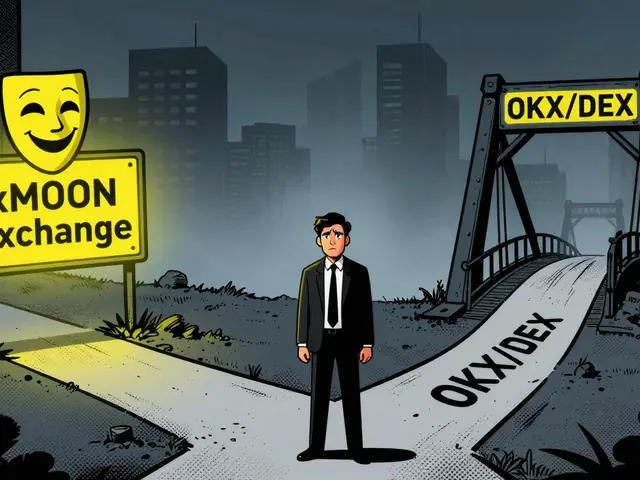
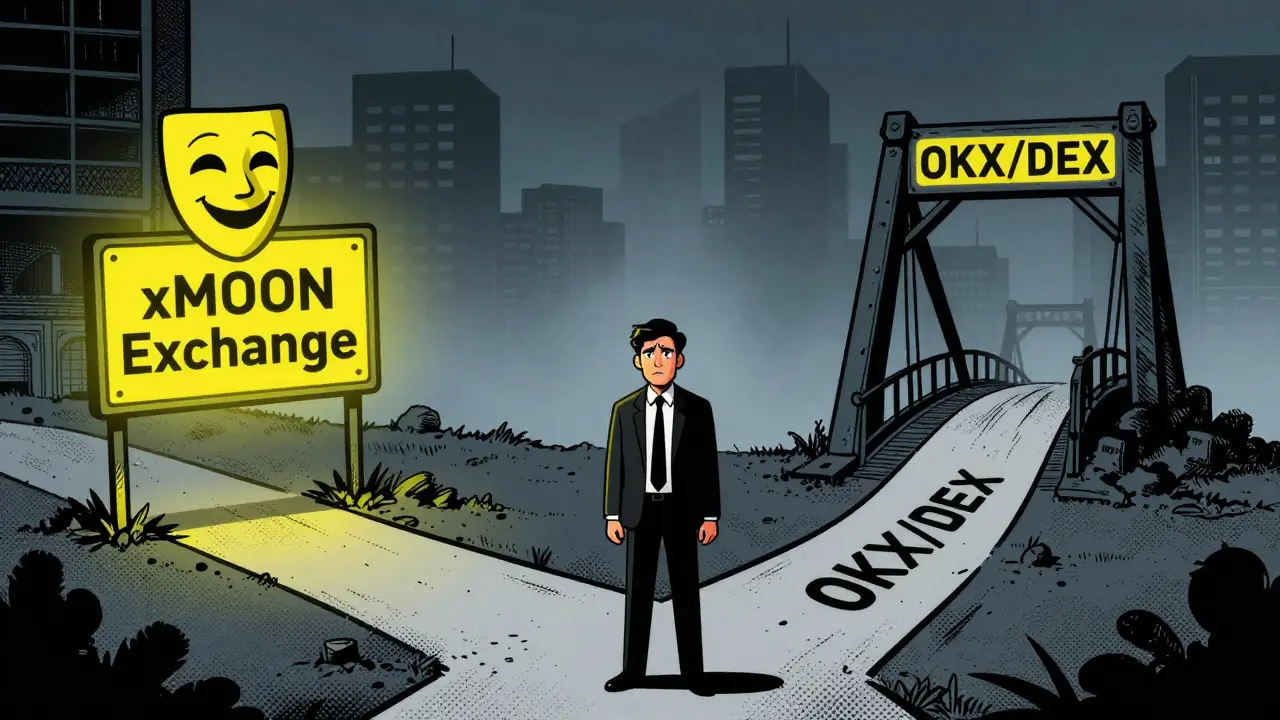
You might have seen the name xMOON is a highly volatile cryptocurrency token with a maximum supply of 100 billion units popping up in your feed or heard friends talking about quick gains. It’s easy to assume that because it has "crypto" in the conversation, there must be a dedicated platform called the "xMOON Exchange." But here is the reality check you need right now: xMOON is not an exchange. It is a digital asset-a token-that trades on other platforms. Confusing the two can lead you straight into a scam or a massive loss.
If you are looking for a place to buy, sell, or hold this specific token, you aren’t going to find a standalone website called xMOON.com where you deposit money like you would at Binance or Coinbase. Instead, you have to navigate through existing infrastructure, primarily using centralized exchanges like OKX is a global cryptocurrency exchange offering spot and derivatives trading for various assets including XMOON or decentralized protocols. This distinction matters immensely for your security. When you trade on a dedicated exchange, you rely on their custody and security measures. When you trade a token like xMOON on secondary markets, you are often dealing with thin liquidity and extreme price swings that no central team can stabilize.
The Hard Truth About xMOON Volatility
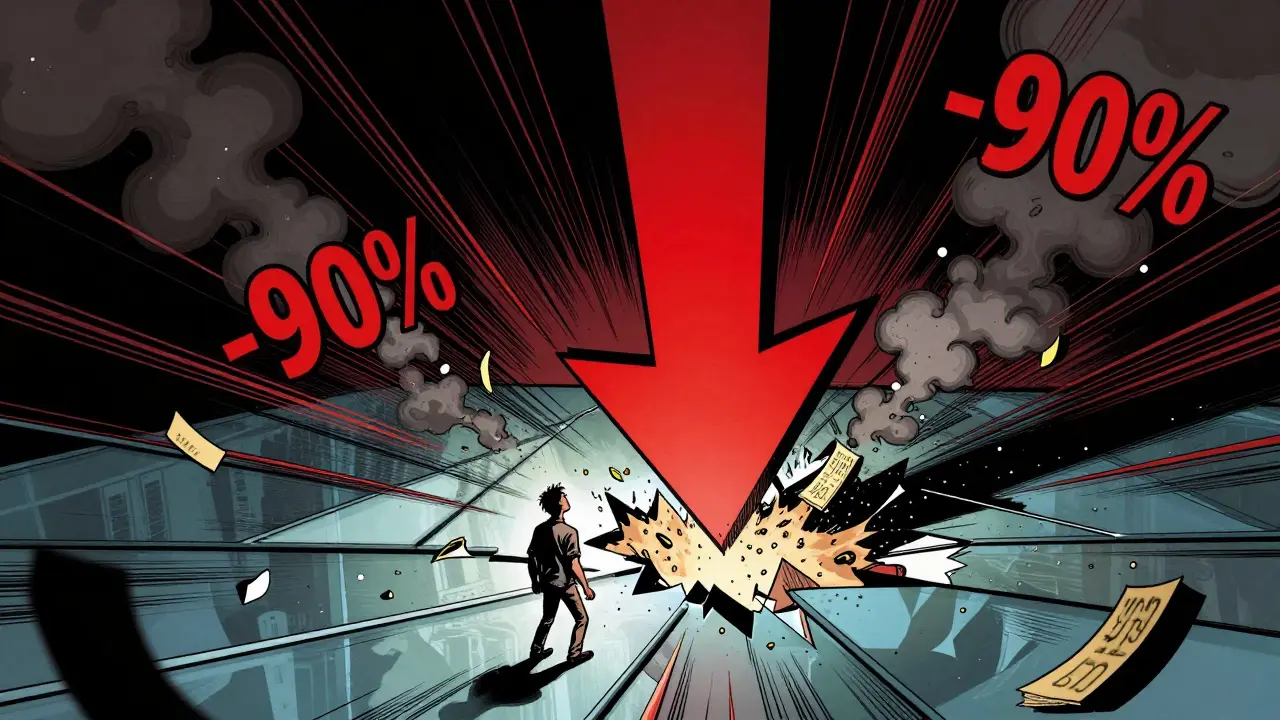
Let’s look at the numbers, because they don’t lie. As of late 2025, xMOON demonstrated what experts call "extreme volatility." In a single 24-hour period, the token’s price crashed by nearly 90%. To put that in perspective, if you had invested $1,000, you would have watched it turn into roughly $100 overnight. That isn’t just a bad day; that is a portfolio-wiping event.
This level of instability usually stems from a few key factors. First, the market capitalization is incredibly low. With a cap hovering around €14,763 (or roughly R$92,170), even a small sell order can send the price plummeting. Second, the holder base is tiny. There are only about 153 known holders. When you have fewer people holding an asset than there are seats in a small classroom, the market is easily manipulated. One or two large holders deciding to cash out can cause a panic dump that leaves everyone else trapped.
Why does this happen? It comes down to liquidity. The available liquidity for xMOON sits at approximately R$160,340. While that sounds like a decent number, in the world of high-frequency crypto trading, it is a drop in the ocean. Low liquidity means there aren’t enough buyers waiting at different price points to absorb selling pressure. If you try to sell a significant amount, you might not find a buyer until the price drops drastically.
Where Can You Actually Trade xMOON?
Since there is no native xMOON exchange, you have to use third-party platforms. Currently, the most accessible route is through OKX provides trading pairs for XMOON in Brazilian and European markets. They list the token in both Brazil (paired with BRL) and Europe (paired with EUR). This suggests that while the token isn’t mainstream globally, it has found pockets of interest in these specific regions.
However, do not expect to see it on every major platform. For instance, Binance does not directly list XMOON on its centralized order books but guides users toward decentralized options. If you try to search for xMOON on Binance’s main interface, you won’t find a direct spot pair. Instead, you’ll likely be directed to connect a wallet and use a Decentralized Exchange (DEX). This adds a layer of complexity. Using a DEX requires you to manage your own private keys, pay gas fees, and understand slippage settings. For a beginner, this friction is a warning sign. Major tokens that are widely accepted and secure usually sit on the main order books of top-tier exchanges because they offer deep liquidity and ease of access.
The Supply Problem: All Tokens Are Already Out
One metric you should always check before buying any coin is its supply structure. xMOON has a maximum supply of 100 billion tokens. Here is the kicker: the circulating supply is also 100 billion. This means 100% of the tokens have already been minted and distributed. There is no future inflation, which some investors view as a positive for scarcity. However, in the context of a micro-cap token with such low adoption, it often indicates that the initial distribution phase is over, and the project is in the hands of early speculators rather than long-term believers.
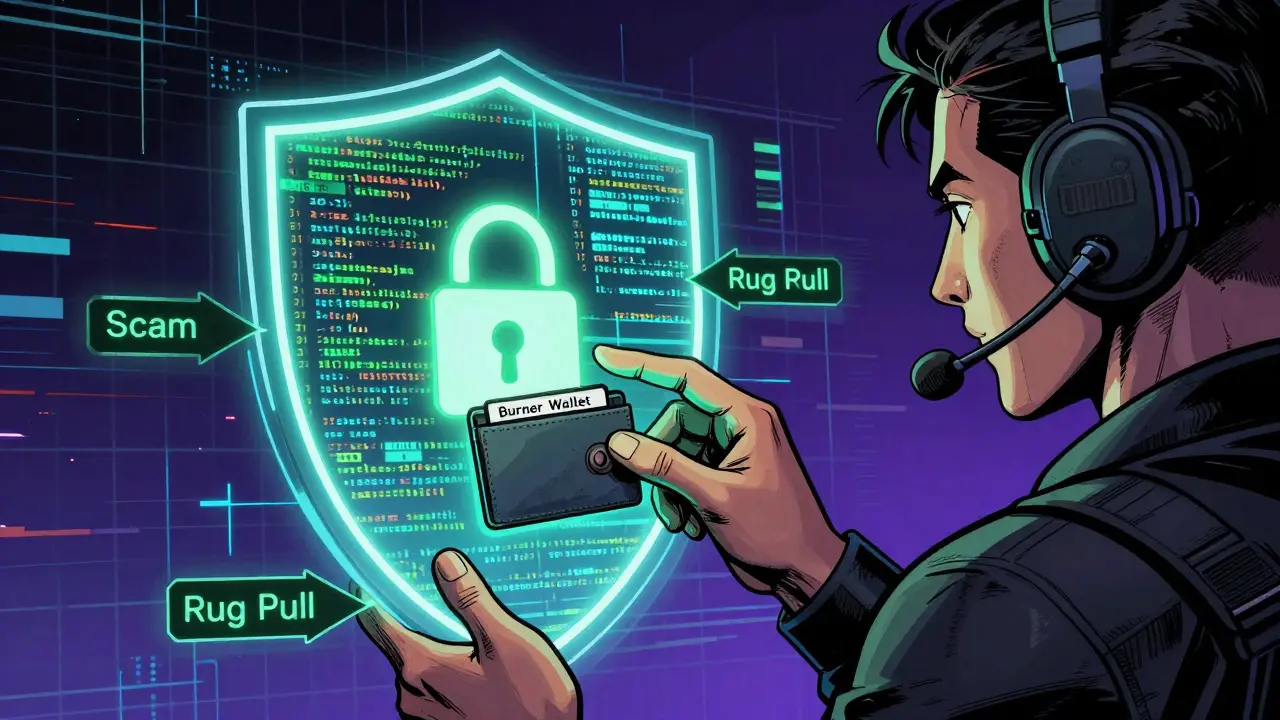
When all tokens are in circulation and the holder count is so low, the risk of "rug pulls" or coordinated dumps increases. Without new buyers entering the ecosystem to drive demand, the price relies entirely on speculative hype. Once the hype fades-and given the 90% crash we saw recently-it can take months or years for the price to recover, if it ever does.
| Metric | Value / Status | Risk Level |
|---|---|---|
| Price Volatility (24h) | -89.67% (Historical Peak Crash) | Extreme |
| Market Cap | ~€14,763 | Very High |
| Circulating Supply | 100 Billion (100%) | Medium (No inflation, but high distribution) |
| Holder Count | 153 | High (Easy manipulation) |
| Liquidity | ~R$160,340 | Low |
| Primary Exchange | OKX (Brazil/Europe) | Medium (Limited accessibility) |
Security and Trust: Who Is Behind xMOON?
In the crypto world, anonymity is common, but transparency is king. For xMOON, transparency is virtually non-existent. There is no public whitepaper detailing a unique technological innovation. There is no verified development team with LinkedIn profiles or past projects. There are no independent security audits from firms like CertiK or SlowMist confirming that the smart contract code is safe from exploits.
Without these fundamentals, you are betting on a ghost. The description of xMOON as a "decentralized digital currency leveraging blockchain technology" is generic enough to apply to Bitcoin, Ethereum, or thousands of copycat tokens. It tells you nothing about what problem xMOON solves. Does it offer faster transactions? Lower fees? A unique governance model? If you cannot answer those questions, the asset has no intrinsic value-only speculative value.
This lack of documentation is a major red flag. Established projects publish roadmaps, release regular updates, and engage with their communities. xMOON operates with limited market visibility and no substantial community engagement data. If something goes wrong with the contract or the liquidity dries up completely, there is no team to contact for support.
Should You Buy xMOON in 2026?
Given the current landscape, the answer leans heavily toward caution. If you are an experienced trader who understands how to use limit orders, set strict stop-losses, and treat every dollar as money you are willing to lose entirely, you might speculate on a bounce. But for the average investor looking for growth or stability, xMOON presents too many risks.
Consider the alternatives. If you want exposure to the crypto market, established assets like Bitcoin or Ethereum offer significantly more liquidity, regulatory clarity, and historical resilience. Even within the altcoin space, tokens with larger market caps and active development teams provide a safer environment for learning and investing.
The fact that major platforms like Binance do not list it directly suggests that institutional validators have passed on it. They perform rigorous due diligence before listing assets. If xMOON hasn’t met their criteria, it’s worth asking why you should trust it with your funds.
How to Protect Yourself If You Still Proceed
If you decide to ignore the warnings and proceed with trading xMOON on OKX or via a DEX, follow these strict safety protocols:
- Use a Separate Wallet: Never keep xMOON in the same wallet as your long-term holdings or your main savings. Use a burner wallet or a separate address that you can afford to drain completely.
- Check Contract Addresses: Scammers often create fake tokens with similar names. Always verify the exact contract address on official block explorers before swapping. One wrong digit, and your money is gone forever.
- Set Stop-Losses: Given the 90% crash history, manual trading is dangerous. If the platform allows automated stop-loss orders, use them. Exit immediately if the price drops below a certain threshold.
- Avoid Market Orders: Due to low liquidity, market orders can result in massive slippage. You might intend to sell at $0.0001 but end up selling at $0.00001. Use limit orders to control your entry and exit prices.
- Monitor Liquidity Pools: If trading on a DEX, watch the liquidity pool size. If developers start removing liquidity, the price will go to zero instantly.
Is there a dedicated xMOON exchange?
No. xMOON is a token, not an exchange platform. You cannot trade it on a standalone "xMOON Exchange." It is traded on third-party platforms like OKX or through decentralized exchanges (DEXs) connected to wallets.
Why did xMOON drop 90% in one day?
The crash was likely caused by extreme volatility combined with low liquidity and a small holder base (only 153 holders). In such thin markets, large sell orders from a few individuals can crash the price without significant resistance from buyers.
Can I buy xMOON on Binance?
Not directly on Binance’s centralized spot market. Binance does not list xMOON as a standard trading pair. Users are typically directed to use decentralized exchanges (DEXs) via their web3 wallet integration to purchase the token.
What is the total supply of xMOON?
The maximum supply is 100 billion tokens. Currently, 100% of this supply is in circulation, meaning no new tokens can be minted. This indicates the initial distribution phase is complete.
Is xMOON a safe investment?
It is considered extremely high-risk. The token lacks transparent development teams, security audits, and has shown severe price instability. It should only be approached by experienced traders who understand the risks of micro-cap, low-liquidity assets.
Where is xMOON primarily traded?
As of recent data, xMOON is primarily available on OKX, specifically in Brazilian and European markets. It is not widely listed on major global centralized exchanges.