
Kosovo Crypto Mining Profitability Calculator
Kosovo Mining Rules (2025)
Legal mining requires: Your own renewable energy source (solar/wind) or private generator.
Grid-connected mining is illegal with fines and equipment seizure.
Minimum investment: €15,000+ for solar setup to power 10 rigs.
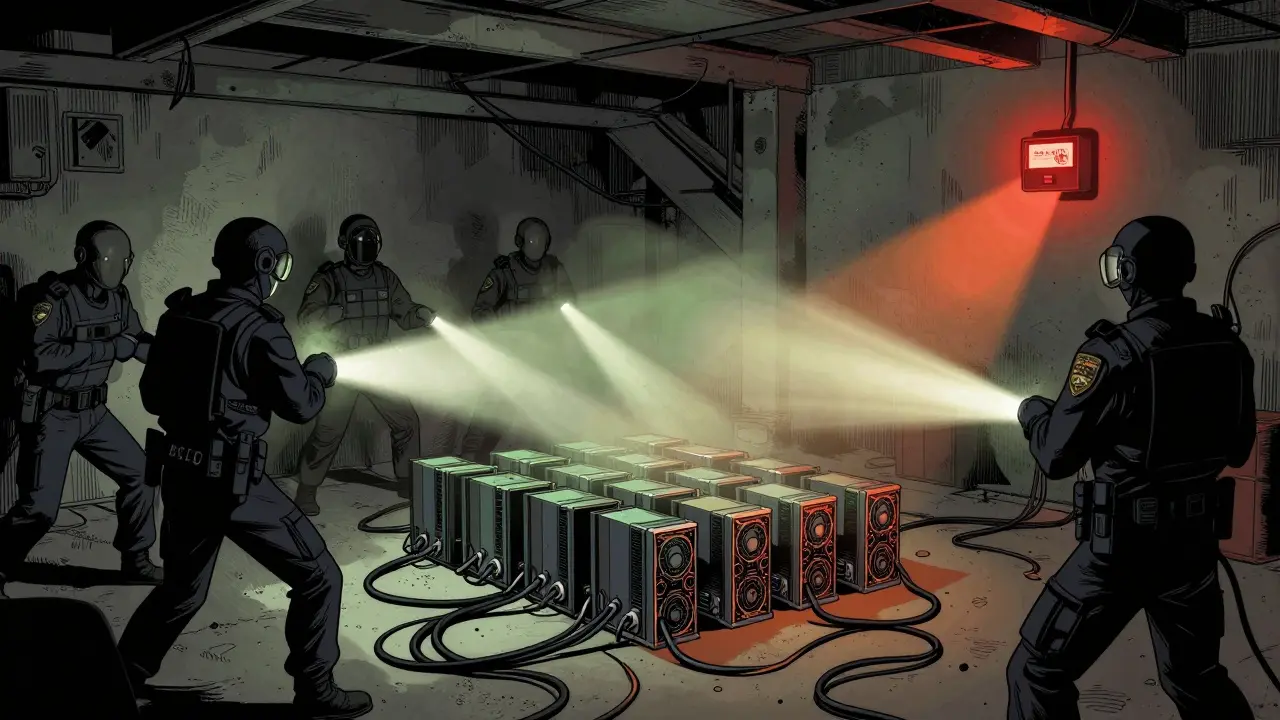
On January 4, 2022, Kosovo shut down its entire cryptocurrency mining industry overnight. No warning. No grace period. Just police raids, seized rigs, and a total ban on mining using the national power grid. The reason? The country was running out of electricity.
Kosovo, a small country of just 1.8 million people, was already struggling to keep the lights on. One of its two main coal plants had broken down. Power imports were expensive and unreliable. Families were getting blackouts. And yet, hundreds of crypto miners - many in the northern Serb-majority regions - were running thousands of machines nonstop, sucking up electricity like it was free. It wasn’t. But it felt like it.
Before the ban, some miners were making up to €2,000 a month. That’s five times the average wage in a country where many people live on less than €400 a month. The machines didn’t care. They just kept running, using up to 30% of Kosovo’s total electricity supply at peak times. The government didn’t have a law to stop them. So they acted anyway.
How Crypto Mining Drained Kosovo’s Grid
Crypto mining isn’t like browsing the web or streaming video. It’s a brute-force process. Computers solve complex math problems to verify Bitcoin and other blockchain transactions. Each solved problem earns the miner a reward - but it also burns electricity. A single mining rig can use as much power as a small house. When you scale that to thousands of rigs, the numbers get scary.
In Kosovo, miners didn’t pay for their power. Some got it illegally tapped from public lines. Others paid rock-bottom rates because of outdated subsidies. The result? Power plants were pushed past their limits. Blackouts hit hospitals, schools, and homes. Emergency services struggled. The government declared a 60-day state of emergency in December 2021 - the same month miners were raking in cash while the country went dark.
By January 2022, authorities had raided over 200 mining sites. They seized more than 5,000 ASIC miners - specialized machines worth €20,000 to €30,000 each. Some were hidden in basements. Others were buried in warehouses. One operation in Mitrovica had 800 rigs running in a single room. The power draw? Enough to light up a small town.
The Ban Wasn’t Forever - But It Changed Everything
Kosovo didn’t just ban mining and walk away. They realized the industry wasn’t going to disappear. So they came back with rules.
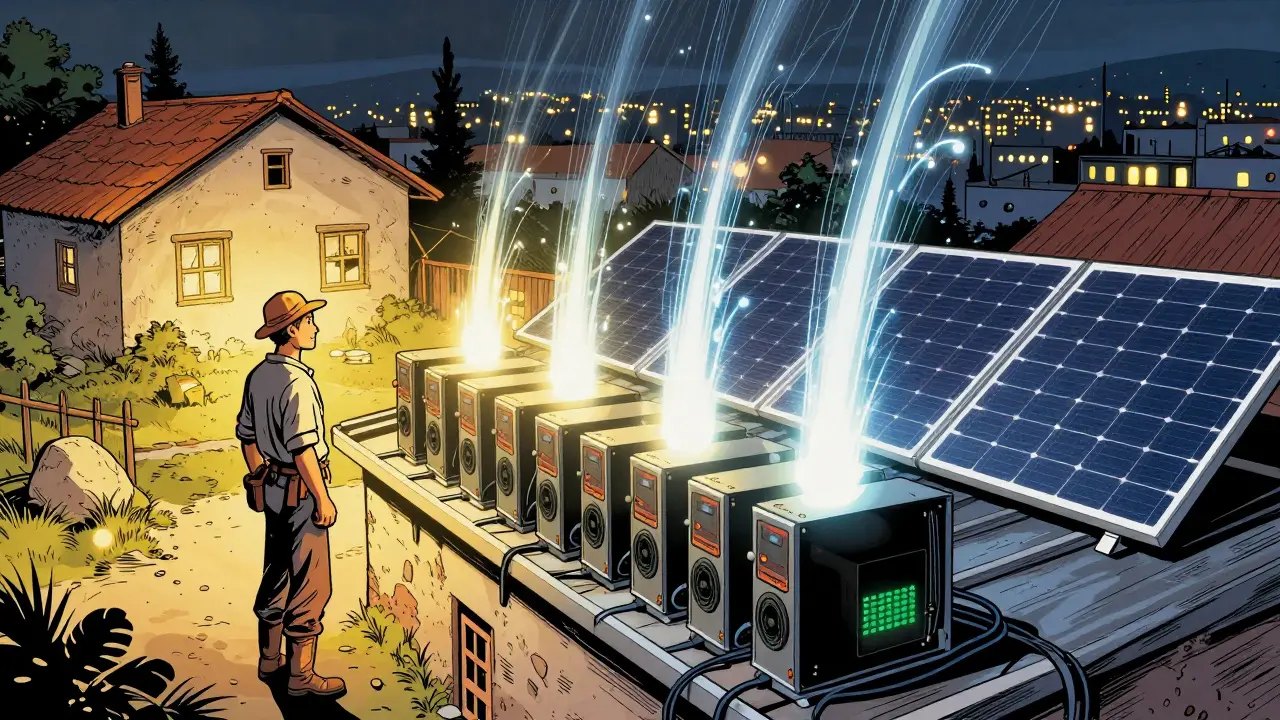
By 2025, mining is no longer illegal - but it’s tightly controlled. You can mine crypto in Kosovo… only if you’re using your own energy source. That means solar panels, wind turbines, or private generators. Anything connected to the national grid? Strictly forbidden. The government checks meters, monitors consumption patterns, and punishes violations with heavy fines and equipment confiscation.
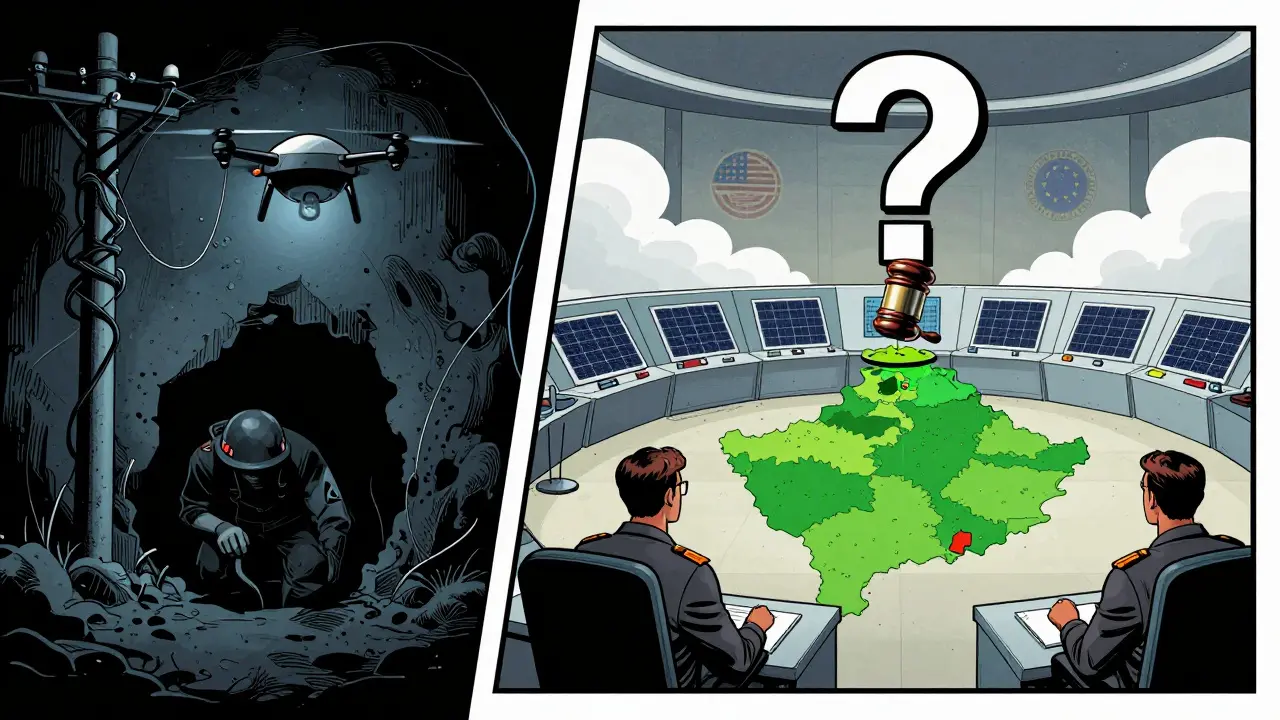
This shift didn’t happen overnight. A parliamentary working group spent over two years drafting a full cryptocurrency law. Mimoza Kusari-Lila, who led the effort, said the goal wasn’t to kill crypto - it was to bring it into the light. They wanted to track equipment imports, tax mining profits, and stop money laundering. But progress stalled when the European Commission stepped in. They demanded changes to align Kosovo’s draft with EU anti-money laundering rules. That added months of delays.
Today, the law is 90% done. But it’s still not passed. So enforcement relies on emergency decrees and energy regulations - not clear crypto laws. That’s a problem. Miners don’t know exactly what’s allowed. Regulators don’t always have the tools to prove someone is using solar power versus stealing grid electricity.
Why Kosovo’s Approach Matters Globally
Kosovo isn’t alone. China banned crypto mining in 2021 and wiped out 75% of the world’s Bitcoin mining capacity. Russia, Turkey, and Egypt have all cracked down. But Kosovo’s story is different. It wasn’t about ideology. It wasn’t about fear of crypto. It was about survival.
When a country can’t even power its hospitals, it doesn’t have the luxury of debating blockchain philosophy. Kosovo chose energy security over speculative profit. And it worked. Electricity imports dropped. Blackouts became rare. The grid stabilized.
But the real lesson is in the nuance. Most countries either ban crypto mining entirely or ignore it. Kosovo tried a third path: conditional permission. If you generate your own power, you’re welcome. If you’re stealing from the public grid? You’re breaking the law.
This model could work elsewhere. Countries like Ukraine, Georgia, and Kazakhstan have seen spikes in mining after Russia’s invasion and Iran’s sanctions. But they’re also facing power shortages. Kosovo’s solution - tie mining to renewable or private energy - could be a blueprint. It rewards innovation while protecting public infrastructure.
What Happens to Miners Now?
Some miners left Kosovo. Others sold their rigs for half price. A few invested in solar panels and restarted quietly. One group in Prizren built a 15-kilowatt solar array and now runs 12 mining machines. They pay no electricity bill. They report their income. And they’re legal.
But most can’t afford the upfront cost. A single solar setup big enough to power 10 rigs costs €15,000 or more. That’s more than most people earn in five years. So many are stuck. Some work in underground operations, trying to hide from inspectors. Others have turned to renting mining space abroad - in places like Iceland or Kazakhstan where power is cheap and regulations are looser.
The underground market still exists. But it’s smaller. And riskier. Police still do random checks. Miners who get caught now face not just fines, but criminal charges for energy theft - a felony in Kosovo.
Is Crypto Mining Still Worth It in Kosovo?
Maybe - if you have the money and the land.
Bitcoin’s price has climbed since 2022. Mining profitability is higher than ever for those with cheap, clean power. But the bar is now extremely high. You need:
- A reliable off-grid power source (solar, wind, or diesel)
- Space to install it (a large roof or land)
- €10,000+ to buy the equipment and setup
- Willingness to report earnings and pay taxes
For the average person? It’s not realistic. The era of quick crypto cash in Kosovo is over. The days of mining in your garage with stolen electricity? Gone.
But for those who can play by the new rules? There’s still a chance. Kosovo isn’t anti-crypto. It’s anti-waste. And that’s a smart line to draw.
What’s Next for Kosovo’s Crypto Scene?
The big question is whether the full cryptocurrency law will pass in 2025. If it does, it could open the door for regulated exchanges, legal token sales, and even government-backed digital wallets. But if it stalls again, Kosovo will remain in legal limbo - enforcing rules without clear laws.
International pressure is growing. The EU wants Kosovo to prove it can fight money laundering. The U.S. Treasury is watching how emerging economies handle crypto. And miners? They’re waiting to see if they can come back - legally.
One thing is certain: Kosovo won’t go back to the old days. The energy crisis taught them that electricity isn’t infinite. And crypto mining, without limits, is a luxury no poor country can afford.
Jon Visotzky
December 5 2025Kosovo didn't ban crypto. They banned theft. And honestly? Smart move. When your hospitals are dark, you don't debate blockchain philosophy. You fix the power.
Tara Marshall
December 6 2025The solar miners in Prizren are the real winners. Off-grid + legal + profitable. That's the future.
Isha Kaur
December 7 2025I think this is actually one of the most balanced approaches I've seen anywhere. Most countries either go full prohibition or full laissez-faire, but Kosovo said 'if you're not taking from the public, you're welcome to mine'. It's not about stopping innovation, it's about not letting innovation starve the people who can't afford it. The fact that they're still working on the law shows they're trying to get it right, not just react. I hope more countries look at this instead of copying China's heavy-handed ban or Argentina's chaotic free-for-all.
Holly Cute
December 8 2025This is just the beginning. Wait till the EU starts demanding KYC on solar-powered miners. They'll be taxing your rooftop Bitcoin like it's a second job. And don't even get me started on how they'll monitor if your 'solar array' is real or just a fancy cover for a grid tap. This isn't regulation-it's surveillance with a greenwashing filter. 😒
Josh Rivera
December 9 2025Oh wow. So now we're rewarding the rich? Only people with €15k to burn can mine? That's not a solution, that's a classist loophole. You're not stopping miners-you're just making them billionaires before they even start. And don't tell me 'they're using renewable' like that makes it noble. It's still energy-intensive nonsense. 🤦♂️
Noriko Robinson
December 11 2025I get why people are mad about the upfront cost, but honestly? If you can't afford to go solar, maybe you shouldn't be running 800 rigs in your basement. This isn't about being rich-it's about being responsible. Kosovo didn't shut down innovation. They just stopped letting it eat the country alive.
Vincent Cameron
December 12 2025It's ironic. We built this entire decentralized dream on the idea of removing intermediaries… and now the state is the only one who gets to decide who can mine. The blockchain was supposed to be beyond borders, beyond control. Now it's just another utility bill with a blockchain sticker on it. We traded anarchic freedom for regulated privilege. Is this progress? Or just a new kind of cage?
Chris Jenny
December 12 2025This is all a distraction. The real reason they banned mining? The IMF told them to. And now they're using 'solar' as a front to control the population. You think those 'solar arrays' are really powering rigs? Nah. They're just using the grid through back channels. The government just wants to track every single transaction. This isn't about energy-it's about surveillance. 🕵️♂️
Krista Hewes
December 13 2025i had a friend in kosovo who ran a miner in his garage. he said the blackouts were so bad his grandma couldn't use her oxygen machine. he shut it down himself. no one forced him. he just… did it. that’s the real story here. not the law. not the rigs. just a guy choosing people over profit.
Uzoma Jenfrancis
December 14 2025Western media loves to paint Kosovo as some heroic underdog. But let’s be real-this is just another case of colonial logic. The West tells poor countries what to do with their resources. First they take your minerals, now they tell you you can’t mine crypto unless you use their solar panels. This isn’t sustainability. It’s control dressed up as ethics.
Roseline Stephen
December 15 2025I don't know if I agree with the ban, but I can't say I blame them. When your country can't even keep the lights on in schools, you don't let a few people run machines that use more power than a whole neighborhood. It's not about hating crypto. It's about not letting greed blind you to basic human needs.
Annette LeRoux
December 17 2025I just love how Kosovo turned a crisis into a blueprint 🌞⚡️ Imagine if every country with power shortages did this-tie mining to renewables. No more stealing from hospitals. No more midnight raids. Just clean energy + fair rules. Maybe crypto can actually be good for something? 🤔
Madison Agado
December 18 2025There’s a philosophical tension here that no one’s naming: Is energy a human right, or a commodity? Kosovo chose the former. They said: electricity is not a profit center. It’s a lifeline. And that’s not just policy-it’s a moral stance. Most nations still treat energy like oil: something to extract, sell, and exploit. Kosovo said: no. We’ll starve our economy before we starve our people. That’s radical. And honestly? Beautiful.
Nelson Issangya
December 19 2025You think this is bad? Wait till the next crypto boom. Then you’ll see miners in Kosovo buying up solar farms like they’re buying lottery tickets. And guess who’ll be left holding the bag? The poor. This isn’t a win-it’s a delay. The rich will always find a way. The rest? They’ll just keep getting blacked out.
Mairead Stiùbhart
December 19 2025Oh wow. So now we’re pretending solar panels are a magic fix? Let me guess-the same people who couldn’t afford a miner before are suddenly expected to drop $15k on panels? And the government’s just gonna trust them? 😂 Tell me again how this isn’t just a fancy way to say 'only the wealthy get to play'.
Neal Schechter
December 20 2025This is actually one of the few crypto policies I respect. Not because it’s perfect, but because it’s honest. It doesn’t pretend crypto is evil. It doesn’t pretend it’s the future. It just says: if you’re using public resources, you’re breaking the law. If you’re generating your own, go ahead. Simple. Clear. Fair. Why can’t everyone else do this?
Doreen Ochodo
December 22 2025The solar miners are quietly winning. No drama. No headlines. Just panels, rigs, and bank statements. That’s the quiet revolution. Not the raids. Not the laws. Just people building something real.
Billye Nipper
December 23 2025I just want to say… this gives me hope. 🌱✨ I’ve been so tired of crypto being this wild, greedy, wasteful thing. But Kosovo? They turned it into something… responsible. Maybe we can still make tech serve people instead of the other way around. I’m crying a little. This is the future I want to believe in.
Thomas Downey
December 24 2025The notion that private energy ownership justifies crypto mining is a dangerous fallacy. Energy consumption is energy consumption, regardless of source. To elevate mining as a morally defensible activity simply because it's 'off-grid' is to ignore the ecological cost of manufacturing ASICs, the e-waste generated, and the carbon footprint of production chains. This is not sustainability. It is privilege masquerading as innovation.
Manish Yadav
December 26 2025You call this fair? Only rich people can mine now? So the poor guy who used to make 2k a month with stolen power? He’s out of luck. But the guy with a big roof and a bank account? He gets to be a crypto king. That’s not justice. That’s just capitalism with a green bow.
Glenn Jones
December 28 2025This is a total scam. The government didn't ban mining-they banned competition. Now the elites control the solar supply. The miners who got caught? They were just trying to survive. But now? They're criminals. And the ones with money? They get to be 'innovators'. This isn't policy. It's a coup. 💥
Adam Bosworth
December 29 2025They’re lying. The real reason they banned mining? The Chinese bought up all the coal contracts. Now they’re forcing Kosovo to 'go green' so they can control the energy supply. The solar panels? Made in China. The inverters? Made in China. The rules? Written by the EU, who’s backed by China. This isn’t about energy. It’s about control. Wake up.
Yzak victor
December 31 2025Honestly? I think Kosovo did the right thing. Not because crypto is bad, but because you can't let a few people burn through the power that keeps a whole country alive. It’s like letting one family run a jet engine in their backyard and then complaining when the neighborhood loses electricity. It’s just… not fair.
Tisha Berg
January 2 2026I just hope this story spreads. Not because it’s perfect, but because it’s human. It’s not about crypto. It’s about who gets to use the lights. And sometimes, the right choice isn’t the easiest one. But it’s the one that keeps the hospital running. 💛