
You’ve probably seen ads for Walkex popping up on social media, promising low fees and high returns. Before you deposit any money, stop and ask yourself one simple question: have you ever heard of this platform before today? If the answer is no, that’s not just a coincidence-it’s a massive red flag. In the world of cryptocurrency, obscurity is often a feature, not a bug, for scams.
I’ve spent years analyzing exchange security, looking at everything from ISO certifications to cold storage protocols. I’ve reviewed giants like Kraken and examined breach reports from Kaspersky and Chainalysis. When I searched for Walkex crypto exchange, the results were startlingly empty. There are no security audits, no regulatory filings, and no independent user reviews. This silence speaks volumes. Let’s break down why you should likely stay away from Walkex and how to spot similar traps.
The Danger of Digital Silence
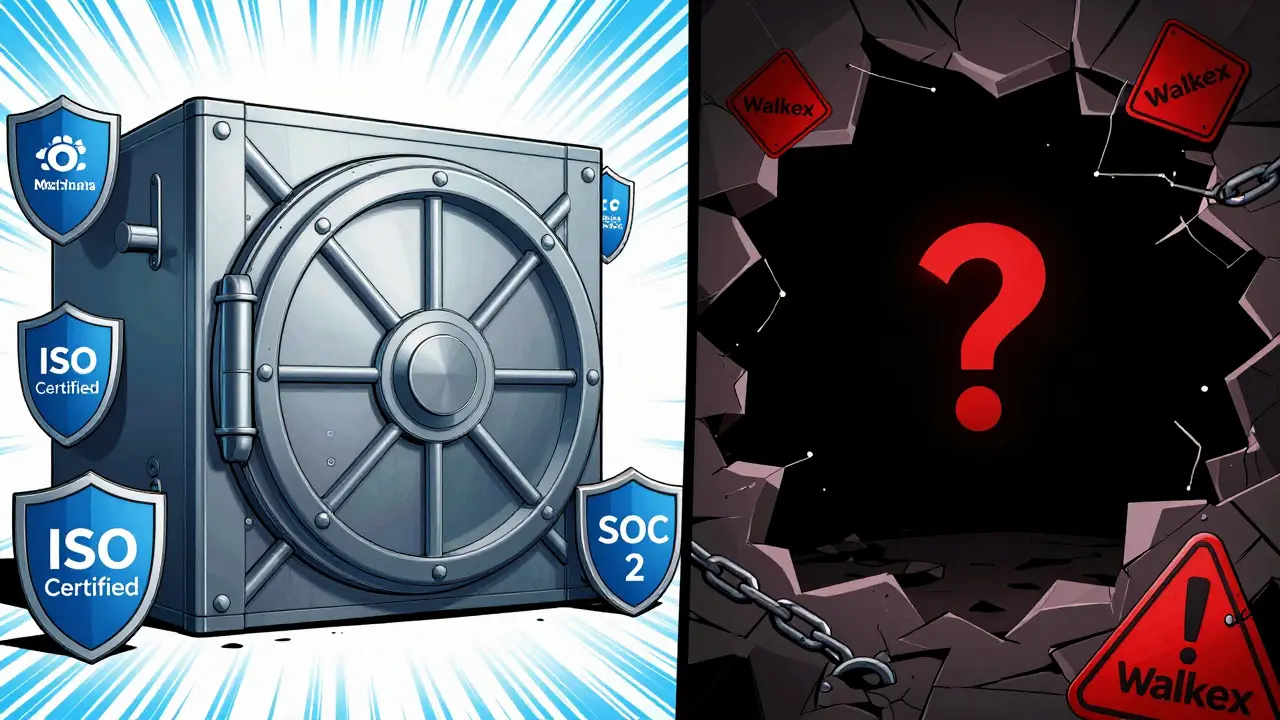
In the crypto industry, legitimacy leaves a paper trail. Established exchanges undergo rigorous checks. For example, Kraken holds ISO/IEC 27001:2022 certification and has completed SOC 2 Type 1 examinations. These aren’t just badges; they prove that an independent auditor verified their security controls. When I looked for Walkex in databases used by firms like Chainalysis or Arkose Labs, it simply wasn’t there.
This absence is critical. Legitimate platforms appear in security analyses because they handle significant volume and attract scrutiny. Even smaller, regional exchanges usually show up in local regulatory registries. Walkex appears in none of these contexts. This suggests three possibilities:
- It is a newly launched platform with zero track record (extremely risky).
- It is a regional exchange operating outside major jurisdictions (limited recourse if things go wrong).
- It is a fraudulent platform designed to disappear once funds are deposited.
Without evidence of existence in authoritative sources, you cannot verify who owns Walkex, where their servers are located, or if they actually hold your assets. Trusting such a platform is gambling with your life savings, not investing.
What Real Security Looks Like
To understand why Walkex is suspicious, you need to know what a secure exchange actually does. Industry standards, outlined by groups like the Cryptocurrency Security Standards (CCSS), require specific measures. Here is what you should expect from any reputable platform:
| Security Feature | Industry Standard | Walkex Verification |
|---|---|---|
| Cold Storage | 95%+ of assets offline (e.g., Kraken) | No public evidence of implementation |
| Multi-Factor Authentication (MFA) | Mandatory for withdrawals | Unknown |
| Regulatory Compliance | Licenses in operating jurisdictions | None found |
| Audits | SOC 2, ISO 27001, or third-party code audits | None found |
| Withdrawal Whitelists | Prevents unauthorized transfers | Not documented |
Notice the pattern. Every major exchange, even those that have suffered hacks like Kucoin (which lost $280 million in 2020), implements withdrawal whitelists and real-time monitoring. Kucoin’s ability to limit damage during that hack was due to these exact protocols. Walkex offers no proof of such safeguards. Without them, a single compromised admin account could drain all user funds instantly.
Red Flags You Can’t Ignore
If you’re still considering using Walkex, look for these common scam indicators. They appear in almost every fraudulent exchange:
- Anonymous Team: Legitimate companies list their founders and executives with verifiable LinkedIn profiles. Walkex likely hides behind generic stock photos or no names at all.
- Unrealistic Promises: Ads claiming “guaranteed profits” or “zero fees forever” are bait. Sustainable businesses charge fees to cover infrastructure costs.
- Pressure to Deposit: Scammers create urgency (“Offer ends in 24 hours!”). Real exchanges don’t pressure you to rush.
- Poor Website Quality: Look for broken links, grammatical errors, or copied content from other sites. Professional exchanges invest heavily in UX and legal compliance.
- No Customer Support: Try contacting them before depositing. If responses are slow, automated, or non-existent, run away.
I’ve seen users lose thousands because they ignored these signs. The pain of losing money is bad enough, but the helplessness of having no recourse is worse. Unlike banks, crypto transactions are irreversible. Once you send Bitcoin or Ethereum to a scammer’s wallet, it’s gone forever.
Better Alternatives for Trading
You don’t need to take risks with unknown platforms. Several established exchanges offer robust security, competitive fees, and regulatory oversight. Here are safer options depending on your needs:
- Kraken: Known for strong security culture. They use advanced cold storage solutions housed in secure facilities under 24/7 surveillance. Ideal for long-term holders.
- Coinbase: Publicly traded company (NASDAQ: COIN) with strict US regulatory compliance. Great for beginners who prioritize safety over low fees.
- Binance: Largest volume globally, offering wide asset selection. While it has faced regulatory challenges, its scale and liquidity make it a dominant player.
- Kucoin: Offers many altcoins not found elsewhere. After their 2020 hack, they improved security significantly, making them a viable option for experienced traders.
Each of these platforms appears in security analyses, has transparent fee structures, and provides customer support channels. They may charge slightly higher fees than Walkex claims, but you’re paying for insurance against theft.
How to Protect Yourself
Even with a legitimate exchange, you share responsibility for your security. Follow these steps to minimize risk:
- Use a Hardware Wallet: For large holdings, move coins off-exchange to devices like Ledger or Trezor. Exchanges are targets for hackers; hardware wallets are not.
- Enable MFA: Use an authenticator app (like Google Authenticator or Authy), not SMS. SIM swapping attacks can bypass phone-based verification.
- Verify URLs: Bookmark the official site. Phishing sites mimic real exchanges to steal login credentials.
- Check Regulatory Status: Ensure the exchange is registered in your country. In the US, look for FinCEN registration. In Europe, check MiCA compliance.
- Start Small: Never deposit more than you can afford to lose when testing a new platform.
Remember, if an exchange doesn’t appear in security reports from firms like Kaspersky or Chainalysis, assume it’s unsafe until proven otherwise. The burden of proof lies with the platform, not you.
Is Walkex a scam?
While we cannot definitively label Walkex as a scam without direct evidence of fraud, the complete lack of information, regulatory presence, and security audits strongly suggests it is unsafe. Legitimate exchanges leave verifiable trails; Walkex leaves none. Treat it as high-risk and avoid depositing funds.
Why isn't Walkex listed on CoinMarketCap or CoinGecko?
These platforms require exchanges to meet strict criteria regarding transparency, security, and user base size. Walkex’s absence indicates it fails to meet basic legitimacy thresholds required for listing on major tracking sites.
What should I do if I already deposited money into Walkex?
Try to withdraw immediately. If withdrawals are delayed or blocked, document all interactions, screenshots, and transaction IDs. Report the incident to your local consumer protection agency and financial regulators. Unfortunately, recovery is unlikely if the platform disappears.
How can I verify if a crypto exchange is legitimate?
Check for regulatory licenses, read independent security audits (SOC 2, ISO 27001), look for team member profiles, and search for news coverage from reputable sources. If you can’t find this information easily, the exchange is likely unsafe.
Are there any safe alternatives to Walkex?
Yes. Kraken, Coinbase, Binance, and Kucoin are well-established platforms with proven security records. They offer varying features but all provide significantly higher safety guarantees compared to unknown entities like Walkex.

Carli Bates
May 3 2026the silence is deafening. just like my wallet after i tried that one 'guaranteed profit' scheme last year. people really need to stop falling for this stuff.
Aaron Zeiler
May 4 2026you are absolutely right about the lack of audits. in my experience working with compliance teams, any exchange without a SOC 2 report or ISO certification is basically operating in the wild west. it is not just risky, it is negligent. always check for those specific certifications before you even think about linking your bank account.
Kathleen Warren
May 4 2026this is such an important post thank you for sharing this info. it can be so confusing for beginners who just want to try crypto out. i always tell my friends to stick with the big names like coinbase or kraken because they have been around forever and you know if something goes wrong there is at least a process to follow. safety first always!
Barbara Jones
May 6 2026thats exactly why i use ledger. no matter what happens to the exchange my coins are safe offline. its a bit more hassle to set up but totally worth it for peace of mind. dont trust verify.
Abhishek Verma
May 6 2026oh please spare me the lecture on security standards. you sound like every other bored tech bro trying to act like a savior. nobody cares about your iso certifications when the market is pumping. walkex might be sketchy but maybe they offer better liquidity than your boring old kraken. live a little.
Brendan Thraxton
May 7 2026i get where you are coming from abhishek but taking risks with unknown platforms is never smart. we all want to make money sure but losing everything because you ignored red flags is not a strategy its just gambling. let us keep our community safe by sticking to verified exchanges.
Janis Naglis
May 8 2026I completely agree with the sentiment here!!! It is so vital that we prioritize security over potential gains!! The regulatory landscape is evolving rapidly, and exchanges that do not comply with MiCA or FinCEN requirements are essentially playing Russian Roulette with user funds!!! We must demand transparency!!!
Tracy McBurney
May 9 2026Let's cut through the noise here. The absence of Walkex from Chainalysis reports isn't just an oversight; it's a deliberate evasion tactic. These entities operate in the shadows precisely because they cannot withstand scrutiny. Your capital is not 'invested'; it is donated to a black hole. Do not mistake obscurity for exclusivity.
Jimmy vasquez
May 10 2026hey everyone just wanted to add that i had a similar experience with another obscure exchange a few years back. they promised low fees but then suddenly 'maintenance' started lasting weeks. eventually i got my money back but barely enough to cover the gas fees for withdrawing. definitely stick to the ones listed in the article.
Andrew Todd
May 10 2026why do we always listen to these globalist security experts? american companies should be allowed to innovate without all this red tape. walkex might be a scam but maybe they are just innovating faster than the slow regulated giants. lets support new ventures instead of crying about audits.
Ryan Nakielny
May 12 2026innovate? sure. steal? also sure. look i am not anti-crypto but pretending that anonymity is a feature rather than a bug is delusional. if you cant show me your team or your audit trail you are not a company you are a criminal enterprise. simple as that.
Sri Astuti
May 12 2026:/ honestly this whole thread is making my head spin with all the technical jargon but i get the point. if it sounds too good to be true it probably is. i lost some money on a trading bot once that turned out to be fake and the lesson was harsh. please people protect yourselves and dont be greedy :/
Elle Kharitou
May 14 2026As someone who has traveled extensively through Asia and Europe, I have noticed a disturbing trend of these shadow exchanges popping up in jurisdictions with lax regulations 🌏✨. It is fascinating how they exploit the digital divide to target unsuspecting users who are eager to enter the crypto space. We must remain vigilant and educated, dear friends! Knowledge is power! 💪📚
Nitin Gupta
May 15 2026i appreciate the detailed breakdown in the original post. it is helpful to see the comparison table between industry standards and walkex status. it clearly shows the gaps. i will share this with my local investment group to ensure everyone is aware of the risks involved with unverified platforms.
AP Fisher
May 16 2026does anyone know if there are any tools that automatically scan exchanges for these red flags? it would be great to have a simple way to check before signing up. i usually just google reviews but sometimes those are fake too so i wonder if there is a more reliable method.
Wayne Gillis
May 17 2026lol yeah just check coinmarketcap if its not there run away 🏃♂️💨 also check twitter for recent complaints. if you see people saying they cant withdraw thats a huge warning sign. dont be the sucker who deposits last 👀
Noel Mandotah
May 19 2026Boring. Predictable. Safe. You call it security, I call it stagnation. The real winners are the ones who take calculated risks on emerging platforms. But sure, keep hiding behind your hardware wallets while the rest of us build empires.
edie rosa
May 19 2026it is pathetic how many people still fall for these obvious scams. you have no excuse anymore with all the information available online. if you lose money to walkex you only have yourself to blame for being ignorant and greedy. wake up people.
Michael Repak
May 19 2026I think it is important to remember that mistakes happen to everyone!!! However, having a solid plan and using reputable exchanges can mitigate those risks significantly!!! Let us support each other in making informed decisions!!!
Ipsita Seal
May 21 2026ugh this is so depressing. why do we even bother checking anymore? everyone gets scammed eventually. i guess i will just sit on cash and watch the world burn. thanks for nothing.