When you send Bitcoin to a friend, how does the network know your transaction is real? You don’t need to download the whole blockchain. You don’t need to check every transaction ever made. All you need is a tiny piece of data called the Merkle root. And that’s where Merkle trees come in - the quiet engine behind every secure, fast, and lightweight crypto transaction.
What Exactly Is a Merkle Tree?
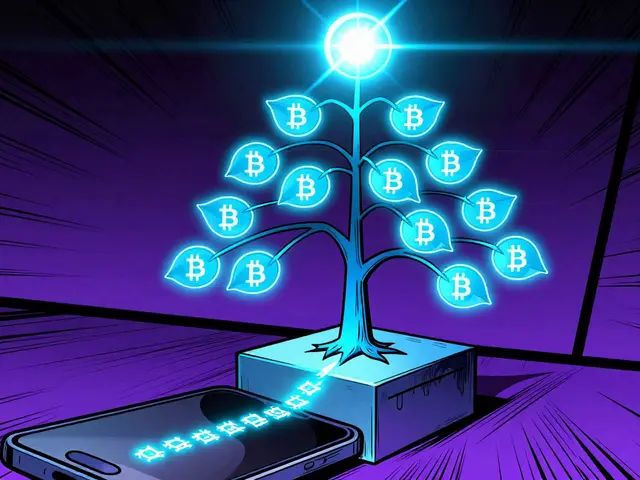
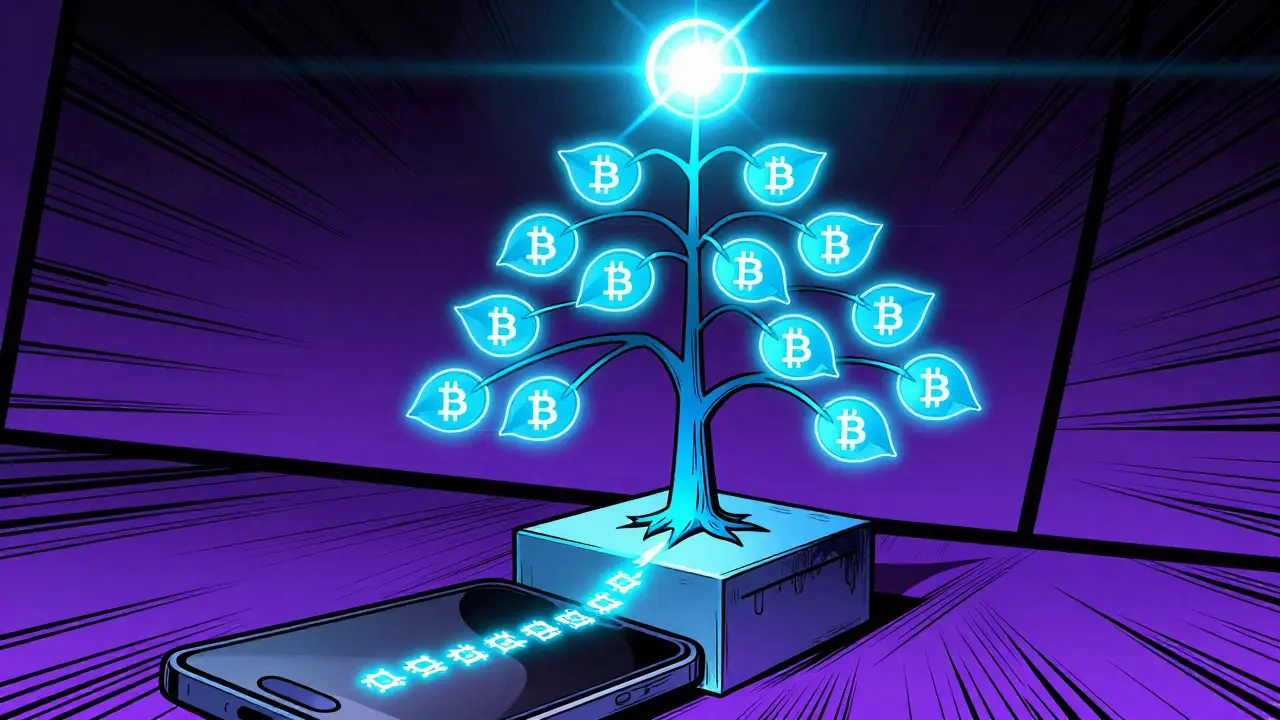
A Merkle tree isn’t magic. It’s just a clever way of organizing data using math. Imagine you have 1,000 transactions in a single Bitcoin block. Each transaction gets hashed - turned into a unique 256-bit string of numbers and letters. These hashes become the bottom layer of the tree, called leaf nodes. Now, pair up those hashes. Take two, combine them, hash them together. Do that again and again, layer by layer, until you end up with one single hash at the top. That’s the Merkle root. It’s a digital fingerprint of everything below it. If even one transaction changes - say, someone tries to alter the amount sent - the whole tree changes. The Merkle root becomes completely different. And since the root is stored in the block header, every node on the network instantly knows something’s off.Why Merkle Trees Save You Bandwidth and Storage
Think about your phone. It’s not a full Bitcoin node. It doesn’t store the whole blockchain. But you still need to verify your payments. Without Merkle trees, your phone would need to download every block, every transaction, just to check if one payment went through. That’s impossible on mobile data. Merkle trees fix that. With a technique called Simple Payment Verification (SPV), your phone only needs four things: your transaction hash, the Merkle root from the block header, and a short list of sibling hashes leading up to that root. That’s maybe 100-200 bytes of data - not 500 MB. You can verify your payment in under a second, even on a slow connection. This isn’t just convenient. It’s what makes decentralized crypto possible. Millions of lightweight wallets can join the network without needing terabytes of storage. More wallets mean more users. More users mean more security. And all of it starts with the Merkle tree’s compact design.Instant Tamper Detection - No Guesswork
Blockchain is built on trustlessness. You shouldn’t have to trust anyone. You should be able to prove things yourself. Merkle trees make that easy. If a miner tries to sneak in a fake transaction - like changing 0.5 BTC to 5 BTC - the hash of that transaction changes. That changes the hash of its parent node. Then the next layer up. Then the next. And finally, the Merkle root flips. The entire block becomes invalid. Every node checks the root. If it doesn’t match what the network expects, the block gets rejected. No debate. No manual review. Just math. This isn’t hypothetical. In 2023, a faulty node in the Bitcoin network tried to broadcast a block with an altered transaction. The Merkle root mismatched. Within seconds, every full node on the network flagged it as invalid. The block was dropped. No coins were stolen. No one got scammed. Just clean, automatic security.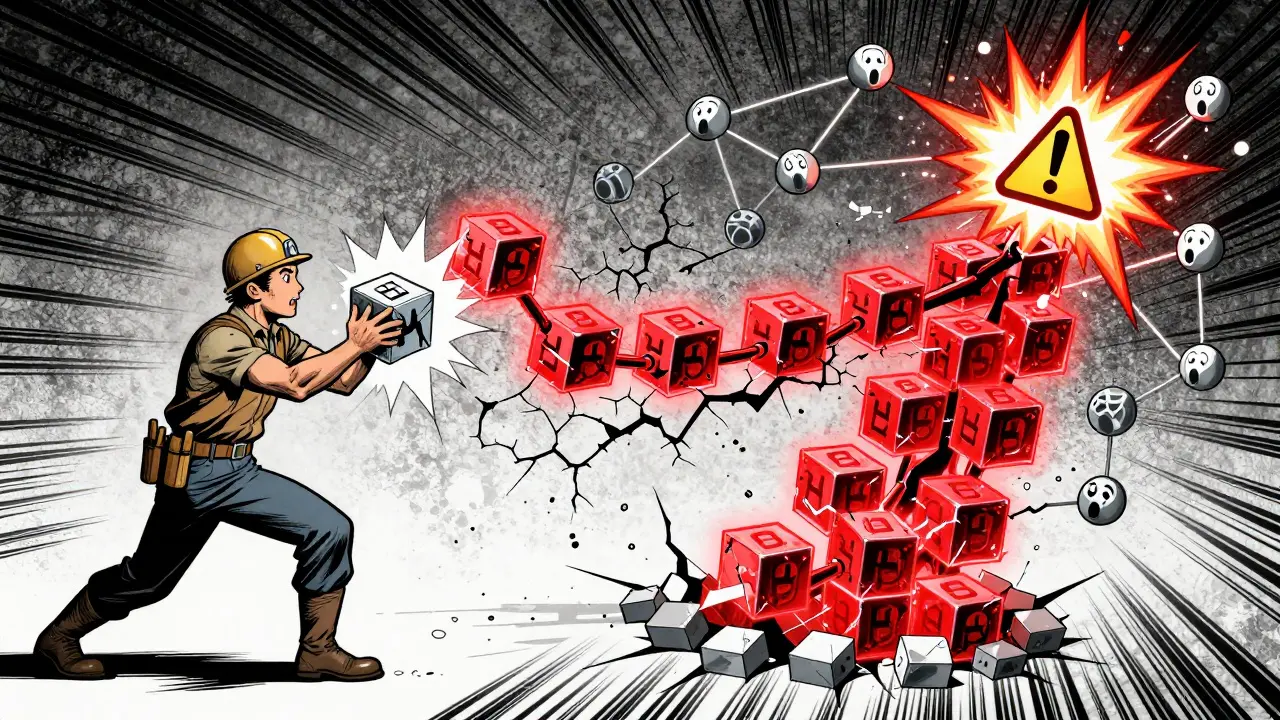
Collision Resistance and Cryptographic Strength
Merkle trees rely on SHA-256 - the same hash function used in Bitcoin. SHA-256 has two key properties: it’s one-way and collision-resistant. One-way means you can turn a transaction into a hash easily. But you can’t turn a hash back into the original data. That’s why your transaction details stay private while still being verifiable. Collision-resistant means it’s practically impossible for two different transactions to produce the same hash. Ever. Even if you tried every computer on Earth for a million years, you couldn’t find two transactions that hash to the same value. That’s what stops attackers from swapping one transaction for another without detection. Together, these properties mean the Merkle root isn’t just a summary - it’s an unbreakable seal.How Light Clients and Mobile Wallets Depend on Merkle Trees
You’re probably using a Merkle tree right now. If you’ve ever checked your Bitcoin balance on your phone using an app like BlueWallet, Samourai, or Trust Wallet, you didn’t download the blockchain. You trusted a full node to give you the Merkle proof. That proof? A short chain of hashes leading from your transaction up to the Merkle root. These apps are called SPV clients. They’re fast, lightweight, and work offline. They can’t validate every transaction on their own. But they don’t need to. They just need to verify that your transaction is included in a block with a valid Merkle root. And that’s enough. This is why mobile crypto adoption exploded after 2018. Before Merkle trees, wallets were clunky. After? Instant balance checks, instant send/receive, zero storage overhead. The entire mobile crypto ecosystem runs on this one structure.Scalability and Network Synchronization
When a new node joins Bitcoin, it doesn’t download 700 GB of data right away. It asks for the block headers - which include the Merkle root - first. Then it verifies the chain of headers. Only after confirming the chain is valid does it start downloading full blocks, and even then, it can request only the transactions it cares about. This is called header-first synchronization. It cuts initial sync time from days to minutes. Without Merkle trees, syncing a new node would take weeks. With them? It’s fast, efficient, and scalable. This matters because decentralization depends on participation. The easier it is to run a node, the more nodes there are. More nodes mean no single entity can take over the network. Merkle trees help keep that balance.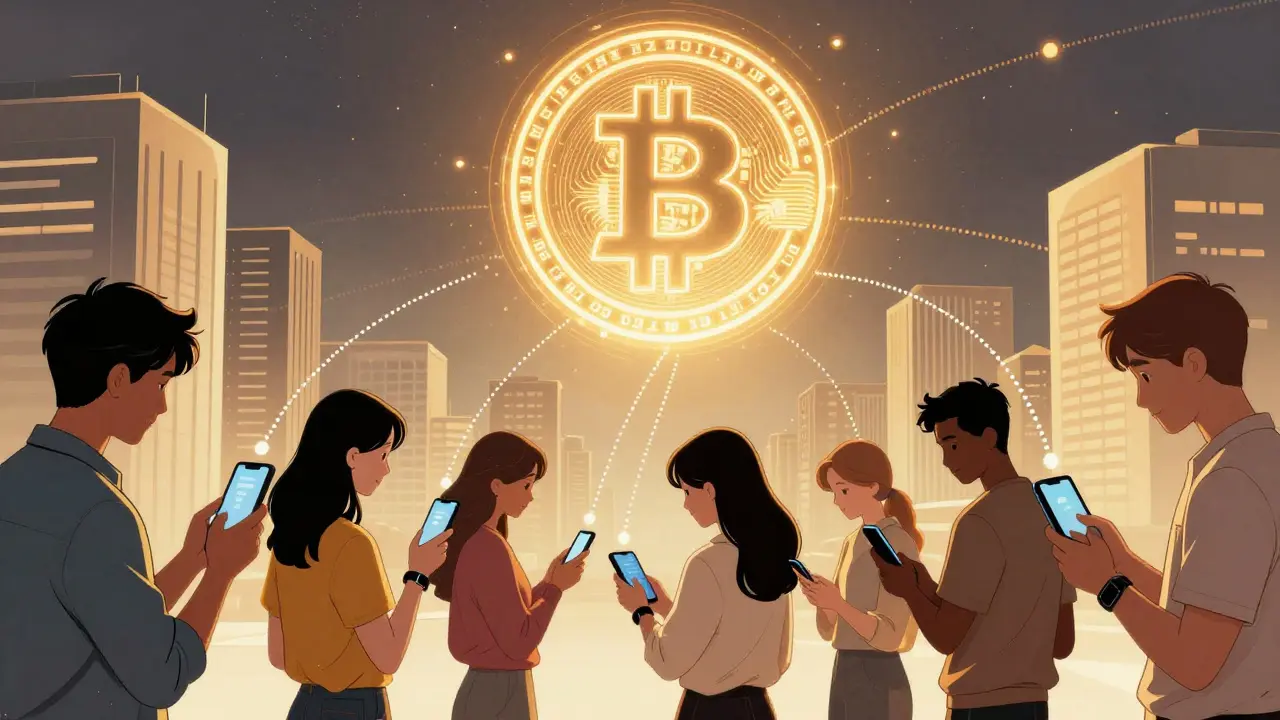
Why Every Major Cryptocurrency Uses Merkle Trees
Bitcoin wasn’t the first to use them - they were invented in 1979 by Ralph Merkle. But Bitcoin made them essential. Today, every major blockchain uses them:- Ethereum uses a modified version called a Merkle Patricia Tree to handle accounts, balances, and smart contracts.
- Litecoin and Bitcoin Cash use the same structure as Bitcoin.
- Monero and Zcash use Merkle trees to verify private transactions.
Real-World Impact: Faster, Cheaper, Safer Crypto
The benefits aren’t theoretical. They’re measurable:- Bitcoin blocks can hold over 4,000 transactions - all verified with a single 32-byte Merkle root.
- SPV verification uses less than 0.01% of the data needed for full validation.
- Mobile wallets use 100x less storage than full nodes.
- New nodes sync in under 5 minutes instead of 24+ hours.
Final Thought: The Quiet Hero of Blockchain
No one talks about Merkle trees. You don’t see ads for them. You don’t hear influencers name-drop them. But every time you send crypto, check your balance, or verify a transaction - you’re relying on them. They’re not flashy. They’re not sexy. But without them, cryptocurrency wouldn’t be possible. They turn chaos into order. They turn massive data into tiny proofs. They make trust automatic. In a world full of complexity, Merkle trees are the elegant solution.Do Merkle trees store actual transaction data?
No. Merkle trees store hashes of transactions, not the transactions themselves. The original transaction data is kept in the block. The Merkle tree only creates a compact summary using cryptographic hashes. This allows for verification without needing to store or transmit the full data.
Can a Merkle tree be tampered with without detection?
Not without changing the Merkle root. Since every hash in the tree depends on the ones below it, altering even one transaction changes its hash, which cascades upward and changes the root. Because the root is included in the block header and verified by every node, any mismatch instantly invalidates the block. Tampering is mathematically impossible without being caught.
Why do light wallets need the Merkle root?
Light wallets don’t store full blocks. The Merkle root is the only way they can verify a transaction is part of a block without downloading everything. By providing a short path of sibling hashes from the transaction to the root, the wallet can confirm the transaction’s existence using minimal data - often less than 1KB.
Are Merkle trees used in Ethereum the same way as in Bitcoin?
Similar, but not identical. Ethereum uses a Merkle Patricia Tree, which adds extra features to handle account states, contract storage, and transaction receipts. Bitcoin’s Merkle tree only tracks transactions. Ethereum’s version does more - but still relies on the same core idea: hashing data into a single root for verification.
Can Merkle trees be used for data other than transactions?
Yes. Merkle trees are used in file systems, version control (like Git), and distributed databases. In blockchain, they’re also used to verify smart contract code, account balances, and even block headers. Any time you need to prove that a piece of data is part of a larger set, Merkle trees are a go-to tool.