
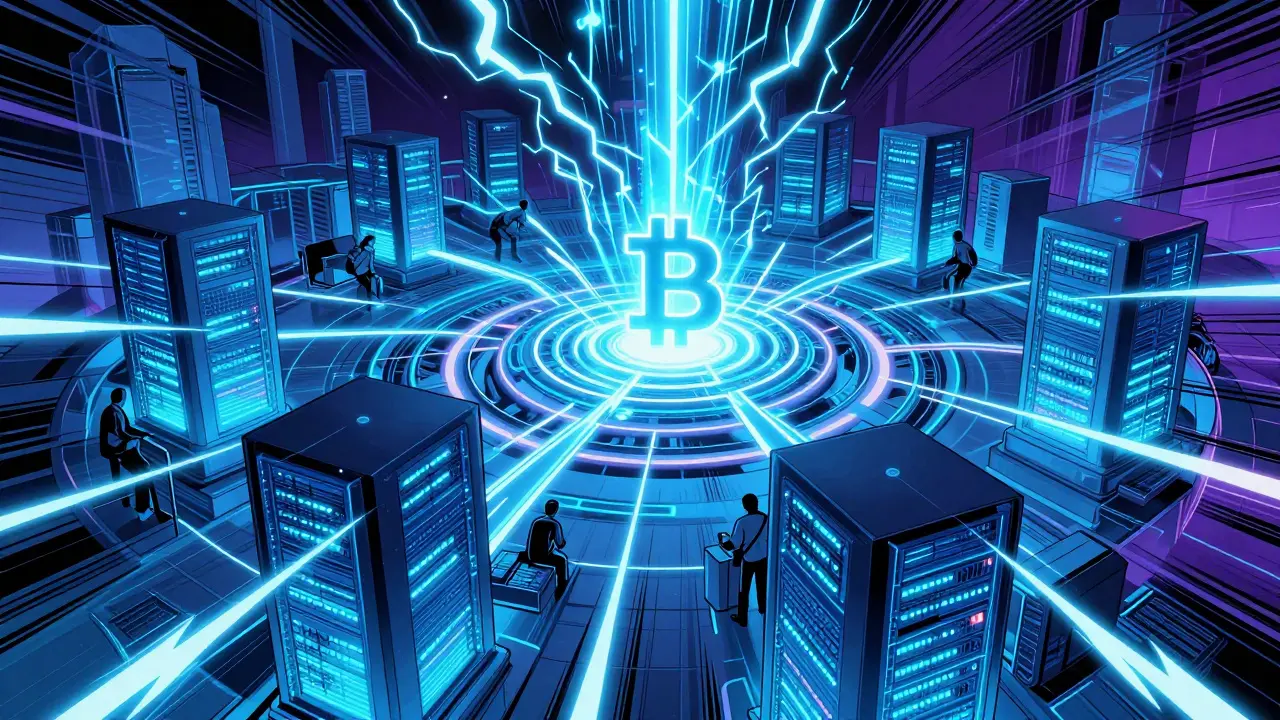
As of October 2024, the Bitcoin network's hash rate reached 690 exahashes per second (EH/s). That's 690 million billion calculations every second. But what does this massive number mean for miners trying to earn Bitcoin?
What is Hash Rate?
Hash rate measures the total computational power of a cryptocurrency network. It's the number of hashing operations a mining rig can perform per second. The higher the hash rate, the more secure the network because it's harder for malicious actors to take control. For Bitcoin, this is measured in hashes per second (H/s), but modern networks operate at terahashes (TH/s), petahashes (PH/s), or even exahashes (EH/s). The global Bitcoin network currently processes over 690 EH/s, which is a 13,000% increase since 2019.
How Hash Rate Impacts Mining Profitability
Higher network hash rate means more competition among miners. When more miners join the network, each miner's chance of solving a block decreases. This makes mining less profitable unless you have efficient hardware and low electricity costs. For example, after the April 2024 Bitcoin halving, the block reward dropped from 6.25 BTC to 3.125 BTC per block. The network hash rate temporarily fell by 19.3% as some miners shut down due to reduced revenue. However, it quickly recovered as efficient miners stayed operational. This shows that profitability isn't just about hash rate-it's about balancing hardware efficiency, electricity costs, and network difficulty.
Electricity Costs: The Biggest Factor
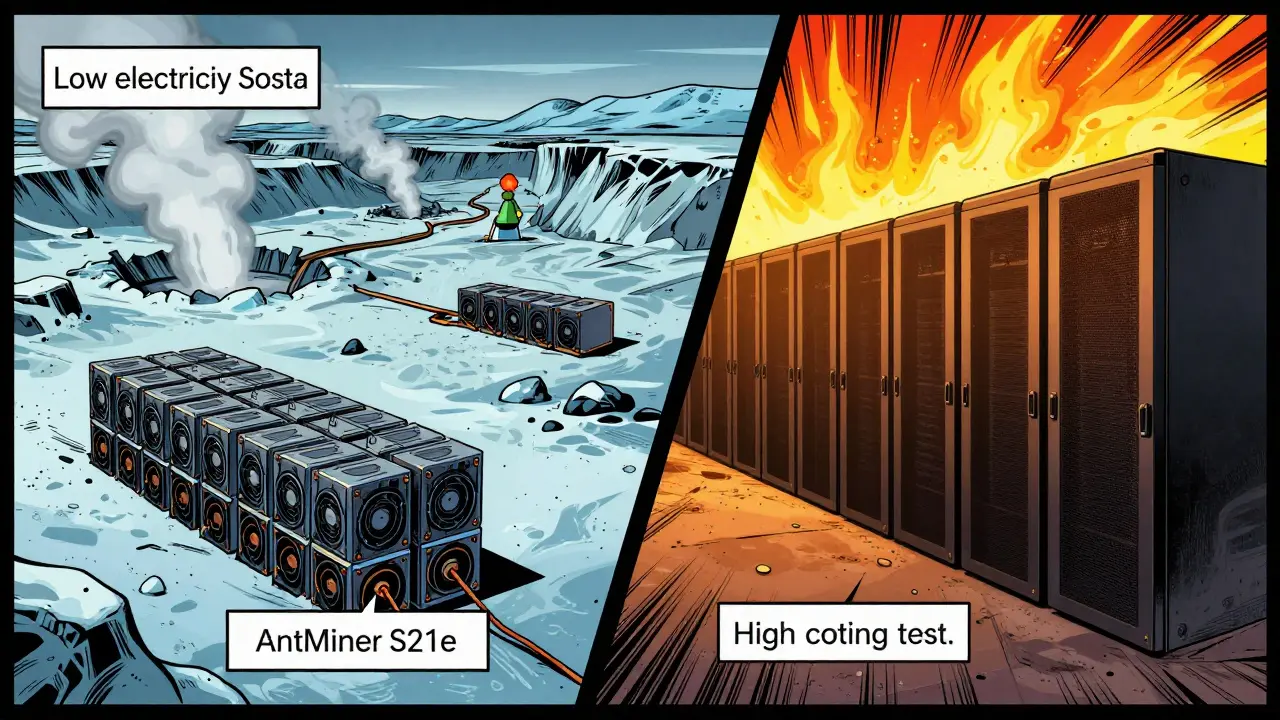
Electricity costs make up 60-70% of mining expenses. A miner using an AntMiner S21e XP Hyd (860 TH/s, 11,180 watts) would spend about $1,138 per year on electricity at the U.S. average rate of $0.1178/kWh. However, in places like Iceland, where electricity costs $0.03/kWh, the same miner would only spend $290 annually. This difference can turn a profitable operation into a losing one. According to JPMorgan's September 2024 report, miners with electricity costs above $0.08/kWh faced 47% margin compression post-halving, forcing 32% of marginal producers to shut down.
Hardware Comparison: ASIC vs GPU Mining
| Hardware | Hash Rate (TH/s) | Power Consumption (W) | Daily Profit (BTC) | Daily Profit (USD) |
|---|---|---|---|---|
| AntMiner S21e XP Hyd | 860 | 11,180 | 0.00047200 | $39.11 |
| AntMiner S19 XP Hyd | 110 | 5,000 | 0.00006000 | $5.00 |
| NVIDIA RTX 4090 (for Bitcoin) | 0.0001 | 320 | 0.00000600 | $0.50 |
As you can see, ASIC miners dominate Bitcoin mining. The AntMiner S21e XP Hyd generates over 78 times more daily profit than the RTX 4090. GPU mining is generally not viable for Bitcoin due to low efficiency. However, GPUs remain competitive for other cryptocurrencies like Ethereum Classic, where they hold 87% of the network hash rate.
Understanding Network Difficulty
Network difficulty is a measure of how hard it is to mine a Bitcoin block. It adjusts every two weeks to maintain a consistent block time of approximately 10 minutes. As more miners join the network, difficulty increases, requiring more computational power to solve blocks. Since January 2020, Bitcoin's difficulty has risen 4,812% from 1.73 trillion to 83.15 trillion as of October 2024. This means miners need more efficient hardware to stay competitive. For example, a miner with a 500 TH/s ASIC in 2020 would now need a 1,000 TH/s rig to achieve similar returns due to rising difficulty.
Halving Events and Their Impact
Bitcoin's halving events reduce block rewards by 50% every 210,000 blocks, roughly every four years. The April 2024 halving cut rewards from 6.25 BTC to 3.125 BTC per block. This immediately decreased miner revenue by half. The network hash rate dropped 19.3% to 555 EH/s before recovering, according to CoinWarz data. Halvings force miners to optimize their operations or exit the market. For instance, miners with high electricity costs often shut down during these events, while those with access to cheap power stay operational.
Real-World Challenges for Miners
Bitcoin mining isn't just about hardware and electricity. Noise levels from mining rigs can exceed 85 decibels, requiring industrial facilities. Cooling infrastructure often costs 2.5 times the hardware price. Supply chain delays average 14.3 weeks for ASIC delivery, according to ASIC Miner Value's Q3 2024 report. Regulatory hurdles also pose risks. New York has a two-year moratorium on proof-of-work mining, while the EU's MiCA framework will impose a 20% energy tax on mining operations starting January 2025. On the flip side, Texas offers 0% corporate tax, attracting 23.7% of U.S. mining operations.
Future Outlook for Mining Profitability
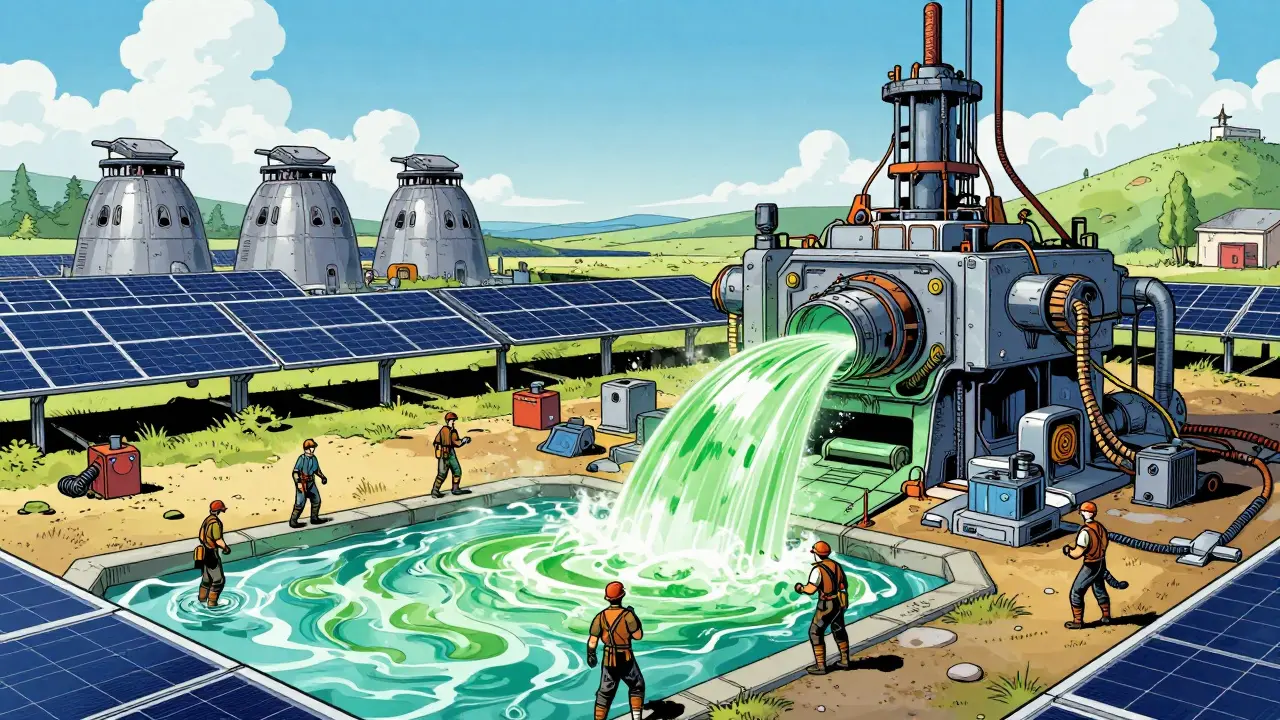
Industry experts have mixed views on mining's future. JPMorgan's September 2024 report forecasts that 68% of current mining operations will become unprofitable by 2026 without efficiency improvements. However, CoinShares' August 2024 analysis projects mining will remain viable through 2140 due to increasing transaction fee revenue compensating for declining block rewards. Nic Carter of Castle Island Ventures predicts 45% of Bitcoin mining will use stranded energy sources like geothermal or flared gas by 2027. This shift toward renewable energy is already happening-geothermal and flared gas operations now control 18.7% of Bitcoin's hash rate, creating an 11.3% cost advantage over grid-powered miners.
Frequently Asked Questions
What is a good hash rate for Bitcoin mining?
It depends on your hardware and electricity costs. Top ASIC miners like the AntMiner S21e XP Hyd (860 TH/s) are standard for serious miners. However, profitability requires electricity costs below $0.08/kWh. Miners with higher costs often struggle after halving events.
How often does Bitcoin's network difficulty adjust?
Every 2,016 blocks, roughly every two weeks. Difficulty increases or decreases based on the network's total hash rate. After the April 2024 halving, difficulty rose 4,812% since January 2020, meaning miners need more efficient hardware to stay profitable.
Can I mine Bitcoin profitably with a GPU?
Generally no. High-end GPUs like the RTX 4090 only generate $0.50 daily in Bitcoin, while electricity costs often exceed that. GPU mining is viable for other coins like Ethereum Classic, but Bitcoin requires specialized ASIC hardware for profitability.
What's the biggest risk in Bitcoin mining?
Electricity costs. Miners with rates above $0.08/kWh face significant margin compression post-halving. For example, a miner with $0.12/kWh electricity could lose $1,200 monthly even with top-tier hardware. Location matters-regions with cheap power like Iceland or Texas offer better returns.
When will Bitcoin mining become unprofitable?
It varies. JPMorgan projects 68% of current operations will become unprofitable by 2026 without efficiency improvements. However, miners using renewable energy sources like geothermal or flared gas can maintain profitability longer due to lower costs. Transaction fees may eventually compensate for declining block rewards, extending mining viability beyond 2140.
Olivette Petersen
February 7 2026Bitcoin's hash rate hitting 690 EH/s is absolutely incredible! It's a testament to the network's resilience and growth. I've been mining for a few years now, and the key to staying profitable is finding cheap electricity. For me, solar power makes all the difference. Even after the halving, my setup is still in the black. The industry is shifting towards renewable energy, and that's a huge win for sustainability. Geothermal and flared gas operations are becoming more common, which is great for reducing costs. If you're struggling with high electricity bills, look into alternative energy sources. Places like Iceland and Texas offer amazing rates. Keep pushing forward, miners! The future is bright if you stay efficient and adapt.
Michelle Anderson
February 7 2026690 EH/s? Pfft. All that power and most miners are still losing money. Electricity costs are the real killer here. Anyone with rates above $0.08/kWh is toast. JPMorgan's report said 47% margin compression post-halving. And you're telling me this is a good thing? The network's secure, sure, but who cares when miners are going bankrupt? It's all about who has the cheapest power, and the little guys don't stand a chance. This whole system is rigged for the big players. Stop pretending it's fair.
Danica Cheney
February 8 2026hash rate is up but what does it really mean? miners are struggling everywhere. electricity costs are everything. i mean, look at the numbers. s21e makes $39 a day but power costs eat most of it. if you're not in iceland or texas you're probably losing money. the halving was a disaster for most. but hey, maybe the future is better idk. just saying.
Matthew Ryan
February 10 2026It's true that electricity costs are the main factor. I've seen miners with low-cost power do well even after the halving. The key is optimizing your setup. Using efficient hardware like the AntMiner S21e helps, but finding cheap electricity is crucial. Maybe we should share resources or collaborate on energy solutions. It's possible to stay profitable if you're smart about it.
Joshua Herder
February 12 2026Oh, you think it's all about electricity costs? Let me tell you something, it's way worse than that. The whole mining industry is a pyramid scheme built on thin air. The network difficulty adjustments are just a way to keep the big players in control. Every time the difficulty goes up, it's another nail in the coffin for small miners. And the halving? That was just a setup for the next collapse. The numbers don't lie: 68% of operations will be unprofitable by 2026. But the media keeps painting a rosy picture. They're all in on the scam. It's not just about the money; it's about the environmental impact. Mining is a waste of energy, and the Bitcoin community is in denial. The fact that they're using renewable energy doesn't fix the core problem. It's all about who controls the hash rate, and it's not the little guys. I've been watching this for years, and it's clear that the system is broken. They're just delaying the inevitable. So yeah, 690 EH/s sounds impressive, but it's all smoke and mirrors. The real story is the slow-motion crash happening right under our noses. And nobody wants to talk about it. Because if they did, the whole house of cards would fall apart. But I'm just a nobody, right? What do I know? Just saying.
Molly Andrejko
February 13 2026Hey everyone, it's important to remember that Bitcoin mining is a complex ecosystem. While the hash rate is high, the profitability depends on so many factors. Electricity costs are indeed a major factor, but there are ways to mitigate them. For example, using renewable energy sources like geothermal or wind can really help. I've seen some great success stories from miners in Iceland and Texas. It's also crucial to stay updated on regulatory changes. The EU's MiCA framework might be challenging, but it's also pushing the industry towards sustainability. Let's all support each other and share knowledge. We're all in this together, and with the right approach, mining can still be viable. Keep learning, stay adaptable, and don't give up!
Jim Laurie
February 14 2026Yo, I feel ya on the electricity costs. It's the biggest hurdle. But check this out: I'm using a solar setup and it's been a game-changer. Even after halving, my profits are solid. The key is optimizing your setup. You don't need the latest ASIC to make it work. Maybe look into used hardware or community co-ops. The industry's moving towards renewables, and that's a good thing. It's not all doom and gloom. We can make this work if we collaborate. Stay positive, guys!
mahikshith reddy
February 16 2026The halving exposed the weak.
Brendan Conway
February 16 2026yeah, electricity is the real issue. even if you have good hardware, high power costs kill profits. but there are solutions. using renewable energy can help a lot. i've heard of miners using geothermal in iceland and it works great. maybe we should all share tips on how to cut costs. it's not impossible to stay profitable. just need to be smart about it.
Katie Haywood
February 18 2026Oh, so you think it's all about the hash rate? Haha. No. It's all about electricity costs. The numbers don't lie: $0.08/kWh is the cutoff. Anything above that and you're losing money. But hey, maybe you're lucky and have access to cheap power. Or maybe you're just delusional. Either way, the industry is changing. Renewable energy is the way to go. But don't take my word for it. Look at the data. It's all there.
Matt Smith
February 18 2026690 EH/s? More like 690 EH/s of doom. 💀 The network is secure? Yeah, but at what cost? Miners are getting crushed. Electricity costs are insane. The halving was a disaster. And the "renewable energy" angle? It's just greenwashing. The real problem is the entire system is rigged. The big players control everything. The little guys? They're just cannon fodder. I'm out. 💸
Josh Flohre
February 19 2026Electricity costs are indeed the primary factor in mining profitability. However, the claim that miners with rates above $0.08/kWh are unprofitable is an oversimplification. Many factors contribute to profitability, including hardware efficiency, maintenance costs, and operational overhead. The JPMorgan report cited is selective in its data and ignores regional variations. It's crucial to analyze the full picture before making sweeping generalizations. The industry is more resilient than commonly portrayed.
Jesse Pasichnyk
February 20 2026US mining is the best.