
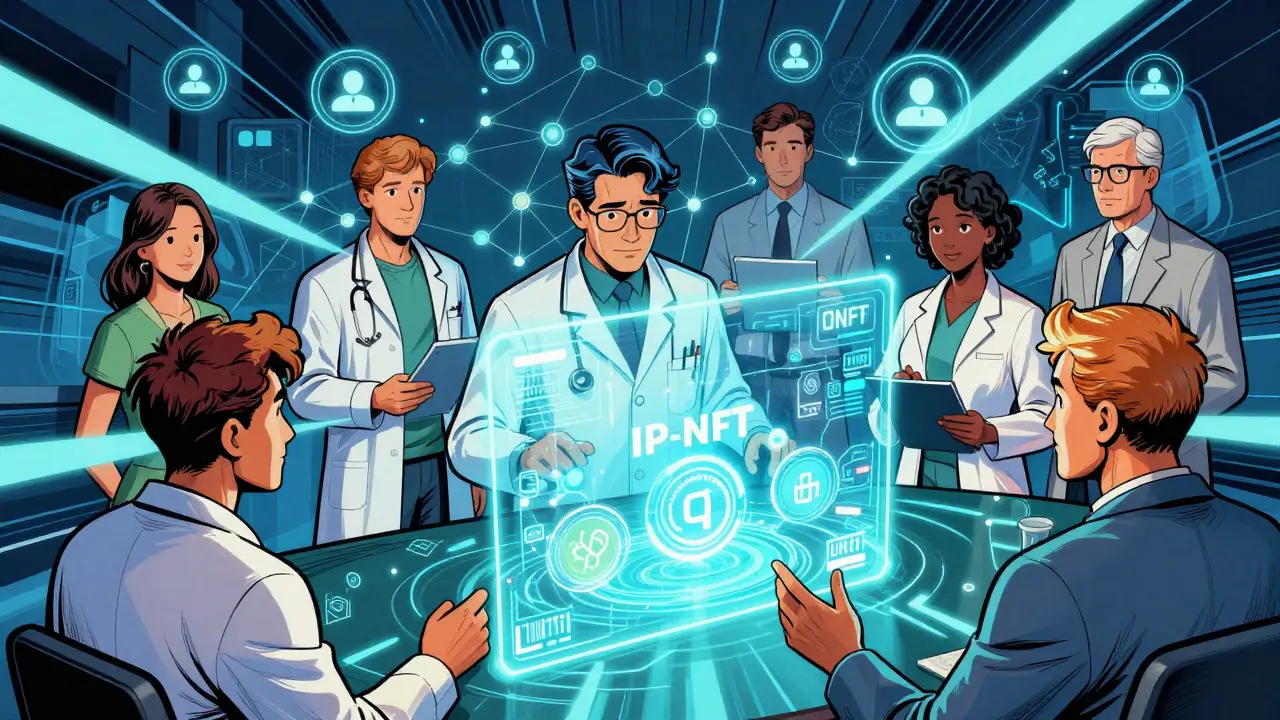
BioDAOs is a decentralized science (DeSci) blockchain protocol that uses cryptocurrency and DAO structures to fund biotech innovations through community ownership of intellectual property. Created by the team behind Molecule and VitaDAO, BioDAOs launched in early 2024 with backing from Binance Labs. It operates primarily as an ERC-20 token on Ethereum with contract address 0xcb1592591996765ec0efc1f92599a19767ee5ffa, though it also uses Solana for better scalability.
Imagine funding cancer research not through big pharma, but through a community of patients, scientists, and investors all owning a piece of the breakthrough. That’s exactly what BioDAOs does. Instead of waiting years for a single company to develop a drug, anyone can contribute to research they care about and share in the rewards when discoveries succeed.
How BioDAOs Works
BioDAOs isn’t just a coin-it’s a whole ecosystem built for biotech. Here’s how it breaks down:
- Community-Owned Research: Each BioDAO focuses on a specific area like longevity or rare diseases. Members vote on which projects to fund using BIO tokens.
- Tokenized IP: Successful projects turn patents or discoveries into IP-NFTs. These represent ownership shares that can be traded or held for future profits.
- Funding Mechanism: New projects get funding through the BIO Launchpad. The protocol takes a 6.9% fee from token allocations to keep operations running.
- Incentives: The Bio/Acc rewards program gives 4% of total tokens (133 million BIO) to users who participate in curation, staking, or project development.
For example, VitaDAO-a BioDAO focused on longevity-has funded 24 projects with over $4.2 million. Members track every dollar spent and see how it leads to real-world results, like new anti-aging therapies.
Key Features of BioDAOs
BioDAOs stands out because it’s built specifically for biotech-not general blockchain use. Here’s what makes it unique:
- Decentralized Curation: BIO token holders vote on projects. This ensures community-driven research priorities, not just venture capitalists.
- BIO Launchpad: New BioDAOs apply here for funding. The community decides which projects get support.
- BioDAO Incubator: Provides legal support, technical guidance, and marketing help to new projects.
- IP-NFTs and IPTs: Intellectual property is tokenized transparently, solving fragmented ownership in traditional biotech.
These features create a self-sustaining ecosystem. When a BioDAO successfully develops a drug, the IP-NFTs can be sold or licensed, generating returns for token holders.
Technical Details
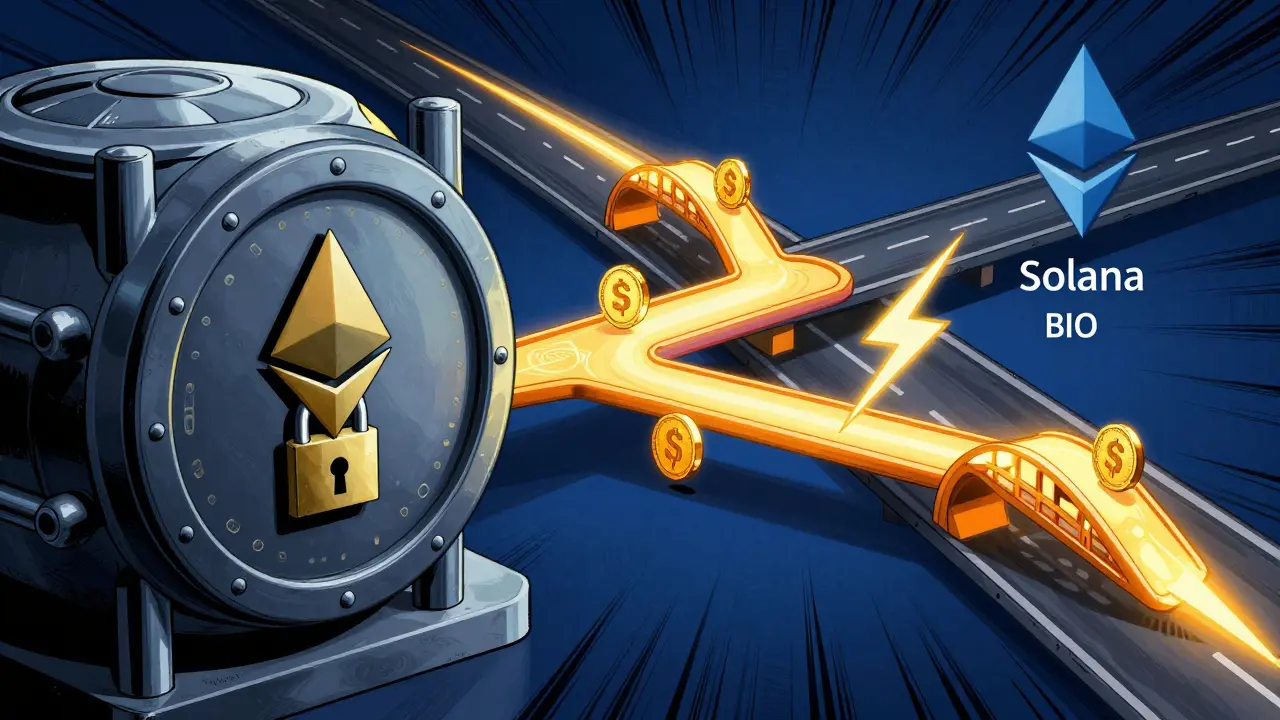
BioDAOs runs on a dual-chain setup: Ethereum for security and Solana for speed. Here’s what that means:
- Ethereum ERC-20 Token: The BIO token is an ERC-20 token with contract address 0xcb1592591996765ec0efc1f92599a19767ee5ffa. This ensures compatibility with most wallets and exchanges.
- Solana Integration: For smaller transactions, like micro-donations or community rewards, Solana handles the load. This keeps fees low and speeds up transactions.
- Token Supply: Max supply is 3.32 billion BIO. As of Q1 2026, 1.66 billion are in circulation. The rest is locked in vesting schedules for investors and the core team over six years to prevent market crashes.
- Revenue Model: BioDAOs earns fees from new projects (6.9%) and automated liquidity management. This keeps the ecosystem running without external funding.
This setup balances security and efficiency. When VitaDAO needed to fund a $100,000 research grant, it used Solana for the transaction to avoid high Ethereum gas fees.
Real-World Impact
BioDAOs isn’t theoretical-it’s already making waves in biotech. Here are two concrete examples:
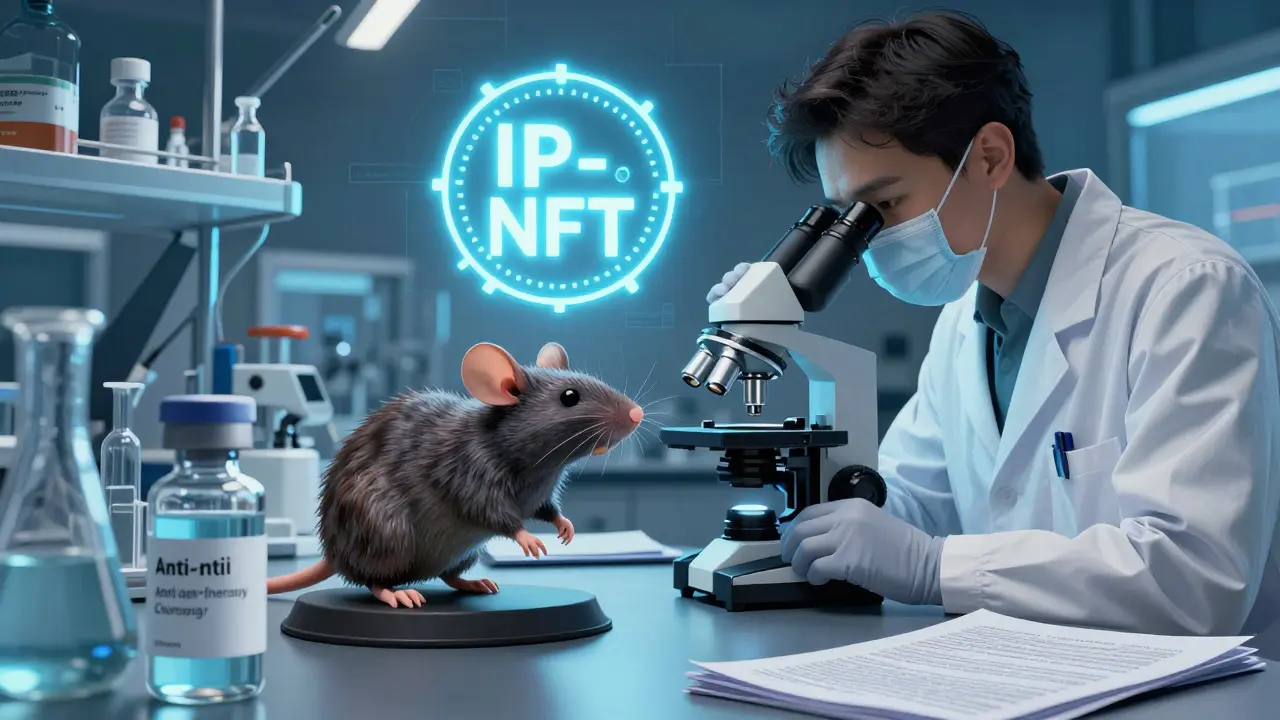
- VitaDAO: This BioDAO has raised over $6 million in liquid funds and funded 24 projects focused on extending human healthspan. One project developed a therapy that reduced cellular aging in mice by 30%, with results published in peer-reviewed journals. Members who staked BIO tokens received a 4x return when the IP was commercialized.
- HairDAO: This community focused on hair regeneration research. After successful early trials, they secured FDA approval for a topical treatment. Investors saw a 5x return on their initial $500 investment. However, delays in regulatory approval showed the challenges of navigating biotech regulations.
These examples highlight both the potential and the hurdles. While BioDAOs can fund innovative research faster than traditional methods, it still faces issues like regulatory uncertainty and technical complexity for non-blockchain users.
Challenges and Limitations
BioDAOs isn’t without its hurdles. Here are the biggest challenges it faces:
- Regulatory Uncertainty: The FDA and other agencies haven’t fully clarified how tokenized IP affects drug approval processes. This creates legal risks for projects trying to commercialize discoveries.
- Technical Barriers: Many scientists aren’t familiar with blockchain. Binance Academy’s 2026 survey found that new users take 2-3 weeks to learn the basics, which slows adoption.
- Capital Limitations: While BioDAOs excels at early-stage research, late-stage clinical trials require millions of dollars. Most BioDAOs lack the resources to fund these phases without outside investment.
- Gas Fees on Ethereum: High transaction costs on Ethereum can make small contributions uneconomical. That’s why Solana integration is crucial for day-to-day operations.
Despite these challenges, the protocol continues to evolve. For instance, the February 2026 cross-chain update between Ethereum and Solana reduced transaction fees by 75% for small contributions.
Getting Started with BioDAOs
If you’re a scientist, patient, or investor looking to get involved, here’s how to begin:
- Set Up a Wallet: Use a compatible wallet like MetaMask (for Ethereum) or Phantom (for Solana). Make sure it supports ERC-20 tokens.
- Buy BIO Tokens: Purchase BIO from exchanges like Binance or Coinbase. You’ll need these to participate in funding or voting.
- Join a BioDAO: Explore active communities like VitaDAO or HairDAO on the BioDAOs website. Read their project proposals and decide where to contribute.
- Stake and Vote: Stake BIO tokens to earn rewards and vote on which projects to fund. Your contribution directly shapes research priorities.
- Stay Informed: Join Discord or Telegram channels for updates. Community support is active, with average response times under 30 minutes for technical questions.
For scientists, BioDAOs offers a new way to fund research without corporate constraints. For patients, it’s a chance to directly support treatments for their conditions. And for investors, it’s a chance to back innovations with real-world impact.
What’s Next for BioDAOs?
The roadmap for 2026-2027 includes major upgrades:
- Q3 2026: Integration with clinical trial databases to track real-time research progress.
- Q1 2027: FDA-compliant data sharing frameworks to simplify regulatory approval.
- Ongoing: Expanded IP licensing mechanisms to make tokenized IP more tradable and valuable.
Industry analysts like Gartner predict BioDAOs will capture 35% of the DeSci market by 2027, but Deloitte warns regulatory hurdles could limit growth to 22%. Regardless, the protocol’s core mission-to democratize biotech innovation-remains clear.
Frequently Asked Questions
Is BIO a cryptocurrency or a protocol?
BIO is the native token of the BioDAOs protocol. The protocol itself is a decentralized science platform that uses BIO tokens to fund biotech research. Think of it like Ethereum: ETH is the token, but Ethereum is the blockchain network. Similarly, BIO powers the BioDAOs ecosystem, but the protocol includes the DAO structures, IP tokenization, and community governance.
How is BioDAOs different from traditional biotech funding?
Traditional biotech funding relies on venture capital or pharmaceutical companies, which often prioritize profitable drugs over niche or early-stage research. BioDAOs lets anyone contribute to projects they care about-patients funding treatments for their conditions, scientists backing their own research, and investors supporting innovations. Ownership is transparent and shared among contributors, not locked up by a single company. This creates faster funding cycles and more diverse research priorities.
What’s VitaDAO’s role in BioDAOs?
VitaDAO is one of the first and most successful BioDAOs. It’s a community focused on longevity research, operating under the BioDAOs protocol. VitaDAO has funded 24 projects with over $4.2 million, managed $6 million in liquid funds, and has 10,000+ members. It demonstrates how BioDAOs works in practice: members vote on projects, stake tokens, and share in IP profits. VitaDAO isn’t separate from BioDAOs-it’s a concrete example of a BioDAO built using the protocol’s tools.
Can I invest in BioDAOs projects as a regular person?
Yes! Unlike traditional biotech, where only accredited investors can participate, BioDAOs is open to anyone. You can buy BIO tokens on major exchanges, join a BioDAO like VitaDAO or HairDAO, and contribute as little as $50 to fund research. Your stake gives you voting power and potential returns if the project succeeds. For example, a Reddit user invested $500 in a VitaDAO token sale and earned $2,800 when the IP was commercialized in late 2025.
What are the biggest risks of using BioDAOs?
The main risks are regulatory uncertainty and technical complexity. The FDA hasn’t fully clarified how tokenized IP affects drug approvals, which could delay or block projects. Also, if you’re new to blockchain, setting up wallets and staking tokens can be confusing. Binance Academy’s survey found 78% of BioDAO formations require legal consultation to navigate IP ownership rules. Finally, while Solana helps with fees, Ethereum’s volatility can still impact larger transactions. Always do your research before investing.
Jordan Axtell
February 7 2026BioDAOs is cool, but let's be real-big pharma is still pulling the strings. They'll just co-opt it. But hey, at least we're fighting back. Maybe. I don't know. Maybe I'm just being paranoid. But seriously, we can't trust this. It's all just a facade.
Danica Cheney
February 9 2026bioDAOs sounds interesting but im too lazy to read all that. just say its good or bad. maybe its a scam. idk
Matthew Ryan
February 9 2026BioDAOs seems like a solid idea. Community-driven research could really help. But I'm not sure about the tokenization part. Maybe it's worth looking into more.
Mendy H
February 10 2026BioDAOs? More like BioBabble. Tokenizing IP? That's just jargon for 'we don't know what we're doing.' The FDA will never accept this. Save your money.
sabeer ibrahim
February 11 2026bioDAOs is a great initaitive, but the western-centric approach is flawed. India's biotech sector is way more innovative. This protocol needs to integrate with indian regulations. Otherwise, it's just another western scam.
Deeksha Sharma
February 13 2026This is truly revolutionary! Imagine a world where science is driven by the people, not corporations. BioDAOs could democratize healthcare. Let's all support this movement for a better future!
Taybah Jacobs
February 14 2026The BioDAOs protocol presents a compelling model for decentralized science funding. The integration of tokenized intellectual property is particularly noteworthy as it addresses longstanding issues in biotech IP management. Further exploration of this framework is recommended.
Alisha Arora
February 16 2026This is a disaster. People don't even know how blockchain works. They're just throwing money at it. It's going to fail. Trust me, I know.
Mrs. Miller
February 16 2026Ah, another 'decentralized' solution. Because what the world needs is more blockchain-based bureaucracy. But hey, maybe it'll work. Or maybe it'll just be another pyramid scheme. Either way, I'll be watching with popcorn.
Katie Haywood
February 17 2026BioDAOs seems cool, but let's be real: most people don't understand blockchain. This is going to be a mess. Still, maybe it'll work. I'll keep an eye on it.
aryan danial
February 17 2026BioDAOs... is a fascinating concept, but it's not without its flaws. The tokenization of IP, while innovative, could lead to regulatory nightmares. Also, the reliance on Ethereum and Solana-what happens when one chain goes down? It's a risky move. But hey, maybe it'll work. I don't know. Maybe I'm just being pessimistic.
Ryan Chandler
February 19 2026This is the future of science! BioDAOs is shaking up the industry. Imagine curing diseases with community power. It's revolutionary. I'm so excited. This is bigger than the internet. It's the next big thing!
Ajay Singh
February 19 2026BioDAOs is the future.
Oliver James Scarth
February 20 2026BioDAOs is an intriguing development, but it lacks the gravitas of British-led biotech initiatives. The UK's regulatory framework is far superior, and we should be leading such innovations. This protocol needs to align with our standards.
Kieren Hagan
February 22 2026The BioDAOs protocol offers a novel approach to biotech funding. The integration of blockchain technology for IP tokenization is a significant step forward. However, regulatory clarity remains essential for widespread adoption.
Kyle Pearce-O'Brien
February 24 2026BioDAOs is the pinnacle of decentralized science! 🌟 Tokenized IP-NFTs? Yes! This is the future. The Ethereum-Solana dual-chain architecture is *chef's kiss*. It's not just a protocol-it's a paradigm shift. 🚀✨