
Imagine trying to buy a coffee with Bitcoin. You pay $50 in fees for a $3 drink and wait ten minutes for the barista to get your confirmation. Frustrating, right? That’s the reality of on-chain congestion. But what if you could open a tab at the café, order hundreds of coffees over a month, and only settle the bill once at the end? That is essentially what State Channels do for blockchain networks. They move the heavy lifting off the main chain, letting you transact instantly and cheaply while keeping the security of the underlying ledger.
You might be wondering how this actually works without someone cheating or running away with the money. It’s not magic; it’s cryptography and smart contracts working together. State channels are a type of Layer 2 scaling solution. Unlike other fixes that try to change the base layer, these channels sit on top, handling the traffic so the main blockchain doesn’t crash under the weight of too many small transactions.
How State Channels Actually Work
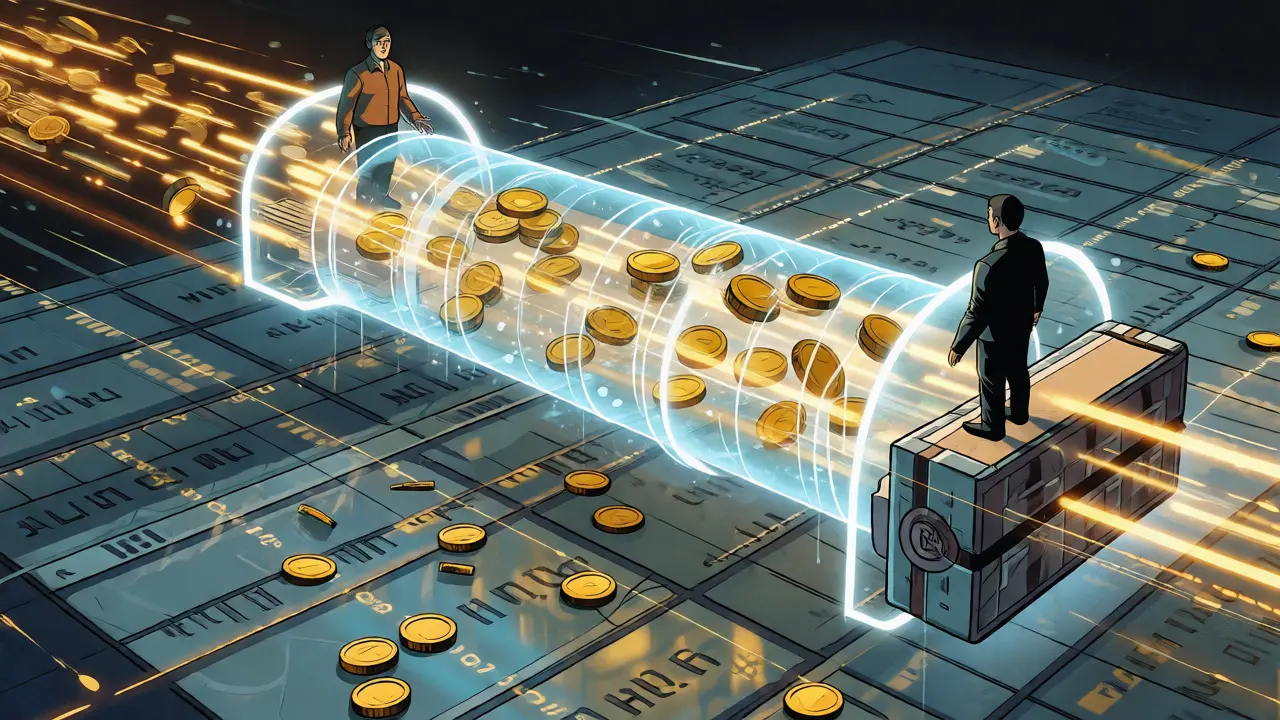
Think of a state channel like a private conversation between two people who agree on the rules before they start talking. First, both parties lock up some funds in a shared digital vault on the main blockchain. This is the "opening transaction." Once the vault is locked, you can send as many updates as you want between each other. These updates are signed messages that say, "Okay, I owe you $1," or "I owe you $5."
These intermediate steps happen completely off-chain. No miners are involved, no gas fees are paid, and the network isn’t burdened. When you’re done-maybe after a thousand micro-transactions-you close the channel. You submit the final balance to the blockchain, which distributes the funds accordingly. If one person tries to cheat by submitting an old, outdated balance, the other person can prove them wrong using the signed history. The system handles disputes automatically, ensuring fairness without needing a central judge.
The Massive Speed and Cost Benefits
The biggest win here is speed. On-chain transactions depend on block times. Bitcoin takes about 10 minutes; Ethereum varies but can still feel slow during peak hours. In a state channel, transactions are near-instantaneous because they don’t wait for a block to be mined. They are processed locally between participants.
Then there’s the cost. Every on-chain transaction costs gas. If you’re playing a game where you make 100 moves, paying gas for each move kills the experience. With state channels, you pay gas twice: once to open, once to close. The hundred moves in between are free. For high-frequency applications like gaming, micropayments, or real-time trading, this difference is night and day.
| Feature | On-Chain Transaction | State Channel Transaction |
|---|---|---|
| Speed | Minutes to hours (depends on network) | Near-instantaneous |
| Cost | Gas fee per transaction | Two gas fees total (open/close) |
| Privacy | Publicly visible | Private until closure |
| Throughput | Limited by block size/time | Virtually unlimited |
Why Developers Love Them (And Why Users Do Too)
Developers love state channels because they unlock use cases that were previously impossible. You can’t build a fast-paced multiplayer blockchain game if every move waits for a block confirmation. You can’t stream content and pay per second if each payment costs more than the content itself. State channels solve these bottlenecks.
For users, the benefit is seamless interaction. You don’t need to know you’re using a state channel. The app just feels faster. Privacy is another huge plus. Since intermediate transactions aren’t broadcast to the public ledger, your spending habits within that channel stay private. Only the final net result hits the blockchain. This is crucial for businesses that don’t want competitors seeing their daily transaction volumes in real-time.
Platforms like æternity have built native support for this, making it easier for developers to implement without complex custom code. Other major networks rely on protocols like Lightning Network for Bitcoin or Raiden Network for Ethereum, proving that this model works across different ecosystems.

The Catch: Collateral and Complexity
It’s not all sunshine and rainbows. There are trade-offs. To open a channel, you must lock up collateral. If you want to play a game with a $100 entry fee, that $100 is stuck in the contract until you close the channel. You can’t spend it elsewhere. For large institutions, this is fine. For a casual user wanting to buy a single coffee, locking up funds for a month-long channel might not make sense.
Managing channels can also get tricky if you’re interacting with many different people. If you’re a merchant accepting payments from thousands of customers, opening a separate channel with each one becomes unmanageable. This is why state channels work best for bilateral relationships (two parties) or small groups, rather than massive marketplaces. Some newer solutions try to route payments through existing channels to fix this, but complexity increases significantly.
When Should You Use a State Channel?
Ask yourself these questions:
- Do I need instant settlement? If yes, state channels are great.
- Am I making frequent transactions with the same person? If yes, the setup cost pays off quickly.
- Are my transactions small? Micro-payments benefit most from zero fees.
- Can I afford to lock up funds? If liquidity is tight, maybe wait for a different solution.
If you answered "no" to most of these, sticking with standard on-chain transactions might be simpler. But for gaming, IoT devices sending data constantly, or high-frequency trading, state channels are often the only viable option today.
What happens if my partner disappears with the funds?
Nothing bad happens to your funds. The smart contract holds the money, not your partner. If they go offline, you can close the channel unilaterally by submitting the latest agreed-upon state to the blockchain. After a challenge period, the funds are distributed according to that state. Your partner’s disappearance doesn’t mean they steal your money.
Are state channels secure?
Yes, they inherit the security of the underlying blockchain. Because the initial deposit and final settlement are on-chain, the main network ensures correctness. Cryptographic signatures prevent anyone from forging transactions. As long as the smart contract code is bug-free, the system is secure against fraud.
Can I use state channels for anything?
Not exactly. They work best for transferring value (coins/tokens) between known parties. They are less effective for complex smart contract executions that require global consensus or interactions with unknown third parties. They excel at simple value transfers and specific application states.
How is this different from sidechains?
Sidechains are independent blockchains connected to the main one. They have their own security model and validators. State channels are not separate chains; they are extensions of the main chain’s logic. State channels maintain the full security guarantees of the parent blockchain, whereas sidechains may have weaker security depending on their validator set.
Do I need special software to use state channels?
Usually, yes. You need a wallet or application that supports the specific state channel protocol (like Lightning for Bitcoin). However, modern wallets are increasingly integrating this functionality seamlessly, so the user experience is becoming indistinguishable from regular crypto usage.