Imagine selling Bitcoin for a massive profit and paying absolutely zero tax on that gain. For many investors, this sounds like a dream scenario found only in tax havens with questionable legal standing. Yet, in Singapore is a global financial hub known for its pro-business policies and lack of capital gains tax, this is the reality. As of 2026, Singapore remains one of the few major developed economies that does not impose a capital gains tax on individuals trading cryptocurrency.
This specific tax advantage has turned the city-state into a magnet for crypto enthusiasts, high-net-worth individuals, and major exchanges alike. But here is the catch: while the tax bill might be empty, the regulatory paperwork is not. The Monetary Authority of Singapore (MAS) enforces strict rules that distinguish between casual investing and running a business. Understanding this distinction is the difference between enjoying tax-free profits and facing hefty penalties or license revocations.
Why Singapore Has No Capital Gains Tax on Crypto
To understand why you don't pay tax on your crypto profits in Singapore, you first need to look at how the country handles wealth generally. Singapore simply does not have a capital gains tax law. Period. This applies to stocks, real estate, and yes, cryptocurrencies. When you sell an asset for more than you bought it, that increase in value is considered a capital gain, and the government takes no cut.
The Monetary Authority of Singapore (MAS) is the central bank and financial regulatory authority of Singapore regulates the space under the Payment Services Act (PSA). They classify cryptocurrencies as "digital payment tokens" or intangible property, not as currency. Because they are treated as property, the standard income tax rules apply only if the activity generates revenue through a business model. If you are just buying and holding, or even actively trading for personal investment purposes, the profits remain yours.
This clarity is rare. In many countries, the line between "investment" and "trading" is blurry, leading to audits and unexpected tax bills. In Singapore, the absence of capital gains tax removes that ambiguity for individual investors. You can trade Bitcoin, Ethereum, or Solana daily, and unless you are classified as a dealer or a business, those gains are tax-exempt.
The Critical Line: Investor vs. Business Trader
Here is where most people get tripped up. While there is no capital gains tax, there is corporate income tax. If the Inland Revenue Authority of Singapore (IRAS) determines that your crypto activities constitute a business, your profits become taxable income. The current corporate tax rate in Singapore is competitive, often around 17%, but it is still a cost you want to avoid if you qualify as an individual investor.
So, how do authorities decide if you are a business? They look at several factors:
- Frequency of Transactions: Are you buying once a year and holding, or are you executing hundreds of trades a day using automated bots?
- Duration of Holding: Short-term flipping suggests trading; long-term holding suggests investment.
- Volume of Trades: Massive volumes relative to your personal income raise red flags.
- Organization of Activities: Do you have an office, employees, and marketing materials promoting your trading strategy?
- Intent: Did you buy the asset primarily to resell it for profit, or to hold it as an investment store of value?
If you answer "yes" to most of these, IRAS may view you as a crypto dealer. In that case, your profits are subject to income tax. However, for the vast majority of retail investors who manage their own portfolios without employing staff or operating as a registered entity, the safe harbor of "personal investment" holds firm.
Regulatory Compliance: The Cost of Doing Business
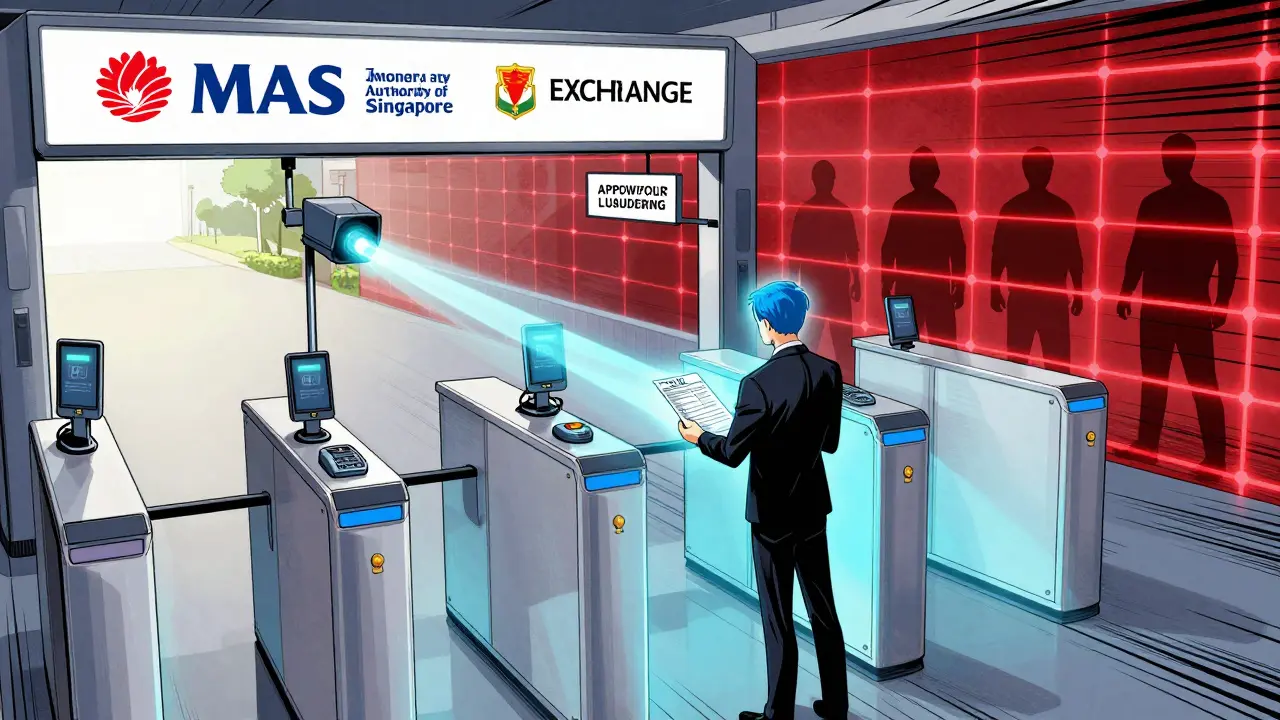
While individual investors enjoy tax freedom, businesses operating in Singapore face rigorous oversight. The Payment Services Act is Singapore's primary legislation regulating payment services and digital token transactions requires any company offering crypto-related services to obtain a license from the MAS. This includes exchanges, wallet providers, and initial coin offering (ICO) platforms.
Licensed Digital Token Service Providers (DTSPs) must adhere to strict Anti-Money Laundering (AML) and Countering the Financing of Terrorism (CFT) frameworks. This means implementing robust Know Your Customer (KYC) procedures, monitoring transactions for suspicious activity, and reporting fraud incidents immediately. The compliance burden is significant. Setting up a compliant crypto business in Singapore can take 6 to 12 months and cost between SGD 50,000 and SGD 200,000 in legal and advisory fees.
Why do companies bother? Because the license provides legitimacy. Major players like Binance, Coinbase, and Crypto.com have established operations in Singapore specifically to access this regulated, trustworthy market. The MAS has issued over 100 payment service licenses since the PSA took effect, signaling a commitment to fostering innovation while protecting consumers. For users, this means higher security standards and recourse in case of platform failure, which is a valuable trade-off for the regulatory complexity.

Comparing Singapore to Other Crypto Havens
Is Singapore the best place for crypto taxes? It depends on what you value. Let’s compare it to other popular jurisdictions as of 2026.
| Jurisdiction | Capital Gains Tax | Personal Income Tax on Crypto | Regulatory Clarity |
|---|---|---|---|
| Singapore | 0% (for individuals) | Only if deemed a business | High (MAS Licensed) |
| Cayman Islands | 0% | 0% | Moderate (VASP Act) |
| Portugal | 28% (short-term), 0% (long-term) | Varies by residency | Moderate |
| Germany | 0% (if held >1 year) | Taxable after 1 year | High |
| El Salvador | 0% (Bitcoin is legal tender) | N/A | Low (Emerging Framework) |
The Cayman Islands offer a similar 0% tax rate but lack the same level of economic infrastructure and political stability as Singapore. Portugal recently changed its laws, taxing short-term gains, which makes it less attractive for active traders. Germany offers a tax-free window if you hold assets for more than a year, which is great for HODLers but terrible for day traders. Singapore stands out because it combines zero capital gains tax with a world-class banking system, strong rule of law, and clear regulatory guidelines. You aren't just saving money; you're gaining access to a stable ecosystem.
How to Benefit: Residency and Practical Steps
You cannot simply open a Singaporean bank account and claim tax benefits. To legally benefit from the tax regime, you generally need to be a tax resident. The definition of tax residency in Singapore is based on physical presence. You typically need to spend at least 183 days in Singapore during the calendar year. Alternatively, if you work in Singapore, you may be considered a resident if you stay for 182 days or more in any 12-month period ending in the relevant year.
For high-net-worth individuals, establishing residency involves more than just showing up. You need to demonstrate strong economic ties, such as owning property, having family residing there, or maintaining a local business. The process is straightforward for those already working in the region but requires careful planning for remote workers or digital nomads. Note that Singapore does not currently have a dedicated "crypto visa," so you must fit into existing employment or entrepreneur pass categories.
Once you are a resident, managing your crypto portfolio becomes simpler. You don't need complex accounting software to calculate capital gains because there are none to report. However, you should still keep records of your transactions. Why? Because if you ever sell a large amount and move funds internationally, banks will ask for the source of funds. Having a clear trail of purchases and sales proves that the money comes from legitimate investments, not illicit activities. This documentation satisfies AML requirements rather than tax obligations.
Risks and Pitfalls to Avoid
Even in a tax-friendly environment, mistakes happen. One common pitfall is ignoring Goods and Services Tax (GST). While capital gains are tax-free, spending crypto on goods and services can trigger GST. If you use Bitcoin to buy a car, the transaction is treated as a barter trade. The seller must charge GST on the value of the car, and you, as the buyer, bear that cost. Currently, the GST rate in Singapore is 9% (as of 2024, rising from previous rates). Always factor this into your budget when using crypto for payments.
Another risk is accidental business classification. If you start teaching others how to trade, charging fees for signals, or managing funds for friends, you cross the line from investor to service provider. This triggers licensing requirements under the Payment Services Act. Operating without a license can result in fines up to SGD 1 million and imprisonment. Always consult a legal expert before monetizing your crypto knowledge or services.
Finally, be wary of scams. The regulatory clarity in Singapore attracts legitimate businesses, but it also gives scammers a veneer of credibility. Just because a platform claims to be "MAS-regulated" doesn't mean it is. Always verify the license status on the official MAS website. The regulator maintains a public register of licensed payment service providers. If a platform isn't on that list, treat it with extreme caution.
The Future of Crypto Taxation in Singapore
Will this change? It is possible. Global tax cooperation is increasing, with organizations like the OECD pushing for greater transparency. However, Singapore has shown no immediate signs of introducing a capital gains tax. The government views its current policy as a competitive advantage that attracts talent and capital. The focus remains on strengthening anti-money laundering controls and consumer protection rather than changing the tax code.
Industry analysts predict that Singapore will continue to refine its regulatory sandboxes, allowing innovative projects to test new models under supervision. This approach balances growth with safety. For investors, this means the current favorable tax treatment is likely to remain stable for the foreseeable future. The key is to stay informed about updates to the Payment Services Act and MAS guidelines, as compliance requirements tend to tighten even when tax rates stay low.
In summary, Singapore offers a unique combination of tax efficiency and regulatory rigor. By understanding the distinction between personal investment and business activity, respecting KYC/AML protocols, and verifying the legitimacy of platforms, you can maximize your crypto returns without worrying about capital gains tax. It is not a loophole; it is a well-defined legal framework designed to support responsible innovation.
Is cryptocurrency trading completely tax-free in Singapore?
For individual investors, capital gains from cryptocurrency trading are tax-free. However, if you are classified as a business or dealer, your profits are subject to corporate income tax. Additionally, spending crypto on goods may incur Goods and Services Tax (GST).
Do I need a license to trade crypto in Singapore?
No, individual investors do not need a license to buy, sell, or hold cryptocurrency. Licenses are required only for businesses providing payment services, such as exchanges, wallet providers, or ICO platforms, under the Payment Services Act.
How does MAS define a crypto business vs. an investor?
The Inland Revenue Authority of Singapore (IRAS) looks at factors like transaction frequency, volume, duration of holding, and organizational structure. High-frequency trading, large volumes, and structured operations suggest a business, while occasional trading suggests personal investment.
Can non-residents benefit from Singapore's crypto tax laws?
Generally, no. To benefit from the tax regime, you usually need to be a tax resident, which requires spending at least 183 days in Singapore per year or demonstrating strong economic ties. Non-residents may still face tax obligations in their home countries.
What happens if I use crypto to buy goods in Singapore?
Using crypto to purchase goods is treated as a barter transaction. While the capital gain itself is not taxed, the purchase of the good is subject to Goods and Services Tax (GST), currently at 9%. The seller must collect this tax from you.