
Bitcoin doesn’t behave like stocks, gold, or any traditional asset. Its price doesn’t rise because a company posted good earnings or because a central bank lowered interest rates. It rises because supply is shrinking - and that’s all thanks to something called a halving.
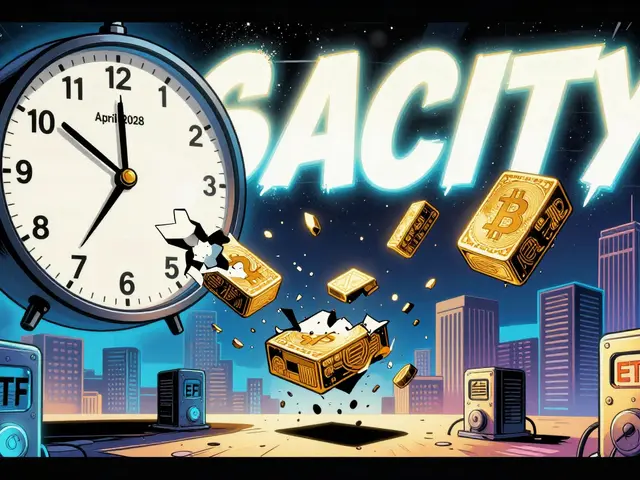
Every four years, Bitcoin cuts the number of new coins miners earn for securing the network. This isn’t a guess. It’s coded into the protocol. And every time it happens, the price doesn’t just react - it often explodes. The last halving was in April 2024. The next one? April 2028. But what does this actually mean for the price? And why does it keep happening the same way?
What Exactly Is a Bitcoin Halving?
Bitcoin’s total supply is capped at 21 million coins. That’s it. No more. No printing more like the Fed does with dollars. New bitcoins are created through mining - when computers solve complex math problems to verify transactions and add them to the blockchain. For their work, miners get rewarded in new BTC.
When Bitcoin launched in 2009, that reward was 50 BTC per block. Every 210,000 blocks - roughly every four years - that reward gets cut in half. That’s the halving.
Here’s how it’s changed:
- 2009: 50 BTC per block
- 2012 (first halving): 25 BTC per block
- 2016 (second halving): 12.5 BTC per block
- 2020 (third halving): 6.25 BTC per block
- 2024 (fourth halving): 3.125 BTC per block
- 2028 (next halving): 1.5625 BTC per block
Each time, the rate of new supply entering the market drops by 50%. That’s not a small tweak - it’s a seismic shift in scarcity. And scarcity, when paired with steady or growing demand, drives price up.
How Halvings Have Moved the Price (Historically)
Let’s look at what actually happened after each halving. Not predictions. Real data.
First Halving - November 2012
Bitcoin was still a curiosity. Price: around $12. Within five months, it hit $229. By the end of 2013? Over $1,100. That’s an 1,800% jump in under six months. No one expected it. But the math was clear: fewer new coins, same demand = higher price.
Second Halving - July 2016
By now, Bitcoin had a real user base. Price on halving day: $640. Within a year? Over $20,000. The bull run that followed wasn’t just hype - it was fueled by institutional interest and growing media coverage. The halving acted like a catalyst.
Third Halving - May 2020
This one was different. The world was in lockdown. Central banks flooded markets with cash. Bitcoin’s fixed supply looked like a lifeline. Price before halving: around $9,000. After? It dipped slightly, then shot past $60,000 in 2021. The narrative shifted: Bitcoin wasn’t just tech - it was digital gold.
Fourth Halving - April 2024
Price hit $73,750 in March - just before the halving. On halving day, it was at $63,000. No fireworks. No panic. Why? Because the market had already priced it in. Traders, hedge funds, and ETFs had been buying for months. The halving didn’t surprise anyone. But after a brief consolidation, price climbed again - reaching $70,000 by June 2024 and holding strong.
Each halving produced a bull market. Not immediately. Not always smoothly. But always.
Why Does Price Go Up After Halving?
It’s not magic. It’s basic economics: supply and demand.
Before a halving, miners are rewarded with 6.25 BTC per block. After? 3.125. That means half the new coins enter circulation every 10 minutes. Fewer coins = less selling pressure from miners. Miners used to sell half their reward to cover costs. Now they sell less. That reduces supply on the open market.
At the same time, demand doesn’t stop. More people are using Bitcoin. More companies accept it. More ETFs are approved. More countries are exploring it as reserves. Demand increases. Supply drops. Price goes up.
There’s also psychology. Bitcoiners expect the halving. They talk about it. They buy in anticipation. That momentum builds over months - and when the event happens, it’s not a surprise, it’s a confirmation.
What Happens to Miners?
Miners are the backbone of Bitcoin. They run powerful machines, pay for electricity, and maintain the network. When their reward drops by half, many go out of business - especially those using old, inefficient gear.
After the 2024 halving, Bitcoin’s hash rate (total mining power) dropped by 15% in the first week. That’s normal. But within 30 days, it bounced back - and then kept climbing. Why? Because price rose. As Bitcoin’s value increased, mining became profitable again. Miners upgraded hardware. New players entered. Efficiency became king.
The lesson? Miners don’t disappear. They adapt. The ones who survive are the ones with low-cost energy, modern rigs, and long-term patience. The halving weeds out the weak - and strengthens the network.
The Bigger Picture: Bitcoin as Digital Gold
Halvings aren’t just technical events. They’re economic ones. They prove Bitcoin works as designed.
Fiat currencies lose value over time. The dollar you had in 2000 is worth less than half today. Bitcoin’s supply is fixed. And with each halving, it becomes harder to create new coins. That’s why institutions now treat Bitcoin like a store of value - not just a speculative asset.
After the 2020 halving, BlackRock, Fidelity, and MicroStrategy all started buying Bitcoin. Why? Because they saw the halving as a signal: this asset is scarce. And scarcity in a world of endless money printing is valuable.
What to Expect After the 2024 Halving
The 2024 halving didn’t trigger a wild price spike right away. But that doesn’t mean it failed. It means the market matured.
Here’s what’s likely to happen next:
- 2025: Price stabilizes between $70,000 and $100,000. More institutional inflows. More ETF approvals.
- 2026: If inflation stays high and interest rates fall, Bitcoin could hit $120,000-$140,000. Historical cycles suggest this is the sweet spot.
- 2027: Momentum builds toward the next halving. Trading volume increases. Media attention spikes.
- 2028: Halving #5. The cycle repeats - but this time, with even more capital behind it.
Don’t expect a 10x in 6 months like in 2013 or 2017. The market is too big now. But a 2x-3x over 18-24 months? That’s still very realistic.
Common Myths About Halvings
Let’s clear up some noise:
- Myth: Halving = instant price surge.
Truth: It takes 6-18 months. The price starts rising months before, peaks months after. - Myth: Halving guarantees profit.
Truth: No asset is guaranteed. If macro conditions crash (recession, regulation crackdown), price could stall. But history shows halvings still win. - Myth: Miners will quit and the network will break.
Truth: Hash rate always recovers. Bitcoin’s difficulty adjustment ensures mining stays profitable for efficient operators.
What’s Next? The 2028 Halving and Beyond
The next halving in 2028 will cut the reward to 1.5625 BTC. By then, over 90% of all Bitcoin will already be in circulation. The last coins won’t be mined until around 2140.
What does that mean? Bitcoin becomes more like gold - not something you mine daily, but something you hold. The halving cycle isn’t just a feature. It’s the reason Bitcoin exists.
As the world faces more economic uncertainty, more currency devaluation, and more distrust in central banks, Bitcoin’s programmed scarcity will become even more valuable. The halving isn’t an event. It’s a promise: supply is finite. And that’s worth something.
Does Bitcoin halving always cause a price increase?
Historically, yes - every halving since 2012 has been followed by a major price increase within 12-18 months. But past performance doesn’t guarantee future results. Market conditions, regulation, and global economics all play a role. Still, the scarcity mechanism has held true across four very different economic eras.
Can Bitcoin’s price drop after a halving?
Yes, briefly. After the 2020 halving, Bitcoin dropped 20% in the first week. After 2024, it dipped below $60,000 before recovering. This happens because some traders take profits, or macro events (like a stock crash) overshadow Bitcoin. But these dips are temporary. The long-term trend has always been up.
Why does Bitcoin’s price rise before the halving?
Because markets are forward-looking. Traders and institutions buy Bitcoin months ahead of the halving, betting on the scarcity effect. This builds momentum. By the time the halving happens, much of the price increase has already occurred. That’s why the event itself often feels anticlimactic - the surprise is gone.
Is the halving date fixed?
No. Bitcoin targets a new block every 10 minutes. If mining power increases, blocks come faster. If it drops, blocks slow down. The network adjusts difficulty every two weeks to keep block time steady. So while halvings happen roughly every four years, the exact date can shift by days or weeks. The next one is expected in April 2028, but it could be late March or early May.
How does halving affect Bitcoin’s long-term value?
It’s the core reason Bitcoin has value. Unlike dollars or euros, Bitcoin can’t be inflated. Halvings ensure the supply grows slower over time - eventually stopping entirely. That makes Bitcoin a rare digital asset. In a world where money is being printed endlessly, scarcity becomes the ultimate form of value.
lori sims
March 2 2026Man, I love how Bitcoin just quietly does its thing while the rest of the world panics over inflation. Halvings aren't flashy, but they're the quiet heartbeat of this whole thing. Every time I see someone comparing BTC to gold, I smile - because gold doesn't have a countdown timer built into its code. This isn't speculation. It's mathematics with soul.
Reggie Fifty
March 4 2026Stop pretending this isn't just a cult. Every halving is just a marketing stunt designed to get rubes to buy at the top. The price spikes because people get FOMO, not because of some magical scarcity. And don't even get me started on the 'digital gold' nonsense. Gold has industrial uses. Bitcoin has memes and overpriced ETFs.
Kristi Emens
March 6 2026I appreciate how the article breaks down the miner behavior after halvings. It's easy to forget that the network's health depends on them. The fact that hash rate rebounds after a dip shows Bitcoin's resilience. Not magic. Just incentives aligning over time.
Deborah Robinson
March 7 2026For anyone new to this, think of halvings like a birthday cake with fewer candles every four years. The cake doesn't disappear - it just gets rarer. And people start valuing it more because they know it won't be made again like this. That's the beauty of predictable scarcity.
Kaitlyn Clark
March 9 2026ok so like i just read this and i'm like wow the halving thing is so cool but also i think the real reason btc goes up is because the fed is printing money like crazy and people are like 'ok i'll take the thing that can't be printed' lol i'm not a fin nerd but this makes sense??
Amanda Markwick
March 10 2026The real genius of Bitcoin isn't the halving - it's the fact that the halving is predictable, transparent, and unchangeable. No central bank, no politician, no lobbyist can alter it. That’s why institutions are moving in. They don’t trust paper money anymore. They trust code that hasn’t been broken in 15 years. The halving is just the visible symptom of a deeper truth: value is being redefined by mathematics, not politics.
Nicki Casey
March 11 2026Let me be clear: this entire narrative is a construct of Wall Street and crypto influencers working in tandem to create artificial scarcity. The halving is not a natural economic phenomenon - it is a programmed event designed to mimic scarcity in a system that could have been designed to be infinitely scalable. The fact that people believe this is evidence of mass psychological manipulation. The real story? The U.S. government quietly controls the majority of mining infrastructure through shell entities. The halving is a distraction. The real power lies in who controls the ASIC factories.
Jessica Carvajal montiel
March 12 2026Everyone’s acting like halvings are some divine law. Newsflash: the price doesn’t always go up. In 2014, after the first halving, BTC crashed 80% over the next year. In 2022, after the 2020 halving, we had a 70% drawdown. The narrative is built on cherry-picked data. If you’re not considering macro cycles, regulatory crackdowns, and liquidity traps, you’re not analyzing - you’re praying.
maya keta
March 13 2026Look, if you're not holding BTC before a halving, you're already behind. This isn't crypto 2017. We're in the institutional phase now. ETFs, sovereign wealth funds, pension allocations - they're all playing the long game. The halving isn't a trigger. It's a confirmation that you were right to buy 18 months ago. If you're still asking 'why now?', you're not in the game. You're watching from the bleachers.
Curtis Dunnett-Jones
March 15 2026It is of paramount importance to recognize that the halving mechanism is not merely a technical adjustment but a foundational economic constraint embedded within the protocol. The reduction in block reward directly correlates with the marginal cost of production, which, when combined with increasing demand elasticity, creates a non-linear price response. This is not speculation. It is algorithmic scarcity in its purest form.
Sean Logue
March 16 2026Been mining since 2018. Saw the 2020 halving wipe out half my rigs. Thought I was done. But when BTC hit $60K, I bought a new rig with my profits. Now I'm running three. The network doesn't die - it just gets smarter. Miners don't quit. They upgrade.
Jeff French
March 16 2026Halving reduces supply. Demand stays steady or grows. Price goes up. That’s supply and demand 101. No need to overcomplicate it. The rest is noise.
Colin Lethem
March 17 2026Bro the fact that we’re already talking about 2028 like it’s a given is wild. We’re not even halfway through the last cycle and people are already planning their next Lambo. Bitcoin’s not a sprint - it’s a slow burn with occasional fireworks. I’m just here for the ride.
Michelle Mitchell
March 18 2026i think the halving thing is kinda overrated tbh like yeah supply goes down but what if no one cares anymore? what if everyone just uses eth or something? like who even uses btc anymore??