Why Bitcoin Costs More in Seoul
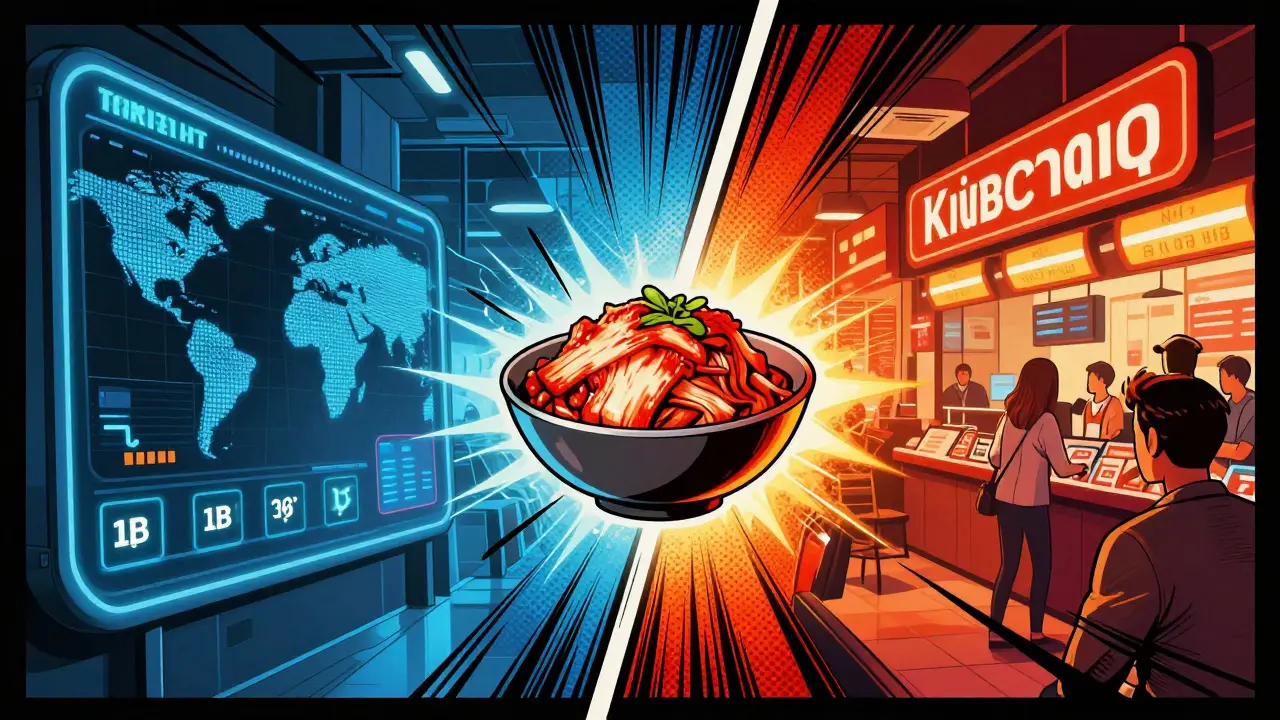
If you check the price of Bitcoin on a global exchange like Coinbase and then look at the price on a major South Korean platform like UpBit, you will often see a noticeable difference. The coin is almost always more expensive in Korea. This isn't a glitch or a temporary error. It is a persistent market phenomenon known as the Kimchi premium. Named after the country's famous fermented cabbage dish, this term describes the price disparity where cryptocurrencies trade at a higher value on South Korean exchanges compared to international markets.
You might wonder why such a simple arbitrage opportunity exists. In efficient markets, traders would buy low abroad and sell high locally until prices equalized. Yet, for nearly a decade, this gap has remained. Understanding the Kimchi premium requires looking beyond simple supply and demand. It forces us to examine how strict government regulations, capital controls, and unique local trading behaviors create an isolated financial bubble within a globally connected digital asset class.
The Mechanics of the Price Gap
To understand the scale of the issue, let's look at the math. If Bitcoin trades at $60,000 on Binance but hits $63,000 on Bithumb, the Kimchi premium is 5%. While that sounds small, it represents millions of dollars in potential profit if you could move money freely. Historically, the gap has been much wider. Research from the University of Calgary highlights that the premium first emerged in 2016 when Bitcoin prices began diverging significantly from US and European markets.
The situation peaked during the crypto boom of late 2017 and early 2018. In January 2018, the premium hit approximately 55%. There were even extreme cases documented by the Corporate Finance Institute where Bitcoin traded at $10,000 in the United States while pricing at $18,000 in South Korea, creating an 80% premium. Even in normal market conditions, however, the average hovers around 4.5%. This consistency suggests the cause is structural, not speculative.
| Period | Average Premium | Market Context |
|---|---|---|
| Normal Conditions (2020-2025) | ~4.5% | Stable regulatory environment, moderate volatility |
| January 2018 Peak | ~55% | All-time high BTC rally, intense local FOMO |
| Extreme Anomaly (2017) | Up to 80% | Severe liquidity crunch, maximum capital control friction |
Capital Controls: The Real Barrier
The primary reason the Kimchi premium persists is not a lack of smart traders, but the presence of formidable legal barriers. South Korea enforces strict capital controls managed by the Bank of Korea. These measures are designed to prevent rapid capital flight that could destabilize the won and the domestic economy. For a cryptocurrency trader, these rules act as a speed bump that kills arbitrage.
Imagine you spot a 10% premium. You want to buy Bitcoin on Coinbase with USD and sell it on UpBit for KRW. To do this legally and efficiently, you need to transfer fiat currency across borders instantly. South Korean banking regulations require extensive verification for large international transfers. Settlement times can stretch from days to weeks. By the time your funds arrive in Korea, the premium may have vanished, or the market may have moved against you. This delay makes traditional arbitrage practically impossible for most individuals and risky for institutions.
Furthermore, the South Korean government has implemented real-name bank account systems linked to national ID numbers. This means you cannot easily open a trading account on UpBit or Bithumb unless you are a resident with verified identity. International traders are effectively locked out of the local market, preventing them from selling their cheaply bought assets into the high-demand Korean pool.

Local Demand and the "Listing Pump"
While regulations keep money stuck, local enthusiasm keeps prices high. South Koreans are among the most active cryptocurrency traders in the world. The culture embraces risk-taking for potential high rewards. When global sentiment turns bullish, Korean investors rush to buy, driving up local prices faster than they rise elsewhere.
A unique driver of this demand is the "listing pump." When a new cryptocurrency gets listed on a major Korean exchange like UpBit or Bithumb, it triggers immediate buying frenzy. Traders anticipate that access to the massive Korean retail investor base will drive the price up. This creates a self-fulfilling prophecy where the mere announcement of a listing causes the asset's price to surge on local platforms, widening the Kimchi premium temporarily.
- High Retail Participation: A significant portion of the population actively trades crypto, unlike in some Western markets dominated by institutional holders.
- Risk Appetite: Local traders show a willingness to hold volatile assets longer, sustaining price floors.
- Exchange Loyalty: Users prefer trusted local platforms over foreign ones due to language barriers and perceived security.
Regulatory Friction and Anti-Money Laundering Rules
Beyond capital controls, South Korea maintains rigorous anti-money laundering (AML) legislation. These rules are designed to protect consumers and maintain financial stability, but they inadvertently sustain the price disparity. The government wants to ensure that every transaction is traceable and compliant. This creates an isolated market environment where prices can diverge significantly from global benchmarks without external correction.
The tension here is clear: blockchain technology operates independently of traditional financial oversight, yet the entry and exit points (fiat on-ramps and off-ramps) are heavily regulated. As long as the gateway between the global crypto market and the Korean fiat system remains narrow and monitored, the Kimchi premium will exist. Regulatory authorities worldwide study this dynamic. It serves as a case study in how centralized control can fragment decentralized markets.

Can You Profit From the Kimchi Premium?
For the average person, the answer is no. The logistical hurdles are too high. You need residency, verified bank accounts, and the ability to navigate complex tax reporting requirements. However, sophisticated players do find ways to exploit the gap, though not through simple cross-border transfers.
Some traders use P2P (peer-to-peer) platforms to bridge the gap. They might sell Bitcoin directly to a Korean buyer who pays via local bank transfer, bypassing the formal exchange settlement delays. Others engage in triangular arbitrage involving stablecoins. But these methods carry significant counterparty risk and regulatory scrutiny. The Korean government remains adamant about eliminating market irregularities, meaning successful arbitrage requires a deep understanding of local laws and substantial time investment.
What the Premium Tells Us About Market Maturity
Industry experts view the Kimchi premium as a barometer for local market sentiment. When the premium expands, it often signals excessive optimism or panic buying within South Korea. When it contracts, it may reflect regulatory concerns or a cooling of local interest. Technical analysts monitor this data to predict potential government interventions. Sustained high premiums often prompt regulators to tighten rules further, which can ironically freeze the premium in place.
As we move through 2026, the premium remains relevant. While the extreme 80% spikes of 2017 are unlikely to repeat, the structural gap persists. It demonstrates that even in a borderless digital economy, national borders still matter. The Kimchi premium is a reminder that regulation shapes reality just as much as code does.
What is the current Kimchi premium rate?
The Kimchi premium fluctuates daily based on market volatility and local trading volume. Under normal conditions in 2025-2026, it typically averages around 4.5%, but can spike higher during periods of intense buying pressure or regulatory uncertainty.
Why is Bitcoin more expensive in South Korea?
Bitcoin is more expensive in South Korea due to high local demand combined with strict capital controls that prevent easy arbitrage. Restrictions on moving money in and out of the country mean traders cannot quickly buy low abroad and sell high locally to equalize prices.
Can international traders exploit the Kimchi premium?
It is extremely difficult for international traders to exploit the premium directly. South Korean exchanges require local residency and ID verification for account creation. Additionally, banking restrictions make transferring fiat currency across borders slow and cumbersome, often causing the arbitrage opportunity to disappear before trades are completed.
Which exchanges contribute most to the Kimchi premium?
Major South Korean exchanges like UpBit and Bithumb are the primary drivers of the Kimchi premium. These platforms host the majority of local trading volume and are subject to specific regulatory frameworks that isolate them from global price discovery mechanisms.
Does the Kimchi premium affect cryptocurrencies other than Bitcoin?
Yes, the Kimchi premium affects various cryptocurrencies, although Bitcoin is the most closely monitored due to its liquidity and market cap. Altcoins, especially those newly listed on Korean exchanges, can experience even sharper price discrepancies due to lower global liquidity and localized hype.