You might have seen social media posts or Telegram groups claiming that Bird Finance is running a massive airdrop in partnership with CoinMarketCap. The promise is simple: connect your wallet to the HECO Chain, stake some tokens, and receive free rewards. It sounds too good to be true because it is. There is no official partnership between CoinMarketCap and Bird Finance(HECO), and engaging with these schemes puts your funds at severe risk.
The cryptocurrency space is filled with projects using similar names to confuse investors. Many users are looking for legitimate opportunities but end up interacting with defunct or malicious contracts. This guide breaks down exactly what Bird Finance(HECO) is, why the "CMC × BIRD" claim is false, and how you can protect your digital assets from these common traps.
The Myth of the CMC × BIRD Partnership
CoinMarketCap is one of the most trusted data aggregators in the industry. They do not randomly partner with small-cap DeFi protocols for airdrops without major public announcements. If a project like Bird Finance claims such a partnership, they are likely using CoinMarketCap’s name to lend false credibility to their offer. This is a classic social engineering tactic known as "authority bias," where scammers borrow trust from established brands to lower your guard.
When you search for this specific airdrop, you will find zero official statements from CoinMarketCap’s verified channels. Instead, you’ll find user-generated content on forums and unverified Telegram groups. These sources often push urgency, telling you that the airdrop window is closing soon. Always remember: legitimate partnerships are announced via official blogs, verified Twitter accounts, and reputable news outlets, not through anonymous DMs or random website pop-ups.
Did CoinMarketCap officially announce a partnership with Bird Finance?
No. There is no record of any official announcement from CoinMarketCap regarding a partnership or joint airdrop with Bird Finance(HECO). Any claims otherwise are unauthorized and likely fraudulent.
What Is Bird Finance(HECO)?
Bird Finance(HECO) launched as a cross-chain revenue aggregation protocol on the HECO Chain. Its contract address is 0xed6a...8b0f3d. The project marketed itself with complex mechanisms, including a "hyper-deflationary" model where 50% of the total supply was sent to a blackhole address at launch. The remaining tokens were subject to a 6% transaction fee, split evenly between liquidity pools, DAO governance, and token holders.
On paper, this sounded innovative. In reality, high-fee structures like this often lead to death spirals. As trading volume drops, the fees collected decrease, reducing the rewards for stakers. This causes more people to sell, further dropping the volume. By late 2025, data showed that Bird Finance(HECO) had effectively ceased operations. The circulating supply listed on major trackers was zero, indicating either technical abandonment or a complete halt in trading activity.
- Token Symbol: BIRD
- Blockchain: HECO Chain
- Max Supply: 10 Billion
- Status: Defunct / No Active Trading
- Last Verified Activity: Q1 2022
Confusion with Other "Bird" Projects
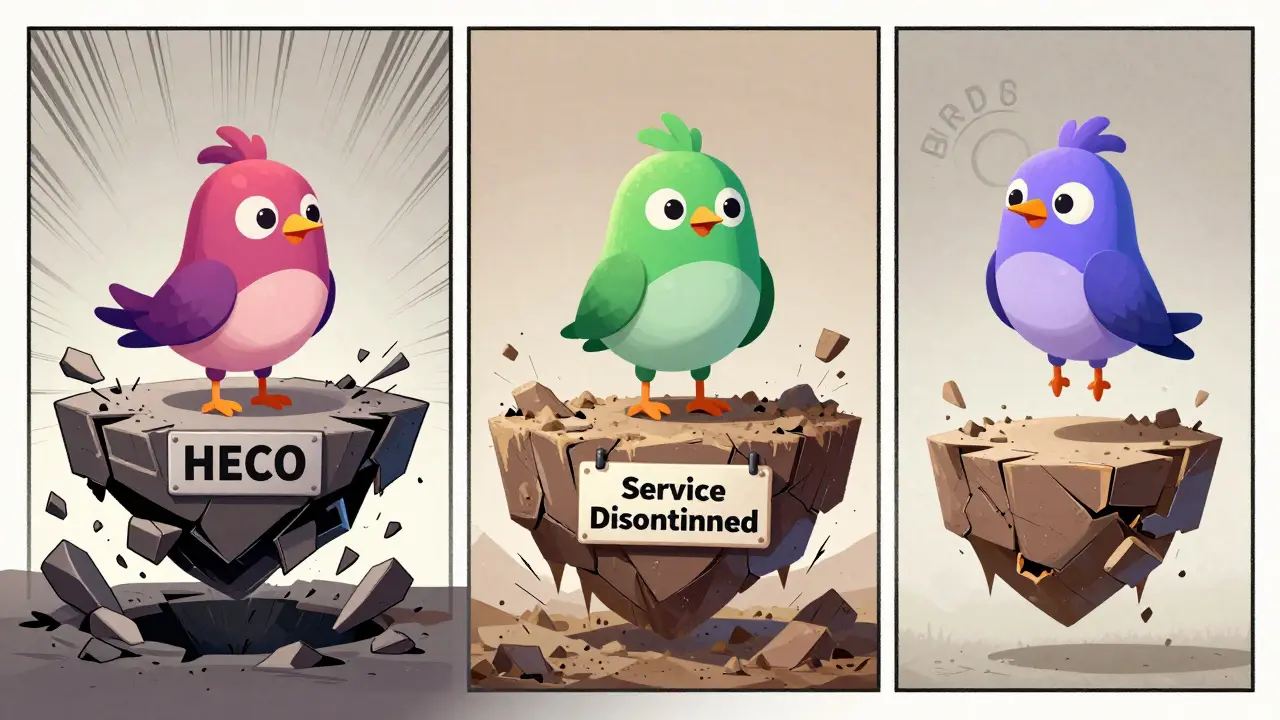
A major reason people get confused is the sheer number of projects using the word "Bird." You need to distinguish between three distinct entities:
- Bird Finance(HECO): The defunct yield aggregator discussed above. It has no active development team and its website returns 404 errors.
- Bird.Money: A separate entity operating on Ethereum. It aimed to provide risk analysis scores for DeFi lending. However, its GitHub repository shows no commits since June 2022, and its platform displays a "service discontinued" message.
- BIRDS Token: An unrelated token that conducted a Telegram-based airdrop. This has no connection to HECO or CoinMarketCap.
Scammers often exploit this naming overlap. They might send you a link for "Bird Finance" when you’re actually looking for "Bird.Money," hoping you won’t notice the different blockchain network or contract address. Always double-check the URL and the network you are connected to before signing any transactions.
| Project Name | Blockchain | Current Status | Risk Level |
|---|---|---|---|
| Bird Finance(HECO) | HECO Chain | Defunct (Website Down) | High (Scam Risk) |
| Bird.Money | Ethereum | Discontinued Service | Medium (Abandoned) |
| BIRDS Token | Varies | Active (Unrelated) | Low (If Legit) |
Red Flags That Signal a Scam
If you encounter an offer for a "CMC × BIRD" airdrop, look for these warning signs. They are universal indicators of fraudulent activity in the crypto space.
1. Unrealistic Returns Promises of guaranteed profits or free tokens worth hundreds of dollars are never real. Legitimate airdrops usually require significant past interaction with a protocol, not just clicking a button on a new website.
2. Broken Links and Dead Websites As of May 2026, the official domain for Bird Finance(HECO) does not resolve. If a project’s primary communication channel is offline, do not trust secondary links shared by strangers. These links often lead to phishing sites designed to drain your wallet.
3. Pressure Tactics Scammers create artificial urgency. Phrases like "Claim within 24 hours or lose out" are designed to bypass your critical thinking. Real companies give users ample time to verify information.
4. Unverified Contracts Before connecting your wallet, check the contract address on block explorers like Etherscan or HEChainScan. Look for warnings about "Honeypot" status or lack of verification. Bird Finance’s contract shows neutral reputation with no recent activity, which is a bad sign for any active project.
How to Protect Your Wallet
Safety in DeFi starts with hygiene. Here are practical steps to keep your assets secure when investigating airdrops.
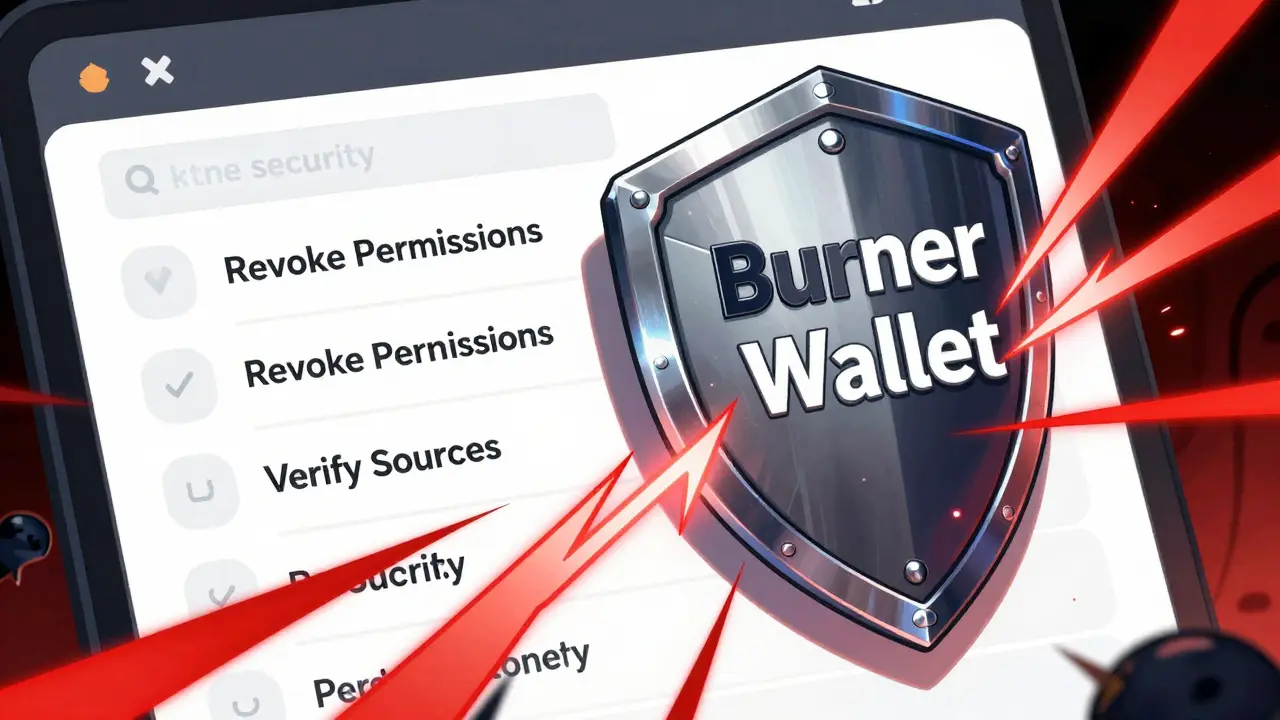
- Use a Burner Wallet: Never connect your main wallet holding long-term savings to unknown dApps. Use a separate MetaMask instance with minimal funds.
- Revoke Permissions: After interacting with any suspicious site, use tools like Revoke.cash to remove access to your tokens. Malicious contracts can sometimes hold approval to spend your assets later.
- Verify Sources Independently: Do not click links from Telegram or Discord. Go directly to the project’s official website via a search engine, then navigate to their docs or announcements section.
- Check Community Sentiment: Look for discussions on Reddit or Trustpilot. For Bird Finance, users reported losing thousands of dollars after staking, with the website disappearing shortly after deposits were made.
Is it safe to connect my wallet to Bird Finance(HECO)?
No. The project appears to be abandoned, and its website is non-functional. Connecting your wallet to dead or compromised contracts exposes you to potential exploits or phishing attacks.
Why do so many crypto projects fail quickly?
Many projects, especially those with hyper-deflationary models, suffer from unsustainable economics. High transaction fees reduce liquidity over time, leading to a collapse in trading volume and value. Industry reports show a failure rate exceeding 90% for such models within the first year.
Can I recover tokens if I sent them to a scam address?
Generally, no. Blockchain transactions are irreversible. Once tokens are sent to a malicious contract or address, they cannot be retrieved unless the scammer voluntarily returns them, which is extremely rare.
How can I verify if an airdrop is legitimate?
Check for official announcements on the project’s verified social media channels and website. Look for smart contract audits by reputable firms. If the only source of information is a third-party blog or social media DM, it is likely a scam.
What should I do if I already connected my wallet to Bird Finance?
Immediately disconnect your wallet from the site. Use a tool like Revoke.cash to revoke any token approvals granted to their contract. Monitor your wallet for unusual outgoing transactions and consider moving your remaining assets to a new, secure wallet.