
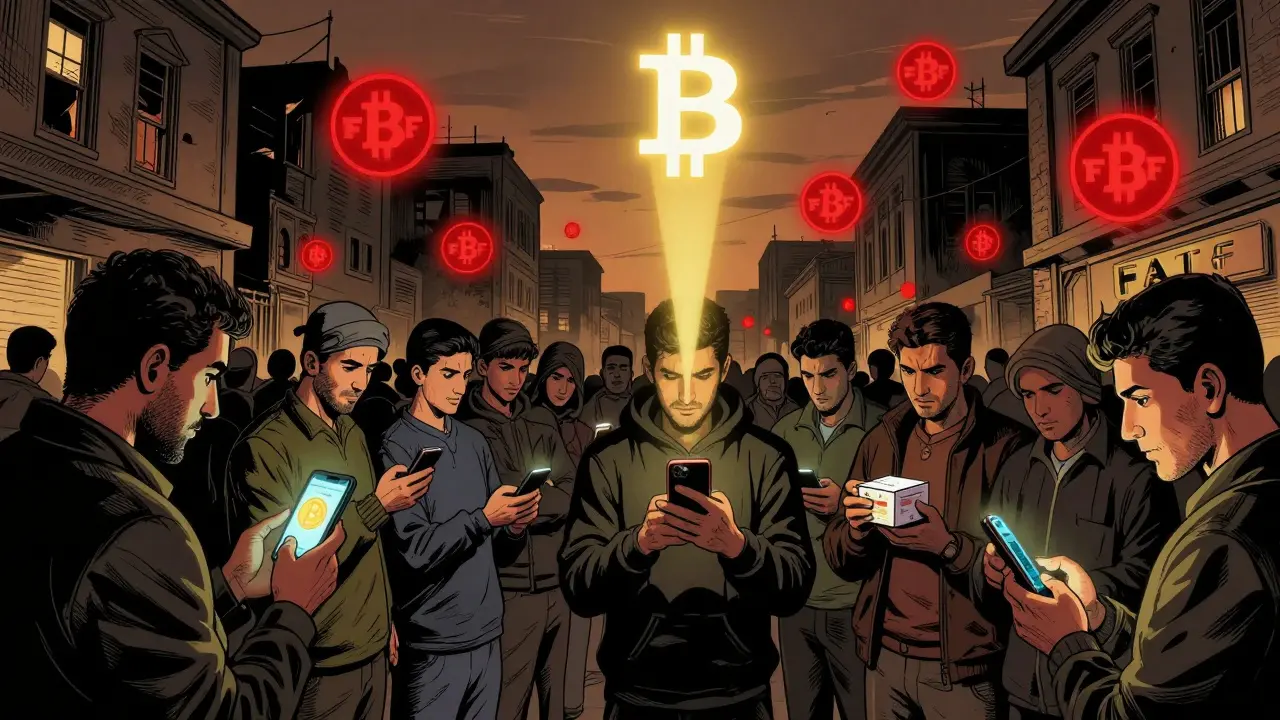
Iran has been on the FATF blacklist since 2019, and that hasn’t changed. As of October 2025, it’s still one of only two countries globally - alongside North Korea - under the Financial Action Task Force’s strictest countermeasures. For ordinary Iranians, this isn’t just a political footnote. It’s the reason their bank accounts are cut off from the world, their ability to pay for medicine or food from abroad is crippled, and their only lifeline to global commerce is cryptocurrency.
Why the FATF Blacklist Hit Iran So Hard
The FATF doesn’t just make recommendations. When a country lands on its blacklist, global banks are forced to treat every transaction involving that country as high-risk. That means freezing accounts, rejecting wire transfers, and shutting down correspondent banking relationships. Iran lost 25 of its 28 international banking connections between 2018 and 2025. SWIFT, the global payment network, no longer processes any Iranian transactions. No exceptions. Not for humanitarian aid. Not for food imports. Not for medical equipment. This wasn’t accidental. FATF’s goal was to pressure Iran into fixing its weak anti-money laundering and counter-terrorist financing systems. But instead of forcing compliance, it forced adaptation. Iranians didn’t stop using money - they switched to crypto.Crypto Became Iran’s Default Banking System
By 2024, Iran was the biggest driver of crypto inflows among all sanctioned countries. Chainalysis reported that $9.2 billion in cryptocurrency flowed into Iran that year - over half of the $15.8 billion total received by all sanctioned jurisdictions combined. That’s more than Russia, Venezuela, and North Korea put together. And it’s not because Iranians are crypto enthusiasts. It’s because they have no other choice. The numbers tell the story: 18.7 million Iranians - 42% of the adult population - now use cryptocurrency. That’s not a trend. That’s survival. When your bank won’t let you send money abroad, you turn to Bitcoin. When your government blocks international payment apps, you use a wallet on your phone. When your salary can’t be converted to dollars, you convert it to crypto.How Iranians Are Using Crypto - And What They’re Avoiding
Most Iranian crypto users aren’t trading for profit. They’re moving value. The dominant asset? Bitcoin. It makes up 78% of all crypto transactions from Iran. Why? Because it’s decentralized. Because it doesn’t need a bank. Because it can’t be easily blocked. Ethereum is second at 14%, mostly used for smart contracts and stablecoin bridges. Monero and other privacy coins make up 5% - used sparingly because they attract more attention from regulators. The average transaction size? Under $1,500. That’s not a coincidence. Users broke their money into smaller chunks to avoid triggering automated monitoring systems. The tools they use? Mobile wallets like Trust Wallet and Exodus. Not exchanges. Not bank apps. Wallets. Because centralized exchanges like Binance and Bybit freeze Iranian accounts the moment they detect FATF-related red flags. One Reddit user in Tehran reported his $8,200 account frozen after three small transfers. That’s not rare. A survey by Nobitex found 33% of Iranian users on global exchanges had accounts frozen in 2025.The Paradox: Compliance = Risk
Here’s the cruel twist: To send crypto internationally, Iranians need to go through exchanges that require KYC - identity verification. But if they provide ID, they risk being tracked by Iranian authorities. If they don’t, global exchanges freeze their accounts. Either way, they lose. Iranian exchanges like Nobitex and Wallex are caught in the middle. They’re licensed by the government, which demands they block cross-border transfers. So they built what they call a “halal blockchain” - a system that only allows domestic trading. But that’s useless for someone trying to buy medicine from Turkey or send money to family in Germany. So users go offshore. And that’s where things get messy. Iranian IP addresses are blocked by 99.8% of global exchanges. To get around that, users rely on Iranian-made anti-surveillance apps like Soroush+, which mask their location. But these apps have a 41% failure rate - meaning one in two attempts to connect gets blocked by the government.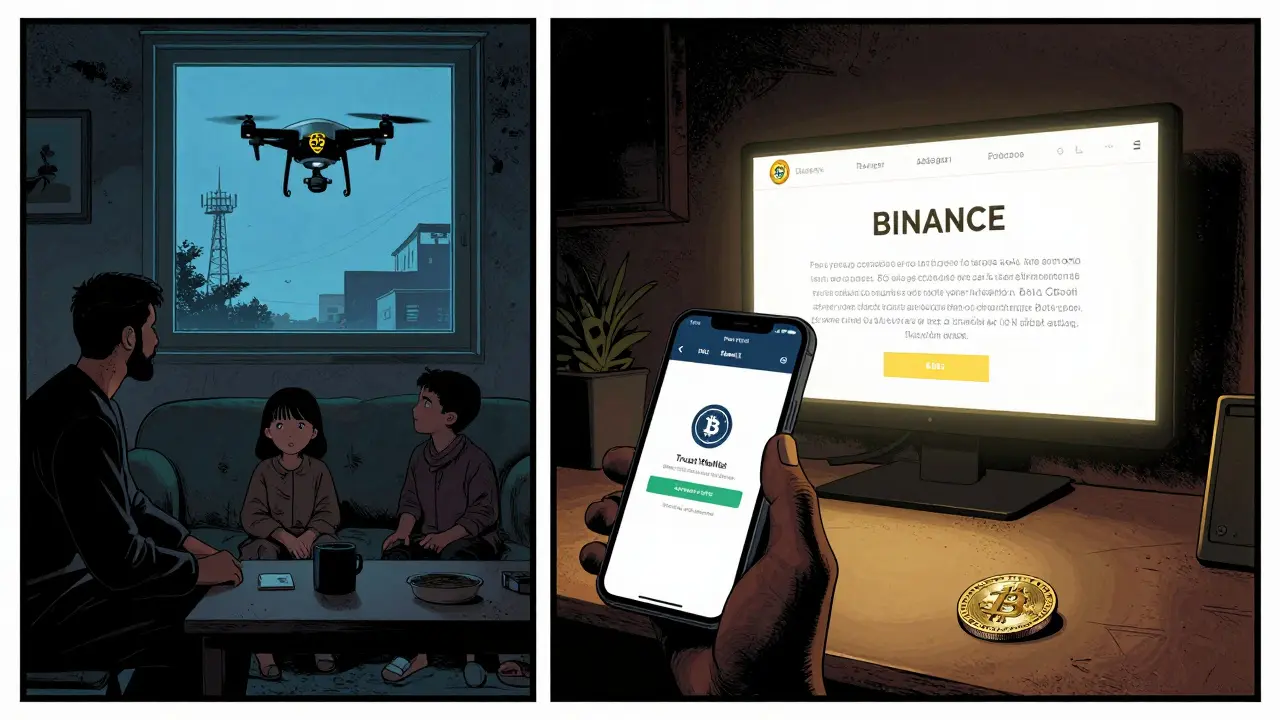
Peer-to-Peer Is the Only Real Workaround
The most reliable way Iranians move crypto now is peer-to-peer (P2P). Platforms like LocalBitcoins and Telegram-based trading groups have become the backbone of Iran’s crypto economy. A user in Shiraz might trade Bitcoin for Turkish Lira with someone in Istanbul using atomic swaps - a direct, trustless exchange that doesn’t go through any exchange. One user reported moving 2.3 BTC to Turkey in 17 minutes using this method. But it’s not free. P2P trades come with 15-22% premiums because sellers demand extra compensation for the risk. Still, 78% of P2P transactions succeed - far higher than the 63% success rate on decentralized exchanges like PancakeSwap, which suffer from low liquidity and high slippage.What Happens When Exchanges Crack Down
It’s not just exchanges that freeze accounts. In July 2025, a UAE-based exchange called Rain shut down all Iranian accounts after FATF issued a public warning. 317 users lost a combined $4.1 million overnight. No refunds. No appeals. Just silence. That kind of event doesn’t just hurt individuals - it erodes trust. Reddit’s r/CryptoIran, with over 12,000 members, is full of posts like: “I spent 3 months saving up to buy my daughter’s insulin. My wallet got frozen. I have no idea where the money went.” Meanwhile, Iranian authorities aren’t idle. The Central Bank throttles internet traffic during peak crypto hours (8-10 PM Tehran time), causing 74% of users to experience transaction failures. They’ve even blocked access to GitHub repositories like IranCryptoKit - open-source tools that help users bypass national firewalls.The Halal Stablecoin Experiment - And Why It Won’t Work
In August 2025, Iran’s Central Bank launched a gold-backed stablecoin called HSC. 4.2 million users transacted $280 million in its first month. Sounds promising? It’s not. The HSC is only usable inside Iran. It can’t be sent abroad. It can’t be traded on global exchanges. It’s not connected to any international blockchain network. It’s a domestic experiment - a digital version of the same failed system: isolated, controlled, and cut off from the world. KPMG’s June 2025 report called it “isolated from global liquidity pools.” In plain terms: it doesn’t solve the problem. It just gives the government more control.
Who’s Really Behind the Surge?
Some experts argue that crypto adoption in Iran is being driven by criminals. Dr. Reza Vafadari of the Middle East Institute says 61% of Iranian crypto transactions fund imports of prohibited goods - like dual-use tech or weapons components. But that’s only part of the story. The other 39%? That’s families paying for medical treatment. Students sending tuition. Small businesses buying raw materials. The same people who used to rely on bank wires now use QR codes. FATF’s own data shows that 93% of Iranian crypto users say they’d use it even more if the blacklist stayed. That’s not a crime wave. That’s a government failure.The Bigger Picture: Is the Blacklist Working?
FATF claims its blacklist is about compliance. But the evidence says otherwise. Iran has ratified three of twelve action plan items. It passed laws against terrorist financing. It signed international treaties. But FATF hasn’t moved it off the list. Dr. Emad Kiyaei, a sanctions expert in Switzerland, put it bluntly: “The blacklist has become counterproductive. It’s accelerating crypto adoption without reducing proliferation risks.” The numbers back him up. Iran’s crypto usage has grown 22% year-over-year. The number of users is projected to hit 25 million by 2027. Meanwhile, global banks still refuse to touch Iranian money. The sanctions haven’t changed Iran’s behavior. They’ve just pushed its economy underground - and into crypto.What This Means for the Future
Iran’s crypto ecosystem isn’t thriving because of innovation. It’s surviving because of desperation. Every wallet, every P2P trade, every atomic swap is a workaround for a broken system. There’s no easy fix. If FATF removes Iran from the blacklist tomorrow, the crypto usage won’t vanish. It’ll just shift - from survival tool to financial tool. But if the blacklist stays, the system will keep fracturing. More users will turn to decentralized networks. More exchanges will shut down. More money will disappear into the dark. The real question isn’t whether Iran is complying. It’s whether the world is willing to let millions of people be locked out of the global economy - and then act surprised when they find another way out.Is cryptocurrency illegal in Iran?
No, cryptocurrency is not illegal in Iran. The government has licensed 17 domestic exchanges and even launched its own gold-backed stablecoin. However, it strictly bans cross-border crypto transfers and monitors all transactions. Using crypto to bypass sanctions is illegal, but using it domestically for personal remittances or savings is tolerated.
Can Iranians use Binance or Coinbase?
Technically, yes - but not reliably. Binance and Coinbase block Iranian IP addresses 99.8% of the time. Even if users bypass the block using VPNs, accounts are routinely frozen due to FATF compliance rules. Over 33% of Iranian users on global exchanges report account freezes in 2025. These platforms avoid Iranian users to prevent regulatory penalties.
Why is Bitcoin the most used crypto in Iran?
Bitcoin is the most used because it’s the most decentralized and hardest to block. Unlike stablecoins or altcoins, Bitcoin transactions don’t require a central issuer or smart contract. It’s the only asset that can move across borders without relying on banks, exchanges, or government approval. It’s also the most liquid, making it the easiest to convert into goods or other currencies.
Do Iranian crypto users face arrest or punishment?
Most users aren’t targeted unless they’re involved in large-scale sanctions evasion or money laundering. The government focuses on exchange operators and businesses, not individual users. However, using crypto to import restricted goods (like military tech) can lead to prosecution. For average citizens using crypto to pay for medicine or send money home, enforcement is rare - but surveillance is constant.
What’s the success rate of crypto transfers from Iran?
It varies by method. Peer-to-peer (P2P) trades have a 78% success rate, but with 15-22% premiums. Decentralized exchanges (DEXs) like PancakeSwap succeed 63% of the time but suffer from 15% slippage. Centralized exchanges block 99.8% of Iranian IPs. The most reliable path is using non-custodial wallets and direct P2P networks - though it requires technical skill and carries risk.
Can Iran get off the FATF blacklist?
Iran has taken steps - ratifying two international anti-terrorism treaties and passing domestic AML laws. But FATF says it hasn’t fully implemented its 12-point action plan. Without addressing core gaps - like independent oversight of financial institutions and transparency in crypto regulation - removal is unlikely. FATF’s June 2025 statement made no indication of progress, and Iran remains on the blacklist as of October 2025.
How has the FATF blacklist affected Iran’s economy?
It has forced Iran into a parallel financial system. Traditional banking collapsed - correspondent relationships dropped from 28 to 3. The economy shifted to crypto for 85% of international transactions. While this keeps basic imports flowing, it also fuels inflation, increases transaction costs, and isolates Iran further from global markets. The Central Bank estimates 17% of remittances now flow through crypto - up from 2% in 2019.
Are there any safe ways for Iranians to use crypto?
The safest methods are non-custodial wallets (like Trust Wallet or Exodus), P2P trading over encrypted channels, and using atomic swaps to avoid exchanges entirely. Avoid KYC-heavy platforms. Use Iranian privacy apps like Soroush+ to mask your IP. Never store large amounts on any platform. And always keep your seed phrase offline - because if you lose it, there’s no customer support to help you.
Alex Thorn
March 10 2026It’s not about sanctions. It’s about humanity.
When you take away someone’s access to insulin, to their child’s medicine, to sending money to a dying relative - you don’t get compliance. You get ingenuity.
Iranians didn’t choose crypto because it’s cool. They chose it because the world said, ‘You can’t breathe,’ and they built their own oxygen system.
This isn’t a loophole. It’s a lifeline. And the fact that we call it ‘circumvention’ instead of ‘survival’ says more about us than them.
FATF talks about ‘risk.’ But what’s the real risk? A bank transferring money? Or a mother watching her child suffer because the system refused to let her help?
Maybe the question isn’t ‘Why are they using crypto?’
Maybe it’s ‘Why are we still punishing people for trying to live?’
I’m not a crypto expert. But I know justice when I see it - and this? This isn’t justice. It’s cruelty dressed up as policy.
They didn’t break the rules. The rules broke them.
And now, the world watches as millions build a new financial world - brick by brick - with Bitcoin and desperation.
One day, historians will look back at this moment.
And they won’t ask why Iran went crypto.
They’ll ask why the rest of us looked away.
Brandon Kaufman
March 12 2026I’ve read this whole thing twice.
And all I can think is - how is this not a global emergency?
People are literally choosing between medicine and their bank accounts.
And we’re having debates about ‘compliance’?
It’s not about rules. It’s about people.
Anshita Koul
March 13 2026India has its own sanctions, its own banking restrictions - and yet, we never see this level of crypto adoption.
Why? Because we still have hope.
Iranians? They’ve lost everything - except their will to survive.
That’s not a tech trend.
That’s a revolution.
And it’s being powered by mothers, students, and grandfathers with phones and private keys.
I’m not surprised.
I’m humbled.
PIYUSH KOTANGALE
March 13 2026Bitcoin = freedom 💪
Who knew the most decentralized thing on earth would become the most human?
18.7 million people using crypto just to eat? That’s wild.
And yet… it makes total sense.
When the system fails, people build their own.
Simple. Real. Beautiful.
vishnu mr
March 14 2026so like… if you use crypto to buy medicine… is that illegal? or just… morally okay? 🤔
idk man i just feel like if my mom needed insulin and the bank said no… i’d use crypto too.
no regrets.
Lindsay Girvan
March 15 2026Oh please. This is just a narrative cooked up by crypto bros to justify breaking sanctions.
Iran is a terrorist state.
They deserve this.
If you’re helping them bypass it, you’re complicit.
Stop romanticizing crime.
Douglas Anderson
March 16 2026There’s a quiet heroism here that no one talks about.
Every time someone in Tehran sends $500 in BTC to their sister in Germany to pay for dialysis - that’s not a transaction.
That’s an act of resistance.
It’s not about avoiding sanctions.
It’s about refusing to let them win.
The system wants them to collapse.
Instead, they built a parallel economy - with wallets, not banks.
And the most terrifying thing?
It’s working.
Tina Keller
March 17 2026I’ve lived in three countries. I’ve seen sanctions. I’ve watched families starve behind walls of bureaucracy.
But this? This is the first time I’ve seen a population turn a weapon into a shield.
FATF thought they were cutting off the flow.
Instead, they turned Bitcoin into the new currency of dignity.
Iranians didn’t break the system.
They outsmarted it.
And now? The world is watching - not with awe, but with fear.
Because if this works… what’s next?
What if Venezuela does it?
What if Sudan?
What if… it spreads?
That’s why they won’t lift the blacklist.
Not because Iran is bad.
Because the world is afraid of what happens when people stop asking for permission.
William Montgomery
March 19 2026Let’s be real: the FATF blacklist is a political tool, not a financial one.
They didn’t blacklist Iran because of AML gaps.
They blacklisted them because they refused to bend to geopolitical pressure.
And now? The people are paying the price.
But here’s the twist - the more you crush them, the more they innovate.
They turned a prison into a workshop.
Every P2P trade is a middle finger to the system.
Every atomic swap is a declaration: ‘You can control our banks. But you can’t control our will.’
And that? That’s the most dangerous thing of all.
Because you can’t sanction a spirit.
karan narware
March 21 2026Wow. So we’re supposed to applaud Iranians for using crypto… because they’re ‘desperate’?
What’s next? Do we cheer when North Koreans use it to buy nuke parts?
Let me guess - ‘it’s not about the money, it’s about the people’?
Except… it’s always about the money.
And the people? They’re just collateral.
Stop pretending this is noble.
It’s just smuggling with a blockchain.
Michael Suttle
March 22 2026THIS IS A FALSE FLAG OPERATION.
FATF is controlled by the same banks that own the Fed.
They want Iran to go crypto so they can track EVERY transaction.
Every wallet. Every IP. Every seed phrase.
They’re using sanctions to build a global surveillance network.
Iranians think they’re free?
They’re being monitored by the NSA, Five Eyes, and the IMF.
It’s all a trap.
Don’t fall for it.
Chelsea Boonstra
March 23 2026Why is no one talking about how the Iranian government is ALSO monitoring crypto?
They’re not heroes - they’re pawns.
One hand blocks SWIFT. The other watches every transaction.
Who’s really in control here?
Not the people.
Not FATF.
Someone else.
Howard Headlee
March 24 2026Let me break it down:
1. Banks cut Iran off.
2. People got creative.
3. Crypto became the new plumbing.
4. The world freaked out.
5. Now they want to regulate it.
It’s not a revolution.
It’s capitalism adapting.
And guess what?
It’s working.
They’re not trying to overthrow the system.
They’re just trying to live.
That’s not a crime.
That’s common sense.
Julie Tomek
March 24 2026While I appreciate the narrative of resilience and innovation, I must emphasize that the structural implications of this phenomenon are far more complex than they appear on the surface.
The migration of a national economy into decentralized financial infrastructure - while commendable in terms of grassroots adaptation - introduces systemic vulnerabilities that cannot be ignored.
First: liquidity fragmentation. The reliance on P2P networks with 15–22% premiums effectively functions as a regressive tax on the most economically vulnerable.
Second: regulatory arbitrage. By circumventing FATF, Iran inadvertently incentivizes the global financial system to further isolate itself - deepening the very exclusion it seeks to overcome.
Third: technological dependency. The reliance on non-custodial wallets and obscure privacy tools creates a population that is technically literate but financially precarious - with zero recourse if a private key is lost.
While I do not dispute the moral urgency of the situation, we must avoid romanticizing structural fragility as innovation.
True progress requires institutional reform - not merely technical workaround.
Perhaps the real question is not whether crypto is a lifeline…
But whether we, as a global community, are willing to rebuild the bridge - rather than just cheer on those swimming in the river.
Alex Thorn
March 25 2026You said it better than I could.
But here’s the thing - when you’ve been told you’re not allowed to build a bridge…
Swimming isn’t a choice.
It’s survival.
And the world didn’t offer a boat.
They just laughed.
So they made their own.