

When you hear "IDTT Identity IDO launch airdrop," what do you picture? A free token drop for early supporters? A secret wallet snapshot? A hype-driven scam? Right now, there’s no official confirmation from IDTT Identity about their airdrop - no whitepaper, no timeline, no public dashboard. But that doesn’t mean you’re in the dark. In 2026, identity-focused projects aren’t just guessing anymore. They’re building real systems, and the airdrops are designed to reward use, not just clicks.
Why Identity Projects Skip the Hype
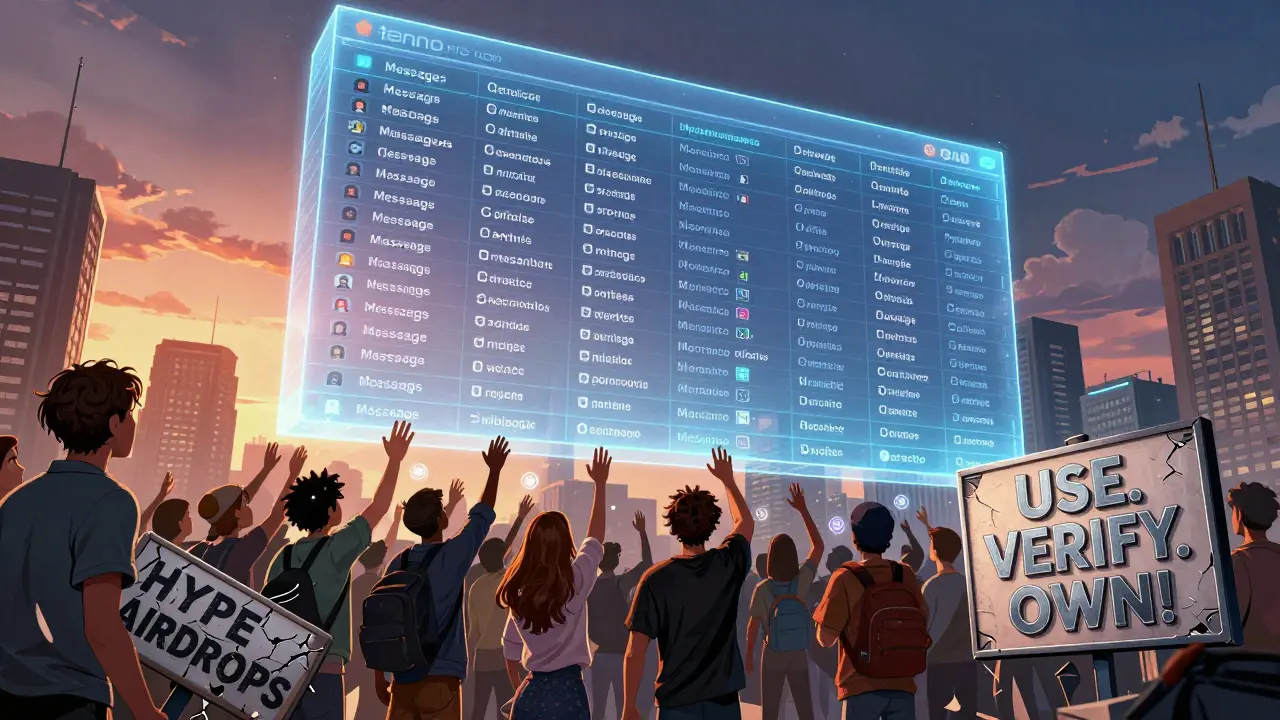
Most crypto airdrops in 2021 and 2022 were like lottery tickets: join a Discord, follow on Twitter, and hope you get lucky. But identity projects - the kind that want to replace passwords, verify real people, and control digital IDs - can’t afford that. If your identity token is meant to unlock access to services, sign documents, or verify your age, then the people holding it need to be real users, not bot farms. Look at idOS, the closest parallel. They didn’t rush. They spent over a year building their decentralized storage network, partnering with FCL (Fractal ID) users, and testing how identity data flows across chains. Their airdrop didn’t go to 10,000 random wallets. It went to the 8,000 FCL holders who had actively used their identity tools. That’s not luck. That’s strategy. IDTT Identity likely operates the same way. If they’re launching an IDO (Initial DEX Offering) with an airdrop, they’re probably not asking you to join their Telegram. They’re asking you to use their product.What an Identity Airdrop Actually Looks Like in 2026
Forget "like and share" campaigns. Here’s what real identity airdrops do in 2026:- Require on-chain interaction - You must have signed a transaction using their wallet, not just clicked a button.
- Target specific tools - If IDTT has a browser extension, mobile app, or wallet integration, they’ll snapshot users who’ve used it in the last 90 days.
- Lock tokens for utility - Your IDTT tokens won’t be sellable on day one. They’ll be locked until you’ve verified your identity, added a credential, or helped onboard someone else.
- Use transparent dashboards - You’ll be able to see your eligibility live, with a public link showing wallet addresses, actions taken, and token allocation.
How to Prepare for IDTT’s Airdrop (Even Without Official Info)
You can’t wait for an announcement. By then, it’s too late. Here’s what to do right now:- Find IDTT’s official channels - Search for their website, GitHub, or verified Twitter/X account. If they have no public presence, they’re likely not ready. Legit identity projects don’t hide.
- Install their testnet tools - If they have a browser extension, wallet plugin, or mobile app on testnet, install it. Use it. Try to sign a message. Link a credential. Record how long it takes.
- Check their on-chain activity - Use Etherscan, Solana Explorer, or PolygonScan. Search for their contract addresses. Look for recent transactions. Are users interacting with their identity contracts? Or is it all empty?
- Join their developer community - If they have a Discord or forum for testers, join. Ask questions. Report bugs. The people who help build the system get rewarded first.
- Don’t pay for access - No legitimate identity airdrop asks for money. No "premium whitelist". No "early access fee". If someone’s selling a spot, it’s a scam.
Red Flags in Identity Airdrops
The crypto space is full of fake identity projects. Here’s how to spot them:- No technical documentation - If they can’t explain how their identity verification works in plain terms, walk away.
- Only social media - A project with 100K Twitter followers but zero GitHub commits or audit reports is a ghost.
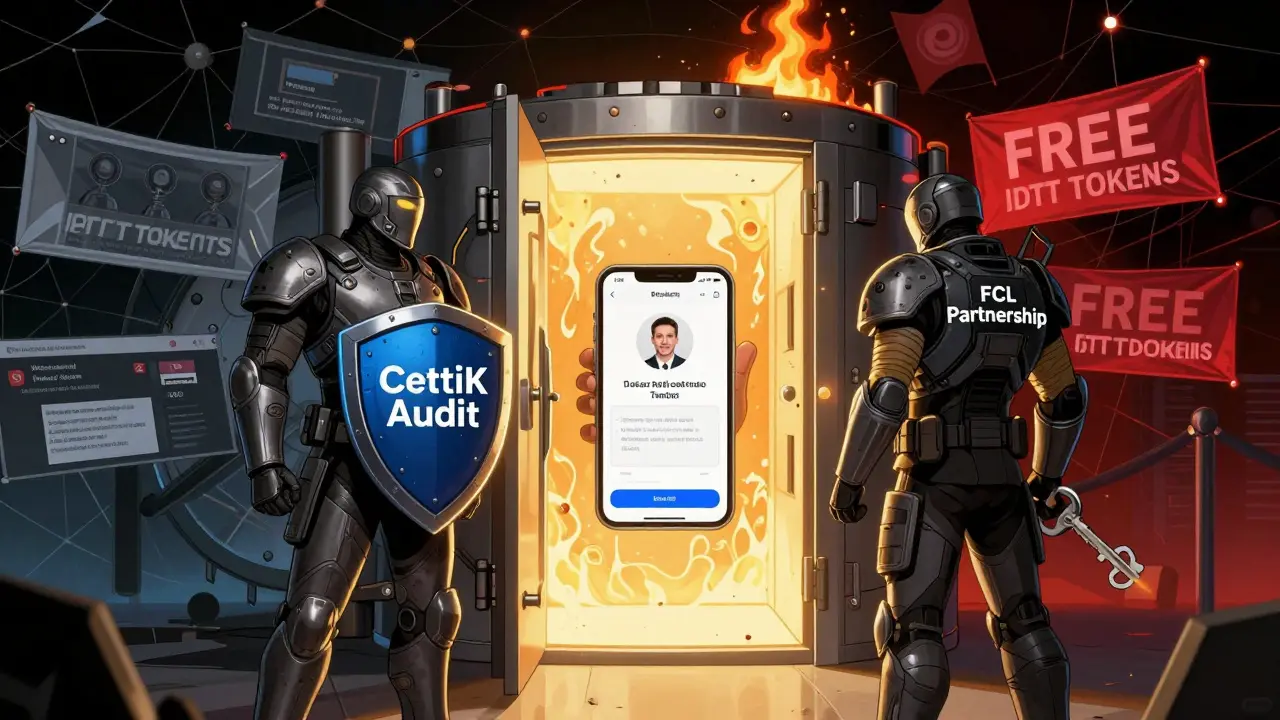
- Token unlock in 24 hours - If your IDTT tokens are tradeable immediately, they’re not meant for identity. They’re meant for pump-and-dump.
- Unverified smart contracts - Always check if their contracts were audited by firms like CertiK, OpenZeppelin, or Hacken. No audit? No trust.
- Too many "free" claims - "Join now, get 10,000 IDTT!" That’s not an airdrop. That’s a phishing trap.
What’s at Stake? Your Digital Identity
This isn’t about making quick cash. Identity tokens are about control. If IDTT launches a successful IDO and airdrop, it could mean you own your digital ID - not Meta, Google, or a bank. You could verify your age without handing over your passport. You could sign contracts with your wallet, not a notary. You could prove you’re human without a CAPTCHA. That’s why the airdrop matters. It’s not a giveaway. It’s a vote. Every person who gets tokens is a stakeholder in a new kind of internet. And if IDTT is serious, they’re not giving tokens to the loudest. They’re giving them to the most active.What to Watch for Next
In early 2026, keep an eye on these signals:- A public GitHub repo with active code commits
- A live testnet dashboard showing user activity
- An audit report from a known security firm
- A public announcement from a partner (like FCL, Polygon, or Chainlink)
- A transparent snapshot date posted on their official site
Right now, the IDTT Identity airdrop is a mystery. But the rules of the game aren’t. Build. Use. Verify. Then wait. The tokens will come to those who earned them - not those who begged for them.
Is there an official IDTT Identity airdrop yet?
As of March 2026, there is no verified public announcement from IDTT Identity about an airdrop. No official website, whitepaper, or smart contract has been confirmed. Be cautious of any claims or websites promising IDTT tokens - they are likely scams.
How do identity airdrops work in 2026?
Modern identity airdrops don’t reward social media follows. They require real interaction: using a wallet extension, signing transactions, verifying credentials, or testing a platform. Tokens are often locked until you complete specific actions, ensuring only active users receive them. Transparency dashboards show who qualifies and why.
Should I pay to join an IDTT whitelist?
Never pay for access to any crypto airdrop, especially for identity projects. Legitimate teams fund their launches through private sales or community contributions - not by charging users. If someone asks for money, it’s a scam.
What’s the difference between IDO and airdrop?
An IDO (Initial DEX Offering) is when a project sells its tokens publicly on a decentralized exchange. An airdrop is when tokens are distributed for free to users who’ve contributed - like testing, using tools, or building on the network. Many identity projects do both: use a private IDO to raise funds, then reward early users with an airdrop.
How can I verify if IDTT is real?
Check for: 1) A live GitHub with recent code commits, 2) An audited smart contract, 3) A testnet you can interact with, 4) Partnerships with known web3 infrastructure (like FCL, Polygon, or Chainlink), and 5) Official social accounts with verified badges. If even one is missing, proceed with extreme caution.
Sriharsha Majety
March 2 2026i just installed the testnet extension and signed a message lol its so simple why do people overcomplicate this
no need for whitepapers when the UI just works
Tabitha Davis
March 3 2026oh please. 'real identity projects'? you mean the ones that took 3 years to build something that could've been done in 3 weeks with a simple API? this is just crypto elitism dressed up as 'security'.
Vishakha Singh
March 4 2026Thank you for this thoughtful breakdown. I truly appreciate how you emphasized the importance of utility over speculation. Many overlook that identity isn't about tokens-it's about trust, and trust is built through consistent, meaningful interaction.
Don B.
March 5 2026so you're telling me i have to actually DO something instead of just hopping on a coin that's gonna 100x? wow. what a concept. where's my free money at?
Arya Dev
March 7 2026No official website? No whitepaper? No audit? Then it’s not real. Not even close. Not even a little. Not even remotely. Not even hypothetically. Not even theoretically. Not even in your dreams. Not even if you’re drunk. Not even if you’re high. Not even if you’re rich. Not even if you’re poor. Not even if you’re smart. Not even if you’re dumb. Not even if you’re a genius. Not even if you’re an idiot. Not even if you’re a unicorn. Not even if you’re a dragon. Not even if you’re a god. Not even if you’re a ghost. Not even if you’re a zombie. Not even if you’re a vampire. Not even if you’re a werewolf. Not even if you’re a mermaid. Not even if you’re a robot. Not even if you’re AI. Not even if you’re sentient. Not even if you’re conscious. Not even if you’re alive. Not even if you’re dead. Not even if you’re dead and alive. Not even if you’re Schrödinger’s identity. Not even if you’re quantum. Not even if you’re entangled. Not even if you’re in superposition. Not even if you’re in a parallel universe. Not even if you’re in the multiverse. Not even if you’re in the metaverse. Not even if you’re in the blockchain. Not even if you’re in the ledger. Not even if you’re in the hash. Not even if you’re in the nonce. Not even if you’re in the block. Not even if you’re in the chain. Not even if you’re in the network. Not even if you’re in the protocol. Not even if you’re in the consensus. Not even if you’re in the decentralization. Not even if you’re in the innovation. Not even if you’re in the future. Not even if you’re in the past. Not even if you’re in time. Not even if you’re not. Not even if you’re everything. Not even if you’re nothing. Not even if you’re both. Not even if you’re neither. Not even if you’re... never mind. It’s a scam.
Nicki Casey
March 7 2026The fundamental flaw in this entire narrative is the assumption that decentralization requires behavioral compliance. Identity is not a game of participation points. It is a civil right. To condition access to one's digital identity upon arbitrary on-chain interactions is not innovation-it is surveillance capitalism rebranded with blockchain aesthetics. The moment you require users to ‘verify’ or ‘complete actions’ to earn autonomy, you have already surrendered sovereignty to the system. This is not liberation. It is gated exclusion disguised as meritocracy.
Curtis Dunnett-Jones
March 8 2026This is the future we've been waiting for. No more centralized gatekeepers. No more identity theft. No more CAPTCHAs that don't work. This is the foundation of a truly free internet. Every single step toward user-owned identity is a step away from corporate control. We must support projects that prioritize substance over hype.
Sean Logue
March 10 2026yo from LA
just used the testnet wallet to sign a credential for my dog's NFT
weird? yeah
but also kinda cool? like i'm not just a user anymore
i'm part of the architecture
Carl Gaard
March 11 2026i love this so much 😍😍😍
finally someone gets it
no more scams
no more fake airdrops
just real people doing real things
thank you 🥹🙏
bella gonzales
March 13 2026This is why I hate crypto. Always the same story. 'Build it, use it, verify it.' Meanwhile, I'm trying to pay my rent. Who has time for this?
Paul Reinhart
March 13 2026There’s something deeply poetic about the idea that identity, once commodified and controlled by institutions, might one day be reclaimed through the quiet, consistent actions of individuals-signing a transaction here, verifying a credential there. It’s not dramatic. It’s not viral. It’s not flashy. But it’s real. And perhaps that’s why it matters more than any airdrop ever could.
Samantha Stultz
March 14 2026You're missing the point entirely. Identity verification via on-chain activity is not a feature-it's a vector for behavioral surveillance under the guise of decentralization. The moment you require users to interact with proprietary tools to earn autonomy, you've created a new form of proprietary control. This isn't liberation; it's permissioned participation. The blockchain doesn't erase power structures-it redistributes them to those who control the infrastructure.
precious Ncube
March 14 2026If you're not paying for this, you're the product. Identity isn't free. Someone's getting paid. Probably not you.
Jan Czuchaj
March 14 2026I wonder if the people who believe in this model have ever considered that identity is not something to be earned, but something to be inherent. To tie human dignity to on-chain activity is to reduce personhood to metrics. What happens when someone can't access the tools? When they lack bandwidth, hardware, or digital literacy? Are they excluded from their own identity? This isn't progress. It's exclusion with a blockchain sticker.
Tracy Peterson
March 15 2026This is it. This is the shift. We're not here for quick cash. We're here to rebuild the internet from the ground up. And if you're not willing to do the work, you don't get to complain when you're left behind. The future belongs to the builders.
KingDesigners &Co
March 16 2026I've seen 1000 airdrops. This one? No. No. No. No audit. No team. No roadmap. Just vibes. You think you're building the future? You're building a ghost town.
Felicia Eriksson
March 16 2026i just signed up for the testnet. didn't even think about it. just clicked. now i'm waiting. no pressure. no hype. just... seeing what happens
aaron marp
March 18 2026One thing I’ve learned from working in web3 is that the most powerful tools are the ones you don’t notice. The best identity system won’t feel like crypto. It’ll feel like logging in. It’ll feel like breathing. If you have to explain it, it’s not ready yet.
Patrick Streeb
March 18 2026The philosophical underpinnings of identity decentralisation require rigorous epistemological scrutiny. To assert that on-chain interaction constitutes authentic verification is to conflate procedural compliance with ontological legitimacy. The subjectivity of human identity cannot be reduced to transactional metadata without risking the erosion of personhood as a foundational social construct.
Tracy Whetsel
March 19 2026I’m so glad someone finally said this. I’ve been using the testnet for weeks and no one talks about how it just… works. No drama. No noise. Just me, my wallet, and a little toggle that says ‘verified.’ It’s quiet. But it matters.
Alyssa Herndon
March 21 2026i think about how much easier life would be if all websites just trusted me
no forms
no passwords
no 2fa
just... me
and my wallet
and that’s it
Ifeanyi Uche
March 21 2026they say build use verify but what about the people who cant even afford a phone? you think africa just gonna sit and wait for your blockchain utopia? nah bruh. this is just another way to leave us out
Elana Vorspan
March 22 2026i like that this doesn't feel like crypto anymore. it feels like something… quieter. like a door that opens when you’re ready, not when you scream loud enough.