

You might be searching for IDAX because you found an old article praising its low fees or extensive altcoin list. Or perhaps you are one of the thousands who lost money when the platform vanished in late 2019. Either way, the reality is stark: IDAX is dead. It does not operate. It cannot trade. And if you somehow still have an account with funds stuck inside, those assets are almost certainly gone forever.
This review isn't about whether IDAX is a good place to buy Bitcoin today-it's not. It’s a post-mortem analysis of what went wrong, why it happened, and what this case study teaches us about the dangers of unregulated cryptocurrency exchanges. Understanding the IDAX collapse helps you avoid similar traps in the future.
The Rise and Fall of IDAX
To understand the disaster, we have to look at how things started. IDAX (International Digital Asset Exchange) launched in December 2017. It was founded under the Global Blockchain Research Center, with operational bases in Mongolia and China. The pitch was simple: superlative trading experience, trusted safety, and speedy transactions. They claimed to offer over 300 token listings, which was impressive at the time, especially for obscure altcoins that major exchanges ignored.
For a brief period, IDAX looked like a viable option for traders seeking niche coins. Their mobile app promised features like 'Crypto Cash' loans using BTC or ETH as collateral and even offered up to 8% APY on held assets. These incentives drew in retail investors looking for yield. However, the foundation was rotten from the start. The exchange operated without oversight from major financial authorities. Its incorporation in Mongolia was a strategic move to avoid stringent regulatory requirements in markets like the US or Europe.
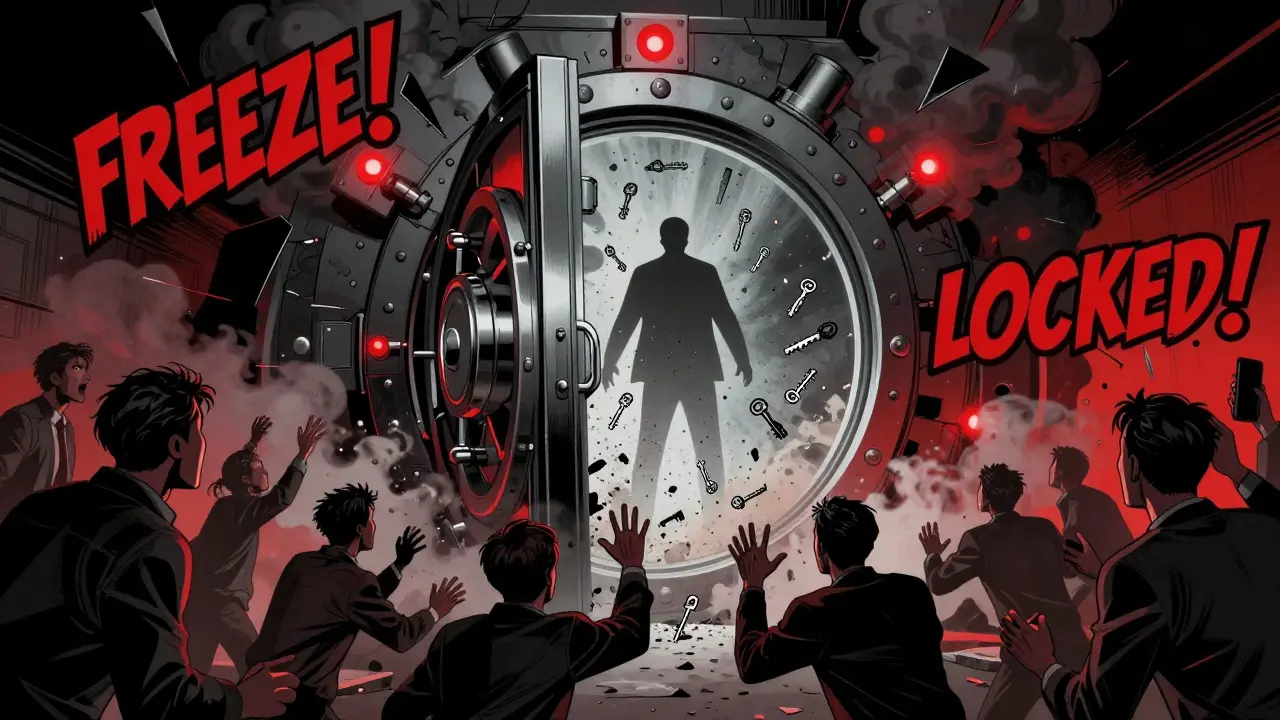
Then, in November 2019, everything stopped. Deposits were frozen. Withdrawals halted. The website went silent. The official reason given was that their global CEO, Lei Guorong, had 'gone missing.' This excuse raised immediate red flags among blockchain analysts. In the world of centralized finance, if your CEO holds the only keys to the vault and then disappears, your money is gone too.
Why Did IDAX Collapse?
The collapse of IDAX wasn't a technical glitch; it was a structural failure combined with likely criminal intent. Here is the breakdown of what happened:
- Centralized Key Management: Unlike decentralized protocols where users hold their own private keys, IDAX controlled all user assets. Industry experts noted that Lei Guorong retained sole access to the exchange's cold wallets. When he vanished, so did the ability to move any funds.
- Lack of Regulatory Oversight: IDAX had no FINTRAC registration, no SEC compliance, and no proof-of-reserves audits. Without these safeguards, there was no legal mechanism to force the return of funds or investigate the disappearance effectively.
- Predatory Terms of Service: A critical examination of IDAX's terms revealed a termination clause (section 9.1) that granted the exchange the right to 'immediately suspend your DAX Account... freeze or lock the Digital Assets... for any reason.' This legal loophole allowed them to shut down operations without accountability.
- Exit Fraud Suspicions: Many observers compared IDAX to the QuadrigaCX incident, where $190 million became inaccessible after the CEO died. In IDAX's case, rumors circulated that Lei had taken the private keys, effectively conducting an exit fraud-stealing user funds before disappearing.
By March 31, 2020, industry watchdogs like Cryptowisser issued urgent updates confirming that all deposits and withdrawals were suspended permanently. The warning was clear: 'Be very careful until further notice.' Unfortunately, for most users, that notice came too late.
IDAX vs. Secure Exchanges: A Critical Comparison
To see just how risky IDAX was, let's compare its attributes against a standard, regulated exchange like Coinbase or Binance. This comparison highlights the specific safeguards IDAX lacked.
| Feature | IDAX (Defunct) | Regulated Exchange (e.g., Coinbase/Binance) |
|---|---|---|
| Regulatory Status | Unregistered (Mongolia/China) | Registered with FCA, FINTRAC, or local authorities |
| Custody Insurance | None | Often available for fiat and some crypto holdings |
| Proof of Reserves | Never published | Regularly audited by third-party firms |
| Key Management | Sole control by CEO | Multisignature wallets and institutional custody |
| User Recourse | None (Terms allowed instant freezing) | Legal channels and customer support escalation |
| Current Status | Defunct / Offline since 2019 | Operational |
The table above makes it clear: IDAX offered none of the protections that modern investors expect. While they marketed themselves as having security backed by firms like Slowmist and Beosin, these partnerships were largely irrelevant once the central point of failure-the CEO-was removed from the equation.
What Should You Do If You Had Funds on IDAX?
If you are reading this hoping to recover your lost assets, I need to be honest with you: the chances are near zero. The OpenPR investigative report titled 'Investors Can Trace Their Lost Funds' suggested some theoretical possibility of tracing blockchain transactions, but it did not outline a successful recovery mechanism for individual users.
Here is the hard truth:
- No Legal Recourse: Because IDAX operated outside major jurisdictions, filing a lawsuit is incredibly difficult and expensive. There is no insurance fund to claim against.
- Blockchain Tracing is Complex: While blockchain data is public, identifying which wallet belongs to the missing CEO and proving he stole *your* specific funds requires forensic expertise that most individuals cannot afford.
- Scam Warnings: Be extremely cautious of anyone claiming they can help you recover IDAX funds. Post-collapse scams are common. Hackers and fraudsters target victims of exchange collapses, offering fake recovery services for a fee. Never pay upfront fees to 'recover' lost crypto.
Reddit discussions from 2019-2020 are filled with users describing the shutdown as 'unannounced' and 'without warning.' Most reported total loss of assets. Accepting this loss is painful, but protecting yourself from secondary scams is crucial.

Lessons Learned: How to Avoid the Next IDAX
The IDAX case is a textbook example of why due diligence matters more than low fees or high APY promises. Here is how you can protect yourself from similar disasters:
1. Check Regulatory Standing
Before depositing money, verify if the exchange is registered with a reputable financial authority. Look for licenses from bodies like the FCA (UK), MAS (Singapore), or state-level registrations in the US. If an exchange claims to be 'global' but lists no regulators, treat it with extreme skepticism.
2. Demand Proof of Reserves
Since the Terra/Luna and FTX collapses, Proof of Reserves (PoR) has become non-negotiable. Reputable exchanges publish monthly attestations from independent auditors showing they actually hold the assets they claim to. IDAX never provided this transparency.
3. Understand Custody Risks
Remember the golden rule: 'Not your keys, not your coins.' For large amounts, use a hardware wallet (like Ledger or Trezor). If you must leave funds on an exchange, ensure they use multisignature cold storage and have clear policies on key management. Single-point control, as seen with IDAX's CEO, is a massive red flag.
4. Read the Terms of Service
It sounds boring, but IDAX's ToS explicitly allowed them to freeze accounts for 'any reason.' Always check if an exchange reserves the right to withhold funds arbitrarily. Legitimate platforms have clear dispute resolution processes.
Final Thoughts on IDAX
IDAX serves as a grim reminder of the wild west era of cryptocurrency. It promised much but delivered nothing but loss. Its collapse highlights the importance of regulation, transparency, and secure infrastructure. Today, in 2026, the market is far more mature. Users have better tools to vet exchanges, and regulators are watching closely.
Do not fall for nostalgia or outdated reviews. If you see IDAX mentioned positively in old forums, ignore it. Stick to platforms with proven track records, regulatory compliance, and transparent security practices. Your capital is worth protecting.
Is IDAX still operating in 2026?
No, IDAX is completely defunct. It ceased operations in November 2019 and has not resumed trading since. All deposits and withdrawals remain suspended indefinitely.
Can I recover my lost funds from IDAX?
Recovery is highly unlikely. With the CEO missing and no regulatory oversight, there is no formal process for refunding users. Be wary of scams promising fund recovery for a fee.
Who was the CEO of IDAX?
The CEO was Lei Guorong. He reportedly 'went missing' in late 2019, taking with him the private keys to the exchange's cold wallets, leading to the suspension of all user withdrawals.
Was IDAX a scam?
While formally classified as an exit fraud or operational collapse, many characteristics align with scam behavior. The lack of regulatory compliance, opaque ownership, and sudden disappearance of leadership suggest malicious intent or gross negligence.
How does IDAX compare to QuadrigaCX?
Both cases involved the disappearance or death of the CEO resulting in inaccessible user funds. QuadrigaCX saw $190 million locked due to the CEO's death, while IDAX's collapse was linked to the CEO going missing, raising suspicions of theft.
Where was IDAX based?
IDAX was registered in Mongolia and had operational ties to China. This jurisdictional choice allowed it to operate without strict regulatory oversight from major financial authorities.


Jay Sharma
June 27 2026It's not just a 'collapse' or a 'structural failure' as you so blandly put it. It was a coordinated hit job by the global banking cartel to suppress decentralized finance before it could threaten their monopoly on fiat currency. Lei Guorong didn't 'go missing.' He was detained, silenced, and erased from the narrative because he actually understood how to bypass SWIFT controls using blockchain technology. The 'missing CEO' trope is the standard cover story for when the deep state decides an exchange has become too useful for the little guy. They freeze the assets, blame the founder, and tell you to accept your loss while they print more worthless paper money. Wake up. This isn't about bad security; it's about control.
Scott Miller
June 27 2026You guys need to stop dwelling on the past and start looking forward! Yes, IDAX failed, but that’s what makes crypto resilient. We learn, we adapt, and we come back stronger than ever. Don’t let one bad actor ruin your faith in the entire ecosystem. There are thousands of legitimate projects out there working hard to build a better financial future. Focus on the solutions, not the problems. Keep learning, keep investing wisely, and remember that every setback is just a setup for a comeback. You’ve got this!
Melissa L
June 28 2026i remeber when i first heard bout idax... it seemed so cool at the time with all those altcoins. now its just sad really. good thing i moved my stuff to a hardware wallet after that whole mess. still dont trust exchanges tho lol
ELNORA JEFFERSON
June 29 2026Ugh. Another article rehashing old news. How many times do we have to read about IDAX? It’s been dead for years. The author clearly needs more content to fill space. Boring. Unoriginal. Waste of bandwidth. I’m sure someone somewhere lost money, but crying over spilt milk doesn’t bring it back. Move on already.
Trent Erman1
June 30 2026This is such a crucial reminder for everyone entering the space today! 🚀 The concept of 'Not your keys, not your coins' isn't just a slogan; it's the fundamental law of digital sovereignty. When you leave your assets on a centralized platform, you are essentially gambling with your own life savings based on the integrity of strangers. IDAX is the perfect case study in why self-custody is non-negotiable. Imagine if we had applied these same rigorous standards to traditional banks-would we have seen fewer collapses? Probably! Let’s use this tragedy to fuel our education and empower ourselves with true financial independence. Knowledge is power, and security is freedom! 💪✨
Sajjad Ghorbani Moghaddam
July 1 2026We should all take a moment to reflect on how this affects us collectively. It’s easy to judge those who lost money, but the reality is that many were simply trying to navigate a complex system without enough guidance. Instead of pointing fingers, let’s focus on building communities where people can share knowledge and support each other. If we look out for one another, we can prevent these kinds of disasters from happening again. What steps are you taking to educate yourself further?
Rebecca Shoniker
July 2 2026Let me be perfectly clear: anyone who deposited significant funds into an unregulated entity like IDAX is displaying a profound lack of due diligence. The term 'exit fraud' is almost too generous; this was blatant embezzlement facilitated by negligence. One must scrutinize the regulatory framework, the custody mechanisms, and the legal recourse available BEFORE parting with capital. To suggest otherwise is to invite disaster. The market does not care about your feelings; it cares about your risk management protocols. Period.
Mélanie Boulay
July 3 2026I find it somewhat disheartening that we continue to revisit these historical failures without fully internalizing the systemic issues that allowed them to occur in the first place, particularly when considering the broader implications for regulatory oversight and consumer protection in the digital asset space, which remains largely fragmented and inconsistent across different jurisdictions, thereby creating opportunities for malicious actors to exploit vulnerabilities that might otherwise be mitigated through more robust and standardized compliance frameworks that prioritize transparency and accountability above all else.
John Curry
July 5 2026The irony is palpable here. We built a technology designed to eliminate intermediaries, to create a trustless environment where code is law, and yet we kept running back to centralized points of failure like IDAX because it was convenient. Convenience is the enemy of security. Every time we choose ease over control, we surrender a piece of our sovereignty. IDAX wasn’t an anomaly; it was the inevitable result of ignoring the core philosophy of decentralization. We must return to the roots of this movement, or we will face countless more 'Lei Guorongs' vanishing into the night.
Fiona Ellis
July 6 2026Did anyone else notice how quickly the 'experts' jumped to call it a scam? 😂 I mean, sure, maybe the CEO ran off, but let’s not pretend every collapse is criminal intent. Sometimes things just go wrong. But hey, I guess it’s easier to write clickbait headlines than to analyze the complex geopolitical pressures these exchanges faced. Just saying. 👀🔥
Emma Rémond
July 8 2026It is truly astonishing that retail investors still fall for such rudimentary schemes. The lack of institutional-grade custody solutions, combined with the absence of verifiable proof-of-reserves audits, should have been an immediate red flag for any competent market participant. IDAX operated in a regulatory vacuum, leveraging jurisdictional arbitrage to evade scrutiny-a tactic that sophisticated entities recognize as inherently unsustainable. To conflate this with legitimate operational risks is to misunderstand the very nature of asymmetric information in emerging markets. One simply cannot expect returns without accepting the corresponding counterparty risk.
Carol @minaszilda
July 8 2026It’s okay to feel frustrated. Losses hurt. But don’t let this define your journey. Use this as a stepping stone. Learn from it. Grow from it. You are stronger than you think. 🌱
Maurice Flynn
July 9 2026Just sitting here watching the cycle repeat itself. People get greedy, ignore the warnings, and then act surprised when the rug is pulled. It’s human nature, really. We want the high yield without the high risk. But the universe always balances the ledger. IDAX was just another lesson in humility. Stay chill, stay safe, and remember that patience pays off in the end. No need to panic, just observe and adapt.
nancy jarecki
July 9 2026How tedious. The article reads like a beginner’s guide to basic financial literacy, which is surprising given the target audience presumably consists of individuals who should already possess a modicum of competence. The repeated emphasis on 'reading the terms of service' is patronizing. If one cannot comprehend contractual obligations, perhaps cryptocurrency trading is not the appropriate venue for their capital allocation. Moving on.
Robert Hundley
July 10 2026Hey folks! Great discussion here! 👋 Remember, every expert was once a beginner. If you made mistakes with IDAX, shake it off! Dust yourself down and get back in the game with better knowledge. The crypto community is here to support you. Let’s keep the energy positive and help each other succeed! You’re doing great! 🙌💯