
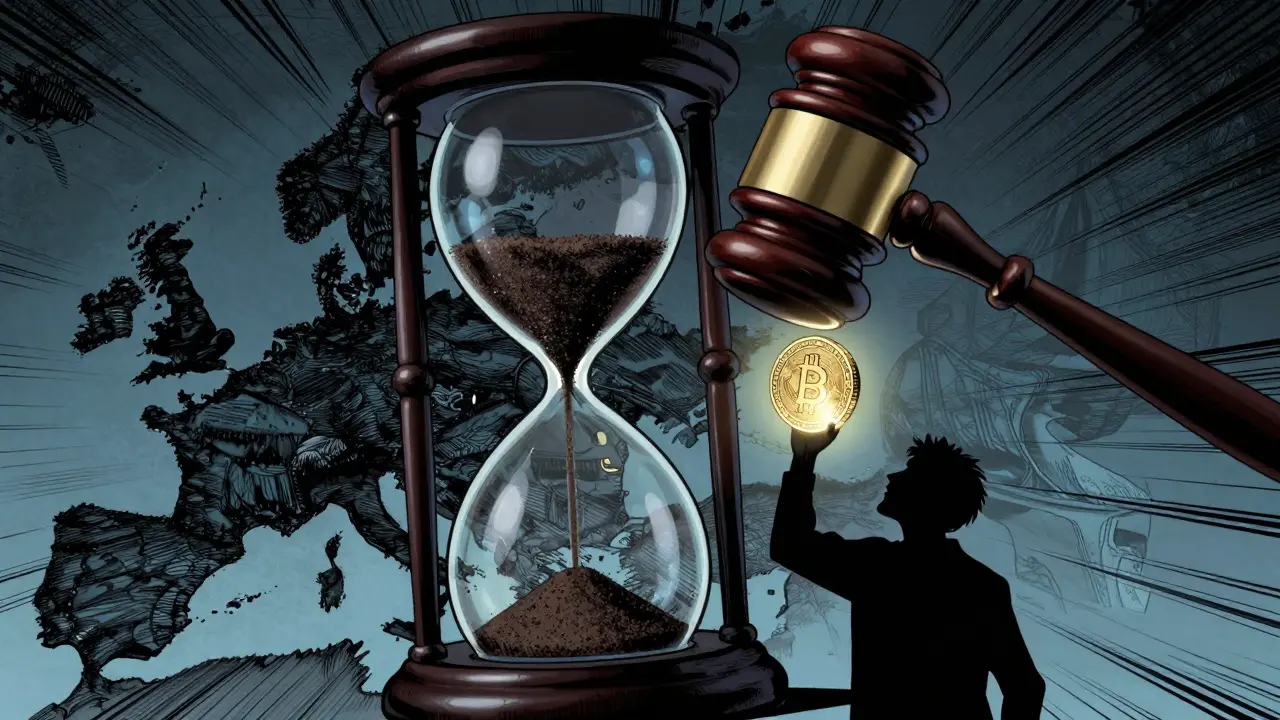
The clock is ticking for millions of cryptocurrency users in Europe. On July 1, 2025, the trading of USDT (Tether) on European exchanges will officially cease. This isn't a rumor or a minor policy tweak; it is a direct enforcement of the Markets in Crypto-Assets Regulation (MiCA), the European Union's comprehensive legal framework for digital assets. If you hold USDT in an exchange account within the EU, your ability to buy, sell, or trade this asset will be restricted. For businesses relying on USDT for cross-border payments, the landscape has shifted overnight from convenient to legally hazardous.
This ban marks a pivotal moment in global finance. The EU is no longer just watching the crypto market; it is actively reshaping it by prioritizing consumer protection and financial stability over unchecked innovation. As someone who tracks these regulatory shifts closely, I’ve seen how quickly markets react to such definitive rules. The question now is not if USDT will be banned, but how you should prepare your portfolio and operations before the deadline hits.
Understanding MiCA: The Rules That Changed Everything
To understand why USDT is facing the axe, we first need to look at MiCA, which stands for Markets in Crypto-Assets Regulation. It became law on June 29, 2023, with its specific provisions for stablecoins taking effect on June 30, 2024, and full enforcement kicking in by December 30, 2024. MiCA was designed to unify the fragmented national regulations across the EU into a single, clear set of rules.
MiCA classifies stablecoins into two main categories:
- Electronic Money Tokens (EMTs): These are tokens pegged to a single official currency, like the US Dollar or Euro. Both USDT and USDC fall into this category because they aim to maintain a 1:1 value with the USD.
- Asset-Referenced Tokens (ARTs): These tokens derive their value from a basket of multiple assets, such as a mix of currencies or commodities.
For any issuer to operate legally under MiCA, they must meet stringent requirements. They need authorization from competent authorities, such as France’s Autorité de Contrôle Prudentiel et de Résolution (ACPR). Issuers must maintain 1:1 backing using liquid assets that are strictly segregated from their own corporate funds. Furthermore, they must provide transparency through detailed white papers, undergo regular independent audits, and implement robust Anti-Money Laundering (AML) and Know Your Customer (KYC) procedures. If daily transactions exceed €200 million, even stricter capital reserve requirements apply to protect systemic financial stability.
Why Tether (USDT) Failed the Compliance Test
Tether Limited, the company behind USDT, simply does not meet these high standards. Despite being the world’s largest stablecoin by market cap and liquidity, its operational model clashes with MiCA’s demands for transparency and security. Here is where Tether falls short:
- Lack of Transparency: MiCA requires real-time disclosure of reserves and liquidity guarantee mechanisms. Tether’s historical approach to auditing has been criticized for lacking the immediacy and depth required by EU regulators.
- Inadequate Audits: Regulators demand regular, independent audits that are publicly available and verifiable. Tether’s audit processes have not consistently met this level of openness.
- AML/KYC Gaps: European authorities require automated KYC/AML integration and full traceability of operations on the blockchain. Tether’s infrastructure has not demonstrated the necessary automation and corporate risk management policies to satisfy these controls.
- No EU Authorization: Crucially, Tether Limited failed to obtain the requisite registrations in the EU before the deadlines passed. Without this license, operating within the EU is illegal.
Legal experts from Aurum Law point out that while there was a transition period for some service providers, Tether’s failure to secure registration placed it in violation since June 30, 2024. The July 1, 2025 date is the hard stop for trading pairs on regulated exchanges.
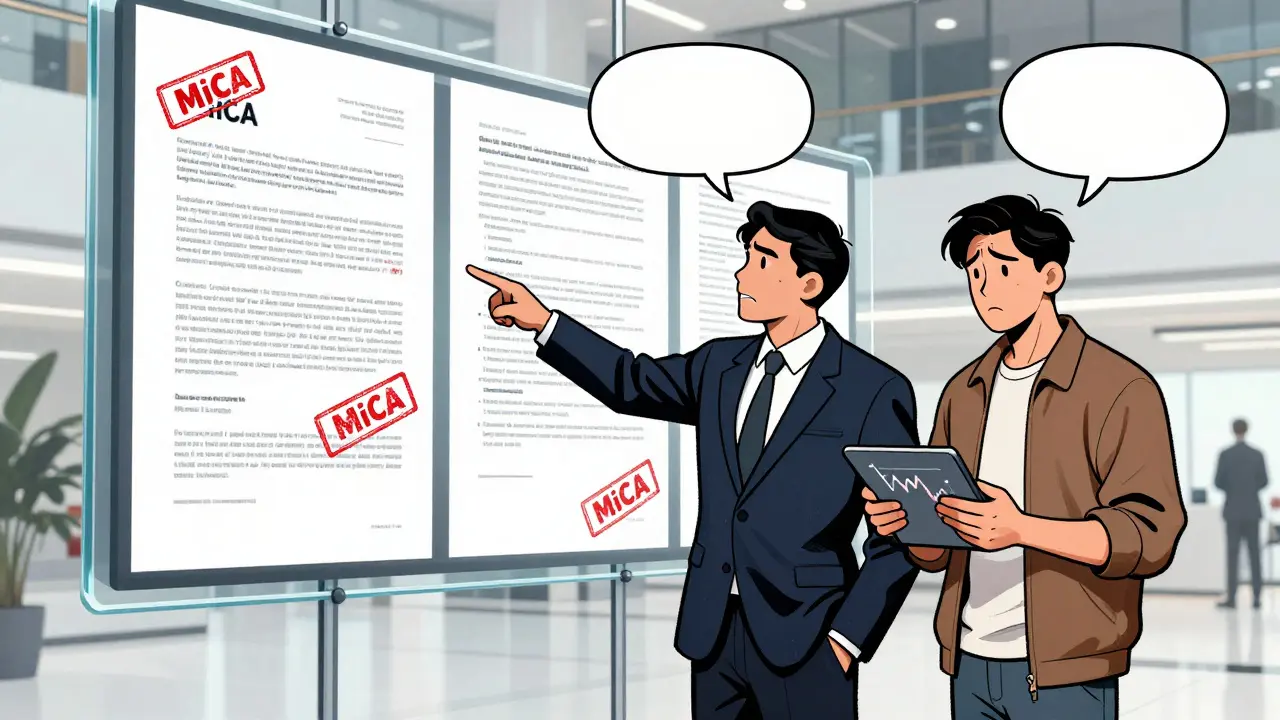
How Exchanges Are Responding: Delistings and Restrictions
You might wonder, "Can I still use my USDT?" The answer depends heavily on which exchange you use. Major platforms have moved quickly to comply with MiCA, often going beyond the minimum requirements to protect their licenses.
| Exchange | Action Taken | Timeline & Details |
|---|---|---|
| OKX | Complete Phase-Out | Became the first major exchange to discontinue all USDT trading pairs in the EU entirely. |
| Coinbase | Removal from Offerings | Announced removal in February 2025. Users received notifications to convert holdings to other supported assets before specified deadlines. |
| Binance | Phased Delisting | Switched to 'sell-only' mode initially. By March 31, 2025, Binance terminated services for unauthorized spot stablecoin pairs, including USDT, FDUSD, and DAI for EEA users. |
If you are using a non-EU based exchange, you might technically still access USDT, but you face significant risks. Industry experts at COREDO have observed that companies using USDT for cross-border transfers are encountering severe difficulties with banking compliance. Using a banned asset can lead to frozen bank accounts or confiscation of digital assets due to heightened AML scrutiny. The EU is not just banning trading; it is making the entire ecosystem around non-compliant stablecoins risky to touch.
What Should You Do Before July 1, 2025?
Panic selling is never the right strategy, but proactive adjustment is essential. Here is a practical checklist to ensure you stay compliant and protected:
- Check Your Exchange Status: Log in to your exchange account and see if USDT trading is already restricted. If you are on Coinbase, Binance, or OKX in the EU, assume USDT is effectively dead for new trades.
- Convert to Compliant Alternatives: Move your holdings to MiCA-compliant stablecoins. While specific lists vary by exchange, tokens like USDC (if the issuer secures compliance) or newly issued EU-regulated EMTs are safer bets. Always verify the token’s regulatory status on the exchange’s help center.
- Review Business Payments: If your business uses USDT for supplier payments or payroll, switch immediately. The regulatory risk of asset blocking is too high. Look for payment processors that offer MiCA-compliant fiat-on-ramp solutions or approved stablecoin rails.
- Secure Private Wallets: If you hold USDT in a private wallet (like Ledger or Trezor), you are not technically violating exchange rules by holding it. However, you will find it increasingly difficult to swap it for fiat or other crypto on regulated platforms. Consider converting it via peer-to-peer (P2P) networks if necessary, though this carries its own counterparty risks.
The Future of Stablecoins in Europe
Despite the ban on USDT, the European stablecoin market is poised for growth. Projections indicate a 37% increase in activity following MiCA’s full implementation in 2025. Why? Because clarity breeds trust. Investors and institutions prefer regulated environments where their assets are backed by transparent, audited reserves.
We are seeing the rise of alternative stablecoins that have gone through the rigorous process of obtaining VASP (Virtual Asset Service Provider) licenses. These compliant tokens may capture a significant portion of USDT’s former market share in the region. For global issuers, the message is clear: if you want to do business in Europe, you must adapt to local laws. There is no more "wild west" era.
This regulatory shift also sets a precedent for other jurisdictions. Countries outside the EU are watching closely. If the EU can successfully enforce these standards without stifling innovation, other regions may follow suit. For long-term viability, crypto projects must build compliance into their core architecture, not bolt it on as an afterthought.
Is USDT completely illegal in the EU?
USDT itself is not illegal to hold in a private wallet. However, trading, issuing, or providing services related to USDT on EU-based exchanges is prohibited under MiCA. Major exchanges have delisted it to avoid penalties. Using it for commercial transactions carries high legal and banking risks.
When exactly does the USDT ban take effect?
The effective date for the prohibition of USDT trading on European exchanges is July 1, 2025. Some exchanges, like Binance, began phasing out support earlier, with complete delisting of non-compliant pairs occurring by March 31, 2025.
Why did Tether fail to comply with MiCA?
Tether failed to meet MiCA’s strict requirements for transparency, independent real-time audits, and automated AML/KYC procedures. Additionally, Tether Limited did not obtain the necessary regulatory authorization from EU competent authorities before the deadline.
What are the best alternatives to USDT in the EU?
Look for Electronic Money Tokens (EMTs) that are fully MiCA-compliant. While USDC is a popular alternative, you must verify if Circle has secured EU authorization. Other emerging options include stablecoins issued by licensed European financial institutions. Always check your exchange’s list of approved assets.
Will my USDT lose value because of the ban?
USDT remains pegged to the US Dollar globally, so its intrinsic value doesn’t change. However, its liquidity in Europe will decrease, potentially causing slight price discrepancies or slippage when trying to convert it to other assets on remaining platforms. The primary risk is accessibility, not valuation.
Does MiCA affect other cryptocurrencies like Bitcoin?
No, MiCA’s specific ban targets non-compliant stablecoins. Bitcoin and Ethereum are not stablecoins and are regulated differently under MiCA. They remain fully tradable on EU exchanges, provided the exchanges themselves are compliant.
Fede Faith
June 15 2026Look, I've been tracking MiCA compliance since the draft stages. The shift isn't just about banning Tether; it's about forcing issuers to actually back their tokens with liquid assets. If you're holding USDT on a regulated exchange in the EU, you need to move it. Convert to USDC or a local EMT before July 1st. Don't wait for the delisting panic. It's that simple.
Mauricio Contreras Loredo
June 16 2026Oh great, another government killing innovation because they can't understand blockchain. Real surprise there. Like, totally unexpected that regulators want to control everything. I guess we should all just go back to using gold coins and carrier pigeons for cross-border payments. Because that worked so well in the 19th century. /s
Suman Patil
June 17 2026The jargon here is heavy but the point stands. MiCA introduces strict AML/KYC protocols that Tether hasn't fully integrated into their core infrastructure. For us in India, this is interesting because it shows global regulatory pressure increasing. We see similar trends with RBI tightening crypto rules. It’s not just EU being difficult; it’s a worldwide shift towards institutional-grade compliance. HODLers need to adapt or get left behind by compliant projects.
Josh Dodson
June 19 2026hey guys just a heads up i checked my binance account and its already sell only for usdt. u need to swap it out fast dont wait till july. its super easy to convert to euro stablecoins now. trust me do it before the fees spike.
Grace Newman
June 20 2026It is imperative to recognize that this ban is merely the tip of the iceberg regarding centralized financial surveillance. The EU is establishing a precedent for total transparency which inevitably leads to the erosion of financial privacy for all citizens. One must question who benefits from such stringent controls over digital assets beyond the traditional banking sector. The implications for monetary sovereignty are profound and largely ignored by casual observers.
Kenneth Riley
June 20 2026everyone knows tether was shady as hell for years. no real audits just vague promises. finally someone stepped up and said enough. its not a ban its a cleanup. people complaining are just mad their gambling chips got taken away. typical retail investor behavior really pathetic honestly
Annemarie Fitzgerald
June 21 2026i mean like... does anyone else feel like we are living in a simulation where money keeps changing form? first gold then fiat now crypto then regulated crypto. it's existential dread wrapped in a legal framework. also why is tether still alive globally if its so bad? confusing vibes only tbh
Kumaran sowkarpet
June 21 2026Nice article! :D In India we also have strict rules but at least we can still trade. But for EU friends, yes switch to USDC or EURC. Tether reserves are not transparent enough for Europe standards. Better safe than sorry! Keep your portfolio clean and happy trading everyone :)
Abby Sivertsen
June 23 2026I’m literally shaking thinking about all the businesses I know that use USDT for payroll. This is going to cause chaos. You don’t just flip a switch on July 1st and expect seamless transition. The counterparty risk on P2P swaps is huge right now. People need to breathe and plan properly instead of panicking.
Benjamin Eisen
June 24 2026wait so if i hold it in ledger am i fine? i read somewhere private wallets are ok but exchanges cant touch it. seems weird that holding it is legal but spending it isnt. can someone clarify if i can still send usdt to a friend outside eu?
Fede Faith
June 25 2026@Benjamin Eisen Yes, holding in cold storage is technically legal under MiCA. However, the utility drops significantly because you can't easily off-ramp to fiat or swap on regulated EU exchanges. Sending to non-EU addresses works, but be aware that any EU-based service provider handling that transaction could face penalties. It isolates your asset.
ravi mahla
June 26 2026Haha yeah good luck with that 'clarity'. Regulators always say clarity breeds trust but usually it just breeds more paperwork and higher fees for users. Typical corporate speak. Enjoy your new expensive stablecoins EU folks!
sreeja boora
June 27 2026This regulation demonstrates the superiority of structured financial systems over chaotic decentralized experiments. While other nations struggle with instability, the EU enforces order. It is unfortunate that some individuals prioritize short-term convenience over long-term systemic integrity and security.