

Imagine finding a cryptocurrency that promises discounts on exchange fees, governance power, and access to specialized payment terminals. That sounds like a solid utility case, right? Now imagine that same coin has a market cap smaller than a single luxury car and trades with less volume than a busy coffee shop in an hour. This is the reality of ARI, a low-cap utility token powering the ARI10 ecosystem.
If you are looking at ARI today, you are likely wondering if it is a hidden gem or a high-risk speculative asset. The answer depends entirely on how much you trust the specific services behind it and how comfortable you are with extreme volatility. As of mid-2026, ARI sits firmly in the micro-cap category, offering niche utility within a specific suite of products primarily targeting users in Poland and surrounding regions.
The Core Identity: What Exactly Is ARI?
At its simplest level, ARI is not a standalone blockchain network like Ethereum or Solana. Instead, it is a utility token built on existing infrastructure-specifically, reports indicate deployments on both the Base blockchain (an Ethereum Layer 2) and the Binance Smart Chain (BSC). This dual-chain presence can be confusing, but it generally means the token is bridged between networks to maximize accessibility for different types of wallets and exchanges.
The primary job of ARI is to serve as the internal currency for the ARI10 ecosystem. Think of it like airline miles, but for crypto services. You hold ARI to get perks, lower costs, and a say in how the platform evolves. Without the ARI10 services, the token has limited external use cases compared to broader assets like Bitcoin or stablecoins.
- Fee Discounts: Using ARI to pay for transactions on associated platforms reduces costs compared to using standard fiat or other cryptocurrencies.
- Governance Rights: Holders can vote on proposals regarding network development and resource allocation within the ecosystem.
- Airdrop Eligibility: Holding ARI often qualifies users for exclusive token distributions or promotional events from the ARI10 team.
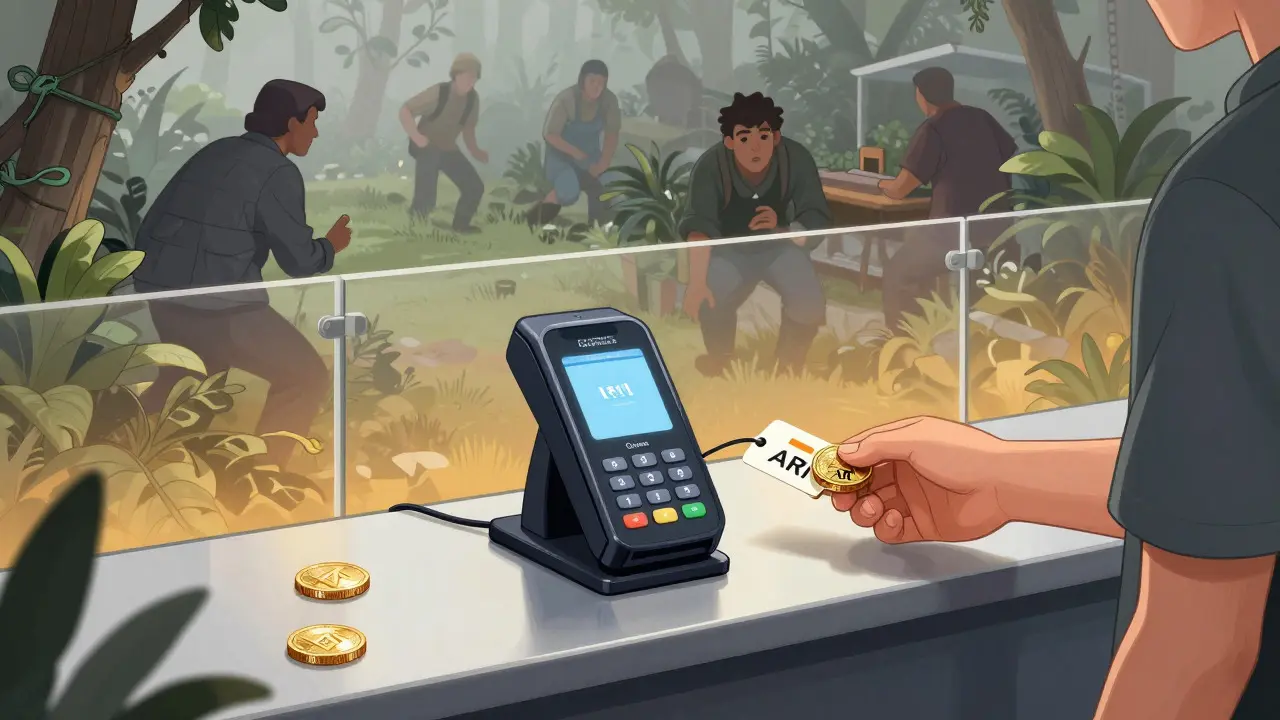
- Service Access: It acts as a payment method for specific tools like the ARI10 CryptoTerminal and BitcoinWidget.
The Ecosystem Behind the Token
To understand ARI, you have to look at what it actually does. The token exists to support a suite of products under the Ari10 brand. These aren't just abstract concepts; they are functional tools used by retail crypto enthusiasts.
| Product Name | Function | Role of ARI Token |
|---|---|---|
| Bitcan.pl | A popular cryptocurrency exchange, particularly strong in the Polish market. | Used to reduce trading fees and potentially unlock premium features. |
| ARI10 CryptoTerminal | Hardware/software solution for point-of-sale crypto payments. | Paid for or operated using ARI, incentivizing merchant adoption. |
| BitcoinWidget | An embeddable tool allowing websites to accept crypto payments easily. | Integration costs or transaction fees may be discounted with ARI. |
| ARI10 Exchange | The central trading hub for the ecosystem's assets. | Governance voting and fee reduction apply here directly. |
This structure creates a "walled garden" effect. If you are actively using Bitcan.pl or setting up a business with their widgets, holding ARI makes financial sense because it lowers your operational costs. However, if you are just a casual trader who doesn't use these specific services, the utility value drops significantly, leaving only the speculative price action.
Tokenomics: Supply and Circulation
When evaluating any small-cap coin, supply dynamics are critical. For ARI, the numbers are relatively straightforward but reveal important constraints.
Data from major aggregators like CoinMarketCap and CoinCheckup indicates that the total supply is capped at approximately 479.64 million ARI tokens. Crucially, nearly 100% of this supply is already in circulation. There are no massive locked-up reserves waiting to be dumped on the market later, which is a positive sign for stability. However, it also means there is no deflationary mechanism like a "burn" rate explicitly highlighted in recent updates to reduce supply over time.
Because the circulating supply equals the maximum supply, price movements are driven almost entirely by demand shifts rather than supply shocks. In a micro-cap environment, even small amounts of buying or selling pressure can cause significant percentage swings.
Price History and Market Reality
Let’s talk about the money side of things, because this is where many investors get burned. ARI is a volatile asset. Looking at the price history between May 2025 and July 2026 paints a picture of a classic boom-and-bust cycle common in niche ecosystem tokens.
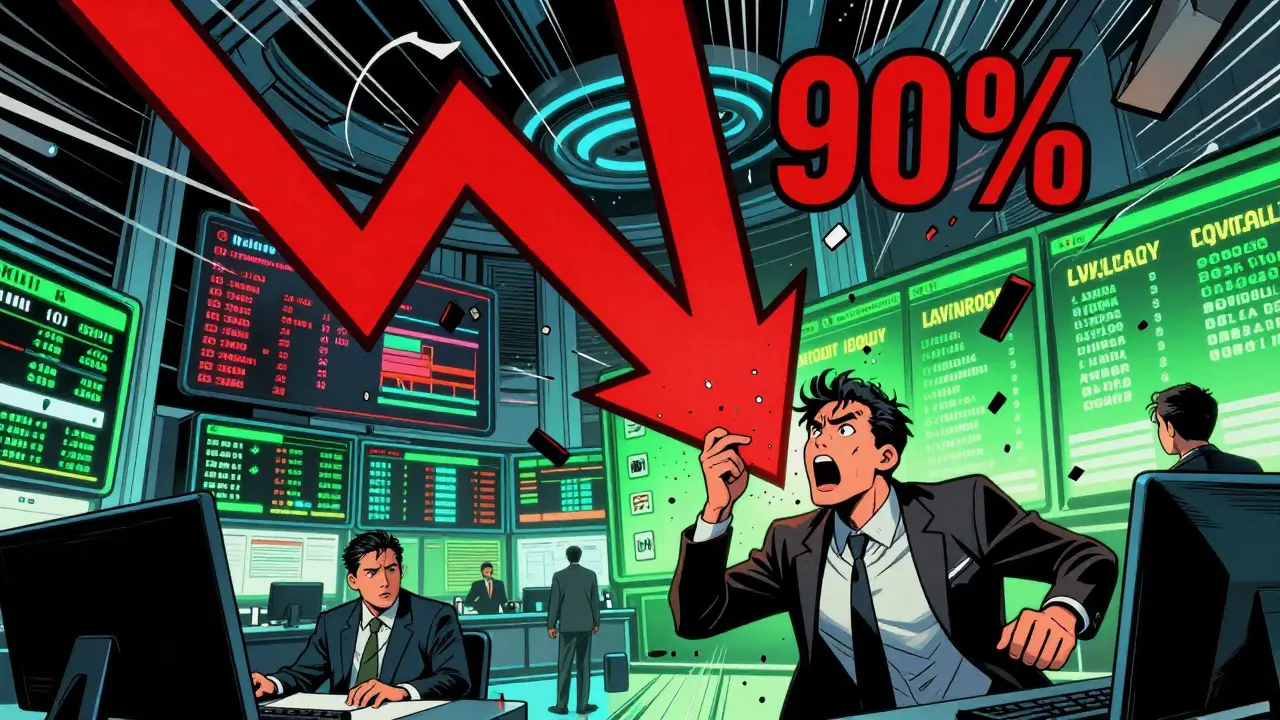
In May 2025, ARI saw a surge, hitting an all-time high (ATH) of roughly $0.01184. At that moment, excitement was high, and the market cap looked more substantial. Fast forward to mid-2026, and the price had retreated dramatically. Recent snapshots show ARI trading in the range of $0.00026 to $0.00031. That represents a decline of over 90% from its peak.
Why did this happen? Several factors contribute:
- Liquidity Constraints: With daily trading volumes often hovering between $10 and $25,000 depending on the venue, large sell orders can crash the price quickly.
- Ecosystem Adoption Pace: If the growth of Bitcan.pl or the CryptoTerminals didn't meet the hype generated during the initial launch, holders may have sold off.
- Broader Market Trends: Micro-caps tend to suffer most when the general crypto market cools down or rotates capital into larger, safer assets.
Currently, ARI ranks outside the top 4,000 cryptocurrencies on major trackers like CoinGecko and CoinMarketCap. Its market cap fluctuates between $126,000 and $150,000. To put that in perspective, this is less than the annual revenue of a small local business. It is a high-risk, high-reward proposition, not a safe harbor.
Where and How to Trade ARI
Buying ARI isn't as simple as clicking "buy" on Coinbase or Binance. Because it is a niche token, you need to navigate specific venues. Here is where liquidity currently exists:
- MEXC: This centralized exchange has been one of the primary venues for ARI, typically paired against USDT. Volumes here have occasionally spiked higher than on decentralized options.
- Uniswap V3 (Base): For those preferring decentralized finance (DeFi), Uniswap on the Base network offers an ARI/USDC pair. This requires a Web3 wallet compatible with Base (like MetaMask configured for Base).
Keep in mind the slippage. On a thin order book or low-liquidity pool, buying a significant amount of ARI might push the price up before your trade executes, meaning you end up paying more per token than the listed price suggests. Always check the swap preview carefully.
Risks You Cannot Ignore
Before you allocate funds to ARI, consider these specific risks inherent to micro-cap ecosystem tokens:
- Concentration Risk: The token's value is tied exclusively to the success of Ari10. If Bitcan.pl loses market share or the CryptoTerminals fail to gain merchant adoption, ARI has little independent value.
- Technical Ambiguity: Conflicting reports about whether ARI is strictly on BSC or Base suggest potential complexity in bridging or metadata errors. While likely manageable, it adds a layer of technical friction for users.
- Lack of Independent Audits: Publicly available data lacks detailed smart contract audit reports from third-party firms. While the underlying chains (Ethereum/Base/BSC) are secure, the specific token contract should ideally be verified by reputable auditors.
- Regulatory Uncertainty: As a utility token tied to an exchange operating in regulated jurisdictions (like Poland via Bitcan.pl), changes in local crypto laws could impact the ecosystem's operations.
Is ARI Worth Your Attention?
The verdict depends on your profile. If you are a user deeply embedded in the Polish crypto scene, actively trading on Bitcan.pl, or running a business that wants to accept crypto via their widgets, ARI offers tangible economic benefits through fee reductions. In this context, it is a useful tool, similar to holding a loyalty card.
However, if you are a pure investor looking for passive gains, ARI carries significant risk. The 90% drop from its ATH demonstrates how quickly sentiment can shift in the micro-cap space. There is no guarantee of recovery, and the low liquidity means exiting a large position could be difficult without impacting the price negatively.
Do your own due diligence. Check the latest announcements from the Ari10 team, monitor the trading volume on MEXC and Uniswap, and never invest more than you can afford to lose. In the world of niche crypto utilities, patience and careful monitoring are just as important as the initial purchase.
What is the current price of ARI coin?
As of mid-2026, ARI trades in the micro-cap range, typically between $0.00026 and $0.00031. Prices vary slightly depending on the exchange (MEXC vs. Uniswap) and real-time liquidity conditions. Always check live charts on CoinGecko or CoinMarketCap for the most up-to-the-second data.
Which blockchain is ARI built on?
ARI has been reported on both the Binance Smart Chain (BSC) and the Base blockchain (an Ethereum Layer 2). This suggests it may be a bridged token available on multiple EVM-compatible networks to facilitate easier trading and integration with different wallets.
How can I buy ARI tokens?
You can purchase ARI on centralized exchanges like MEXC (usually paired with USDT) or on decentralized exchanges like Uniswap V3 on the Base network (paired with USDC). Ensure your wallet supports the specific network where you intend to trade.
What is the total supply of ARI?
The maximum and circulating supply of ARI is approximately 479.64 million tokens. Nearly 100% of the supply is currently in circulation, meaning there are no significant future unlocks scheduled that would dilute current holders.
Is ARI a good investment?
ARI is considered a high-risk, speculative asset due to its low market cap (under $200k) and high volatility. It is best suited for users who actively utilize the ARI10 ecosystem services (like Bitcan.pl) for fee discounts. Pure investors should exercise extreme caution due to the lack of deep liquidity and historical price drawdowns.
What happens if the ARI10 ecosystem fails?
Since ARI is a utility token with no broader external use cases beyond the Ari10 suite (Bitcan, CryptoTerminals, etc.), its value is heavily dependent on the success of these services. If the ecosystem loses users or relevance, the demand for ARI would likely plummet, leading to further price depreciation.