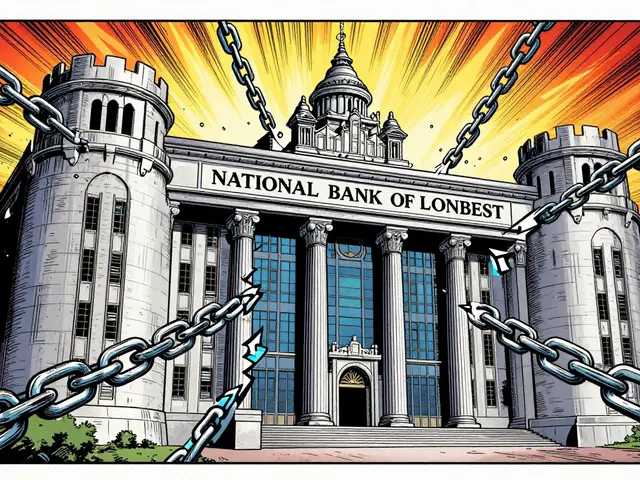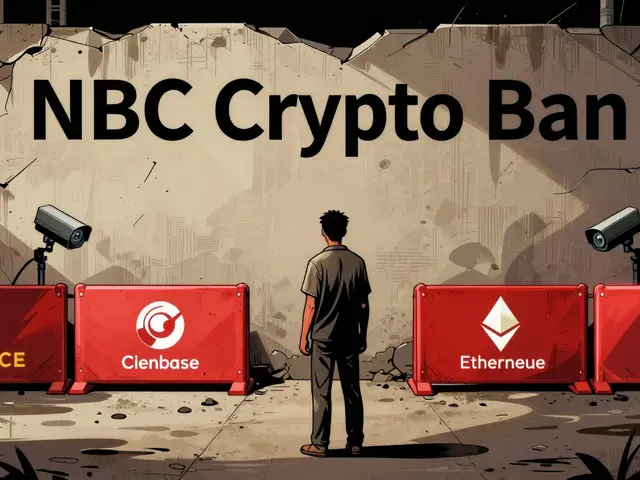
For years, headlines screamed that the National Bank of Cambodia had banned cryptocurrency. If you tried to access Binance or Coinbase from Phnom Penh in late 2024, those headlines felt accurate. Your connection would drop, and your trading account would become inaccessible. But calling it a simple "ban" misses the complex reality unfolding in Southeast Asia’s most dollarized economy.
The truth is more nuanced. The National Bank of Cambodia (NBC) has shifted from informal prohibition to a strict, licensed regulatory framework for digital assets. Instead of wiping out the industry, authorities are forcing it underground into regulated channels. They blocked overseas giants to protect the local financial system, specifically the Bakong payment network and the stability of the Cambodian riel. Today, crypto isn’t illegal, but accessing it requires navigating a maze of licenses, domestic exchanges, and banking restrictions that didn't exist just two years ago.
The Great Blockade: Why Overseas Exchanges Were Cut Off
In November 2024, the landscape changed overnight. The Telecommunications Regulator of Cambodia (TRC) pulled the plug on internet access to 16 major overseas cryptocurrency exchange websites. This included heavyweights like Binance and Coinbase. Over 102 domains associated with these platforms were blacklisted.
Why did this happen? It wasn't about ideology; it was about control and revenue leakage. At the time, Binance alone had roughly 200,000 registered users in Cambodia. These users were moving money outside the traditional banking system, bypassing fees and oversight. The domestic crypto market was valued at $7.9 million, but the real issue was the flow of capital. When people trade on offshore exchanges, the state loses visibility into where the money goes. This creates risks for anti-money laundering (AML) efforts and makes it harder to track illicit flows.
The block also served a protective function for the local currency. Cambodia is heavily dollarized, meaning many transactions use US dollars rather than the Cambodian riel. Cryptocurrency adoption threatened to further erode the riel's relevance. By blocking easy access to global exchanges, the NBC aimed to steer users toward domestic solutions where they could exert influence and ensure compliance.
Prakas B7-024-735: The New Rulebook
Blocking websites is a blunt instrument. To manage the industry long-term, the NBC needed rules. On December 26, 2024, the bank issued Prakas B7-024-735 Prokor, which took effect in early 2025. This document is the cornerstone of Cambodia’s modern crypto policy. It doesn't ban crypto; it categorizes it.
The regulation splits digital assets into two distinct groups:
- Group 1 Assets: These include tokenized securities and approved stablecoins. These are considered lower risk because they are backed by real-world assets or regulated entities. Commercial banks can invest in or hold these assets, subject to specific exposure limits set by the NBC.
- Group 2 Assets: This category covers "other crypto-assets," primarily including unbacked cryptocurrencies like Bitcoin and Ethereum. These are viewed as high-risk speculative instruments. Banks are explicitly prohibited from holding Group 2 assets on their own balance sheets.
This distinction is crucial. It means that while your local bank might not buy Bitcoin for its own reserves, it might still be allowed to offer services related to it for its clients, provided it gets prior approval. The regulation defines key terms like Crypto Asset Service Providers (CASPs), e-wallets, and stablecoins, bringing clarity to an industry previously defined by ambiguity.
Can Banks Still Touch Crypto?
One of the biggest misconceptions following the new regulations was that banks were completely cut off from crypto. That’s not entirely true. The language in Prakas B7-024-735 contains a critical nuance. It bans banks from engaging with cryptocurrencies for "their own crypto-assets." Legal analysts interpret this to mean banks cannot trade crypto for proprietary profit. However, they may provide services to clients.
With prior NBC approval, commercial banks and payment settlement institutions can offer:
- Custody solutions (holding crypto for clients)
- Exchange on-ramping services (converting fiat to crypto)
- Remittance conversion services
This turns banks into gatekeepers. Instead of users going directly to Binance, they go through their bank, which acts as a CASP. This allows the NBC to monitor transaction volumes, enforce AML checks, and ensure that tax obligations are met. It’s a move from prohibition to supervision. However, the specific licensing requirements for banks to act as CASPs are detailed in separate forthcoming regulations, meaning the full operational picture is still emerging.
| Asset Type | Examples | Bank Holding Allowed? | Risk Profile |
|---|---|---|---|
| Group 1 Assets | Tokenized Securities, Approved Stablecoins | Yes (with limits) | Lower |
| Group 2 Assets | Bitcoin, Ethereum, Unbacked Tokens | No (Proprietary Ban) | Higher |
The Domestic Alternative: RGX and CNX
If overseas exchanges are blocked and banks are restricted, how do Cambodians trade? The answer lies in the FinTech Regulatory Sandbox overseen by the NBC. As of 2025, only two domestic platforms have received authorization to operate: Royal Group Exchange (RGX) and Cambodian Network Exchange (CNX).
These platforms are the government’s preferred channels. They operate under direct regulatory scrutiny, making them easier to monitor for fraud and money laundering compared to offshore entities. The strategy is clear: channel all legitimate crypto activity into these two sandboxes. Users who want to trade must use these local exchanges. While they may not yet match the liquidity or feature set of global giants like Binance, they offer legal certainty and integration with the local banking system.
This limited licensing approach forces market consolidation. It prevents a fragmented market where dozens of unregulated startups pop up and vanish. By keeping the number of authorized players low, the NBC ensures that compliance standards remain high. For investors, this means less choice but potentially greater security against platform collapse or fraud.
Bakong: The Real Competitor to Crypto
To understand why the NBC is so cautious, you have to look at Project Bakong. Launched in 2020 with technical support from Japan, Bakong is a blockchain-based peer-to-peer payment system. It functions as both a Central Bank Digital Currency (CBDC) and a tokenized deposit system. Users link their bank accounts to Bakong wallets and can transfer funds instantly, 24/7.
By 2024, over 65% of Cambodia’s population was using Bakong. It has been integrated into regional payment systems, allowing cross-border transfers. For the NBC, Bakong represents the ideal future of finance: fast, cheap, transparent, and fully controlled by the central bank. Cryptocurrencies like Bitcoin compete with Bakong by offering similar speed and low fees but without central bank oversight.
The crypto regulations are partly designed to protect Bakong’s dominance. If people use Bitcoin for daily payments, Bakong’s user base shrinks, and the NBC loses data on economic activity. By restricting speculative crypto and promoting stablecoin-like assets (Group 1), the NBC aims to complement Bakong rather than let it be replaced by volatile foreign tokens.
Fighting Fraud and Cybercrime
A major driver behind the strict regulations is the fight against cybercrime. Cambodia has struggled with scam compounds, often linked to forced labor, that target victims worldwide through cryptocurrency fraud. In October 2024, the U.S. Department of Justice indicted entities like the Prince Group for operating such schemes.
Cryptocurrency’s anonymity features made it a favorite tool for these criminal networks. By blocking unlicensed exchanges and requiring KYC (Know Your Customer) verification on domestic platforms, the NBC aims to dry up the tools used by scammers. The goal is to make it harder for criminals to move stolen funds quickly and anonymously. This aligns with international pressure on Cambodia to clean up its financial sector and improve its standing with global bodies like the Financial Action Task Force (FATF).
Challenges and Loopholes
Despite the sophisticated framework, enforcement faces practical hurdles. The ban on overseas exchanges relies on internet filtering, which can be circumvented using Virtual Private Networks (VPNs). Many tech-savvy users in Phnom Penh simply route their traffic through servers in Singapore or Australia to access Binance again. This creates a regulatory arbitrage where the wealthy or technically proficient ignore the rules, while ordinary citizens are forced into the domestic sandbox.
Additionally, the effectiveness of the ban depends on the competitiveness of RGX and CNX. If these domestic exchanges have high fees, poor liquidity, or frequent downtime, users will find ways around the blocks. The NBC must ensure that the regulated options are viable alternatives, not just compliance traps. Experts note that the current model balances innovation and risk, but its success hinges on whether domestic platforms can scale to meet demand.
What’s Next for Cambodian Crypto?
As we move through 2026, the trend points toward gradual expansion within strict boundaries. The NBC is likely to finalize the pending regulations for CASP licensing, giving banks clearer guidelines on how to serve crypto clients. We may see increased adoption of stablecoins (Group 1 assets) as banks develop custody services, potentially integrating them with Bakong for seamless fiat-crypto conversions.
However, expect continued resistance to unbacked cryptocurrencies like Bitcoin entering the mainstream banking system. The NBC’s priority remains monetary stability and the promotion of the riel and Bakong. For now, crypto in Cambodia is a walled garden: you can play inside, but you need permission to enter, and you’re watched closely.
Is cryptocurrency illegal in Cambodia in 2026?
No, cryptocurrency itself is not illegal. However, operating exchanges without a license is banned, and access to major overseas exchanges like Binance and Coinbase is blocked by the telecommunications regulator. Individuals can trade crypto through licensed domestic platforms like Royal Group Exchange (RGX) and Cambodian Network Exchange (CNX).
Why did Cambodia block Binance?
The National Bank of Cambodia blocked Binance and other overseas exchanges to bring crypto activity under regulatory oversight. The goals were to prevent money laundering, combat cybercrime scams, protect the Cambodian riel, and promote the adoption of the domestic Bakong payment system. Unlicensed exchanges operated outside the NBC’s jurisdiction, creating systemic risks.
Can Cambodian banks hold Bitcoin?
Under the 2025 regulations (Prakas B7-024-735), commercial banks are prohibited from holding Group 2 assets, which include Bitcoin and other unbacked cryptocurrencies, on their own balance sheets. However, with prior NBC approval, banks may offer custody and exchange services for clients, acting as intermediators rather than direct holders.
What is Project Bakong?
Project Bakong is Cambodia’s national blockchain-based payment system launched in 2020. It allows users to transfer funds instantly between bank accounts via mobile wallets. With over 65% of the population using it, Bakong serves as a competitor to private cryptocurrencies and is central to the NBC’s strategy for financial inclusion and monetary control.
Which crypto exchanges are legal in Cambodia?
As of 2025-2026, the only authorized domestic cryptocurrency exchanges are Royal Group Exchange (RGX) and Cambodian Network Exchange (CNX). These platforms operate within the NBC’s FinTech Regulatory Sandbox and are subject to strict compliance and oversight requirements.