You know that feeling when you try to explain Web3 to a friend who still thinks the internet is just websites? It’s hard. They hear "crypto" and think of money. But for developers and architects, Web3 isn't just about coins; it's an entire infrastructure shift. If you’re trying to build on this new web, you need to understand the machinery under the hood. The Web3 Technology Stack is the collection of tools, protocols, and layers that allow decentralized applications (dApps) to function without a central server holding all the cards.
This article breaks down that stack layer by layer. We aren't just listing buzzwords. We are looking at how data moves from your browser to a blockchain, how code executes, and where files actually live. Whether you are a developer moving from Web2 or a product manager trying to scope a project, understanding these components is non-negotiable.
The Core Difference: Why You Need a New Stack
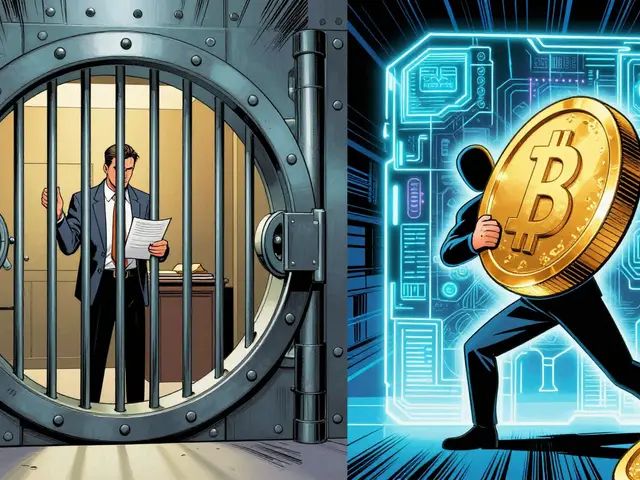
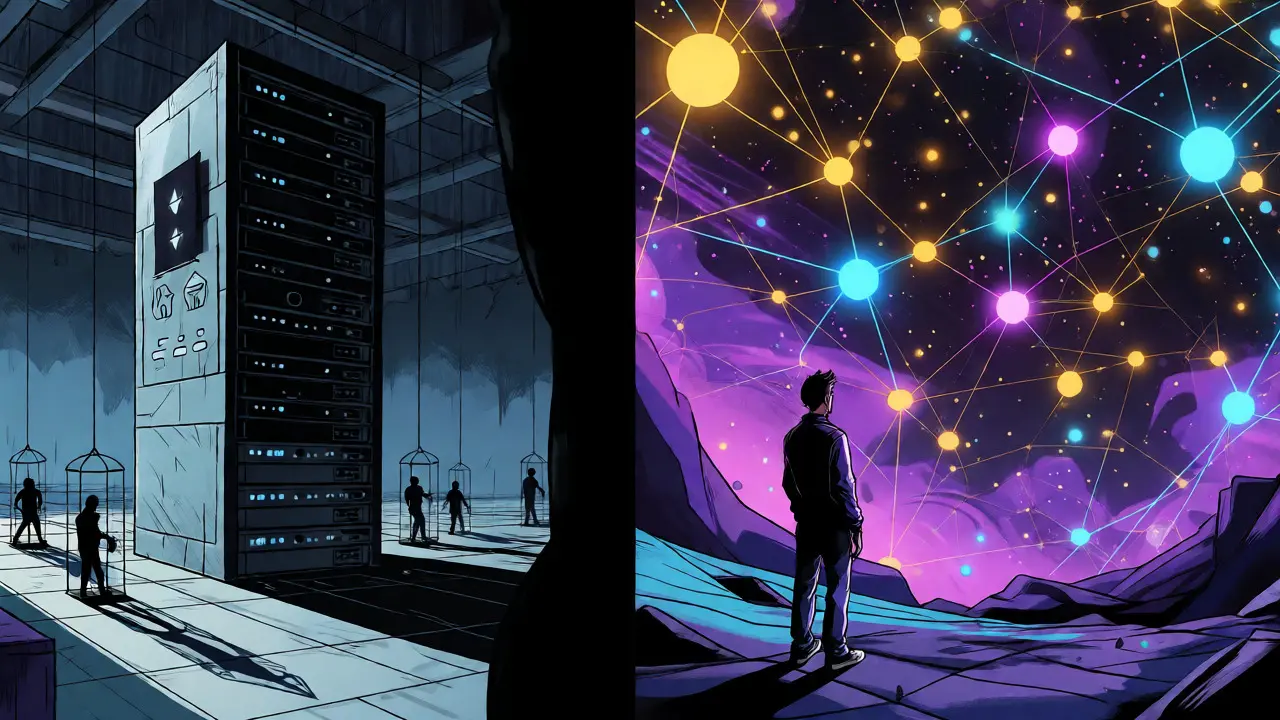
In traditional web development (Web2), you have a client (browser) and a server (AWS, Azure, etc.). The server holds the database, runs the logic, and serves the frontend. It’s centralized. If AWS goes down, your app dies. If Amazon changes the rules, your app might die too.
Web3 flips this model. Instead of one giant server, you have thousands of nodes talking to each other. There is no single point of failure. But this decentralization comes with complexity. You can’t just install a standard LAMP stack and call it a day. You need specific tools to handle consensus, cryptographic signing, and distributed state.
Think of it like building a house. In Web2, you hire one contractor who owns the land and the house. In Web3, you co-own the land with neighbors, and everyone has a vote on how the house looks. You need different legal agreements (smart contracts) and communication tools (nodes) to make that work.
Layer 0 and Layer 1: The Foundation
Before you write any code, you need a place to put it. This is where the base layers come in.
Layer 0 refers to the physical infrastructure. These are the computers, servers, and network cables running the nodes. While you rarely interact with Layer 0 directly as a developer, it’s worth knowing that projects like Polkadot and Cosmos focus heavily here, creating interoperability between different blockchains.
Layer 1 is the main blockchain itself. This is Ethereum, Solana, Bitcoin, or Avalanche. It defines the rules of the game. How do we agree that transaction X happened? Who validates it? What language do we use?
- Ethereum: Uses Proof of Stake (PoS). High security, massive ecosystem, but can be slow and expensive.
- Solana: Also PoS, but optimized for speed. Great for high-frequency apps, but historically had more stability issues.
- Bitcoin: Primarily a store of value. Its scripting language (Script) is limited, so most dApps don't run directly on it.
Your choice of Layer 1 dictates everything else. If you pick Ethereum, you’ll likely use Solidity. If you pick Solana, you’ll use Rust. This decision locks you into a specific tooling ecosystem.
Smart Contracts: The Logic Layer
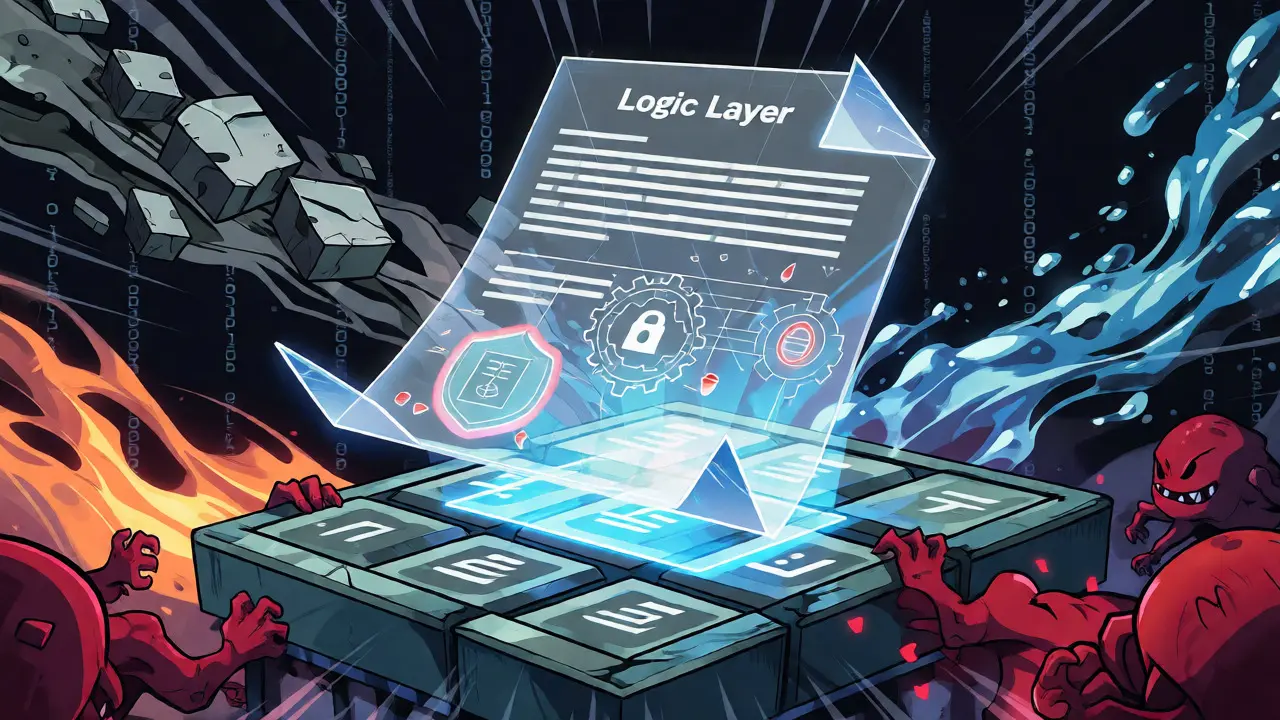
If Layer 1 is the hardware, Smart Contracts are the software logic. These are self-executing programs stored on the blockchain. Unlike a normal API endpoint, once you deploy a smart contract, you can’t easily change it. It’s immutable.
The most common language here is Solidity. It looks a lot like JavaScript or C++, but it runs inside the Ethereum Virtual Machine (EVM). The EVM is crucial because it ensures that every node computes the same result. If one node says "Alice sent Bob 1 ETH" and another says "Alice sent Bob 0.5 ETH," the network rejects the block.
Why does this matter? Because writing smart contracts is risky. A bug in a web server means a 404 error. A bug in a smart contract can mean millions of dollars drained in seconds. That’s why testing frameworks like Hardhat or Foundry are not optional-they are survival tools.
| Language | Primary Blockchain | Learning Curve | Best For |
|---|---|---|---|
| Solidity | Ethereum, Polygon, Arbitrum | Moderate | DeFi, NFTs, General dApps |
| Rust | Solana, Polkadot | Steep | High-performance apps |
| Move | Aptos, Sui | Moderate-High | Asset-centric applications |
Middleware and RPC Nodes: The Bridge
Your frontend (React, Vue, etc.) cannot talk directly to the blockchain. Blockchains speak binary and require complex cryptographic signatures. Your browser speaks JSON and HTTP. Enter RPC Nodes (Remote Procedure Call). These act as translators.
Services like Infura, Alchemy, or QuickNode provide access to these nodes. When your user clicks "Buy," your frontend sends a request to the RPC provider. The provider broadcasts the transaction to the blockchain network. Without this middleware, you’d have to run your own full node, which requires terabytes of storage and constant maintenance.
Libraries like ethers.js or web3.js simplify this interaction. They let you write JavaScript functions that look familiar, hiding the messy cryptographic details underneath.
Decentralized Storage: Where Data Lives
Here is a common misconception: People think all data lives on the blockchain. It doesn’t. Storing data on-chain is incredibly expensive. A simple image file could cost hundreds of dollars to store on Ethereum. So, where do NFT images go? To Decentralized Storage.
The most popular solution is IPFS (InterPlanetary File System). IPFS uses content addressing. Instead of asking "give me the file at http://example.com/image.jpg," you ask "give me the file with hash QmX...". If anyone changes the file, the hash changes. This ensures integrity.
Another option is Arweave, which offers permanent storage. You pay once, and the data stays there forever. For dynamic dApps, you might still use traditional cloud storage (like AWS S3) for temporary data, but critical assets usually go to IPFS or Arweave to maintain the decentralized promise.
User Identity and Wallets
In Web2, you log in with an email and password. The company owns that identity. In Web3, you log in with a wallet. MetaMask is the most famous example, but others like Phantom (for Solana) and Rabby exist.
Your wallet isn't just for holding money. It’s your identity. When you connect to a dApp, you aren't giving them your username; you're giving them permission to read your public address. Some advanced stacks use Decentralized Identifiers (DIDs) to manage reputation and credentials across platforms without relying on a central authority.
This shift changes UX design entirely. You have to handle "pending transactions," "network errors," and "gas fees." Users expect to see their balance drop instantly after a purchase. Designing for this transparency is harder than hiding latency behind a loading spinner.
Layer 2 Solutions: Scaling Up
As adoption grows, Layer 1 blockchains get congested. Gas fees spike. Transactions slow down. This is where Layer 2 (L2) solutions come in. These are networks built on top of Layer 1 to handle transactions off-chain, then bundle them back to the main chain for security.
- Optimistic Rollups (e.g., Arbitrum, Optimism): Assume transactions are valid unless proven otherwise. Cheaper and faster than Ethereum Mainnet.
- ZK-Rollups (e.g., zkSync, StarkNet): Use zero-knowledge proofs to verify batches mathematically. More secure but technically complex.
For developers, using an L2 often feels like using Ethereum, but cheaper. However, you must ensure your smart contracts are compatible with the L2’s specific architecture. Not all Ethereum code runs perfectly on every L2 without adjustments.
Building Your First dApp: A Practical Checklist
So, how do you actually start? Don't try to learn everything at once. Follow this path:
- Pick a Chain: Start with Ethereum Sepolia testnet or Polygon Mumbai. They have the best documentation and community support.
- Set Up Environment: Install Node.js, then use Hardhat or Foundry for local development. These tools simulate a blockchain on your laptop.
- Write a Simple Contract: Create a basic ERC-20 token or an NFT minting contract. Deploy it to the testnet.
- Connect Frontend: Use ethers.js to connect a React app to your deployed contract. Add a "Connect Wallet" button.
- Handle Errors: Test what happens when the user denies the transaction signature. Test what happens if they have insufficient funds.
You will hit walls. The documentation can be fragmented. But the core concepts-consensus, immutability, and cryptographic signing-are consistent across the stack.
Key Takeaways
- Layer Choice Matters: Choosing Ethereum vs. Solana determines your programming language and tooling.
- Storage is Separate: Large data goes to IPFS/Arweave; only hashes and logic go on-chain.
- Wallets are Identities: User login is tied to cryptographic keys, not passwords.
- Testing is Critical: Smart contracts are immutable; bugs are costly. Rigorous testing is mandatory.
- L2s are the Future: For scalable apps, Layer 2 rollups are becoming the default deployment target.
What is the difference between Web2 and Web3 tech stacks?
Web2 relies on centralized servers (like AWS) for data storage and logic execution. Web3 replaces these with decentralized blockchains for logic (smart contracts) and distributed networks (like IPFS) for storage. Web2 uses SQL databases; Web3 uses distributed ledgers. Web2 authentication uses OAuth/passwords; Web3 uses cryptographic wallets.
Do I need to learn Solidity to build on Web3?
If you want to build custom smart contracts on Ethereum-compatible chains (EVM), yes. However, many low-code/no-code platforms now allow you to deploy standard contracts (like NFTs or tokens) without writing Solidity. Additionally, if you choose non-EVM chains like Solana, you would learn Rust instead.
Where does my dApp's frontend code live?
Interestingly, the frontend (HTML/CSS/JS) usually still lives on centralized servers like Vercel, Netlify, or AWS. Only the smart contract logic and critical data reside on the blockchain or decentralized storage. Some projects experiment with hosting frontends on IPFS, but it adds complexity for little benefit for most early-stage apps.
What are RPC providers and why do I need them?
RPC providers (like Infura or Alchemy) offer easy access to blockchain nodes. Running your own full node is expensive and resource-intensive. RPC providers allow your application to send requests to the blockchain via standard APIs without managing the underlying hardware. They are essential for connecting your frontend to the network.
Is IPFS free to use?
The protocol itself is free, but pinning data (ensuring it stays available) usually costs money. Public gateways may throttle speeds or delete infrequently accessed files. Services like Pinata or Filebase charge fees to guarantee your data remains accessible over time. Permanent storage solutions like Arweave require upfront payment based on data size.