
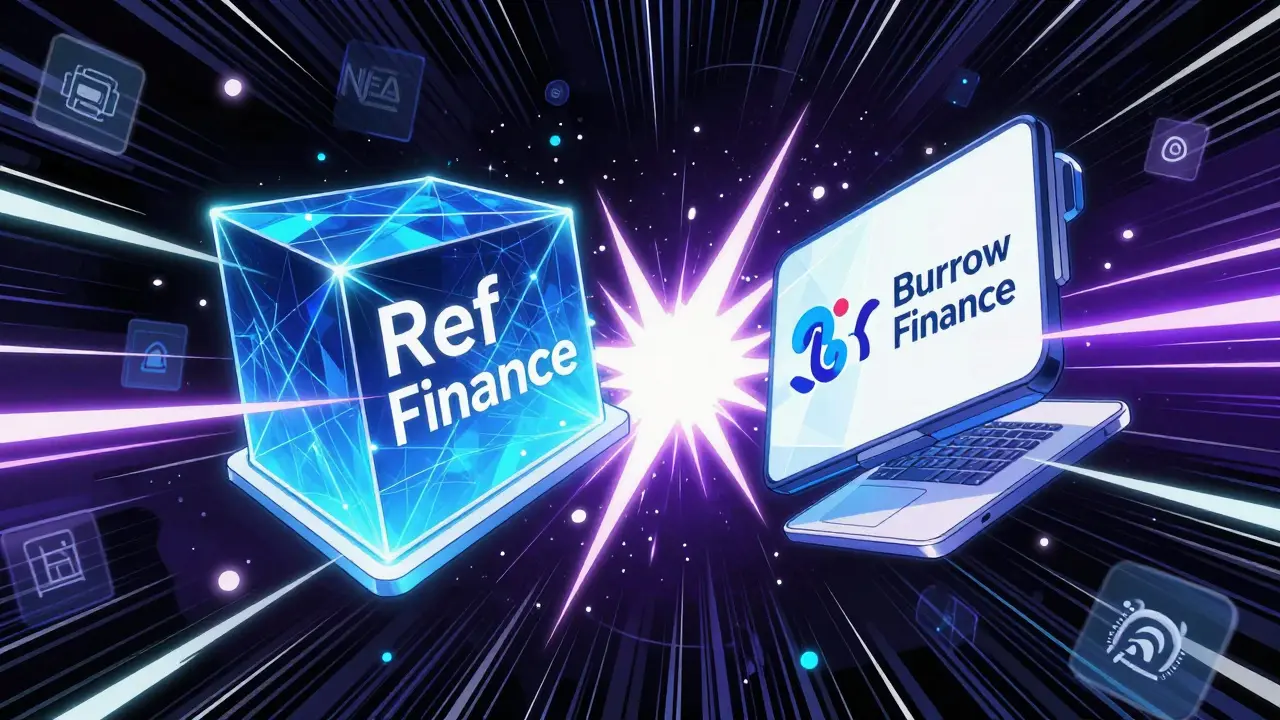
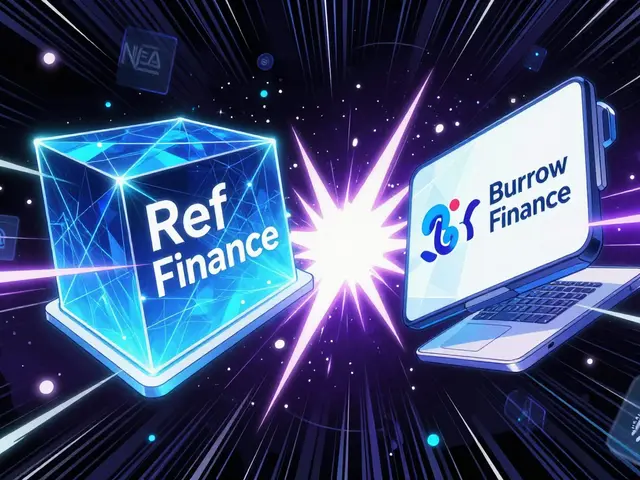
You’ve probably heard the buzz around Rhea Finance, especially if you’re deep in the NEAR Protocol ecosystem. It’s not just another decentralized exchange (DEX) popping up overnight. This platform is the result of a major consolidation effort, merging two established projects-Ref Finance and Burrow Finance-into one unified interface. But does that merger actually make your life easier, or did it just create a bigger target for volatility? With the RHEA token now trading on major centralized exchanges like Bitget, the stakes are higher than ever.
I’ve spent time digging into the numbers, talking to users in the community, and testing the interface myself. The goal here isn’t to tell you whether to buy or sell, but to give you a clear picture of what Rhea Finance offers, where it falls short, and how it stacks up against giants like Uniswap. If you’re looking for a streamlined way to trade on NEAR without juggling multiple wallets and protocols, this review breaks down exactly what you need to know before you connect your wallet.
What is Rhea Finance?
Rhea Finance is a decentralized exchange built on the NEAR Protocol, formed by the merger of Ref Finance and Burrow Finance. It aims to simplify DeFi by combining liquidity pools, lending, and trading into a single dashboard.
The Origin Story: Why the Merger Matters
To understand Rhea Finance, you have to look at why it exists. In the early days of DeFi, fragmentation was a huge headache. You’d have one protocol for swapping tokens and another for lending them out. Managing positions across these separate platforms meant paying gas fees twice, tracking two different dashboards, and worrying about security risks in multiple smart contracts.
Rhea Finance launched officially as a consolidated entity on July 30, 2025. The team behind Ref Finance and Burrow Finance decided to join forces. The logic was simple: combine their liquidity to reduce slippage and abstract away the cross-chain complexities that usually plague NEAR users. Instead of hopping between apps, you get one interface. For someone who trades frequently, saving even 15 minutes a day on management tasks adds up quickly. One user, Alex Chen, noted in August 2025 that this unified dashboard cut his cross-protocol management time by about 65%. That’s a significant efficiency gain.
However, mergers aren’t magic. They bring together codebases, communities, and tokenomics that didn’t originally align. The success of Rhea depends entirely on whether this integration feels seamless or clunky. From my experience, the interface is clean, but there are still quirks in how liquidity is distributed during peak hours.
Trading Experience: Liquidity, Fees, and Slippage
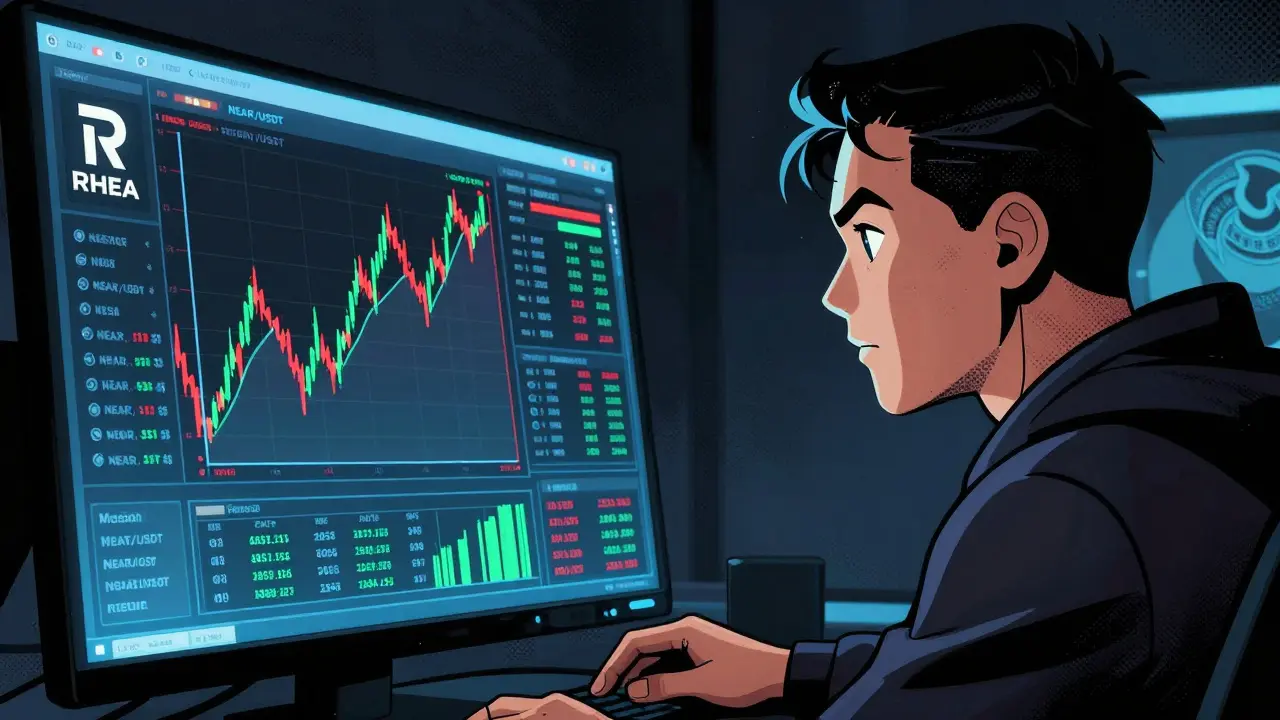
Let’s talk about the meat of the operation: trading. Rhea Finance currently supports 47 coins and 106 trading pairs. That might sound small compared to Uniswap, which boasts over 1,800 pairs, but remember, Rhea is niche-focused. It’s designed primarily for the NEAR ecosystem. If you’re holding USDT, NEAR, or other top-tier NEAR assets, you’ll find plenty of depth.
The average bid-ask spread sits at 0.6%, which is competitive for a mid-sized DEX. However, liquidity depth isn’t uniform. While the volume percentile ranking is strong at the 93rd position, meaning it handles more volume than most peers, large swaps can still trigger slippage. A Reddit user named 'DeFi_Watcher2025' pointed out in October 2025 that they experienced 3-5% slippage on larger transactions. This defeats the purpose of consolidation if you’re moving serious capital. For small to medium trades, though, the execution is smooth.
Gas fees on NEAR are generally low, but during network congestion, estimation inaccuracies can bite you. The community knowledge base recommends setting manual gas limits 15-20% above the suggested value during peak hours. It’s an extra step, but it prevents failed transactions, which cost you money and time.
| Feature | Rhea Finance | Uniswap V3 | PancakeSwap |
|---|---|---|---|
| Blockchain | NEAR Protocol | Ethereum & L2s | BSC & Ethereum |
| Trading Pairs | 106 | 1,800+ | 1,200+ |
| Avg. Spread | 0.6% | Variable (often lower) | 0.04% - 0.25% |
| Primary Focus | NEAR Ecosystem | Multi-chain/ETH | BSC Ecosystem |
| User Interface | Consolidated (Trade/Lend) | Swapping Only | Swapping + Yield Farming |
The RHEA Token: Value, Supply, and Volatility
Every DEX has its native token, and Rhea Finance uses RHEA. Understanding its mechanics is crucial because the token’s performance often mirrors the platform’s health. The total supply is capped at 1 billion tokens. As of late 2025, only 200 million (20%) were in circulation. The remaining 800 million are locked in a 3-year vesting schedule.
This vesting structure is a double-edged sword. On one hand, it prevents immediate dumping by early investors. On the other, it creates uncertainty. If new tokens enter the market faster than demand grows, prices could drop. Analysts from Wallet Investor suggest that if the release schedule aligns with user growth, it could provide sustainable liquidity. But if adoption stalls, those unlocking tokens might flood the market, driving prices down.
Volatility has been high. Following its listing on Bitget in July 2025, RHEA saw 28% price swings within a month. That’s significantly higher than the 15-18% typical for established DeFi tokens. CoinCodex’s technical indicators predicted a bearish trajectory for late 2025, forecasting a drop to $0.01783. Conversely, 3Commas projected a range between $0.0203 and $0.0227 for December 2025. These conflicting predictions highlight the speculative nature of the token right now.
If you’re holding RHEA, be prepared for wild rides. It’s not a stable store of value yet; it’s a high-risk, high-reward asset tied directly to the success of the NEAR ecosystem’s consolidation efforts.
Security and Trust: What You Need to Know
In DeFi, trust is earned through transparency and track record. Rhea Finance operates as a decentralized protocol, meaning there’s no central company to sue if things go wrong. Your security depends on the smart contracts and your own wallet hygiene.
The platform integrates with major NEAR-compatible wallets like Ledger and Meteor Wallet. This is a good sign-it means you don’t have to trust a custodial service with your keys. However, the merger itself introduces complexity. Combining two codebases increases the surface area for potential bugs. So far, there haven’t been any major exploits reported, but the community remains vigilant.
Trustpilot shows a 3.8/5 rating based on 142 reviews as of October 2025. Positive reviews praise the "intuitive NEAR-native interface." Negative reviews, however, frequently cite "limited customer support channels." In a decentralized world, support often comes from Discord or Telegram. Rhea has active communities there (12,543 members on Telegram, 8,732 on Discord), but response times average 18 hours for non-urgent issues. If you’re stuck during a critical trade, you might be on your own.
A concerning signal emerged in October 2025 when an unnamed trading platform removed RHEA from contract trading. While we don’t know the exact reasons, such moves often indicate a lack of confidence in the cryptocurrency’s stability or regulatory compliance. Keep an eye on these developments, as they can impact liquidity and market recognition.
Who Should Use Rhea Finance?
Rhea Finance isn’t for everyone. If you’re a casual trader looking to swap Bitcoin for Ethereum, stick with larger multi-chain DEXs. Rhea shines for specific users:
- NEAR Ecosystem Believers: If you hold significant assets on NEAR and want to avoid bridging fees to other chains, Rhea is your best bet.
- DeFi Power Users: Those who lend and borrow frequently will appreciate the integrated interface. No more switching tabs between a DEX and a lending protocol.
- Efficiency Seekers: If you value time over tiny fee differences, the consolidated dashboard saves you hours of management.
On the flip side, avoid Rhea if:
- You Trade Large Volumes: The liquidity depth isn’t there for whale-sized transactions without significant slippage.
- You Want Multi-Chain Access: Unlike THORSwap, which supports 20+ blockchains, Rhea is strictly NEAR-focused (for now).
- You Need Instant Support: The decentralized support model means slow responses.

Future Outlook: Expansion and Risks
The roadmap announced in August 2025 includes a planned integration with Ethereum via a bridge solution expected in Q1 2026. This is a critical move. Staying confined to NEAR limits growth. Bridging to Ethereum would open up massive liquidity pools and attract a broader user base. Delphi Digital notes that while the consolidation model is positive, long-term viability depends on this cross-chain expansion. Failure to diversify could cap Rhea’s market share at single digits even within its niche.
Regulatory pressures are also mounting. While Rhea is decentralized, its token is listed on centralized exchanges like Bitget, which operate under jurisdictional rules. This creates a gray area. If regulators crack down on DEX tokens, RHEA could face delisting risks, similar to what happened with some other governance tokens in previous years.
Despite these risks, the NEAR ecosystem is growing. Total Value Locked (TVL) reached $1.8 billion in October 2025, a 37% year-over-year increase. Rhea captures an estimated 12-15% of NEAR-based decentralized trading volume. As the ecosystem matures, Rhea is well-positioned to benefit, provided it executes its expansion plans successfully.
Final Thoughts
Rhea Finance represents a bold step toward simplifying DeFi on NEAR. The merger of Ref and Burrow Finance has created a powerful tool for ecosystem natives, offering convenience and efficiency that standalone protocols can’t match. However, it’s not without flaws. Liquidity constraints for large trades, high token volatility, and limited support channels are real hurdles.
If you’re already invested in NEAR, Rhea is worth trying. Start with small amounts to test the waters. Monitor the upcoming Ethereum bridge announcement closely, as that could be the catalyst for wider adoption. Just remember: in crypto, fundamentals can change fast. Do your own research, keep your private keys safe, and never invest more than you can afford to lose.
Is Rhea Finance safe to use?
Rhea Finance uses audited smart contracts and non-custodial wallets, which enhances security. However, as with all DeFi platforms, there are risks associated with smart contract vulnerabilities and market volatility. Always use a hardware wallet like Ledger for added protection.
How do I start trading on Rhea Finance?
You need a NEAR-compatible wallet (like Meteor Wallet or Ledger). Fund it with NEAR or other supported tokens, then connect it to the Rhea Finance website. Navigate to the Swap tab, select your tokens, and execute the transaction. Ensure you have enough NEAR for gas fees.
What is the RHEA token used for?
The RHEA token is used for governance, staking rewards, and potentially fee discounts within the Rhea Finance ecosystem. Holding RHEA allows users to vote on protocol upgrades and participate in decision-making processes.
Can I trade Ethereum tokens on Rhea Finance?
Currently, Rhea Finance is focused on the NEAR Protocol. However, a bridge to Ethereum is planned for Q1 2026. Until then, you can only trade assets native to or bridged onto NEAR.
Why did Rhea Finance merge with Ref and Burrow?
The merger aimed to consolidate liquidity, reduce fragmentation in the NEAR DeFi space, and provide a unified interface for trading and lending. This reduces user friction and improves price execution by pooling resources from both former platforms.
What are the fees on Rhea Finance?
Rhea Finance charges standard NEAR network gas fees plus a small protocol fee for swaps. The average bid-ask spread is 0.6%. Specific swap fees vary by pool liquidity and token pair. Always check the estimated output before confirming a transaction.
Where can I buy RHEA tokens?
RHEA tokens are available on several centralized exchanges including Bitget, Binance, GATE, and MEXC. You can also acquire them directly on the Rhea Finance DEX by swapping other cryptocurrencies.
How does Rhea compare to Uniswap?
Uniswap is a multi-chain giant with vastly more trading pairs and liquidity. Rhea is specialized for the NEAR ecosystem, offering integrated lending and trading features that Uniswap lacks. Choose Rhea for NEAR-specific efficiency and Uniswap for broad asset selection.
Is Rhea Finance regulated?
As a decentralized protocol, Rhea Finance itself is not regulated by a central authority. However, its token listings on centralized exchanges like Bitget are subject to local regulations in jurisdictions where those exchanges operate.
What is the future roadmap for Rhea Finance?
Key developments include the launch of an Ethereum bridge in Q1 2026 to expand cross-chain capabilities, continued optimization of liquidity pools, and enhanced governance features for RHEA token holders.
JEVON HALL
June 4 2026hey guys, just wanted to drop a quick tip for anyone new to Rhea. the gas fees on NEAR are super low compared to ETH but you gotta watch out during peak hours. i usually set my manual gas limit about 15-20% higher than what the app suggests so my txs dont fail 😅 it saves so much headache later when you realize your swap got stuck in limbo. also make sure you have enough NEAR in your wallet for the gas itself, not just the token you want to swap. hope this helps someone avoid losing money on failed transactions! 🚀
Narendra Kulkarni
June 6 2026thats really helpful info thank you for sharing. i was wondring if the slippage is still high for big amounts like the post said. i heard some ppl say 3-5% which sounds scary for any trader trying to move serious capital. does anyone else experiance that or is it just bad luck?
JEVON HALL
June 7 2026@narendra kulkarni yeah the slippage can be real if you try to dump a huge bag all at once. since its a niche DEX focused on NEAR the liquidity depth isnt as deep as Uniswap. i stick to smaller trades or split them up over time to keep slippage under 1%. its annoying but better than eating 5% loss instantly. the spread is decent for normal swaps tho 👍
verna kennedy
June 8 2026It is quite amusing how people continue to defend these fragmented ecosystems when the market clearly favors consolidation and liquidity depth. The merger of Ref and Burrow Finance was theoretically sound, yet the execution remains questionable given the persistent slippage issues reported by users. One must consider whether this platform is truly solving fragmentation or merely creating a larger target for volatility without addressing the core liquidity deficits. The reliance on a single chain further limits its utility in a multi-chain world.
Greg Lewis
June 9 2026you think you know what fragmentation means but do you really? the whole concept of merging protocols is just a bandaid on a bleeding wound. we are moving towards a singular truth in blockchain and anything that tries to compartmentalize value is fighting against the natural order of things. why do we need different chains when one could rule them all? it is a philosophical failure of the entire industry to keep building silos instead of bridges. rhea is just another example of this misguided attempt to control narrative through artificial unity.
Matthew Malone
June 11 2026Oh please, spare me the pseudo-intellectual drivel about 'natural order'. This isn't a philosophy seminar, Greg, it's a financial instrument review. The fact that Rhea is listing on Bitget shows real-world demand, unlike your abstract theories. Americans are leading the charge in crypto adoption because we understand leverage and efficiency, not because we're waiting for some utopian single-chain fantasy. Stick to trading, leave the metaphysics to the poets.
dan kaffeman
June 12 2026You people are wasting your time analyzing spreadsheets while the smart money moves elsewhere. Rhea is a trap for the uneducated masses who don't understand market manipulation. The vesting schedule is designed to dump on retail investors like yourselves. I've seen this play before and I won't let these elitist project teams fool me again. They promise expansion but deliver dilution. Stay away from this garbage if you value your capital.
Dr Lynea LaVoy
June 12 2026I appreciate the caution here, but let's look at the data objectively. The TVL growth of 37% year-over-year indicates genuine ecosystem strength, not just manipulation. While the token volatility is high, that is typical for early-stage DeFi protocols undergoing significant structural changes like mergers. It is important to distinguish between short-term price action and long-term protocol utility. For those using NEAR assets, the integrated lending and swapping interface does offer tangible time savings, which has value beyond just token speculation.
Meg Gran
June 13 2026oh right because tvl is the only metric that matters lol. you can have billions locked up and still be a disaster if the code is buggy or the team is incompetent. i mean come on, removing contract trading on major platforms is a huge red flag that no amount of tvl hype can cover up. its like painting over mold on a wall. eventually it peels off and you realize the foundation was rotten all along. stop pretending everything is fine just because some chart went up.
aaliyah zahid
June 14 2026Look, I get the skepticism, but maybe we should acknowledge that different regions have different approaches to DeFi. In some parts of the world, having a unified dashboard for NEAR assets is actually a massive quality of life improvement. It’s not about being elite or basic; it’s about accessibility. If Rhea makes it easier for everyday people to participate in the economy, isn’t that worth something? We should be encouraging innovation rather than tearing it down with cynicism.
Kelly Tenney
June 14 2026I completely agree with Aaliyah. Accessibility is key. I’ve been using Rhea for small daily trades and the interface is surprisingly intuitive. It doesn’t feel like I’m wrestling with complex settings every time I want to swap tokens. The community support on Discord is slow, yes, but the documentation is pretty good. For someone who values their time, saving 15 minutes a day on management tasks adds up significantly over a month. It’s a tool that works for its intended audience.
Caralee Robertson
June 15 2026i love that u mentioned the time saving aspect. honestly thats what sold me on it too. im not a whale so i dont care about the slippage on huge amounts but for my daily needs it works great. the only thing that bugs me is when the network gets congested and the gas estimates go crazy. but overall its a nice change from juggling multiple tabs. thanks for the positive vibes!
Erik Kirana
June 16 2026The superficial praise for user experience ignores the fundamental economic flaws inherent in the RHEA token model. The 80% locked supply creates a ticking time bomb of potential sell pressure that will inevitably crush retail holders. It is disheartening to see such naive optimism in the face of obvious predatory tokenomics. These projects rely on FOMO to mask their lack of sustainable revenue models. Do not be fooled by the polished UI.
Mark Corpuz
June 17 2026While the concerns regarding the vesting schedule are valid, it is equally important to note that the unlocked portion represents only 20% of the total supply. This structure is common among established DeFi protocols to ensure team alignment and long-term development funding. The key metric to watch is whether the incoming demand from new users offsets the gradual release of tokens. Historical data from similar mergers suggests that successful integration often leads to increased utility, which can absorb the additional supply. Therefore, dismissing the project solely based on vesting schedules may be premature.
Alexander DeVries
June 18 2026Let’s cut through the noise. You either use the tool or you don’t. If you’re holding NEAR assets, Rhea is currently the most efficient way to trade them without bridging fees. The Ethereum bridge coming in Q1 2026 is the real catalyst to watch. If they pull that off, the current complaints about liquidity become irrelevant. Until then, treat it as a specialized tool for the NEAR ecosystem. Stop whining about what it isn’t and use what it is.