
Trading meme coins often feels like walking a tightrope. You’re chasing high volatility returns while trying to avoid the hidden traps that plague smaller platforms. If you are holding Baby Doge Coin is a community-driven cryptocurrency on the BNB Chain known for its massive supply and deflationary tokenomics, you’ve likely encountered BabyDogeSwap is a specialized decentralized exchange (DEX) built specifically for the Baby Doge ecosystem on the BNB Smart Chain. But here is the real question: does this platform actually offer value, or is it just another niche wrapper around standard liquidity pools?
I’ve spent years analyzing decentralized exchanges, from giants like Uniswap to obscure gems on sidechains. BabyDogeSwap sits in a unique spot. It isn’t trying to be everything to everyone. Instead, it doubles down on one thing: optimizing the experience for Baby Doge holders. In this review, we will break down the fees, security, user experience, and whether this DEX deserves a spot in your wallet in 2026.
What Exactly Is BabyDogeSwap?
Unlike major aggregators such as 1inch is a decentralized exchange aggregator that splits trades across multiple DEXs to find the best prices or general-purpose platforms like PancakeSwap is the leading decentralized exchange on the BNB Chain offering hundreds of trading pairs and yield farming opportunities, BabyDogeSwap was born out of necessity for a specific community. Launched in 2022, it operates entirely on the BNB Smart Chain is a blockchain network compatible with Ethereum’s Virtual Machine, known for fast transactions and low gas fees (BSC). Its primary function is to facilitate swaps between BEP-20 tokens, with a heavy emphasis on the native BABYDOGE token.
The platform uses an Automated Market Maker (AMM) model. This means there are no order books. Instead, you trade against liquidity pools provided by other users. As of late 2023 data points which remain relevant for understanding its scale, the platform supported roughly 31 trading pairs. While this sounds small compared to PancakeSwap’s 400+ pairs, it reflects the platform’s intent. It is not designed to be a hub for every altcoin. It is designed to be the most efficient way to move Baby Doge tokens in and out of other assets within its ecosystem.
Fees and Tokenomics: The Real Deal
If you are trading large volumes, fees matter. Let’s look at how BabyDogeSwap structures its costs. The standard swap fee is set at 0.30%. This might sound familiar because it mirrors the industry standard established by early AMMs. However, the distribution of this fee is where things get interesting:
- 0.20% goes back to liquidity providers (LPs) as rewards.
- 0.05% is allocated to the treasury for development and operations.
- 0.05% is directed toward a buyback and burn program, reducing the total supply of tokens.
Here is the kicker for active traders: if you hold the native BabyDoge token, you can slash these fees significantly. Holders receive up to a 70% discount on swap fees, bringing the cost down to a mere 0.09%. For certain high-volume pairs, like BabyDoge/BNB, the swap fee is effectively 0%. This creates a powerful incentive to keep your BABYDOGE tokens rather than selling them immediately after a pump, which helps stabilize the token’s price action slightly more than pure speculation would allow.
| Platform | Standard Swap Fee | Discounted Fee (Holders) | Primary Chain |
|---|---|---|---|
| BabyDogeSwap | 0.30% | 0.09% (with BABYDOGE) | BNB Chain |
| PancakeSwap | 0.25% | N/A (Standard) | BNB Chain |
| Uniswap | 0.30% | N/A | Ethereum / L2s |
Security and Trust: Should You Worry?
When dealing with DeFi, security is non-negotiable. BabyDogeSwap has undergone audits by CertiK is a leading blockchain security firm that provides smart contract auditing and risk management services, a reputable name in the industry. This audit provides a baseline level of confidence that the smart contracts don’t contain obvious backdoors or critical vulnerabilities. However, an audit is a snapshot in time. Code changes, new features, or integration updates can introduce new risks.
One point of contention among purists is the consensus mechanism underlying the broader Baby Doge ecosystem. While the DEX itself runs on the BNB Chain, the Baby Doge token originally utilized a Proof of Authority (PoA) model with 21 validators approved by developers. Critics argue this makes the token less decentralized than fully permissionless chains. For the DEX user, this means you are trusting the BNB Chain’s security for transaction finality, but the economic incentives of the pool are tied to a token with centralized elements. Always remember: in DeFi, you are your own bank. Never invest more than you can afford to lose, and always verify contract addresses directly from official sources.
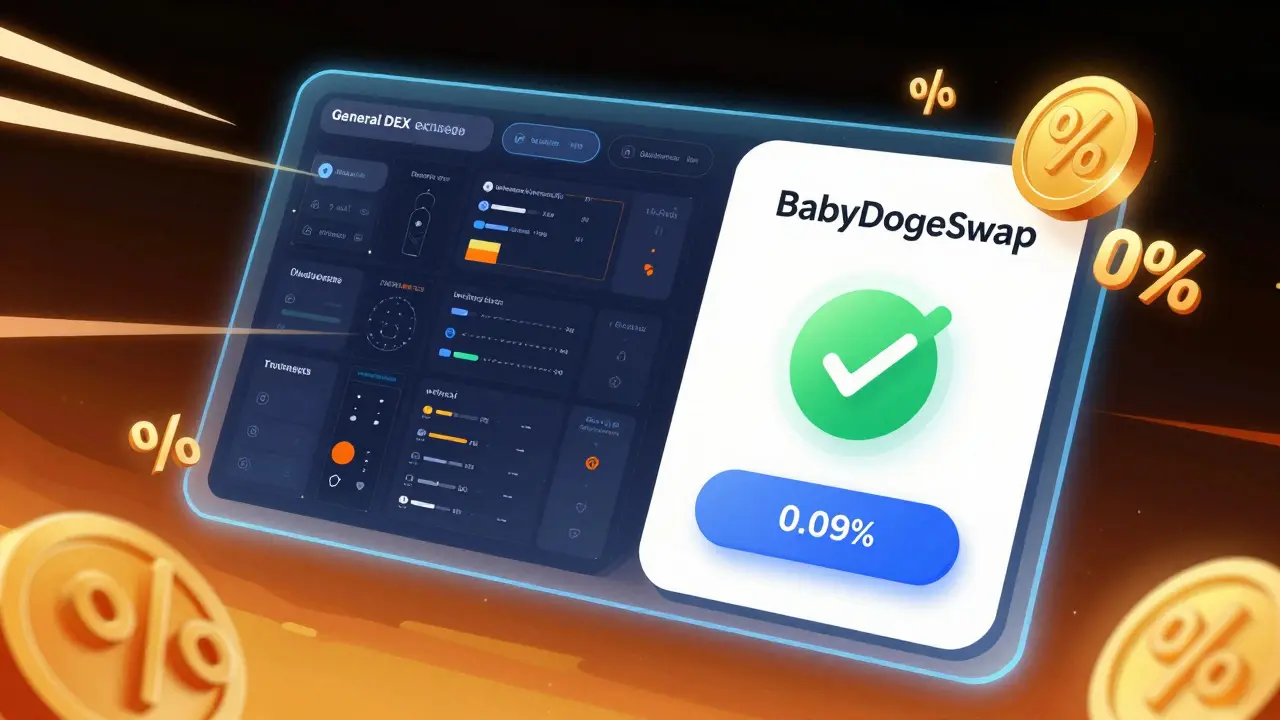
User Experience and Interface
Let’s talk about how it feels to use the platform. BabyDogeSwap connects via Web3 wallets like MetaMask is a popular software cryptocurrency wallet used to interact with the Ethereum blockchain and other EVM-compatible chains or Trust Wallet. The interface is clean, minimal, and functional. It doesn’t have the cluttered dashboards or complex charting tools found on professional trading terminals. This is intentional. The target audience is the average holder, not the institutional arbitrageur.
For beginners, the learning curve is moderate. If you’ve used any DEX before, swapping tokens here will feel second nature. You paste the token address, approve the spend, and confirm the transaction. Gas fees on the BNB Chain are typically fractions of a cent, making micro-transactions viable. However, the platform lacks advanced features like limit orders, stop-losses, or deep historical data visualization. If you need those tools, you’ll need to bridge your assets to a larger DEX or use a separate trading terminal.
Liquidity and Trading Pairs
Liquidity is the lifeblood of any DEX. Without it, slippage kills your profits. BabyDogeSwap focuses heavily on the BabyDoge/BNB pair. This concentration means that for this specific pair, liquidity is relatively deep, resulting in lower slippage for medium-sized trades. However, if you try to swap obscure tokens through this platform, you may encounter significant price impact due to thinner pools.
Compared to PancakeSwap, which aggregates liquidity from hundreds of projects, BabyDogeSwap is a specialist. It excels when you are moving in or out of the Baby Doge ecosystem. It struggles if you are trying to use it as a gateway to explore the wider DeFi landscape. For yield farmers, the platform offers LP token staking options. By providing liquidity, you earn a share of the 0.20% trading fees. Additionally, the platform integrates with yield farming pools where you can stake your BABYDOGE tokens for fixed or flexible terms to earn additional rewards. This creates a circular economy that incentivizes long-term holding.
Pros and Cons: The Bottom Line
After analyzing the mechanics, fees, and security posture, here is my honest assessment of BabyDogeSwap in 2026.
Why You Should Use It:
- Low Fees for Holders: The 70% fee discount is a genuine benefit for active BABYDOGE traders.
- Simplicity: The UI is straightforward and easy to navigate for beginners.
- Ecosystem Integration: It seamlessly connects with BabyDogeNFT and other ecosystem utilities.
- Cheap Transactions: Running on BNB Chain ensures gas fees remain negligible.
Why You Might Avoid It:
- Limited Scope: Only 31 trading pairs restricts its utility for diverse portfolios.
- Centralization Concerns: The underlying token’s PoA history raises questions for decentralization purists.
- Volatile Underlying Asset: The platform’s health is tightly coupled with BABYDOGE’s price action, which has shown extreme volatility (drops of over 20% in weeks).
- Lack of Advanced Tools: No charting, limit orders, or advanced analytics.
Final Verdict
BabyDogeSwap is not a replacement for PancakeSwap or Uniswap. It is a specialized tool for a specialized community. If you are deeply invested in the Baby Doge ecosystem, looking to farm yields, or want to minimize fees when swapping BABYDOGE tokens, this platform delivers exceptional value. The fee discounts and integrated yield farming make it the logical choice for loyal holders.
However, if you are looking for a general-purpose DEX to trade a wide variety of cryptocurrencies, you will find BabyDogeSwap lacking. Its limited pair selection and focus on a single volatile asset mean it carries higher concentration risk. Use it for what it was built for: optimizing the Baby Doge experience. Keep your diversified portfolio on larger, more liquid platforms. And as always, do your own research. The crypto market moves fast, and yesterday’s gem can become tomorrow’s ghost.
Is BabyDogeSwap safe to use?
BabyDogeSwap has been audited by CertiK, a reputable security firm, which reduces the risk of smart contract exploits. However, like all DeFi platforms, it carries inherent risks including potential bugs, rug pulls, or market manipulation. Users should always verify contract addresses and never invest more than they can afford to lose.
How much does it cost to swap on BabyDogeSwap?
The standard swap fee is 0.30%. However, if you hold BabyDoge tokens, you can receive up to a 70% discount, reducing the fee to 0.09%. Some high-volume pairs, like BabyDoge/BNB, may even have 0% swap fees.
Can I use BabyDogeSwap on Ethereum?
No, BabyDogeSwap operates exclusively on the BNB Smart Chain (BSC). To use it, you need a wallet configured for BSC and enough BNB to pay for gas fees. It does not support Ethereum Mainnet transactions directly.
What is the difference between BabyDogeSwap and PancakeSwap?
PancakeSwap is a general-purpose DEX with hundreds of trading pairs and advanced features. BabyDogeSwap is a niche platform focused specifically on the Baby Doge ecosystem. It offers lower fees for BABYDOGE holders but has far fewer trading pairs and less liquidity for non-BABYDOGE tokens.
How do I start using BabyDogeSwap?
First, set up a Web3 wallet like MetaMask or Trust Wallet and configure it for the BNB Smart Chain. Buy some BNB to cover gas fees. Then, visit the official BabyDogeSwap website, connect your wallet, and ensure you are interacting with the correct contract address before swapping tokens.

Sheldon Friesen
May 13 2026Oh, look at that! Another DEX review for a coin named after a puppy 🐶. How original! But seriously, the fee structure is actually... wait for it... not completely terrible?!! Who would have thought?! The 70% discount for holders is a neat little trick to keep people from dumping immediately. It’s almost like they want you to hold the bag! 😂 But hey, if you’re already deep in the Baby Doge ecosystem, why pay full price on PancakeSwap when you can save a few cents here? Just don’t expect institutional-grade tools. This isn’t Wall Street; it’s a digital petting zoo with smart contracts!
Bronwen Butler
May 14 2026everyone is so hung up on the fees but nobody talks about the liquidity depth which is practically non-existent for anything other than babydoge/bnb pairs its basically a dead end unless you are only trading that one token and even then the slippage on larger orders will make you cry
Jocelyn Garcia
May 14 2026From a DeFi perspective, the AMM model here is standard BSC fare, but the concentration risk is real. If BABYDOGE dumps, the LPs get hit hard because there's no diversification in the pool assets really. I've seen similar niche DEXs fail when the underlying meme loses steam. The yield farming might look attractive initially, but impermanent loss is going to eat those gains alive if the token volatility stays this high. Keep an eye on the TVL trends.
Amit Varpe
May 15 2026Indian devs built better tech than this garbage :P Why use a specialized swap when PancakeSwap has more liquidity and better security audits? This is just another rug pull waiting to happen. Stick to proven platforms or go home. No need for fancy discounts if the whole platform collapses next week. Save your time and money. :)
Tricia Alach
May 16 2026I feel like the community aspect is what keeps this alive though! Its not just about the numbers right? The deflationary burn mechanism is kinda cute in a way. Like we are all burning tokens together to make the remaining ones more valuable (hopefully). I tried swapping last week and the UI was super easy to use. Maybe i am just naive but i liked the simplicity. Less clutter means less stress for me lol.
Michelle Bonahoom
May 16 2026typical american hype machine trying to push a useless token wrapper. the centralization concerns are huge and everyone ignores them because they want free money. PoA validators mean developers can pause transactions or change rules whenever they want. its not decentralized finance its centralized control with extra steps. dont fall for it.
Albert Lee
May 17 2026Man, I totally get the frustration with complex interfaces sometimes. You just want to swap your tokens without reading a manual! BabyDogeSwap does seem to hit that sweet spot for beginners who are intimidated by the big players. The fact that gas fees are negligible on BSC makes it much less painful to test out small trades. I appreciate that the author highlighted the security audit too. It gives me a bit more confidence to try it out, at least for smaller amounts!
Matt Davis
May 18 2026Absolutely ridiculous to call this a 'specialized tool'. It is a glorified calculator with a dog theme! The lack of limit orders is not a feature it is a massive flaw for anyone serious about trading. You cannot manage risk effectively without stop-losses. This platform is designed for lemmings who buy at the top and sell at the bottom while paying premiums in slippage. Do not use this for any significant portfolio allocation. It is financial suicide wrapped in cute branding.
Pauline Larocco71
May 19 2026I think its important to remember that not everyone is a day trader looking for advanced charts. For someone like me who just wants to hold onto their crypto for the long term and maybe swap occasionally, this seems perfect. The cultural vibe of the baby doge community is very welcoming and supportive. I love how they integrate with NFTs too. It feels like a complete ecosystem rather than just a trading platform. Plus the low fees are a nice bonus for us casual holders!
beti macedo
May 20 2026It is quite fascinating how the tokenomics are structured to incentivize holding. The buyback and burn program is a classic move but effective in theory. However one must always be cautious of the centralization aspects mentioned in the post. The PoA model does raise some eyebrows regarding true decentralization. Nevertheless for those deeply embedded in the ecosystem it provides a convenient utility. Always DYOR as they say.
Ankush Pokarana
May 21 2026when we look at the broader philosophy of decentralized exchanges the purpose is to remove intermediaries yet here we see a platform that relies heavily on a single volatile asset which creates a fragile ecosystem. the convenience of lower fees is undeniable but one must ask themselves if the cost of potential illiquidity or centralization risks outweighs the savings. it is a delicate balance between accessibility and security that many users fail to consider until it is too late. the market will ultimately decide if this niche approach survives or fades into obscurity.
Bianca Vilas Boas Lourenço
May 23 2026Ugh why do these reviews always sound so boring? 😒 Like yeah it has low fees wow ground breaking news! I bet the customer support is non-existent because it's just bots and smart contracts. I tried using a similar DEX once and got stuck in a transaction for hours. Total nightmare. 🙄 I'm sticking to my centralized exchanges where I can at least call someone if things go wrong. This crypto stuff is too stressful for my poor heart. 💔
Yash Lodha
May 23 2026The CertiK audit is likely a paid formality meant to lull unsuspecting investors into a false sense of security. These 'audits' often miss subtle backdoors that can be exploited later. The PoA validators are essentially the new gatekeepers, monitoring your every move and ready to freeze assets if the narrative shifts against them. This is not freedom; it is a digital panopticon disguised as a decentralized exchange. Trust nothing that claims to be secure in this rigged system.