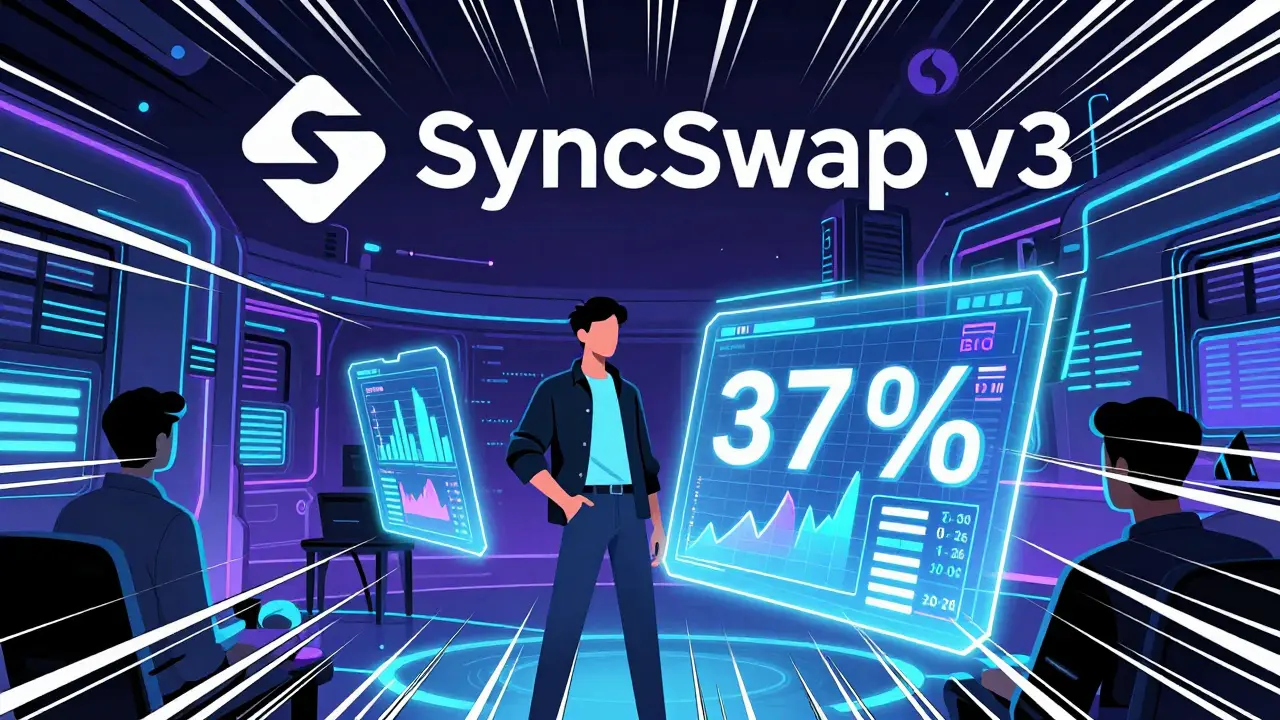
Trading on Ethereum mainnet used to feel like paying a premium for the privilege of moving money. You’d pay $10, maybe $50, just to swap tokens, and wait minutes for confirmation. That era is largely behind us thanks to Layer 2 solutions, and right now, zkSync Era is one of the hottest ecosystems in town. But which decentralized exchange (DEX) should you actually use? If you are looking at SyncSwap v3, a leading decentralized exchange built specifically for the zkSync Era network, you aren't alone. It currently dominates the landscape with over 37% market share.
This isn't just another generic DeFi protocol. SyncSwap has positioned itself as the go-to liquidity hub for zero-knowledge rollup technology. In this review, we cut through the hype to look at the real numbers: gas fees, speed, security, and whether the upcoming SYNC token launch makes it worth your attention in 2026.
What Exactly Is SyncSwap v3?
At its core, SyncSwap is an automated market maker (AMM) designed from the ground up for zkSync Era. While many DEXs port their code from Ethereum mainnet or Arbitrum, SyncSwap was built to leverage the specific architecture of zkRollups. This means it doesn't just run *on* zkSync; it optimizes for it.
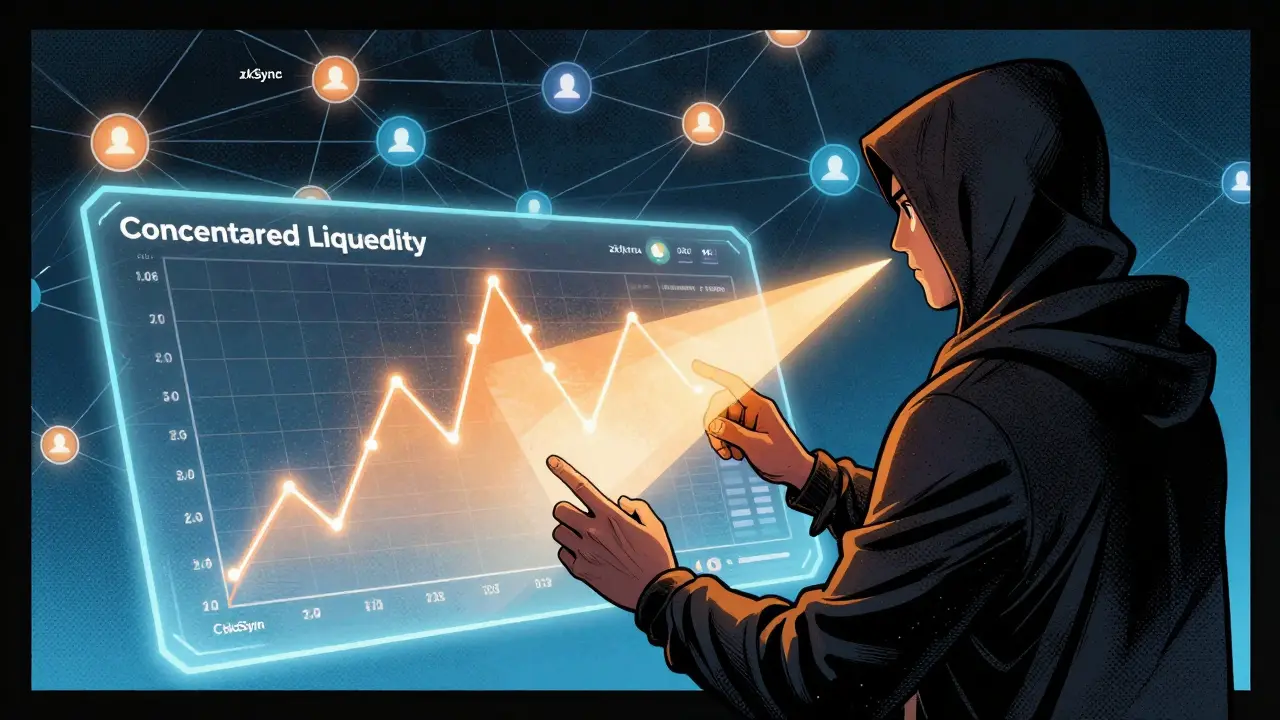
The "v3" designation refers to its latest iteration, which introduces concentrated liquidity positions similar to Uniswap v3. This allows liquidity providers to allocate capital within specific price ranges, boosting capital efficiency. For traders, this translates to deeper liquidity and tighter spreads, especially for major pairs like USDC/WETH.
Launched alongside the growth of the zkSync ecosystem post-2023, SyncSwap has rapidly become the dominant player. As of mid-2025, it held a Total Value Locked (TVL) between $63 million and $82 million, commanding roughly 35% to 37% of all DEX volume on zkSync. With over $8 billion in cumulative trade volume, it’s not a niche experiment anymore-it’s infrastructure.
Performance: Speed and Cost Breakdown
If you are switching from Ethereum mainnet, the performance difference will shock you. Here is what you can expect when using SyncSwap v3:
- Transaction Finality: Approximately 10-15 minutes for full settlement on the underlying layer, but swaps execute in 2-5 seconds on the interface.
- Gas Fees: Averages 0.0005 to 0.001 ETH per transaction. This is a 90-95% reduction compared to Ethereum mainnet.
- Throughput: Capable of handling around 2,000 transactions per second during peak loads.
- Cross-Network Support: Unlike competitors stuck on one chain, SyncSwap supports zkSync Era, Scroll, Linea, Taiko, and Sophon.
Why does the multi-network support matter? Because liquidity fragmentation is a huge problem in DeFi. By supporting five different networks, SyncSwap ensures that even if zkSync faces congestion or issues, you have alternatives without losing your familiar interface. When comparing gas costs, SyncSwap averages significantly lower fees than rivals like Mute.io or SpaceFi, offering a 60-70% cost advantage on average trades.
User Experience: The Good and The Ugly
Let’s be honest: DeFi interfaces can be clunky. SyncSwap is no exception, though it tries hard to improve. The dashboard provides clear views of your portfolio, active pools, and recent transactions. However, users frequently report a steeper learning curve than centralized exchanges (CEXs).
One common pain point is the initial setup. You need a Web3 wallet compatible with zkSync Era, such as MetaMask configured with the correct RPC settings. Bridging assets from Ethereum mainnet to zkSync takes 10-30 minutes depending on network congestion. Many new users get stuck here, unsure if their funds are lost or just pending. Community tutorials on YouTube have collectively amassed over 50,000 views helping people navigate this exact hurdle.
Once you’re in, the swapping experience is smooth. Slippage tolerance settings are easy to adjust, and the price impact indicators are transparent. However, Reddit discussions from late 2025 highlight that claiming airdrops or interacting with complex governance features can still confuse beginners. One user noted it took them 30 minutes just to figure out the proper claim process for early incentives. It’s powerful, but it demands patience.
Security and Trust Metrics
In crypto, security isn't a feature; it's a requirement. SyncSwap relies on the security model of zkSync Era, which uses zero-knowledge proofs to ensure data integrity without revealing private information. This offers "complete Ethereum security" at a fraction of the cost.
Key security attributes include:
- Open Source Code: Fully auditable GitHub repositories with 15-20 commits per week, showing active development and transparency.
- No Custody: Your funds remain in your wallet until the moment of swap. There is no central server holding your assets.
- Smart Contract Risks: Like all DeFi protocols, there is inherent risk in smart contract bugs. While no major exploits have been reported recently, always verify contract addresses before interacting.
It is worth noting that while the platform is secure by design, the broader ecosystem risks apply. If zkSync Era suffers a protocol-level failure, SyncSwap would be affected. Diversification across different L2s remains a wise strategy for large holders.
The SYNC Token: What You Need to Know
A major talking point for SyncSwap in 2025 and 2026 is its native token, SYNC. The total supply is capped at 100 million tokens. Initially, there was confusion regarding the tokenomics, with some sources citing a lack of official announcements. However, subsequent guides confirmed the structure.
The SYNC token serves several purposes:
- Governance: Holders can vote on protocol upgrades and fee structures.
- Fee Discounts: Using SYNC may reduce trading fees, incentivizing long-term holding.
- Liquidity Mining Rewards: Providers earn SYNC tokens for adding liquidity to pools.
For investors, the token represents a bet on the continued dominance of SyncSwap within the zkSync ecosystem. With Messari forecasting 20-30% quarterly growth for the zkSync ecosystem through 2026, the demand for SYNC could rise alongside platform usage. However, remember that token value is speculative and tied directly to adoption rates.
| Feature | SyncSwap v3 | Mute.io | SpaceFi |
|---|---|---|---|
| Market Share | ~37% | < 5% | < 5% |
| TVL (Approx.) | $63M - $82M | ~$20M | ~$15M |
| Supported Networks | 5 (zkSync, Scroll, etc.) | 1 (zkSync) | 1 (zkSync) |
| Avg Gas Fee | 0.0005 - 0.001 ETH | 0.0015 - 0.003 ETH | 0.0015 - 0.003 ETH |
| UI Complexity | Moderate | Low | Low |
Who Should Use SyncSwap?
SyncSwap isn't for everyone. If you are a complete beginner who wants to buy Bitcoin with a credit card, stick to a centralized exchange like Coinbase or Binance. SyncSwap is for users who already hold crypto and want to move it efficiently within the DeFi space.
It is ideal for:
- Active Traders: Those making multiple swaps daily will save significant amounts on gas fees.
- Liquidity Providers: Users seeking higher capital efficiency through concentrated liquidity positions.
- zkSync Ecosystem Believers: Investors who think zkRollups are the future of Ethereum scaling.
It may be less suitable for:
- Casual Users: Those unwilling to learn about bridging, wallets, and slippage.
- Micro-Traders: If you are swapping $5, even low gas fees can eat into your profits proportionally.
Final Verdict
SyncSwap v3 has earned its spot as the king of zkSync DEXs. Its combination of low fees, high speed, and expanding multi-chain support makes it a robust tool for serious DeFi participants. The upcoming SYNC token adds a layer of governance and incentive that could further solidify its position. While the interface has room for improvement, the underlying technology is sound, secure, and actively developed. If you are operating on zkSync Era, SyncSwap should be your default starting point.
Is SyncSwap safe to use?
Yes, SyncSwap is considered safe as it operates on the secure zkSync Era blockchain and uses open-source smart contracts. However, like all DeFi platforms, it carries inherent risks such as smart contract vulnerabilities and user error. Always double-check URLs and never share your private keys.
How do I bridge funds to SyncSwap?
You need to bridge assets from Ethereum mainnet to zkSync Era using the official zkSync bridge or third-party bridges like Orbiter. Connect your MetaMask wallet, select the amount to bridge, and confirm the transaction. Wait 10-30 minutes for finalization before trading on SyncSwap.
What is the SYNC token used for?
The SYNC token is used for governance voting, earning fee discounts on trades, and receiving rewards for providing liquidity. It has a fixed supply of 100 million tokens.
Does SyncSwap charge any hidden fees?
No hidden fees. You pay standard network gas fees (very low on zkSync) and a small trading fee that goes to liquidity providers. The fee structure is transparent and displayed before you confirm any swap.
Can I use SyncSwap on mobile?
Currently, SyncSwap is primarily accessed via web browsers. While the interface is responsive, a dedicated mobile app is reportedly in development for Q4 2025. Until then, use a mobile browser like Chrome or Brave.