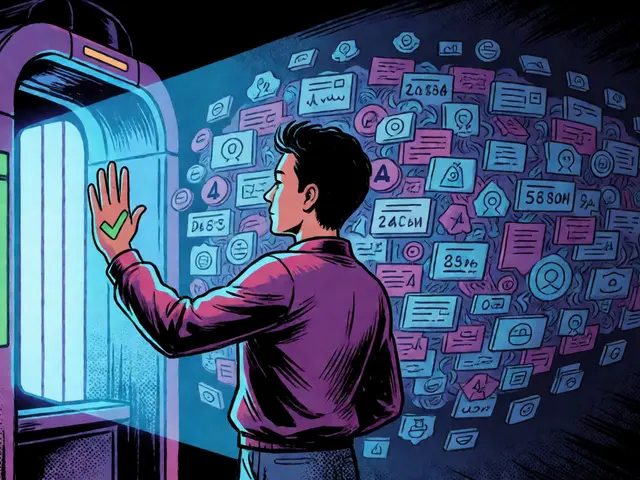
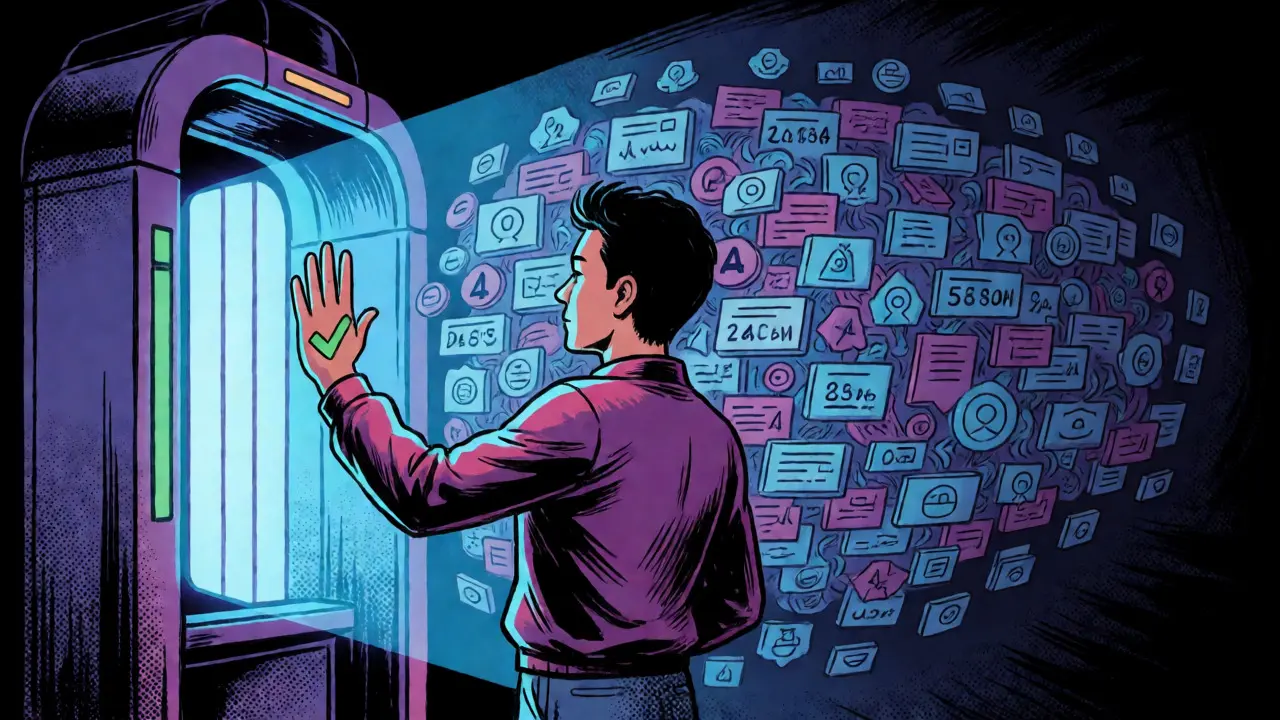
Imagine you need to prove to a bouncer that you are over 21, but you don't want to hand over your ID card with your name, address, and date of birth. You just need to prove the fact, not reveal the data behind it. That is essentially what zk-SNARKs do for blockchain transactions. They allow one party to prove they know something without revealing what that thing actually is.
This technology sounds like magic, but it’s pure math. Specifically, it’s cryptography designed to solve two massive problems in crypto: privacy and scalability. If you’ve ever wondered how Zcash hides transaction amounts or how Layer-2 networks compress thousands of transactions into one tiny proof, this guide breaks down exactly how zk-SNARKs work under the hood.
What Exactly Is a zk-SNARK?
Let’s unpack the acronym because each letter tells you something crucial about how this tech functions. Zero-Knowledge Succinct Non-Interactive Argument of Knowledge (zk-SNARK) is a cryptographic protocol that lets a prover convince a verifier that a statement is true without revealing any information beyond the validity of the statement itself.
- Zero-Knowledge: The verifier learns nothing about the private input. If I prove I know the password to a door, you learn I have the right key, but you don’t see the key.
- Succinct: The proof is tiny. Whether the computation takes 10 steps or 10 million, the proof size remains constant and small (often less than 300 bytes).
- Non-Interactive: No back-and-forth conversation is needed. The prover sends one message, and the verifier checks it. This is critical for blockchains where multiple nodes need to verify the same proof simultaneously.
- Argument of Knowledge: It proves the prover actually knows the secret witness, rather than just guessing.
The concept was formally introduced in a 2012 paper by cryptographers Bitansky, Canetti, Chiesa, and Tromer. Before this, proving complex computations on-chain was either too slow or required revealing all the data. zk-SNARKs changed the game by making verification nearly instant while keeping the underlying data hidden.
The Core Mechanism: How It Actually Works
To understand how zk-SNARKs function, you have to look at three distinct phases: Arithmetization, Proving, and Verification. Think of it as translating a real-world problem into math, creating a receipt for that math, and then checking the receipt.
Step 1: Arithmetization (Turning Code into Math)
Computers speak in code (if statements, loops), but cryptography speaks in polynomials. To use zk-SNARKs, developers must convert their application logic into an Arithmetic Circuit. This circuit consists of gates that perform basic operations like addition and multiplication. Every variable in your program becomes a wire, and every operation becomes a gate. If you want to prove you know a number $x$ such that $x^2 + x = 6$, you build a circuit that calculates this. If the output matches, the circuit is satisfied.
Step 2: The Trusted Setup
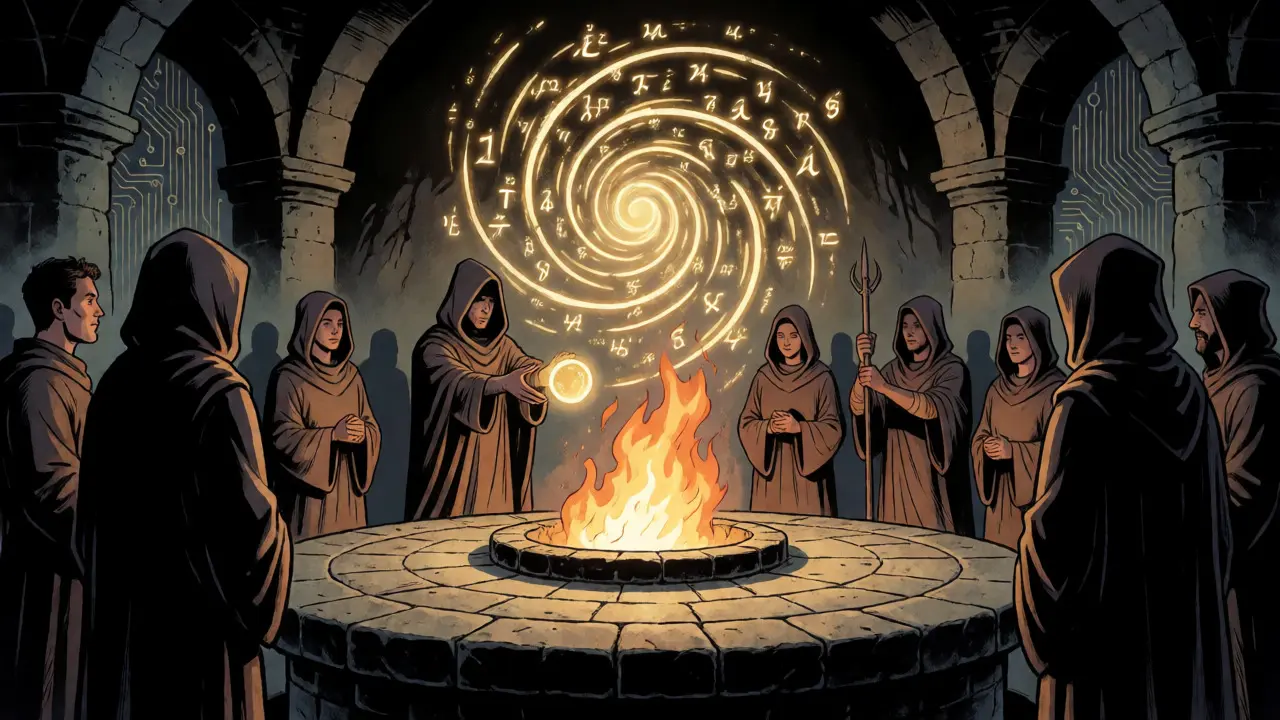
Here is the catch. Most zk-SNARK implementations require a "trusted setup" ceremony. Before anyone can create proofs, a set of random numbers (called toxic waste) is generated. These numbers are used to create public parameters (proving and verifying keys). Once these keys are generated, the random numbers must be destroyed forever. If someone keeps the "toxic waste," they can forge proofs-creating fake money out of thin air. This is why Zcash held a massive multi-party computation ceremony in 2016, involving dozens of participants worldwide, to ensure no single person had the complete secret.
Step 3: Proving and Verifying
Once the keys exist, the process is straightforward:
- Prover: Takes the public input (e.g., the transaction amount) and the private witness (the sender's balance) and runs them through the circuit using the Proving Key. This generates a short proof.
- Verifier: Takes the proof and the Public Input and runs it against the Verifying Key. If the math holds up, the verifier accepts the transaction.
The beauty here is speed. While generating a proof might take seconds or minutes depending on complexity, verifying it takes milliseconds. For a blockchain, this means nodes can check thousands of transactions per second without re-executing every single calculation from scratch.
Why Do Blockchains Need zk-SNARKs?
Blockchains are transparent by default. Everyone sees everyone else’s balance. While this ensures trust, it kills privacy. zk-SNARKs offer a solution to the transparency paradox: how do we keep the ledger secure without exposing sensitive data?
| Use Case | Problem Solved | Example Project |
|---|---|---|
| Private Payments | Hides sender, receiver, and amount | Zcash |
| Scalability (Rollups) | Compresses thousands of txs into one proof | StarkNet, Loopring |
| Identity Verification | Proves age/citizenship without sharing docs | Civic, Polygon ID |
| Voting | Verifies eligibility without revealing choice | Aragon |
Take Zcash, the pioneer of this tech. In a standard Bitcoin transaction, you broadcast inputs and outputs. Anyone can trace your funds. In Zcash, when you make a shielded transaction, the network verifies that the inputs equal the outputs and that you own the coins via a zk-SNARK. The actual values remain encrypted. The network agrees the transaction is valid without knowing who sent what to whom.
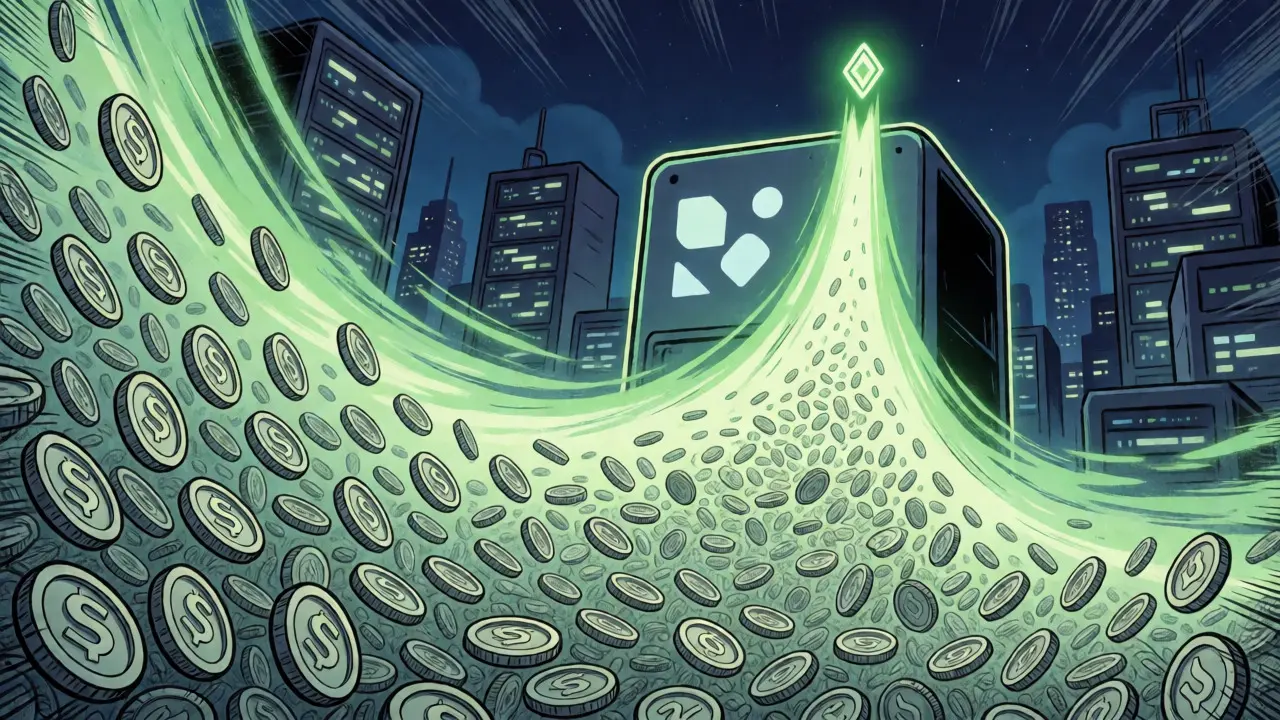
On the scalability front, Ethereum uses zk-SNARKs in its Layer-2 solutions called Rollups. Instead of posting every transaction to the main chain, the rollup processes them off-chain and posts a single zk-SNARK proof to Ethereum. This proof says, "I processed these 5,000 transactions correctly." Ethereum only needs to verify that one proof, saving massive amounts of gas fees.
zk-SNARKs vs. zk-STARKs: Which One Wins?
You’ll often hear zk-SNARKs compared to their rival, zk-STARKs (Zero-Knowledge Scalable Transparent Arguments of Knowledge). Both achieve similar goals, but they take different mathematical paths. Choosing between them depends on your specific needs.
| Feature | zk-SNARKs | zk-STARKs |
|---|---|---|
| Trusted Setup | Required (Toxic Waste risk) | Not Required (Transparent) |
| Proof Size | Very Small (~200-300 bytes) | Larger (Kilobytes) |
| Verification Speed | Extremely Fast | Fast, but slower than SNARKs |
| Quantum Resistance | No (Relies on Elliptic Curves) | Yes (Hash-based) |
| Ecosystem Maturity | High (Longer history) | Growing rapidly |
SNARKs win on efficiency. Their proofs are tiny, which is gold for blockchains where storage space costs money. However, STARKs win on security assumptions. Because STARKs don’t need a trusted setup, there’s no "toxic waste" to worry about. Plus, STARKs are believed to be resistant to quantum computers, whereas SNARKs rely on elliptic curve cryptography, which quantum computers could theoretically break in the future.
For most current applications, especially those prioritizing low transaction costs, SNARKs remain the dominant choice. But newer protocols like Halo 2 have started eliminating the trusted setup requirement for SNARK-like systems, bridging the gap between the two technologies.
Challenges and Limitations
It’s not all sunshine and rainbows. Implementing zk-SNARKs comes with significant hurdles.
The Learning Curve: Writing circuits for zk-SNARKs isn’t like writing JavaScript. Developers use specialized languages like Circom or Cairo. Debugging a circuit that fails to generate a proof can be frustrating because errors are often abstract polynomial mismatches rather than clear syntax errors.
Computational Cost of Proving: While verification is fast, generating the proof is heavy. Complex smart contracts can take several seconds to minutes to produce a proof. This requires powerful hardware, which can centralize the role of provers if not managed carefully.
Circuit Correctness: If your circuit has a bug, the proof might still verify mathematically but fail logically. For example, if you forget to check that a user has sufficient funds in your circuit design, the system will happily accept a negative balance. Rigorous auditing is mandatory.
The Future of Zero-Knowledge Proofs
The trajectory for zk-SNARKs is steeply upward. As blockchain adoption grows, the demand for privacy and scalability intensifies. We are seeing zk-SNARKs move beyond simple payments into complex areas like decentralized identity, supply chain tracking, and even AI verification.
Regulators are also taking notice. Governments want audit trails, but users want privacy. zk-SNARKs offer a middle ground: selective disclosure. A company can prove it paid taxes without revealing its entire revenue stream. This feature makes zk-tech attractive for institutional finance.
With continuous improvements in tooling and the emergence of universal setups (where one ceremony works for many projects), the barriers to entry are dropping. What started as an academic curiosity in 2012 is becoming the backbone of the next generation of internet infrastructure.
Are zk-SNARKs safe?
Yes, provided the implementation is correct. The main risk historically was the "trusted setup" where malicious actors could retain secret randomness. Modern ceremonies and new constructions like Halo 2 mitigate this risk significantly. Always check if a project has undergone professional audits.
Do zk-SNARKs hide everything?
No, they hide what you choose to hide. In Zcash, for example, you can send "transparent" transactions (visible like Bitcoin) or "shielded" ones (private). The proof only conceals the specific inputs designated as private witnesses.
Can quantum computers break zk-SNARKs?
Current zk-SNARKs rely on elliptic curve cryptography, which is vulnerable to Shor's algorithm on a sufficiently powerful quantum computer. zk-STARKs, which use hash functions, are considered post-quantum secure. Research is ongoing to update SNARK constructions to be quantum-resistant.
What is a "trusted setup"?
A trusted setup is a one-time initialization process where random numbers are generated to create public keys for proving and verifying. If the person generating these numbers doesn't destroy their copy, they can forge proofs. Multi-party ceremonies distribute this risk among many participants.
Which cryptocurrencies use zk-SNARKs?
Zcash is the primary cryptocurrency built entirely around zk-SNARKs. Additionally, many Ethereum Layer-2 scaling solutions (like Loopring and Aztec) utilize zk-SNARKs to bundle transactions and reduce costs on the main Ethereum network.