
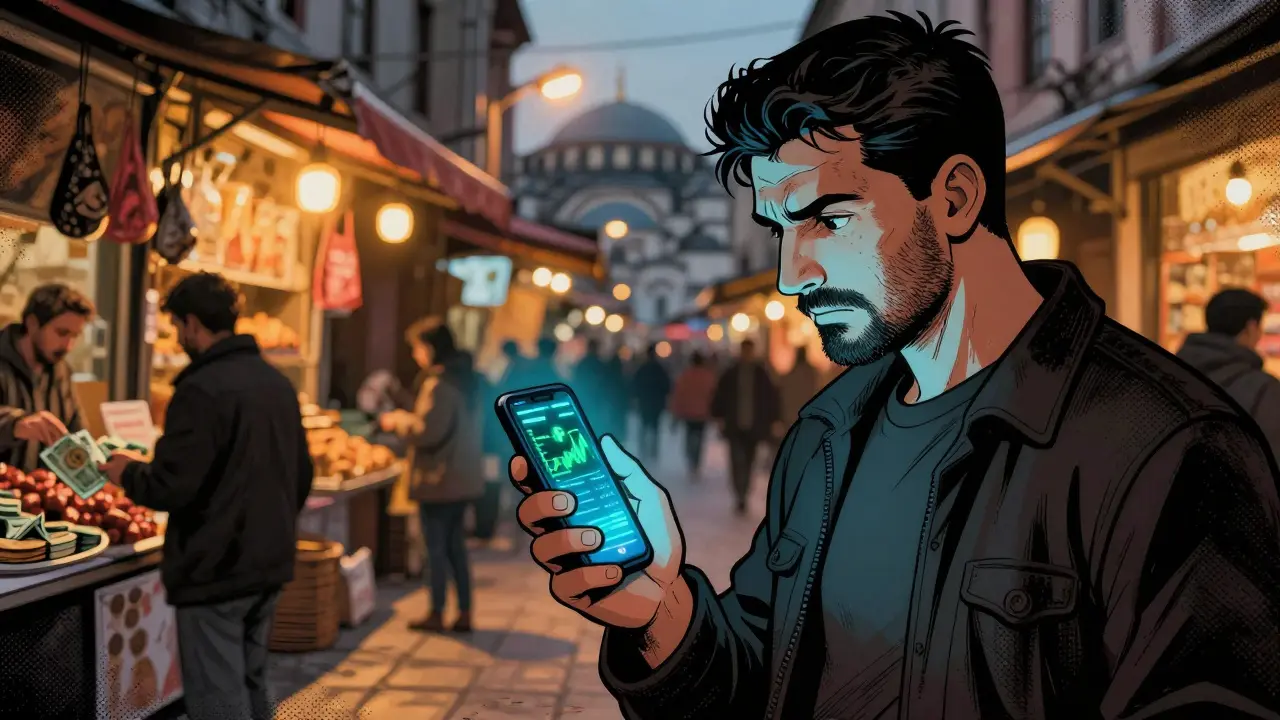
Imagine trying to buy groceries with Bitcoin in Istanbul. You can’t. The Central Bank of the Republic of Turkey (CBRT) banned using cryptocurrency for payments back in April 2021. But here’s the twist: buying and selling crypto itself is still perfectly legal. This strange split has created a massive underground economy where millions of Turks trade digital assets daily, navigating a maze of rules, bans, and technical workarounds.
If you are looking at how this works from the outside, it looks like a contradiction. How do you have one of the world’s most active crypto markets while simultaneously banning its primary use case? The answer lies in a complex mix of licensed platforms, peer-to-peer networks, and clever technical tricks that keep the market flowing despite heavy restrictions.
The Two-Tier Market: Licensed vs. Shadow Trading
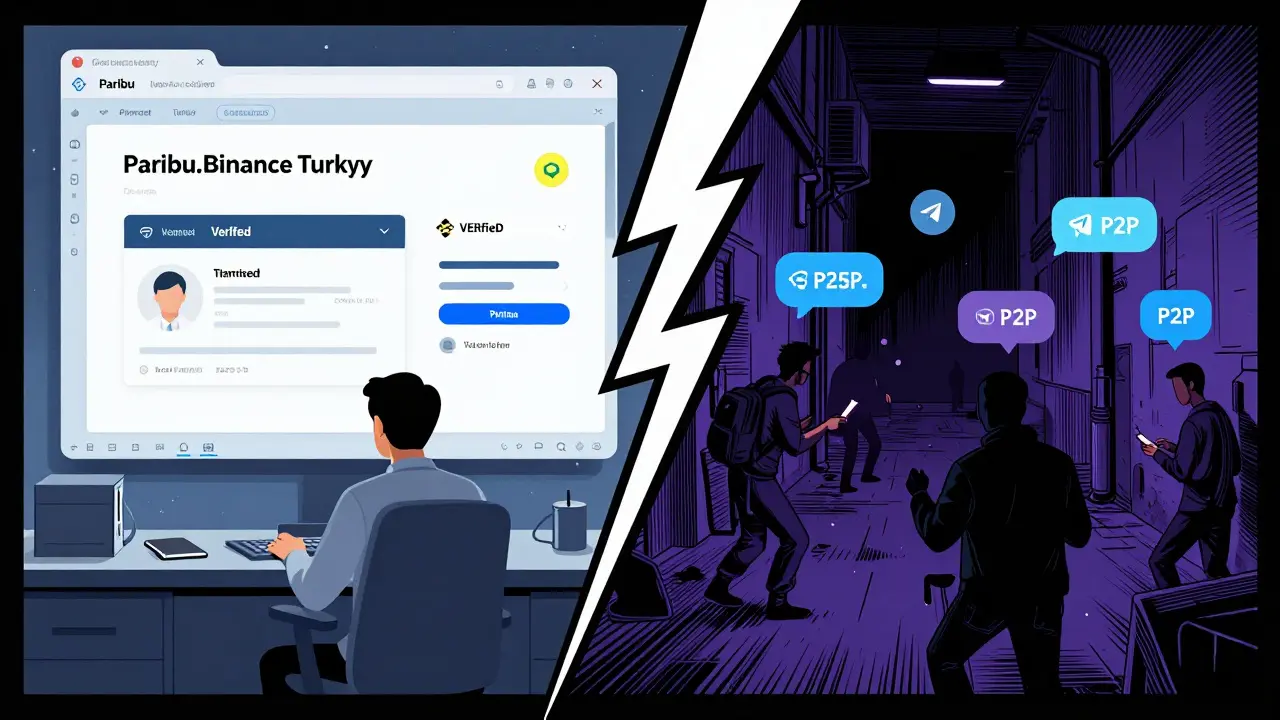
To understand how Turks trade, you first need to understand the landscape. Since February 2025, the market has been strictly divided into two tiers. On one side, you have the Licensed Exchanges, which are regulated platforms authorized by the Capital Markets Board (CMB) to operate legally within Turkey. These include names like Paribu, Binance Turkey, and Bitlo. They require strict identity verification and adhere to anti-money laundering (AML) laws.
On the other side is the "shadow tier." This includes unlicensed international platforms, decentralized exchanges (DeFi), and peer-to-peer (P2P) networks. While the CMB banned 46 specific platforms in early 2025-including major DeFi protocols like PancakeSwap-users have found ways around these blocks. According to data from Istanbul Technical University, licensed exchanges handle about 58% of the total trading volume, but they only serve 35% of the users. The remaining 65% of users rely on the shadow tier for their trades.
Why does this split exist? It comes down to control versus freedom. Licensed platforms offer legal protection and fast withdrawals, often under two hours. However, they come with strict limits. For example, transactions over 15,000 Turkish lira (roughly $425) trigger mandatory identity checks. Many users dislike this scrutiny, pushing them toward unregulated options where anonymity is higher, even if the risk is greater.
Method 1: Using Licensed Centralized Exchanges
For many beginners, the safest route is sticking to the big, regulated players. Platforms like Paribu and Binance Turkey are the go-to choices. Here is why people choose them:
- Legal Safety: If something goes wrong, you have a regulator to complain to. In the shadow market, if a platform disappears, your money is likely gone forever.
- Speed: Withdrawals to Turkish bank accounts are fast, usually processing within 1-2 hours.
- Fees: Transaction fees are competitive, ranging from 0.05% to 0.25%.
However, there is a catch. The KYC (Know Your Customer) process is rigorous. You need to upload ID documents and verify your identity. Once verified, you are monitored. If you try to move large amounts of money quickly, MASAK (the Financial Crimes Investigation Board) might flag your account. In fact, a survey by the Istanbul Blockchain Association found that 22% of users reported having their accounts frozen due to suspicious activity alerts.
Method 2: Peer-to-Peer (P2P) Trading Networks
When centralized exchanges feel too restrictive, traders turn to P2P. This method exploded in popularity after the 2021 payment ban. Instead of trading directly with an exchange, you trade with another person. The exchange acts as an escrow service, holding the crypto until both parties confirm the transaction.
Platforms like LocalBitcoins saw a 217% increase in Turkish user activity between late 2021 and late 2024. By December 2024, these networks were processing about $1.2 billion in monthly transactions. Why do people love P2P?
- No Direct Exchange Limits: You can negotiate terms directly with the seller.
- Anonymity: While some platforms require KYC, many Telegram-based groups operate with zero identity verification.
- Arbitrage Opportunities: Savvy traders buy Bitcoin on a licensed exchange like Paribu and sell it on a P2P platform for a slight premium, pocketing the difference. Some report consistent profits of 3-5% using this method.
The downside? Trust. If you deal with a scammer in a Telegram group, you have no recourse. Also, premiums can be high, sometimes reaching 2% above market price, compared to the lower fees on licensed exchanges.
Method 3: Technical Workarounds for DeFi Access
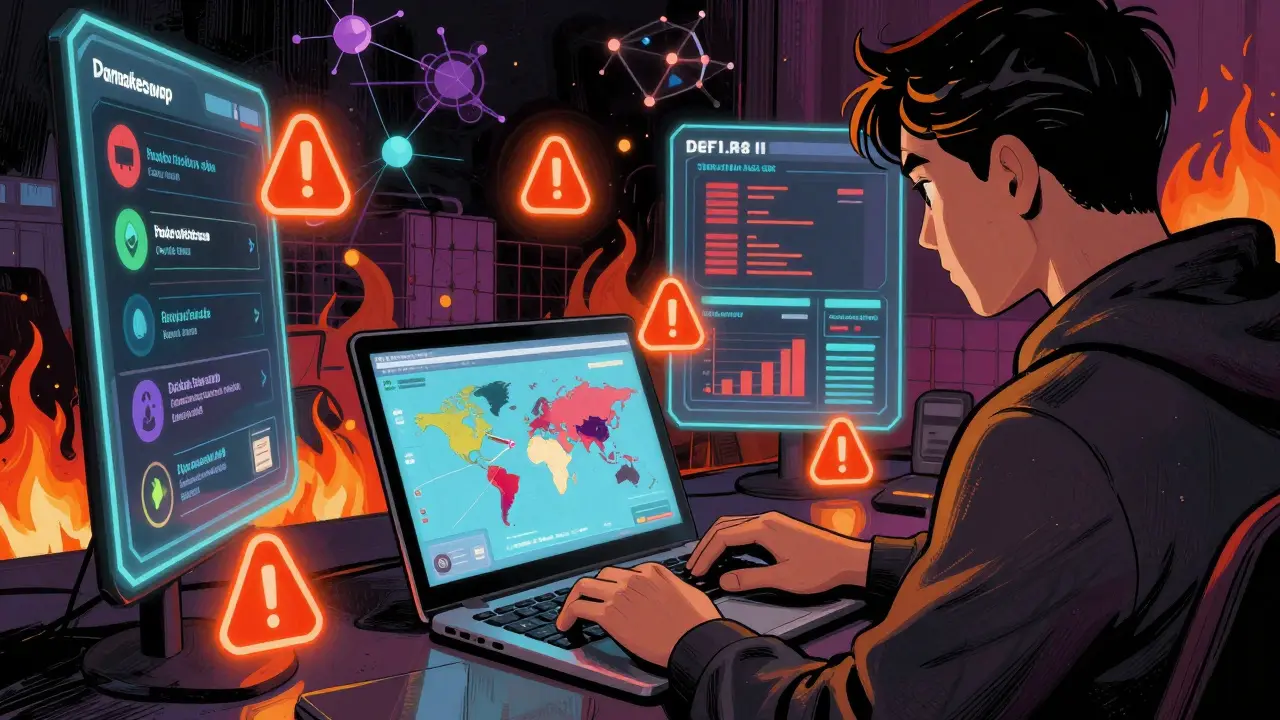
This is where it gets technical. When the CMB banned access to decentralized finance (DeFi) platforms like PancakeSwap in February 2025, developers didn’t stop; they just changed addresses. Users who want to trade tokens not listed on local exchanges or who want full anonymity use virtual private networks (VPNs) and custom wallet settings.
A study by TÜBİTAK in December 2024 revealed that 68% of Turkish crypto users have used VPNs to access banned services like Coinbase or Kraken. For DeFi, the process is slightly different. Users install wallets like MetaMask or Trust Wallet and connect them to non-Turkish RPC endpoints. Essentially, they bypass the local internet filters by routing their connection through servers in other countries.
It sounds complicated, but community guides make it easier. On Reddit’s r/CryptoTurkey, top posts detail how to set up Trust Wallet with custom RPC settings to access Uniswap. One popular guide claimed it takes only five minutes to set up. Despite the ban, statistics show that 3.7 million Turkish addresses interacted with DeFi protocols in the first quarter of 2025 alone.
The Role of Stablecoins and Inflation Hedging
You cannot talk about Turkish crypto trading without mentioning inflation. The Turkish lira has faced significant volatility, driving citizens to seek safer stores of value. This is where stablecoins, particularly USDT (Tether), come into play. In 2024, nearly 39% of all crypto transactions in Turkey involved stablecoins.
People aren’t just speculating on Bitcoin prices; they are parking their savings in digital dollars to protect against currency devaluation. This demand keeps the market alive regardless of regulations. Even when trading is restricted, the need to preserve wealth drives innovation. As Dr. Ayşenur Acar from Ankara University noted, the payment ban created a paradox where utility was restricted, but speculative and hedging activity skyrocketed.
Risks and Regulatory Crackdowns
Trading in this environment is not without danger. The government is actively tightening the net. In February 2025, new AML regulations required stricter identity verification for any transaction over 15,000 TL. This forced many users to adopt strategies like "transaction splitting," where they break large purchases into smaller chunks to avoid triggering alerts. An Ipsos poll found that 62% of users deliberately split their transactions for this reason.
MASAK has become more aggressive. Account freezes are common, and resolving them can take anywhere from 14 to 30 days. Furthermore, using unregulated platforms carries the risk of losing funds entirely if the platform collapses or is shut down by authorities. The collapse of Thodex in 2021 serves as a grim reminder of what happens when regulation fails, although Thodex has since relaunched under provisional authorization.
| Feature | Licensed Exchanges (e.g., Paribu) | P2P Networks (e.g., LocalBitcoins) | DeFi via VPN/Wallets |
|---|---|---|---|
| Legality | Fully Legal | Gray Area | Banned (but accessible) |
| KYC Required | Yes (Strict) | Varies (Often No) | No |
| Transaction Fees | 0.05% - 0.25% | 0.5% - 2% Premium | Gas Fees + Network Costs |
| Security Risk | Low (Regulated) | Medium (Counterparty Risk) | High (Technical/Scam Risk) |
| Best For | Beginners, Large Volume | Privacy Seekers, Arbitrage | Advanced Users, Altcoins |
Future Outlook: Will the Bans Hold?
The regulatory game is far from over. The Capital Markets Board announced plans for a "Crypto Asset Gateway" system by mid-2026. This system aims to centralize all on-ramps and off-ramps, potentially making it harder to use shadow methods. However, experts like Dr. Hasan Yılmaz predict that as long as trading is legal but payments are banned, innovative workarounds will continue to emerge.
The market is resilient. With projected trading volumes reaching $102 billion in 2025, the demand is simply too strong to suppress. Whether through licensed apps, Telegram groups, or hidden DeFi portals, Turkish citizens have proven that they will find a way to trade, driven by both investment opportunity and economic necessity.
Is it illegal to own cryptocurrency in Turkey?
No, owning and trading cryptocurrency is legal in Turkey. The ban specifically applies to using cryptocurrency as a means of payment for goods and services. You can buy, sell, and hold crypto assets without breaking the law, provided you use regulated channels or navigate the gray areas carefully.
What happens if I exceed the 15,000 TL transaction limit?
If you transact more than 15,000 Turkish lira on a licensed exchange, you must complete strict identity verification (KYC). Failure to do so may result in frozen assets or reports to MASAK (Financial Crimes Investigation Board). Many users split transactions to avoid this threshold, though this practice is monitored.
Can I use international exchanges like Coinbase in Turkey?
Direct access to many international exchanges is blocked or restricted. However, approximately 68% of Turkish users utilize VPNs to access platforms like Coinbase or Kraken. While technically circumventing local blocks, this remains a common practice, though it carries higher security risks and lacks local regulatory protection.
Which is safer: P2P trading or licensed exchanges?
Licensed exchanges are significantly safer because they are regulated by the Capital Markets Board and offer dispute resolution mechanisms. P2P trading involves dealing directly with individuals, which increases the risk of scams and fraud. If you prioritize security, stick to licensed platforms like Paribu or Binance Turkey.
How do people access DeFi platforms like PancakeSwap?
Users access DeFi platforms by using Web3 wallets like MetaMask or Trust Wallet and connecting them to non-Turkish RPC endpoints. This allows them to bypass local internet filters. Additionally, many users employ VPNs to mask their location and access banned websites directly.
What is the "Crypto Asset Gateway" planned for 2026?
The Crypto Asset Gateway is a proposed system by the Capital Markets Board to centralize all cryptocurrency on-ramps and off-ramps in Turkey. Aimed for completion by Q2 2026, it seeks to bring tighter oversight to the market, potentially reducing the effectiveness of current workarounds and shadow trading methods.
KEITH WONG
July 4 2026lol the whole 'shadow tier' thing is just people doing what they gotta do 🤷♂️
Ruth Williams
July 5 2026It is quite amusing to observe how individuals attempt to circumvent established financial regulations with such rudimentary technical workarounds. The notion that one can simply utilize a VPN to engage in decentralized finance while ignoring the broader economic implications demonstrates a profound lack of understanding regarding monetary sovereignty and regulatory compliance. These so-called 'innovations' are merely symptoms of a populace that refuses to accept the necessary constraints imposed by central banking authorities for the greater good.
Tracy Marshall
July 6 2026they want you to think its about inflation but its really about control :/ the central bank knows exactly what they are doing and they are testing us all ::)
Kristy Morrow
July 7 2026actually the real issue here is that fiat currency is a scam anyway so why should anyone care about the ban on payments when the system itself is broken
Guy Davis
July 9 2026its dangerous stuff man u dont know who u dealing with on p2p
Natalie Lucas
July 10 2026i mean it makes sense right? if your money is losing value every day you gotta find a way to save it lol
Hamza k
July 10 2026The sheer audacity of using custom RPC endpoints to bypass national internet filters is nothing short of poetic! It’s like watching a digital revolution unfold in real-time, where the code becomes the shield against oppression. One must admire the ingenuity required to navigate this labyrinth of restrictions while maintaining anonymity in an era of surveillance capitalism.
Brad Semp
July 12 2026The article fails to adequately address the systemic risks inherent in relying on unregulated shadow markets. While the author presents these workarounds as clever solutions, they are fundamentally precarious mechanisms that expose users to significant counterparty risk and potential legal repercussions. The reliance on peer-to-peer networks without robust dispute resolution frameworks is a recipe for disaster, particularly for those lacking sophisticated technical knowledge or legal recourse.
Korn Arrieta
July 13 2026This entire ecosystem is built on sand. The moment MASAK decides to pull the plug on IP ranges used by popular VPN providers, millions of dollars vanish into thin air. People romanticize the 'freedom' of DeFi but ignore the fact that they are playing Russian roulette with their life savings because they cannot be bothered to follow basic KYC procedures.
Sophie Nakasako
July 14 2026I wonder if the government realizes that by banning crypto payments, they've actually accelerated the adoption of crypto as a store of value? It's almost like they're pushing people towards decentralization whether they like it or not. What do you think drives this resilience?
Jackie D
July 15 2026it wild how many people are using stablecoins just to sleep at night knowing their savings wont evaporate overnight 💸
Kat Barr
July 17 2026oh my gosh!! i love seeing people take control of their own finances despite the odds 😊🙌 its so inspiring to see communities come together to share tips on setting up wallets safely!!!
John Harman
July 18 2026look i've been trading since 2017 and let me tell you the licensed exchanges are the only way to go if you want to keep your head above water. sure the fees are higher but at least you aren't getting scammed by some random guy on telegram promising you the moon.
Curtis Johnson
July 19 2026it is truly fascinating how human adaptability shines through even in the most restrictive environments; yet we must also consider the ethical boundaries of evading financial oversight which serves a purpose in preventing illicit activities
Steven Briggs
July 20 2026i guess its just survival mode for a lot of them
Kim Kay
July 21 2026i feel like everyone should be more careful though because scams are everywhere and it hurts to lose hard earned money :(
Antony Lopez
July 23 2026typical foreign interference in local economies. they always try to undermine national currencies with these digital tokens. we need to protect our sovereign wealth from these globalist schemes.
Ray Arney
July 24 2026Thanks for sharing this detailed breakdown. It's interesting to see how the market has adapted to the regulations. I'll be keeping an eye on the Crypto Asset Gateway developments.