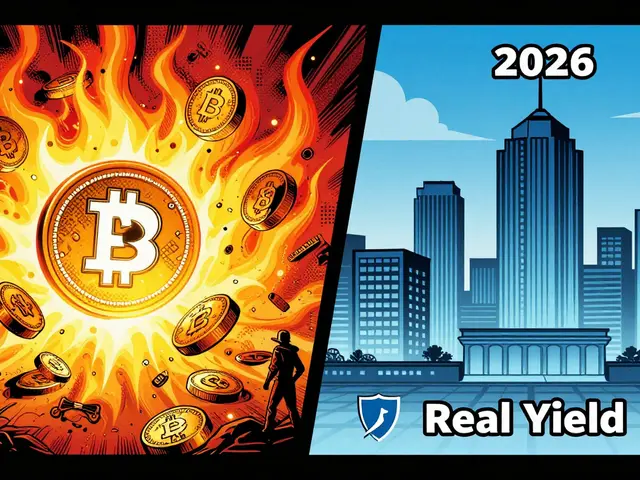

Remember when "10,000% APY" was the headline of every crypto tweet? Those days are gone. The wild west of early decentralized finance has matured into a sophisticated ecosystem where returns are lower, but so is the risk of losing everything overnight. As we move through 2026, yield farming-also known as liquidity mining-is no longer just about chasing the highest number on a screen. It’s about sustainable income, smart risk management, and understanding which protocols actually generate real value versus those that just print tokens to pay you.
If you’re looking to put your crypto assets to work this year, you need to know which platforms are worth your trust. We’ve analyzed the top yield farming platforms based on security track records, actual yield sources (trading fees vs. token inflation), and ease of use. Here is what you need to know to farm effectively in the current market.
How Yield Farming Works in 2026
At its core, yield farming involves providing liquidity to decentralized protocols. You deposit your assets into a pool, and in return, you earn rewards. These rewards usually come from two sources: trading fees generated by users swapping tokens on the platform, or new tokens issued by the protocol itself.
In 2026, the landscape has shifted significantly. The era of unsustainable, hyper-inflationary token rewards has largely faded. Instead, successful protocols now focus on "real yield," meaning your returns are backed by actual revenue from trading activity or lending interest. This shift means lower Annual Percentage Yields (APYs) compared to 2021, but much higher stability. You aren’t just getting paid with promises; you’re getting paid with profits.
The process typically involves connecting a non-custodial wallet like MetaMask or Rabby to a platform, selecting a liquidity pool, depositing your assets, and waiting for rewards to accrue. Some platforms automate this process, while others require manual intervention to compound your earnings.
Curve Finance: The Stablecoin Standard
Curve Finance is a decentralized exchange optimized for stablecoins and assets with similar values. Launched in 2020, it remains the gold standard for low-risk yield farming. If you want steady returns without the heart-stopping volatility of meme coins, Curve is where you start.
Curve specializes in automated market maker (AMM) pools designed for stablecoins like USDC, USDT, and DAI, as well as pegged assets like stETH. Because these assets trade at nearly identical prices, the risk of impermanent loss-the potential downside when providing liquidity to volatile pairs-is minimal.
In 2026, Curve offers APYs ranging from 5% to 15% for most stablecoin pools. While these numbers might look modest compared to historical highs, they are remarkably consistent. The platform’s architecture is battle-tested, having survived multiple market crashes and numerous security audits. Curve doesn’t have built-in auto-compounding, but many users pair their Curve positions with aggregators like Convex Protocol to boost yields further.
The governance token, CRV, adds another layer. By locking CRV as veCRV, users can vote on which pools receive incentives, effectively directing the flow of capital within the ecosystem. For the conservative investor, Curve provides a reliable baseline yield that outperforms traditional savings accounts with significantly more accessibility.
Yearn Finance: The Set-and-Forget Aggregator
Yearn Finance is a suite of DeFi products created by Andre Cronje that automatically optimizes yields across various protocols. Think of Yearn as an automated financial advisor for your crypto portfolio. Instead of manually moving funds between different platforms to chase the best rates, Yearn’s smart contracts do it for you.
Yearn operates through "vaults." You deposit your assets into a vault, and Yearn’s strategies deploy those funds across multiple protocols-including Curve, Aave, and Compound-to maximize returns. If one protocol’s rate drops, Yearn automatically shifts your capital to a better opportunity. This automation is invaluable for users who don’t have time to monitor markets 24/7.
Current APYs on Yearn range from 4% to 20%, depending on the asset class and market conditions. The platform is particularly popular among beginners because of its simplicity. You connect your wallet, choose a vault, and deposit. Yearn handles the rest. However, convenience comes with a fee structure. Yearn charges performance fees on profits, which can eat into returns during periods of low volatility. Despite this, the transparency and security of Yearn’s codebase make it one of the safest entry points into DeFi yield generation.
GMX: Earning from Trading Fees
GMX is a decentralized perpetual exchange that allows users to provide liquidity to earn trading fees. Unlike traditional yield farming, which often relies on token emissions, GMX generates yield from actual trading activity. When traders open leveraged positions on GMX, they pay fees. These fees go directly to liquidity providers.
GMX operates primarily on Arbitrum and Avalanche networks. Users provide liquidity by buying GLP (or esGLM on Avalanche), a diversified basket of assets including ETH, BTC, and stablecoins. In 2026, GMX offers APYs between 10% and 20%, paid in ETH and the native GMX token. This is considered "real yield" because it’s derived from revenue, not inflation.
The appeal of GMX lies in its sustainability. Even if the price of the GMX token drops, the underlying trading fees continue to generate income. However, there are risks. During extreme market volatility, if traders profit significantly, liquidity providers may absorb some of those losses. Additionally, since GLP holds a basket of volatile assets, you are exposed to the price movements of ETH and BTC. GMX is best suited for investors who believe in the long-term growth of major cryptocurrencies and want exposure to derivatives trading revenue.
Beefy Finance: Cross-Chain Optimization
Beefy Finance is a leading cross-chain yield optimizer that supports over 30 blockchains. Beefy aggregates farming opportunities from dozens of underlying protocols and uses automated vaults to compound rewards. It’s the go-to platform for users who want access to high-yield opportunities across multiple networks without managing each position individually.
Beefy supports chains like BNB Chain, Polygon, Fantom, Arbitrum, and Avalanche. Its APYs vary widely, from 5% for conservative stablecoin vaults to upwards of 80% for high-risk, experimental strategies. The platform’s strength is its breadth. Whether a new protocol launches on a niche chain or a major update happens on Ethereum, Beefy likely has a vault for it.
However, higher yields come with higher complexity. Beefy’s strategies often involve multiple layers of interaction, such as depositing into a lending protocol, then using the collateral to farm on another platform. This creates dependency risks. If one underlying protocol fails, the entire vault could be affected. Beefy’s smart contracts have been extensively audited, but users must understand that they are taking on counterparty risk from multiple sources. For experienced farmers willing to do their due diligence, Beefy offers unparalleled flexibility and potential returns.
Comparing the Top Platforms
| Platform | Risk Level | Typical APY Range | Primary Yield Source | Best For |
|---|---|---|---|---|
| Curve Finance | Low | 5% - 15% | Trading Fees + Token Rewards | Conservative investors seeking stablecoin yields |
| Yearn Finance | Medium | 4% - 20% | Aggregated Protocol Yields | Beginners wanting automated optimization |
| GMX | Medium-High | 10% - 20% | Trading Fees (Real Yield) | Users seeking revenue-backed returns |
| Beefy Finance | High | 5% - 80%+ | Multi-Protocol Strategies | Advanced farmers comfortable with cross-chain risks |
Critical Risks Every Farmer Must Understand
Before you deposit a single dollar, you need to understand the risks. Yield farming is not free money; it’s compensated risk.
- Impermanent Loss: This occurs when the price of your deposited assets changes compared to when you deposited them. If one asset pumps hard while the other stays flat, you end up with less of the pumping asset than if you had just held it. Stablecoin pools minimize this risk, but volatile pairs amplify it.
- Smart Contract Risk: All DeFi platforms run on code. Bugs, exploits, and hacks are still possible. Always check if a protocol has undergone recent security audits from reputable firms like CertiK or Trail of Bits.
- Gas Fees: On networks like Ethereum, transaction fees can eat into your profits. If you’re farming small amounts, the cost of entering and exiting a position might exceed your earnings. Layer-2 solutions like Arbitrum and Optimism offer cheaper alternatives.
- Token Volatility: Many rewards are paid in native tokens. If the token price crashes, your nominal APY might look high, but your actual USD value could plummet. Always evaluate yields in terms of total value, not just percentage.
How to Start Yield Farming Safely
Starting your yield farming journey doesn’t require a computer science degree, but it does require caution. Follow these steps to get started securely.
- Choose a Reputable Wallet: Use a hardware wallet like Ledger or Trezor for large amounts, or a trusted software wallet like MetaMask or Rabby. Never share your seed phrase.
- Start Small: Begin with a small amount you can afford to lose. Test the waters with a stablecoin pool on Curve or a vault on Yearn.
- Verify Contracts: Always double-check the URL of the platform. Phishing sites are common. Bookmark official sites and avoid clicking links from social media.
- Diversify: Don’t put all your eggs in one basket. Spread your capital across different protocols and chains to mitigate specific platform risks.
- Monitor Your Positions: Use portfolio trackers like DeBank or Zapper to keep an eye on your yields, impermanent loss, and overall performance.
Future Trends in Yield Farming
As we look ahead, several trends are shaping the future of yield farming. Real-world asset (RWA) tokenization is bringing traditional finance yields into DeFi. Bonds, treasury bills, and real estate are being tokenized, offering stable, regulated yields alongside crypto-native strategies.
Additionally, AI-driven optimization is emerging. Advanced aggregators are beginning to use machine learning to predict market movements and adjust strategies in real-time, potentially offering higher efficiency than human-managed portfolios. Regulatory clarity is also improving, with major jurisdictions establishing frameworks for DeFi operations, which should bring institutional capital into the space and increase overall stability.
The key takeaway is that yield farming is evolving from a speculative gamble into a legitimate component of a diversified investment portfolio. By choosing established platforms, understanding the source of your yields, and managing risk carefully, you can harness the power of DeFi to grow your wealth sustainably.
What is the safest yield farming platform?
Curve Finance is generally considered the safest option due to its focus on stablecoins and pegged assets, which minimizes impermanent loss. It has a long track record of security and consistent performance. Yearn Finance is also a safe choice for beginners due to its transparent, audited vault strategies.
Can you lose money yield farming?
Yes. You can lose money through impermanent loss if the price of your deposited assets diverges significantly. Smart contract bugs or hacks can lead to total loss of funds. Additionally, if rewards are paid in volatile tokens that crash in value, your overall return can be negative even if the APY looks high.
Is yield farming legal in 2026?
The legality varies by jurisdiction. In many countries, yield farming is treated as a taxable event, meaning rewards are subject to income tax. Some regions have stricter regulations on DeFi protocols. Always consult with a local tax professional to understand your obligations.
What is the difference between APY and APR?
APR (Annual Percentage Rate) calculates simple interest, while APY (Annual Percentage Yield) includes the effect of compounding. In yield farming, APY is more accurate because rewards are often reinvested automatically, generating additional interest on top of interest.
Do I need a lot of money to start yield farming?
Not necessarily. While some platforms have minimum deposit requirements, many allow you to start with small amounts. However, gas fees on networks like Ethereum can make small deposits inefficient. Using Layer-2 networks like Arbitrum or Polygon reduces costs, making smaller investments viable.