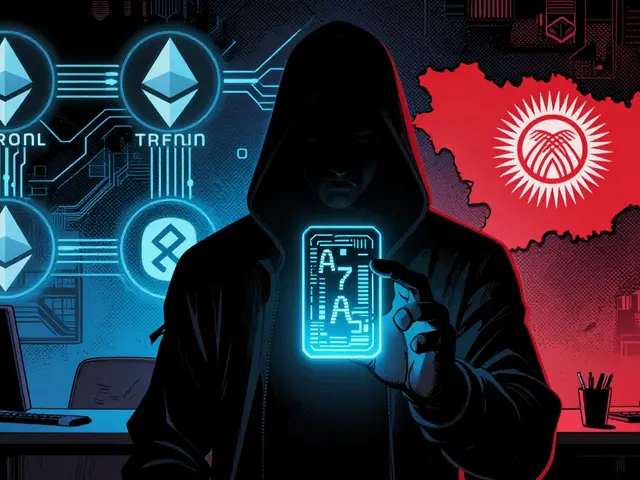
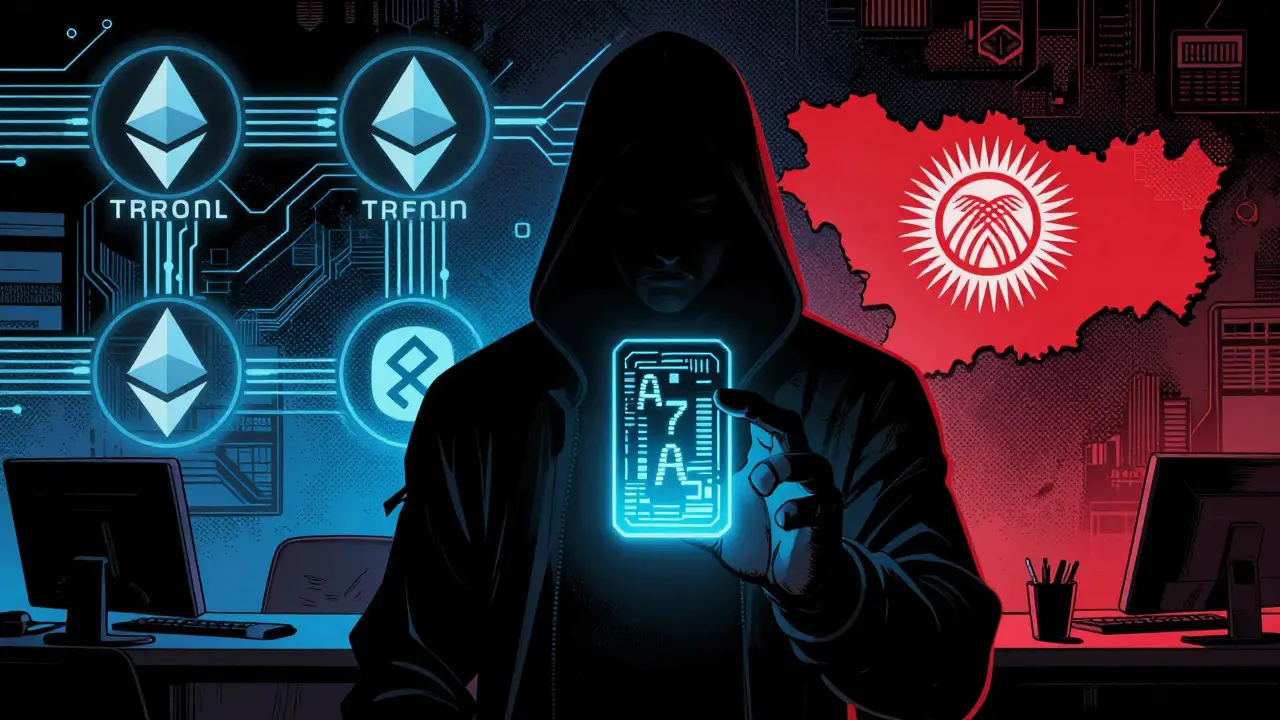
Western sanctions were supposed to cut off Russia’s access to global finance. Instead, Moscow found a backdoor built on blockchain code. Since the invasion of Ukraine, Russia has shifted from simple bank transfers to complex digital asset networks that span multiple countries. These systems use custom tokens, shell companies, and offshore exchanges to move billions of dollars without triggering traditional banking alerts.
The scale is staggering. In just four months, a single ruble-backed token processed $9.3 billion in transactions. This isn’t random speculation; it is a state-coordinated effort to fund military operations and maintain economic stability despite isolation. As we move through 2026, the cat-and-mouse game between Russian evaders and international regulators has reached a critical tipping point.
The A7A5 Token: A Custom Tool for Evasion
At the heart of this operation is the A7A5 token, which is a ruble-backed cryptocurrency designed specifically to bypass Western financial restrictions. Unlike Bitcoin or Ethereum, which are decentralized and open to anyone, A7A5 was created with a singular purpose: to act as a bridge between sanctioned Russian rubles and international crypto markets.
This token operates on both the TRON and Ethereum blockchains. Why two? Redundancy. If one network faces increased scrutiny or technical issues, the other keeps the flow of funds moving. The token is issued by a firm based in Kyrgyzstan, a country that has become a key hub for these financial maneuvers due to its less stringent regulatory environment compared to Europe or North America.
The mechanics are straightforward but effective. Users convert their rubles into A7A5 tokens. These tokens can then be traded on dedicated exchanges or swapped for stablecoins like USDT (Tether). From there, the funds can be moved globally, converted to fiat currency in friendly jurisdictions, or used to purchase goods and services. The entire process leaves a trail on the blockchain, but that trail is obscured by layers of mixing services, shell companies, and opaque ownership structures.
| Attribute | Value / Detail |
|---|---|
| Backed By | Russian Ruble (RUB) |
| Blockchains | TRON, Ethereum |
| Total Volume (4 Months) | $9.3 Billion |
| Jurisdiction of Issuer | Kyrgyzstan |
| Primary Purpose | Sanctions Evasion & Military Funding |
From Garantex to Grinex: The Exchange Pivot
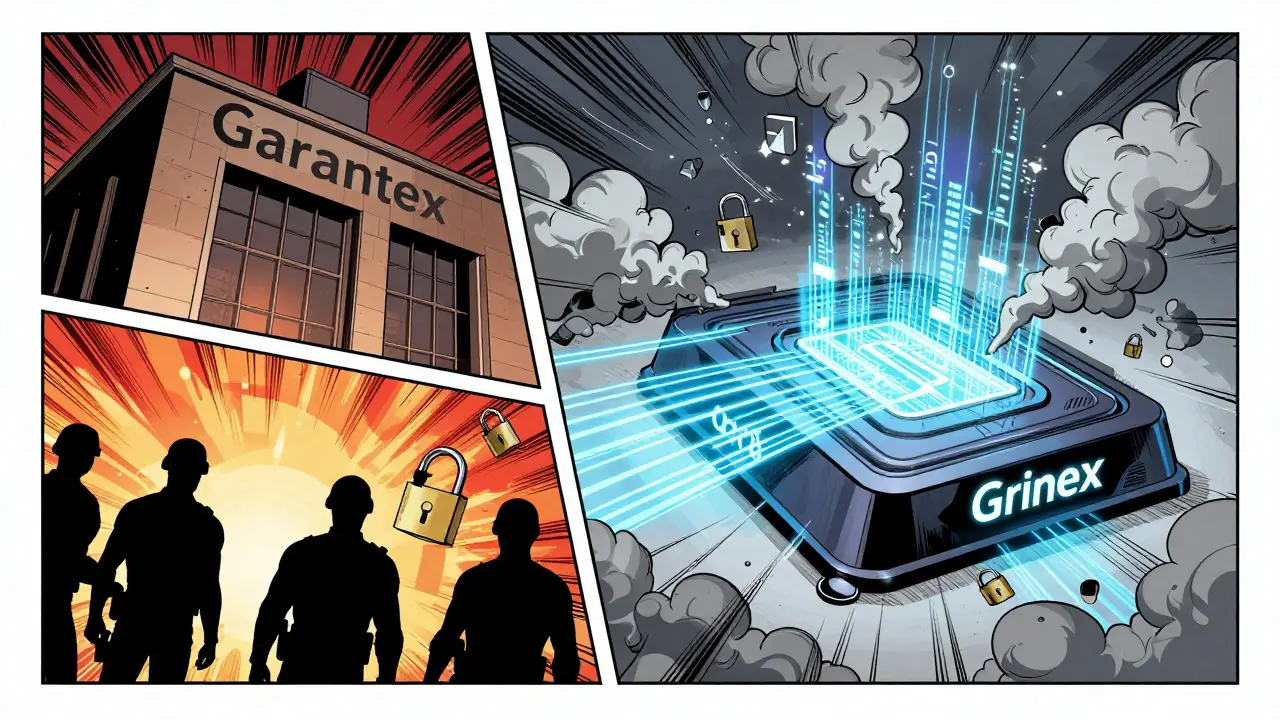
You cannot have a token without a place to trade it. For years, Garantex was the go-to exchange for Russian users looking to move money out of the country. It was known for lax KYC (Know Your Customer) checks and high volumes of suspicious activity. But in March 2025, the U.S. Secret Service shut down Garantex, seizing its domain and infrastructure.
If you think that ended the story, you’re mistaken. Immediately after the takedown, Garantex officers launched Grinex. The promotional materials for Grinex didn’t even hide their intentions; they explicitly stated the platform was formed in response to the sanctions and asset freezes affecting Garantex. They transferred customer deposits directly to the new platform, ensuring continuity for their users.
By mid-2025, Grinex had facilitated billions of dollars in transactions. The U.S. Treasury’s Office of Foreign Assets Control (OFAC) eventually designated Grinex for sanctions, citing that it was owned or controlled by the same entities behind Garantex. Yet, the damage was done. The rapid pivot showed how resilient these networks are. When one door closes, another opens-often with better security and updated branding.
Kyrgyzstan’s Role: Capital Bank and the Fiat Gateway
Crypto alone doesn’t buy tanks or spare parts. You need to convert those digital assets into real-world currency. This is where Kyrgyzstan becomes critical. Its financial sector, particularly institutions like Capital Bank, serves as the gateway between the crypto world and the traditional banking system.
Capital Bank, under the direction of Kantemir Chalbayev, has been identified as a key player in paying for military goods. The process works like this: Crypto funds arrive at wallets linked to Russian entities. These funds are converted to fiat currencies (like dollars or euros) through local intermediaries. Capital Bank then processes these transactions, allowing the money to be wired to suppliers in neutral countries or used to pay contractors.
This integration of conventional banks with crypto infrastructure creates a comprehensive circumvention capability. It’s not just about hiding money; it’s about making it usable. By leveraging Kyrgyzstan’s banking relationships, Russia maintains access to global supply chains despite being cut off from SWIFT and major Western banks.
The Ilan Shor Connection: Political Activism and Money Laundering
These financial networks aren’t just for war funding; they also support political influence operations. Data leaked in September 2025 revealed connections between the A7A5 ecosystem and Ilan Shor, a Moldovan politician and fugitive allied with Vladimir Putin. Shor was convicted in 2017 for stealing $1 billion from Moldovan banks and later sanctioned by the U.S. for undermining democratic elections in Moldova.
Analysis by blockchain intelligence firm Elliptic showed that wallets associated with A7 and related businesses received $8 billion in stablecoin transactions over 18 months. These funds weren’t just sitting idle. They were used to purchase infrastructure for developing apps that manage and pay networks of political activists in Moldova. This demonstrates how crypto sanctions evasion extends beyond military logistics into hybrid warfare and political destabilization.
International Regulatory Response in 2025 and 2026
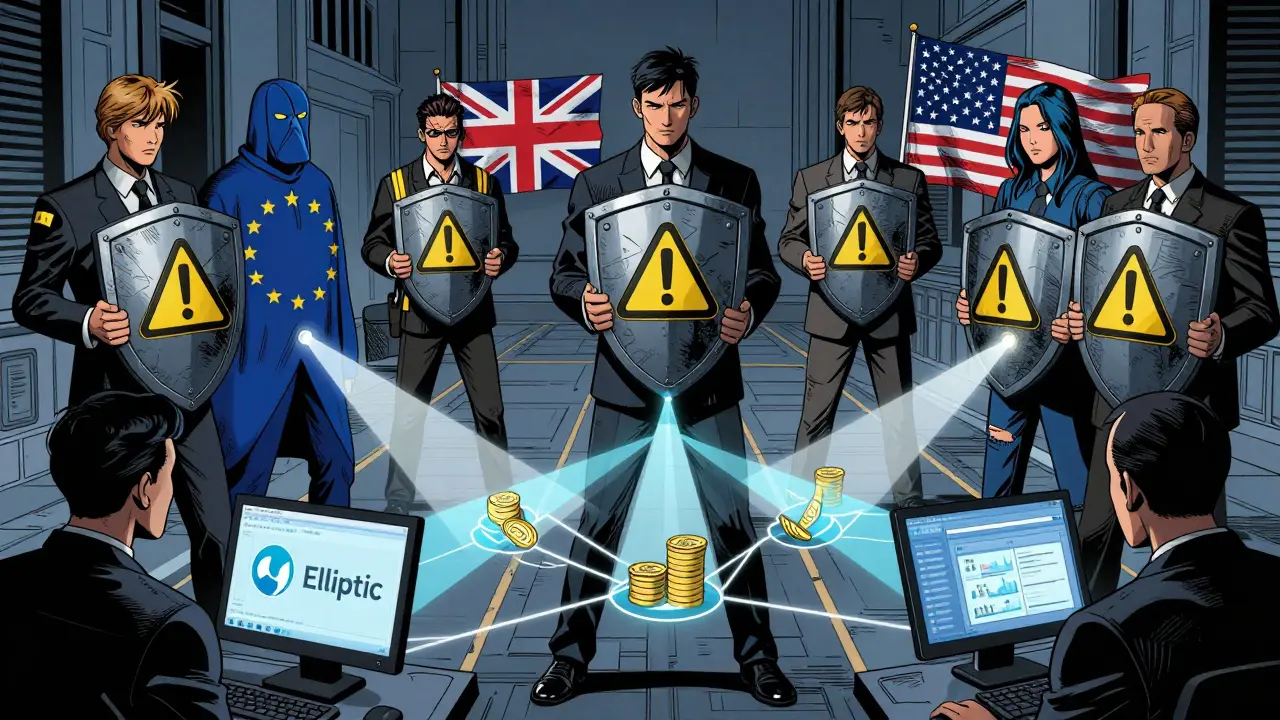
The West has finally started catching up. In October 2025, the UK government announced targeted sanctions against the Grinex and Meer cryptocurrency exchanges, alongside the A7A5 token infrastructure. This was part of a broader coordinated effort involving the U.S., EU, and UK to dismantle these networks.
The European Union took a historic step with its 19th package of sanctions. For the first time, it directly targeted "dirty" Russian crypto schemes by banning transactions on platforms used to bypass restrictions. This wasn’t just symbolic; it forced European financial institutions to block any interaction with these specific tokens and exchanges.
On the technical side, compliance tools are evolving. Elliptic added support for screening A7A5 transactions on TRON and Ethereum. This allows banks and crypto exchanges to identify and flag risky wallets automatically. The Financial Action Task Force (FATF) also highlighted the growing threat in August 2025, noting that terrorist organizations like ISIL-K are increasingly using similar virtual asset techniques for donations and transfers.
Why This Matters for the Crypto Industry
If you’re a legitimate user or business in the crypto space, this situation poses significant risks. The association of cryptocurrencies with sanctions evasion leads to stricter regulations worldwide. Exchanges face higher compliance costs, and users may experience more intrusive KYC requirements.
Moreover, the sophistication of these evasion schemes forces the industry to innovate in security and transparency. Layer-2 solutions, zero-knowledge proofs, and enhanced blockchain analytics are becoming standard not just for privacy, but for proving legitimacy. The line between illicit activity and private transaction is blurring, and regulators are responding by demanding greater visibility.
Oxford Analytica predicted in September 2025 that Russia will continue expanding its crypto use for sanctions evasion. While this provides short-term benefits for Moscow, it invites long-term regulatory backlash. As tracking capabilities improve, the cost of operating these shadow networks will rise. The question isn’t whether Russia will stop-it’s how quickly the international community can close the loopholes.
What is the A7A5 token?
The A7A5 token is a ruble-backed cryptocurrency created to help Russia bypass Western sanctions. It operates on the TRON and Ethereum blockchains and is issued by a firm in Kyrgyzstan. It allows users to convert sanctioned rubles into digital assets that can be traded globally.
How did Grinex replace Garantex?
After the U.S. Secret Service shut down Garantex in March 2025, its operators immediately launched Grinex. They transferred customer deposits to the new platform, which explicitly marketed itself as a successor formed in response to sanctions. Grinex was later sanctioned by OFAC.
Why is Kyrgyzstan important in this scheme?
Kyrgyzstan hosts key financial institutions like Capital Bank, which acts as a gateway between crypto networks and traditional banking. It allows crypto assets to be converted into fiat currency for purchasing military goods and other supplies, exploiting the country's less stringent regulatory environment.
Can regular users still use these exchanges?
No. Platforms like Grinex and the A7A5 token infrastructure have been sanctioned by the UK, U.S., and EU. Legitimate financial institutions and compliant crypto exchanges block transactions involving these entities to avoid secondary sanctions.
How do regulators track these crypto transactions?
Regulators use blockchain analytics firms like Elliptic to monitor wallet addresses and transaction patterns. These tools can trace flows across different blockchains (like TRON and Ethereum) and link them to known sanctioned entities, enabling authorities to freeze assets and impose penalties.