
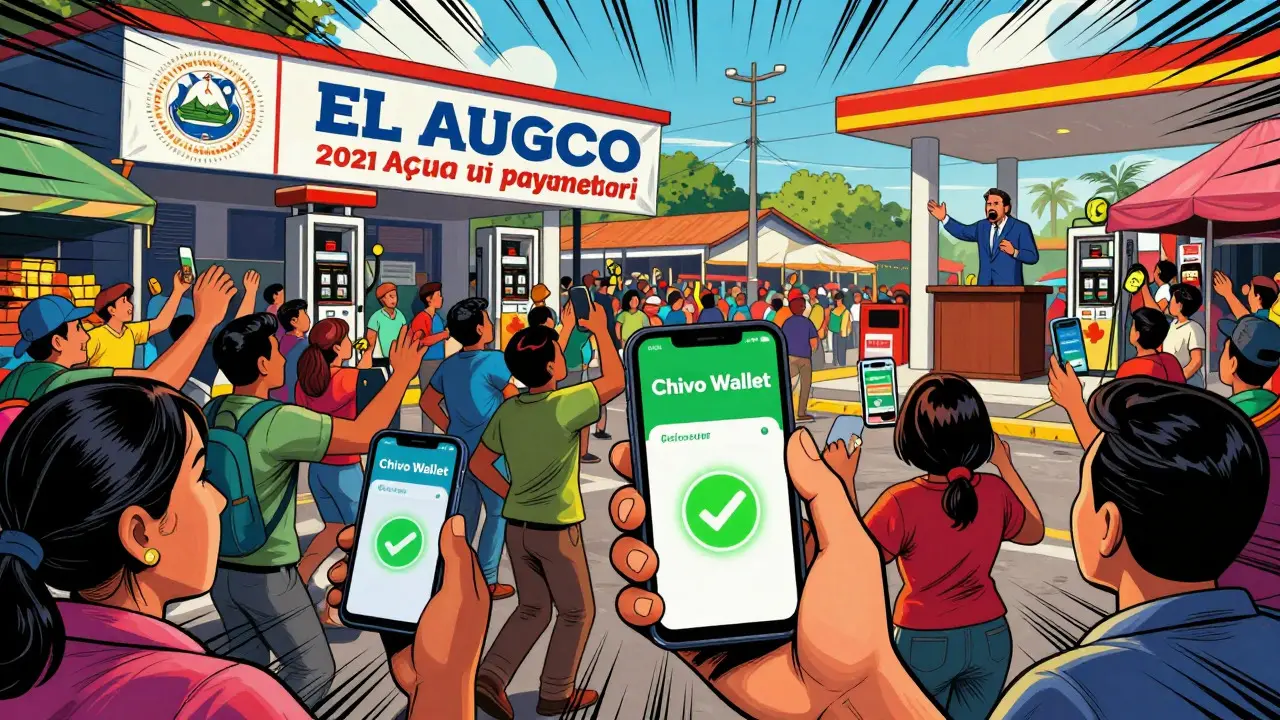
It started with a bang. On September 7, 2021, El Salvador became the first nation on Earth to declare Bitcoin as legal tender alongside the US dollar. President Nayib Bukele promised financial inclusion, cheaper remittances, and a tech revolution. Five years later, the reality is far more complex. If you are looking at this story today, in August 2026, you need to know one critical fact: the mandatory nature of that experiment is dead.
The dream of a fully Bitcoin-powered economy didn't vanish overnight, but it was systematically dismantled by economic pressure and technical failure. By January 2025, the government had effectively rescinded the core obligations of the original law. Today, Bitcoin remains a fascinating chapter in monetary history, but for businesses and citizens in El Salvador, it is no longer a requirement. It is an option-and a rarely used one.
The Original Promise: Why El Salvador Went All In
To understand where we are, we have to look at why they started. In 2021, roughly 30% of Salvadorans lacked access to traditional banking services. Remittances from family members abroad made up about 20% of the country's GDP, costing users high fees through Western Union and MoneyGram. The theory was simple: if everyone uses Bitcoin via the Lightning Network, transaction costs drop near zero, and unbanked populations get instant access to digital finance.
The government launched the Chivo Wallet, a state-sponsored app designed to make these transactions seamless. To sweeten the deal, the government deposited $30 into every citizen's account. Gas stations offered discounts for Chivo payments. For a brief moment, it seemed like a genuine social engineering triumph. Within a month, 3 million people-46% of the population-had downloaded the app. That number dwarfed the percentage of people with bank accounts at the time.
But downloads do not equal adoption. And numbers do not tell the whole story of what happened next.
The Reality Check: Technical Glitches and Market Volatility
From day one, the infrastructure struggled. On launch day, the Chivo wallet servers crashed under the weight of millions of simultaneous users. It took hours to restore service. Coincidentally, Bitcoin’s price plummeted shortly after the announcement, putting the government’s initial holdings into a paper loss of $3 million almost immediately. The state responded by buying more Bitcoin to prop up the price, a move that critics called market manipulation.
As months turned into years, the friction became undeniable. Merchants complained about the complexity of setting up Lightning Nodes. Consumers feared losing money due to Bitcoin’s notorious volatility. Who wants to buy groceries when the price of milk could change by 5% before you finish paying? The data showed a stark disconnect between political ambition and user behavior. By 2024, reports indicated that 92% of Salvadorans did not use Bitcoin for daily transactions. Only 5% of citizens paid taxes with it. Large firms accepted it at a rate of just 20%, mostly for show rather than practical utility.
Hacking incidents further eroded trust. When the very system meant to protect financial inclusion becomes a target for cybercriminals, public confidence evaporates. The Chivo wallet, once hailed as a miracle tool, became a symbol of bureaucratic overreach and technical incompetence.
The Turning Point: IMF Pressure and the 2025 Reversal
The real nail in the coffin came from international finance. The International Monetary Fund (IMF) had long criticized El Salvador’s Bitcoin policy, citing risks to fiscal stability and lack of transparency. They withheld crucial loans until changes were made. Facing economic strain, President Bukele’s administration had little choice.
In January 2025, the Legislative Assembly voted 55-2 to modify the Bitcoin Law. This wasn’t a repeal-it was a gutting. The new legislation removed the word "currency" from Bitcoin’s legal definition. More importantly, it eliminated the obligation for businesses to accept Bitcoin. Citizens could still use it voluntarily, but merchants could say no without penalty. Taxes and state bills had to be paid in US dollars or other recognized fiat currencies.
Economist Rafael Lemus summarized the shift perfectly: "Bitcoin no longer has the strength of legal tender... it should have always been that way, but the government tried to force it into existence, and it didn't work." Even Bukele admitted that the mandate was his government’s "most unpopular" measure.
| Feature | Original Law (2021) | Current Status (2026) |
|---|---|---|
| Legal Status | Legal Tender (Mandatory) | Voluntary Asset / Private Use |
| Merchant Obligation | Required to Accept | No Requirement |
| Tax Payments | Accepted in BTC | Fiat Currency Only (USD) |
| Government Promotion | Active (Chivo Wallet, Subsidies) | Minimal / Phased Out |
| Primary Use Case | Daily Transactions | Store of Value / Investment |

What Remains: The Strategic Bitcoin Reserve
Just because the street-level experiment failed doesn’t mean the government gave up on crypto entirely. In fact, El Salvador doubled down on its role as a macro-economic investor. While citizens stopped using Bitcoin for coffee, the state kept buying it.
As of early 2025, El Salvador held 688 Bitcoin in reserve, valued at approximately $574 million-a profit of $287 million. By March 2025, they expanded this to over 6,100 coins, worth around $500 million. This "Strategic Bitcoin Reserve Fund" serves a different purpose now. It is no longer about facilitating daily trade; it is about national wealth preservation and geopolitical signaling.
The country continues to host events like the PLANB Forum, positioning itself as a hub for crypto innovation in Central America. Tourism spiked during the height of the hype, bringing foreign investors and curious travelers. But these benefits were largely symbolic. They did not offset the economic inefficiencies of forcing a volatile asset into a stable currency ecosystem.
Lessons Learned: Why Mandates Fail
So, what does this mean for the rest of the world? El Salvador’s experiment provides a cautionary tale for any nation considering similar moves. Here are the key takeaways:
- Voluntary Adoption Wins: You cannot legislate trust. People adopted Bitcoin when it solved a problem (like cheap remittances), but abandoned it when it created friction (volatility, technical bugs).
- Infrastructure Matters: A shiny app isn’t enough. Without robust backend support, low-latency networks, and widespread digital literacy, even the best-intentioned tools fail.
- Stability is King: For developing economies, predictability is more valuable than potential upside. The US dollar provided stability; Bitcoin provided chaos. Most consumers chose stability.
- IMF Influence is Real: National sovereignty has limits when you need international bailouts. Regulatory pressure can quickly reverse radical monetary policies.
The transition from mandatory to voluntary acceptance reflects a more sustainable approach. It allows market forces, rather than government decrees, to determine the role of cryptocurrency. For most Salvadorans, that role is negligible. For the government, it remains a speculative investment portfolio.
Current Landscape for Businesses and Travelers
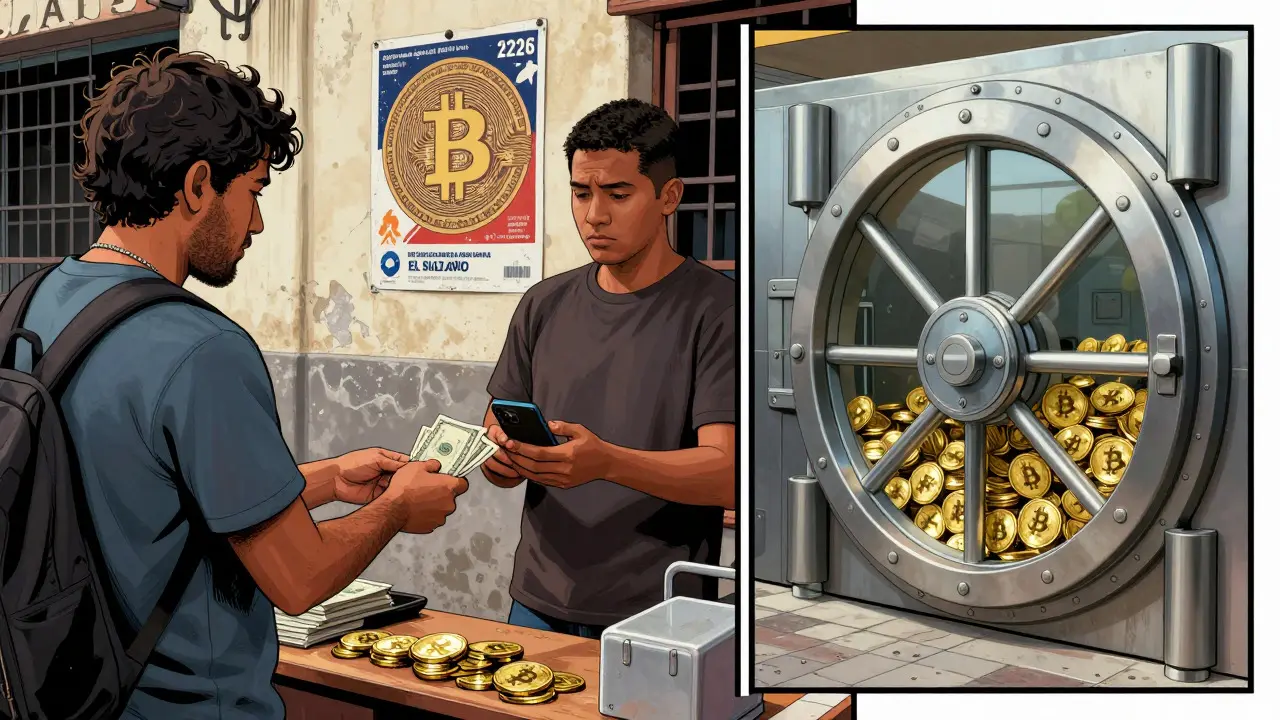
If you are planning to visit El Salvador in 2026, bring US dollars. While some tourist-oriented businesses might still display QR codes for Bitcoin out of habit or marketing appeal, do not count on it. ATMs dispense dollars. Markets operate in cash. The Chivo wallet is largely dormant for everyday commerce.
For entrepreneurs, the regulatory environment has cooled. There is less red tape for starting a crypto-friendly business, but also fewer incentives. The focus has shifted from mass consumer adoption to niche fintech innovations and institutional investments. The "crypto capital of the world" label has faded, replaced by a more pragmatic stance: Bitcoin is an asset class, not a shopping cart.
Conclusion: A Historic Experiment, Not a Blueprint
El Salvador’s journey with Bitcoin as legal tender was bold, messy, and ultimately instructive. It proved that technology alone cannot override economic fundamentals. While the mandatory aspect of the law is gone, the legacy remains. We now have five years of real-world data on national cryptocurrency adoption. The verdict? It works as an investment vehicle for the state, but not as a daily currency for the people.
As we move further into 2026, the story of El Salvador serves as a reminder: innovation requires organic growth, not forced marches. The future of money will likely include digital assets, but probably not as a replacement for the stable foundations we rely on today.
Is Bitcoin still legal tender in El Salvador in 2026?
Technically, yes, but with major caveats. The 2025 amendment removed the mandatory requirement for businesses to accept Bitcoin. It is no longer a required medium of exchange for taxes or state bills. Citizens can use it voluntarily, but most do not. It functions more like a private asset than a true currency.
Why did El Salvador change its Bitcoin law?
The primary driver was pressure from the International Monetary Fund (IMF). To secure a $1.4 billion loan agreement, El Salvador had to address concerns about fiscal stability and transparency. Low adoption rates, technical failures of the Chivo wallet, and public dissatisfaction also contributed to the decision to scale back the mandate.
Can I pay for things with Bitcoin in El Salvador today?
You can try, but don't expect it to work everywhere. Most merchants no longer feel obligated to accept it. Some tourist spots or crypto-friendly businesses might still have terminals, but US dollars are the standard for all daily transactions. Always carry cash.
How much Bitcoin does the El Salvador government hold?
As of early 2025, the government held over 6,100 Bitcoin in its Strategic Bitcoin Reserve Fund, valued at approximately $500 million. The state continues to view Bitcoin as a long-term store of value and investment asset, separate from its failed attempt at daily circulation.
Did the Chivo wallet ever succeed?
Initially, it saw massive download numbers (3 million users in the first month), but actual usage remained extremely low. By 2024, 92% of Salvadorans were not using it for transactions. Technical glitches, hacking fears, and Bitcoin's volatility led to its decline as a practical payment tool.
What replaced Bitcoin as the main focus of El Salvador's financial policy?
The focus shifted back to stabilizing the economy with the US dollar and attracting traditional foreign investment. While crypto innovation is still encouraged in the private sector, the state prioritized fiscal responsibility and meeting IMF conditions over aggressive crypto promotion.
Nick Darring
August 13 2026Look, everyone is so quick to say it failed because they look at the surface level stuff like Chivo wallet crashes and all that noise, but honestly I think we are missing the bigger picture here regarding monetary sovereignty and how central banks have been manipulating us for decades by keeping interest rates artificially low while printing money out of thin air just to bail out their corporate buddies who don't deserve a single cent of our hard earned tax dollars anyway. The fact that El Salvador still holds Bitcoin as a reserve asset shows they aren't giving up on the idea of breaking free from the dollar hegemony which is basically a slow motion train wreck waiting to happen for the rest of the world if we don't wake up soon enough to realize that fiat currency is just digital IOUs backed by nothing but faith in politicians who can't even balance a budget let alone manage a national economy properly without causing inflation that eats away at your savings every single day until you are left with scraps. It's not about buying coffee with BTC necessarily right now because the infrastructure wasn't ready for that kind of volume back then but it is about having an exit strategy when the house of cards finally collapses under its own weight and greed.
Eden Tadesse
August 14 2026i mean its pretty sad tho that they tried so hard and it didnt work out for the regular people :( hope they do better next time
Eric Zehr
August 16 2026This is actually a really fascinating case study in behavioral economics and policy implementation, and I appreciate the detailed breakdown of the timeline. It highlights the importance of aligning technological innovation with actual user needs rather than imposing top-down mandates that ignore ground-level realities. The shift from mandatory to voluntary acceptance seems like a pragmatic correction that allows the market to find its natural equilibrium without government coercion. We should view this not as a total failure, but as a necessary experiment that provided valuable data points for future financial policies globally. The resilience shown by the government in maintaining the strategic reserve despite public pushback demonstrates a long-term vision that may pay off in ways we cannot yet fully predict. Let’s keep learning from these real-world applications of decentralized finance.
Namrata Mapgaonkar
August 16 2026hmm interesting read :) i guess sometimes ideas are ahead of their time or maybe just not fit for the culture there. feels like a big lesson learned for sure :)
Rita Dutta
August 16 2026The metaphysical implications of forcing a volatile digital abstraction into the concrete reality of daily commerce are profound, almost tragic in their hubris. One must consider the epistemological disconnect between the abstract value of Bitcoin and the tangible needs of the populace who require stability for their subsistence. It is a classic example of ideological fervor overriding practical wisdom, where the map was mistaken for the territory itself. The state attempted to legislate trust, which is inherently impossible since trust is organic and cannot be mandated by decree. This failure serves as a cautionary tale against the tyranny of technocratic solutions applied to complex human systems without sufficient empathy or understanding of local contexts. Perhaps the true value lies not in the transaction but in the philosophical inquiry it sparked about the nature of money itself.
Paul Smith
August 18 2026Wow, what a journey! 🚀 It's crazy to think how much changed in just five years. At least they kept the reserves though 💎🙌
Rodmun Tarnowski
August 18 2026Indeed; the situation is quite illuminating. One must acknowledge the sheer audacity of the initial proposal. However, the subsequent adjustments were inevitable. The market always corrects itself. Stability remains paramount. Volatility is the enemy of commerce. Therefore, the retreat to fiat dominance is logical. Prudence dictates such measures. Progress requires patience. Let us observe further developments with caution.
Matthew Smith
August 19 2026it is morally bankrupt to force citizens into a speculative asset class under the guise of financial inclusion. the government overstepped its ethical bounds by ignoring the basic need for economic stability among the poor. this was a power play disguised as innovation. the reversal is a small step toward justice but the damage done to public trust is significant. we must hold leaders accountable for such reckless experiments.
Prudence Flemming
August 19 2026the paradigm shift here is subtle but critical. we moved from a coercive model of adoption to a laissez-faire approach which essentially admits defeat in the realm of mass retail utility. the liquidity constraints and high volatility inherent in btc make it unsuitable as a unit of account for perishable goods. the chivo wallet was a tech solution looking for a problem that did not exist at scale. now we see the reversion to mean where usd reigns supreme due to its network effects and stability. the narrative has shifted from revolution to evolution.
Carl Michaud
August 20 2026Don't fall for the mainstream narrative that this was a 'failure' due to technical issues. The IMF intervened because the US Federal Reserve saw a threat to the petrodollar system. El Salvador was exposing the fragility of centralized banking by offering an alternative. The 'technical glitches' were likely sabotage or incompetence fueled by external pressure to maintain the status quo. The government holding onto the reserve proves they know the truth: fiat is collapsing. They are positioning themselves for the next cycle while the sheep sleep. Wake up.
Matt Kay
August 21 2026boring article. too much text. just tell me if i can spend btc or not. no thanks.
Dave Kjendal
August 23 2026typical government overreach. they thought they could fix everything with a app. dumb idea. people want cash. simple as that. dont complicate things.
Kat Bennett
August 24 2026I've been following this story since the beginning and it's really interesting to see how the narrative has evolved from pure hype to a more nuanced understanding of what works and what doesn't in emerging markets. The fact that they managed to turn a profit on their holdings despite the operational failures is quite impressive and suggests that perhaps the investment thesis was stronger than the payment thesis. It makes me wonder if other countries will try similar strategies but with better infrastructure planning and less coercive tactics. The key takeaway for me is that technology needs to serve people not the other way around.
Candice Cornett
August 25 2026everyone says it failed but i bet they are lying to protect the banks. the people knew what was best for them. forced adoption is always bad. let the market decide. simple logic. why do we need laws for money?
Sus Sawyer
August 25 2026Hey folks! Just wanted to add some context here since I worked in fintech during that rollout. The biggest issue wasn't Bitcoin itself, it was the Lightning Network implementation. The latency and error rates were unacceptable for point-of-sale transactions back then. Merchants couldn't afford to wait minutes for confirmation or risk double-spend attacks. Also, the UX of the Chivo wallet was clunky for older users. Now that LN is more mature, maybe we'll see a resurgence in micro-payments, but for now, USD is king for daily buys. Don't write off crypto entirely though!
Aryan MISHRA
August 25 2026The macroeconomic indicators clearly suggest a misalignment between monetary policy and fiscal reality. The IMF's intervention was statistically justified given the debt-to-GDP ratios and reserve adequacy metrics. Volatility indices (VIX) correlated negatively with consumer confidence scores during the peak mandate period. Thus, the legislative rollback represents a rational correction towards mean reversion in currency preference. Data does not lie.
Earl Kott65
August 26 2026Oh wow, talk about a plot twist! 😂 First they said it's the future, now it's just an option? Classic Bukele move though, never admit defeat just pivot! 🤷♂️ At least they made bank on the side. 🤑
Jack Delasquez
August 27 2026so basically they lost the battle but won the war on investments? kinda cool i guess. hope other countries learn from this mess before trying it themselves. dont wanna see another crash like that.
Harman Singh
August 29 2026why does nobody care about the people who lost money? it must be so stressful living in constant fear of price drops. poor souls. i feel bad for them really.