Buying a Bitcoin miner in 2025 is less about picking the fastest machine and more about calculating your break-even point against local electricity rates. The days of plugging in a USB stick or an old GPU are long gone. Today, you are looking at industrial-grade Application-Specific Integrated Circuits (ASICs) that cost as much as a used car. If you buy the wrong unit, you aren't just losing money on the purchase; you are paying to keep a space heater running all year.
The market has shifted dramatically. We moved from air-cooled boxes screaming at 75 decibels to silent, water-cooled monsters tucked into server racks. But with hash rates exceeding 800 TH/s and prices hovering around $17,000 for top-tier models, how do you choose? This guide breaks down the best mining hardware available right now, separating marketing hype from cold, hard profitability math.
What Makes a Miner "Best" in 2025?
Before we list machines, let's agree on what matters. Raw hash rate (TH/s) is vanity. Energy efficiency (Joules per Terahash, or J/TH) is sanity. A machine producing 800 TH/s but burning 20 J/TH will bankrupt you faster than a 400 TH/s machine running at 13 J/TH if your power costs anything above $0.06/kWh.
In 2025, the three pillars of selection are:
- Efficiency Ratio: Anything above 15 J/TH is risky unless you have free electricity. The sweet spot is 12-14 J/TH.
- Cooling Type: Hydro-cooling allows higher density and lower noise but requires complex infrastructure. Air-cooling is plug-and-play but noisy and less efficient at scale.
- Total Cost of Ownership (TCO): Include shipping, import duties, installation labor, and potential downtime. A $4,000 miner that arrives broken costs more than a $12,000 miner that works out of the box.
The Heavyweights: Bitmain Antminer Series
Bitmain remains the undisputed king of the hill, holding roughly 60-65% of the global market share. Their Antminer S21 series is the current gold standard, but there are distinct tiers within it.
| Model | Hash Rate (TH/s) | Power (Watts) | Efficiency (J/TH) | Approx. Price |
|---|---|---|---|---|
| Antminer S21e XP Hyd 3U | 860 | 11,180 | 13.0 | $17,210 |
| Antminer S21 XP+ Hyd | 500 | 5,500 | 11.0 | $12,700 |
| Antminer S21 Pro | 234 | 3,510 | 15.0 | $4,500* |
The Antminer S21e XP Hyd 3U is a beast. It delivers 860 TH/s, which is nearly four times what flagship miners produced two years ago. However, it’s a hydro-cooled unit. You cannot just plug this into a wall socket in your garage. It requires a dedicated cooling loop, pumps, and heat exchangers. If you don't have this infrastructure, budget an extra $2,000-$5,000 for setup. The upside? It runs at a whisper-quiet 50dB, making it viable for office environments where air-cooled units would violate noise ordinances.
For those who want Bitmain reliability without the plumbing headache, the Antminer S21 Pro is the pragmatic choice. Released in early 2024, it’s still competitive because its price has dropped significantly. At 234 TH/s and 15 J/TH, it’s not the most efficient, but it’s air-cooled, easy to maintain, and widely supported. If you’re a home miner with decent ventilation, this is your entry ticket.
The Challenger: MicroBT WhatsMiner
MicroBT, the maker of WhatsMiner, has carved out a loyal following by focusing on build quality and durability. While Bitmain pushes raw speed, MicroBT often wins on reliability and ease of maintenance.
The standout model here is the WhatsMiner M66S++. It offers 356 TH/s at 5,518W, resulting in an efficiency of roughly 15.5 J/TH. Priced around $8,660, it sits comfortably between the expensive high-end hydro units and the cheaper older models. Users on mining forums frequently praise the M6x series for its robust chassis and fewer fan failures compared to competitors. For medium-scale operations where uptime is critical, the M66S++ is a safer bet than chasing the absolute highest hash rate.
MicroBT also offers hydro-cooled variants like the M63S Hydro, but they lag slightly behind Bitmain in adoption. If you prefer the MicroBT ecosystem, stick to their air-cooled or hybrid solutions unless you have specific data center constraints.
The Value Play: Auradine and Bitdeer
New entrants are shaking up the market by offering aggressive pricing. Auradine launched the Teraflux AH3880, delivering 600 TH/s for just $7,800. That’s a massive value proposition. However, there’s a catch: support. As a newer player, Auradine lacks the extensive service network of Bitmain. If a part fails, you might wait weeks for a replacement. Is the savings worth the risk of downtime? Only you can decide based on your technical skills.
Similarly, Bitdeer’s SealMiner A2 Pro Hyd offers 500 TH/s for under $4,000. This is arguably the best bang-for-buck hydro-cooled miner on the market. But again, verify availability. High demand often leads to 3-6 month delivery delays, during which time difficulty could rise, eroding your projected profits.
Hydro vs. Air: Which Cooling System Fits You?
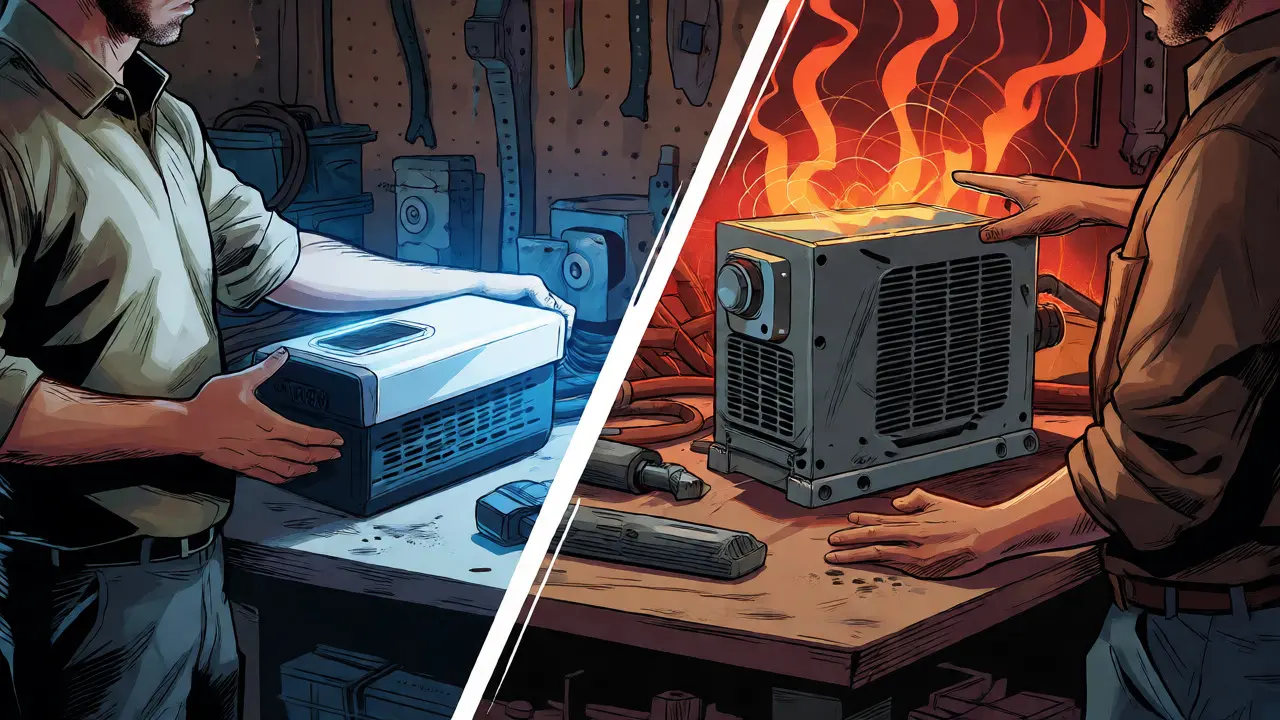
This is the biggest decision you’ll make after choosing a brand. Let’s be clear: hydro-cooling is not magic. It’s engineering.
| Feature | Air-Cooled | Hydro-Cooled |
|---|---|---|
| Setup Complexity | Low (Plug & Play) | High (Plumbing required) |
| Noise Level | 70-80 dB (Loud) | 45-55 dB (Quiet) |
| Maintenance | Replace fans regularly | Check leaks, coolant levels |
| Density | Low (Need spacing) | High (Rack-mountable) |
| Initial Cost | Lower | Higher (+$2k-$5k infra) |
If you are mining in a residential area, hydro-cooling is almost mandatory due to noise restrictions. An air-cooled S21 sounds like a jet engine taking off. Hydro units, however, require professional installation. Leaks can destroy electronics. If you aren’t comfortable working with pumps and fluid dynamics, hire a technician. Do not attempt DIY hydro setups without prior experience.
Profitability Reality Check
Let’s run some numbers. Assume Bitcoin is trading at a stable price and network difficulty increases by 2% monthly (a conservative estimate). How long until you break even?
- Scenario A: Cheap Power ($0.05/kWh). The S21e XP Hyd (13 J/TH) becomes profitable in ~14 months. Even the less efficient S21 Pro (15 J/TH) survives.
- Scenario B: Average Power ($0.10/kWh). The S21e XP Hyd takes ~22 months to break even. The S21 Pro struggles, potentially never breaking even before the next halving cycle impacts rewards.
- Scenario C: Expensive Power ($0.15/kWh). Most ASICs bought today are unprofitable. You are essentially speculating on Bitcoin price appreciation rather than earning mining revenue.
Notice how sensitive these timelines are? A small change in electricity cost doubles your payback period. Always use a live calculator like WhatToMine or NiceHash before buying. Input your exact local rate, not the national average.
Where to Buy and Pitfalls to Avoid
Buying direct from manufacturers (Bitmain, MicroBT) ensures authenticity but comes with long lead times. Authorized resellers offer faster shipping but may mark up prices. Beware of third-party sellers on Amazon or eBay claiming "new" stock. Many are refurbished units sold as new.
Key pitfalls:
- Shipping Delays: Popular models like the S21e XP Hyd often face 3-6 month backlogs. Plan for this delay in your cash flow.
- Voltage Requirements: Most modern ASICs need 220V-277V input. Standard US 110V outlets won’t work without heavy-duty transformers, which add inefficiency and cost.
- Heat Output: One S21e XP Hyd outputs enough heat to warm a small house in winter. In summer, you need serious exhaust systems. Don’t underestimate thermal management.
The Future: What’s Next?
Technology doesn’t stand still. Bitmain has announced plans for the S22 series in Q2 2026, targeting sub-12 J/TH efficiency. MicroBT is exploring immersion cooling, where miners are submerged in non-conductive liquid. This could eliminate fans entirely and boost density further.
Should you wait for 2026 models? Probably not. The jump from S21 to S22 will likely be incremental (10-15% improvement), not revolutionary. Meanwhile, Bitcoin’s halving effect continues to squeeze margins. Buying a proven S21 series unit now locks in capacity while prices are stabilizing. Waiting risks missing the window if difficulty spikes unexpectedly.
Frequently Asked Questions
Is Bitcoin mining still profitable in 2025?
Yes, but only for operators with low electricity costs (under $0.08/kWh) and efficient hardware (below 15 J/TH). Home miners with standard residential rates often struggle to cover power bills unless Bitcoin’s price rises significantly.
Can I mine Bitcoin with a gaming PC?
No. Modern Bitcoin mining requires SHA-256 ASICs. GPUs are inefficient for Bitcoin and are better suited for altcoins or AI tasks. A gaming PC mining Bitcoin would earn pennies per day while consuming significant power.
Do I need hydro-cooling for home mining?
Not necessarily, but it helps with noise. Air-cooled miners are very loud (70+ dB). If you have a detached garage or soundproofed room, air-cooling is simpler and cheaper to set up. Hydro-cooling is quieter but requires complex plumbing and maintenance.
Which brand is more reliable, Bitmain or MicroBT?
Both are reputable. Bitmain has larger market share and better software support. MicroBT is often praised for hardware durability and lower failure rates. Choice often depends on regional availability and support networks.
How long do ASIC miners last?
Typically 2-4 years. After this period, they become obsolete as newer, more efficient models reduce their profitability. They can still be sold as second-hand units, but value drops sharply once newer generations launch.
Final Verdict
If you have cheap power and technical skills, the Antminer S21e XP Hyd 3U is the performance king. For most home miners, the Antminer S21 Pro or WhatsMiner M66S++ offers the best balance of cost, efficiency, and ease of use. Avoid the cheapest options unless you have free electricity; otherwise, you’re just subsidizing the grid.