
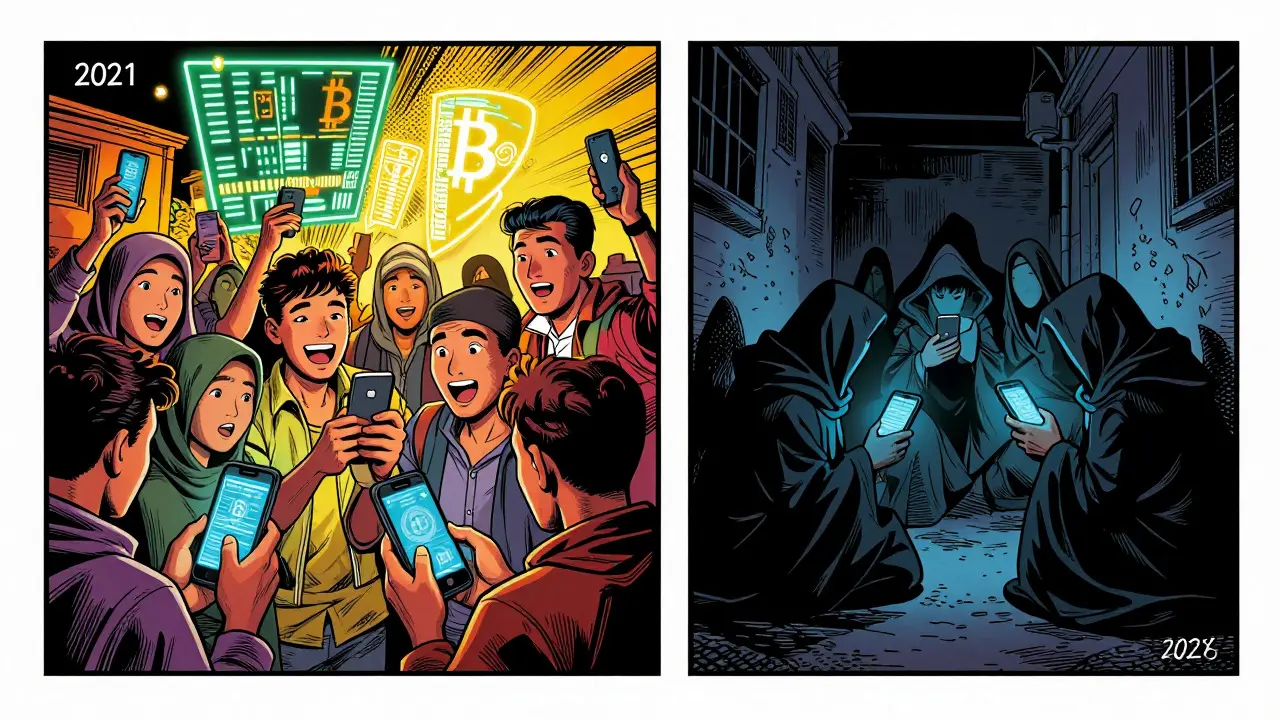
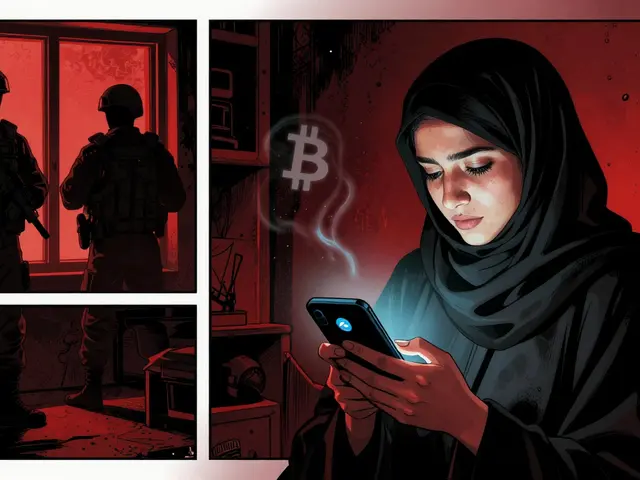
Imagine a country that went from being one of the fastest adopters of digital currency to having one of the strictest bans on it-all within twelve months. That is exactly what happened in Afghanistan after the Taliban took control in August 2021. By mid-2022, the de facto government declared all cryptocurrency activities haram (forbidden) under their interpretation of Islamic law. Today, in 2026, this prohibition remains one of the most severe regulatory walls in the global crypto landscape. But here is the twist: despite the ban, the underground market hasn’t disappeared. It has just gone deeper.
The Shift From Boom to Ban
To understand why the ban hit so hard, you have to look at where things stood before it. In 2021, Afghanistan was an unlikely crypto hotspot. With traditional banking channels frozen by international sanctions and foreign reserves locked away, ordinary Afghans turned to digital assets as a lifeline. The country jumped to rank 20th globally in crypto adoption out of 154 nations tracked by major indices. People were using Bitcoin and stablecoins not for speculation, but for survival-to send remittances, save value, and bypass a broken financial system.
Then came the reversal. In August 2022, Taliban authorities issued a formal decree halting all Bitcoin trading. They argued that cryptocurrencies lacked tangible backing and resembled gambling, which violates Sharia principles. This wasn't just a suggestion; it was a comprehensive prohibition covering mining, trading, and usage. Within months, monthly transaction values plummeted from millions of dollars to roughly $80,000. The official market vanished overnight.
| Metric | 2021 (Pre-Ban) | 2026 (Current) |
|---|---|---|
| Global Adoption Rank | #20 out of 154 | N/A (Illegal) |
| Legal Status | Unregulated/Gray Area | Strictly Prohibited |
| Primary Use Case | Remittances & Savings | Underground Survival Tool |
| Enforcement Level | Low | High (Periodic Crackdowns) |
Why the Taliban Banned Crypto
The reasoning behind the ban is rooted in religious doctrine rather than economic strategy. Taliban officials cite two main issues with digital assets:
- Lack of Tangible Backing: Unlike gold or fiat currency backed by central banks, cryptocurrencies are viewed as speculative bubbles without physical value.
- Gambling Nature: The volatility of prices is interpreted as maysir (gambling), which is forbidden in Islam.
This stance puts Afghanistan in a tiny club. As of 2026, only about nine countries globally maintain total prohibitions on Bitcoin. Most other restrictive nations, like Morocco, have lifted their bans recently. Afghanistan stands alone as the last major jurisdiction to implement such a harsh restriction, largely due to its isolation from global financial trends and its unique governance structure.
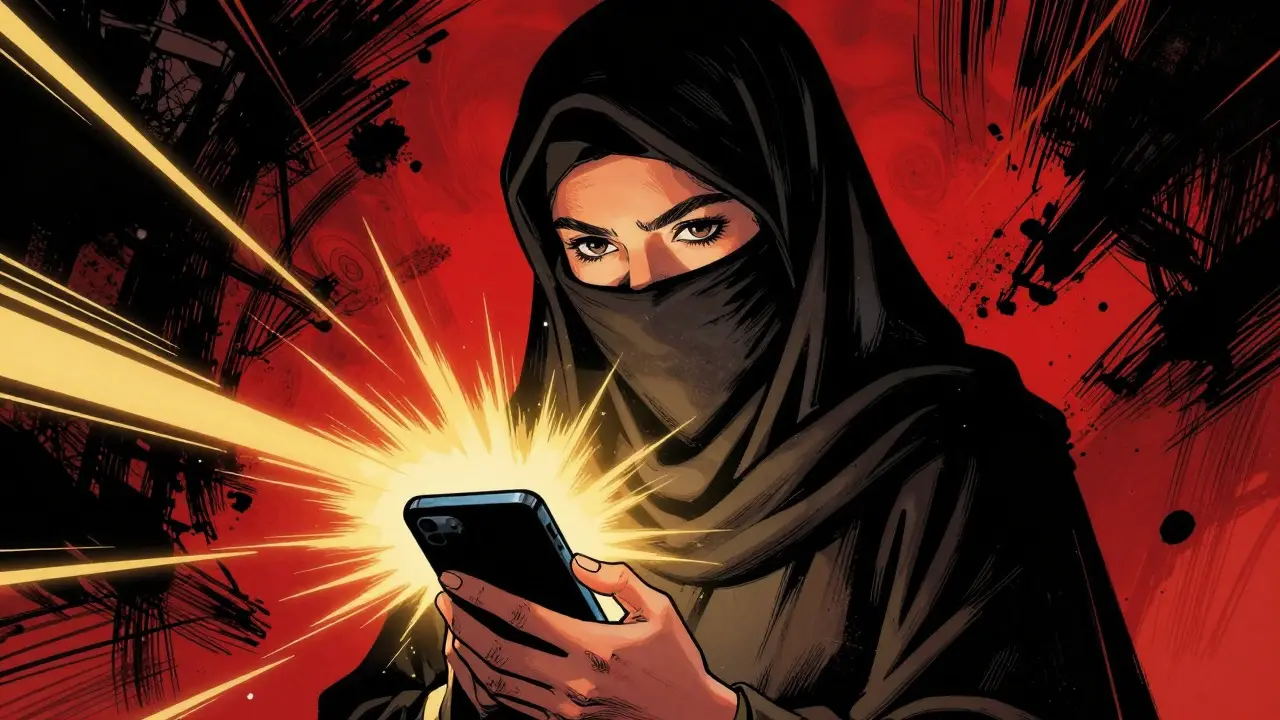
How People Still Trade Crypto Underground
If the ban is so strict, why does crypto still exist there? Because necessity overrides fear. For many Afghans, especially those cut off from the global economy, crypto is not a luxury-it’s a utility. The traditional banking sector has collapsed, and international aid flows are heavily restricted. Without crypto, sending money across borders would be nearly impossible.
The solution? Peer-to-peer (P2P) networks. Instead of using centralized exchanges like Binance or Coinbase, which can be easily shut down, traders use decentralized platforms and direct wallet transfers. USDT (Tether) and Bitcoin dominate these underground markets because they are easy to store on mobile phones and transfer without bank accounts.
Enforcement is inconsistent. The Taliban lacks the technical resources to monitor every blockchain transaction. While they conduct occasional raids on known miners or forex traders, the decentralized nature of P2P trading makes complete eradication nearly impossible. Traders operate in shadows, often relying on trusted community networks to verify counterparties.
The Human Cost: Women and Financial Freedom
One of the most critical aspects of this story involves Afghan women. Under Taliban rule, women face severe restrictions on employment, education, and even leaving home without a male guardian. Traditional banking requires identification documents and proof of income-barriers many women cannot overcome.
Crypto offers a loophole. Organizations like the Digital Citizen Fund, led by tech entrepreneur Roya Mahboob, have been teaching women how to use Bitcoin through underground channels. For these women, owning crypto isn't about getting rich; it's about basic dignity. It allows them to receive small payments for freelance work, access humanitarian aid directly, and maintain a sliver of financial independence in a society that seeks to erase their public presence.
"It gives them a hope of financial freedom," says Mahboob. "In an oppressive environment, cryptocurrency becomes easier to understand because it doesn't ask for your gender, your ID, or your permission."
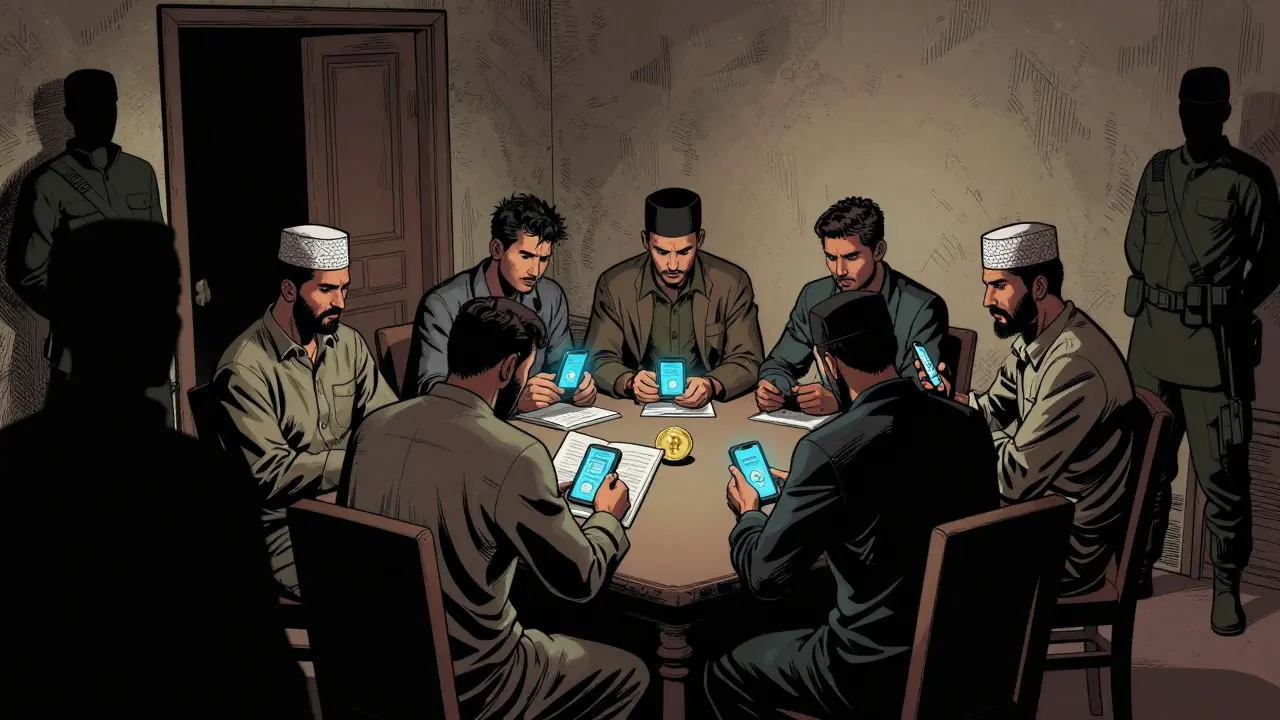
Economic Reality vs. Religious Doctrine
The ban creates a stark contradiction. On one hand, the government declares crypto sinful. On the other, the economy is in freefall. The UN reported in 2022 that 97% of Afghans fell below the poverty line. Food exists, but people lack purchasing power. In this vacuum, crypto fills the gap.
Despite unreliable electricity, high illiteracy rates, and limited internet access (only ~21% of the population has regular connectivity), the demand for digital assets persists. Why? Because the alternative is total financial isolation. The black market for crypto has become a vital component of Afghanistan’s informal economy, allowing families to survive when formal systems fail.
What Does the Future Hold?
Will the ban lift anytime soon? Unlikely. The Taliban’s ideological commitment to Sharia-based finance suggests no immediate change. However, pressure may mount if the humanitarian crisis worsens. International NGOs are already exploring ways to use blockchain technology to deliver aid more efficiently, bypassing corrupt local intermediaries.
For now, Afghanistan remains an outlier. While the rest of the world moves toward regulating and integrating crypto, Afghanistan pushes harder to suppress it. Yet, as history shows, you can ban a technology, but you can’t always ban the need it fulfills.
Is Bitcoin legal in Afghanistan in 2026?
No. Bitcoin and all other cryptocurrencies remain strictly prohibited under Taliban rule. Trading, mining, or holding crypto can lead to arrest or confiscation of assets, though enforcement varies by region.
Why did the Taliban ban cryptocurrency?
The Taliban banned crypto citing Sharia law, arguing that digital assets are speculative (like gambling) and lack tangible backing, making them haram (forbidden).
How do Afghans trade crypto if it’s illegal?
Most trading happens via peer-to-peer (P2P) networks using trusted contacts and decentralized wallets. This avoids centralized exchanges that are easier for authorities to monitor or shut down.
Does the crypto ban affect women differently?
Yes. Since women face barriers to opening bank accounts and working legally, crypto provides a rare avenue for financial independence and receiving remittances without needing traditional ID or male guardianship.
Are there any penalties for crypto users?
Penalties include arrests, fines, and confiscation of devices or funds. However, enforcement is sporadic due to resource limits and the difficulty of tracking decentralized transactions.
Rita Dutta
August 4 2026the irony is palpable isn't it? a nation that once danced on the edge of digital freedom now shackled by dogma. yet, the human spirit, like water, finds cracks in the stone. they call it haram but survival is halal if you squint hard enough at the moral relativism of it all. the blockchain doesn't care about your beard or your burqa, it only cares about the hash rate and the truth of the ledger.
i find it fascinating how technology outpaces theology every single time. the taliban thinks they can ban an idea, but ideas are like viruses, contagious and unstoppable. crypto is just the latest vector for liberty in a land choked by control. it's beautiful in a tragic sort of way, really. like watching a flower bloom in a warzone, vibrant against the grey rubble of oppression. we should be paying more attention to these underground networks, not just as economic anomalies but as acts of quiet rebellion. the real revolution isn't with guns, it's with private keys.
Paul Smith
August 5 2026Wow, this is such a powerful story! 🌍✨ It’s amazing to see how people use tech to stay connected even when everything else falls apart. The part about women using crypto for financial independence really touched my heart 💖. It shows that no matter where you are, there’s always hope! 🙏🚀
Rodmun Tarnowski
August 6 2026Indeed, Mr. Smith! It is truly remarkable how resilience manifests in such dire circumstances!! The utilization of decentralized finance serves not merely as an economic tool, but as a beacon of autonomy for those marginalized by traditional systems!! One must applaud the ingenuity displayed by these individuals who navigate the treacherous waters of prohibition with such grace and determination!!! It is a testament to the indomitable human spirit!!
Matthew Smith
August 7 2026you speak of autonomy as if it is a virtue detached from consequence. the taliban are not wrong to fear chaos. money without backing is a lie. a lie that destroys communities. yet here we are praising liars because they defy authority. what does that say about us? we value rebellion over stability. we value the symbol over the substance. perhaps the problem is not the ban but our own moral compass spinning wildly in the wind of technological novelty. let them starve in their honesty while we feast on our digital delusions.
Prudence Flemming
August 7 2026the discourse around 'honesty' in fiat currency is laughably naive. central banks print money out of thin air daily. that is the ultimate lie. crypto is just math. cold hard math. the taliban are luddites clinging to a past that never existed for most afghans. they confuse volatility with immorality. it's a classic ad hominem attack on the technology itself rather than engaging with the utility. p2p networks are the purest form of market interaction. no middlemen. no gatekeepers. just trustless exchange. the state fears what it cannot tax or control. simple as that.
Carl Michaud
August 9 2026trustless? please. you naive sheep believe in the 'math' while the whales manipulate the charts behind closed doors. the entire ecosystem is a ponzi scheme designed to extract wealth from the developing world into the pockets of silicon valley elites. the taliban are actually protecting their people from globalist exploitation, whether they realize it or not. the 'underground' market is just a data harvesting ground for surveillance capitalism. you think you're free? you're just another node in the matrix being mined for behavioral data. wake up sheeple.
Matt Kay
August 9 2026boring read. too much fluff.
Dave Kjendal
August 9 2026it's not boring, it's reality. people suffer. you ignore it because it doesn't affect your wallet. typical. the article highlights a stark contrast between ideology and survival. most people here will argue semantics while a woman in kabul risks prison to send $50 to her family. perspective matters. stop looking down your nose at the 'simple' truths of life. sometimes the simplest solution is the hardest to accept for the privileged class.
Kat Bennett
August 11 2026I’ve been following this situation closely for years, and it’s heartbreaking yet inspiring to see how communities adapt. The fact that stablecoins like USDT are becoming a lifeline for remittances is significant because it bypasses the broken banking infrastructure entirely. It makes me wonder if other sanctioned countries might follow suit, creating a shadow economy that operates parallel to traditional finance. Do you think international NGOs will eventually embrace blockchain for aid distribution despite the political pushback? It seems inevitable given the inefficiencies of current systems.
Candice Cornett
August 12 2026inevitable? don't make me laugh. governments love control. they will crush any system that threatens their monopoly on power. the taliban are just the first domino. soon every authoritarian regime will join the club. crypto isn't saving anyone, it's just delaying the inevitable crackdown. and when it comes, it will be brutal. naivety is dangerous. stop romanticizing the struggle and start preparing for the fall.
Lance Jantz
August 13 2026Oh, the tragedy of it all! 🎭 To think that mere digits on a screen hold more power than the edicts of men! It is a Shakespearean tale of hubris and defiance. The Taliban, in their quaint misunderstanding of the modern zeitgeist, attempt to dam the river of innovation with stones of dogma. But water, my friends, always finds a way! 💧 The women of Afghanistan are the true protagonists here, wielding private keys like swords of liberation! A magnificent display of the human condition!
Don Fizy
August 14 2026Hey everyone! :) Just wanted to chime in and say that education is key here. If more people understood the basics of wallets and seeds, they could help others stay safe. I've seen some great tutorials online that explain P2P trading simply. Sharing knowledge is how we build community! Keep supporting each other through tough times! :)
Phil Babb
August 16 2026EXCELLENT POINT, DON!!! We MUST educate ourselves and others!!! The spread of knowledge is the antidote to oppression!!! Let us rally together and share resources!!! No one should be left behind in this digital revolution!!! FORWARD MARCH!!! 💪🔥
Dominic Greco
August 17 2026they are tracking you right now. the moment you type 'crypto' on reddit, algorithms flag you. the taliban have agents in the west. they know who sympathizes. be careful what you post. the deep state wants you to believe in freedom so you keep buying their narrative. btc is the only escape. get off grid. burn your phones. 👁️👄👁️
Sean Rowland
August 18 2026Your sentimentality is misplaced, Mr. Fizy. The notion that 'sharing knowledge' equates to safety is a profound miscalculation. In a surveillance state, knowledge is a liability unless encrypted and compartmentalized. You speak of community as if it were a sanctuary; in reality, it is a vulnerability vector. The Taliban do not need to track every transaction; they need only to identify the nodes of influence. Your casual optimism is a death sentence for the very people you claim to support. Consider the implications of metadata exposure before you broadcast your naivety to the masses.